Zeppelin Museum
The inaugural Zeppelin airship, the LZ1, ascended in 1900. Did this marvel of engineering predate the Wright brothers' historic flight?
Full story unlocks in the tour
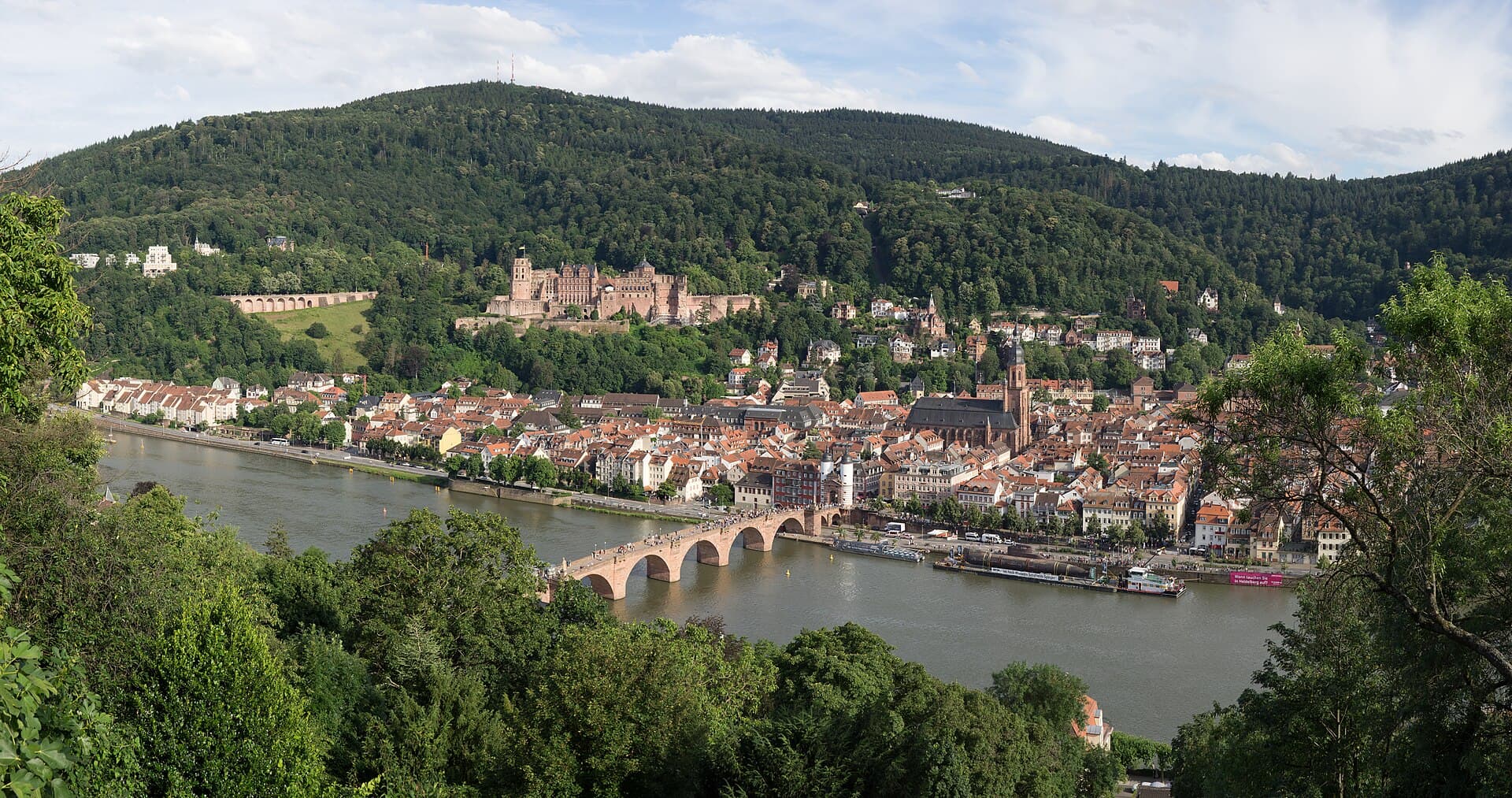 Photo of Heidelberg, via Wikimedia Commons
Self-guided audio walking tour of Friedrichshafen — GPS route, offline playback, story-driven narration in 32 languages.
“Where the sky met human ambition, beside the tranquil expanse of Lake Constance.”
Not the postcards. The stories even locals don't know — whispered in your ear, right where they happened.
The inaugural Zeppelin airship, the LZ1, ascended in 1900. Did this marvel of engineering predate the Wright brothers' historic flight?
Friedrichshafen is celebrated for its Zeppelins, yet Claude Dornier, another aviation pioneer, also established his company here. What unique hurdle did he encounter while testing his early seaplanes?
The Maybach name evokes images of grand automobiles, but the company's origins in Friedrichshafen were rooted in a different, equally vital form of transport.
Discover every secret of Friedrichshafen
Every address, every reveal in full — in your ear, right where it happened.
You pick your stops. You walk. The voice reveals what the others miss.


Your self-guided audio tour of Friedrichshafen is ready — pick your landmarks, choose your language, and start the moment you arrive.
BuyLume has a built-in augmented-reality guide. Hold your phone up and its camera shows the street ahead of you, with a glowing arrow laid over the real view that always points to your next stop — no map to puzzle over, no wrong turns. Like everything in Lume, it works fully offline.
Friedrichshafen, a city along the northern edge of Lake Constance (Bodensee) in southern Germany, offers a compelling fusion of inventive spirit and lakeside calm. Recognized globally as the birthing place of the Zeppelin airship, the city's identity is profoundly interwoven with aviation's story, providing a distinctive lens on human ingenuity and aspiration. Beyond its technological marvels, Friedrichshafen unfolds a scenic panorama with the gleaming waters of Lake Constance in the foreground and the grand Swiss Alps forming a dramatic backdrop.
This dynamic city invites visitors to delve into its inventive past through world-class museums, wander along its palm-lined promenade, and surrender to the serene beauty of its natural surroundings. Whether drawn to the engineering accomplishments that once graced the skies, the allure of water sports, or simply a leisurely respite by the lake, Friedrichshafen offers a refreshing and engaging experience for all.
With its relaxed ambiance and varied attractions, Friedrichshafen serves as an excellent base for exploring the wider Lake Constance region, including appealing towns like Meersburg and Lindau, and even providing picturesque ferry connections to Switzerland.
The narrative of Friedrichshafen is a compelling account of strategic significance, royal decree, and pioneering innovation. The city's contemporary identity began in 1811 when King Frederick I of Württemberg formally established Friedrichshafen by merging the ancient Free Imperial City of Buchhorn and the monastic village of Hofen. This action was a calculated move, granting the Kingdom of Württemberg its own crucial access to Lake Constance for independent trade with Switzerland. Buchhorn itself holds an older chronicle, with its first recorded mention dating to 838 and achieving the esteemed status of a Free Imperial City in 1275, cementing its role as a significant regional trade nexus.
The 19th century witnessed considerable expansion for Friedrichshafen. The introduction of steamship services on Lake Constance in 1824, with the inaugural voyage of the 'Wilhelm,' marked the dawn of regular mechanized shipping. This was succeeded by the completion of the Southern Railway in 1847, linking the lake port with the interior regions of Württemberg and further solidifying its standing as a logistical hub. A ferry service to Romanshorn in Switzerland commenced in 1869, enhancing its international ties.
The late 19th and early 20th centuries ushered in Friedrichshafen's most defining era: the age of flight. Here, Count Ferdinand von Zeppelin, a retired German general, chose to develop and construct his groundbreaking rigid airships. The first Zeppelin airship, the LZ1, undertook its maiden flight over Lake Constance on July 2, 1900, years before the Wright brothers' initial flight. This pioneering spirit drew other aviation innovators, most notably Claude Dornier, who initially collaborated with Zeppelin before establishing his own aircraft company, Dornier Flugzeugwerke, in Friedrichshafen. Wilhelm Maybach, a co-founder of Daimler-Motoren-Gesellschaft, also founded a company here, initially producing high-performance engines for airships and aircraft, later transitioning to luxury automobiles.
Friedrichshafen's industrial importance, particularly in aviation, rendered it a target during World War I and especially during World War II. The city's factories, including Zeppelin, Maybach, and Dornier, were vital to the German war effort, and the city endured extensive bombing by Allied forces between 1943 and 1945. A major raid on April 28, 1944, destroyed most of the old city center, with approximately two-thirds of Friedrichshafen lying in ruins by the war's conclusion. After the war, German aircraft production faced a ban for many years, forcing companies like Dornier to adapt and Maybach to pivot entirely to other industries. The city gradually recovered, becoming the main administrative center for the Bodenseekreis district in 1973. Today, Friedrichshafen stands as a testament to resilience, having rebuilt itself into a modern and sought-after destination that proudly commemorates its profound history of innovation while embracing its role as a lively lakeside city.
Friedrichshafen presents an engaging array of sights, primarily revolving around its aviation heritage and magnificent lakeside setting. A visit is incomplete without exploring the Zeppelin Museum, housed in the former harbor railway station. It presents the world's largest collection related to airship travel, including a full-scale reconstruction of a section of the Hindenburg, inviting visitors to walk through elegant cabins and lounges. For an unparalleled experience, consider a Zeppelin NT Flight Experience from Friedrichshafen Airport, offering sweeping aerial views of Lake Constance and the Alps.
Another essential stop for aviation enthusiasts is the Dornier Museum, situated near the airport. This futuristic structure chronicles 100 years of aerospace history, featuring original aircraft, space exhibits, and interactive displays that recount the story of Claude Dornier's pioneering endeavors. The Uferpromenade (Lakefront Promenade) is a highlight, stretching for kilometers along Lake Constance. Lined with palm trees and flower beds, it is perfect for a leisurely stroll, offering numerous cafés and restaurants with outdoor seating and, on clear days, expansive views of the Swiss Alps.
The twin-towered Schlosskirche (Castle Church) stands as a prominent landmark, a Baroque masterpiece from the early 18th century that was once part of a monastery and later a royal dwelling. For a glimpse into the past of education, the School Museum Friedrichshafen offers insights into school life from the 1850s to the 1900s. Finally, a ferry trip to Romanshorn, Switzerland, provides a scenic and relaxing way to experience the international character of Lake Constance, with the crossing lasting around 40 minutes.
The ideal time to visit Friedrichshafen extends from late spring to early autumn, specifically May through September, when the weather is mild and the lake is most inviting. July and August represent peak months, offering the most activities but also larger gatherings. For those seeking a more tranquil experience with autumnal hues, particularly during the grape harvest, this period is quite appealing. While winter is considerably quieter, the lakeside Christmas Market from late November to just before Christmas provides a magical and comforting ambiance.
Friedrichshafen is well-connected and easily reached. It possesses its own regional airport, Friedrichshafen Airport (FDH), providing seasonal flights to and from other European cities. The airport also features its own railway station. By train, Friedrichshafen Stadt station is centrally positioned with connections to major German cities like Frankfurt, Stuttgart, and Ulm, and international links to Innsbruck and Basel. Driving is straightforward, with good road connections from Stuttgart, Munich, and across the Austrian and Swiss borders. For a scenic arrival from Switzerland, consider taking a train to Romanshorn and then the ferry across Lake Constance.
Within the city, buses offer convenient transport for shorter distances. The long lakefront promenade is perfect for walking or cycling, with bike rentals readily available. Many attractions, including the Zeppelin Museum, are situated along the promenade or within easy reach of the city center. For accommodation, a range of hotels, guesthouses, and apartments are at hand. The local currency is the Euro.
Friedrichshafen in Korean, in Chinese or in Hebrew — and 29 more languages, every stop narrated by a native voice. The widest language range of any self-guided audio tour.
Available in: