Abbaye Saint-Michel
Centuries ago, the monks of Gaillac's abbey received a rather generous daily allowance.
Full story unlocks in the tour
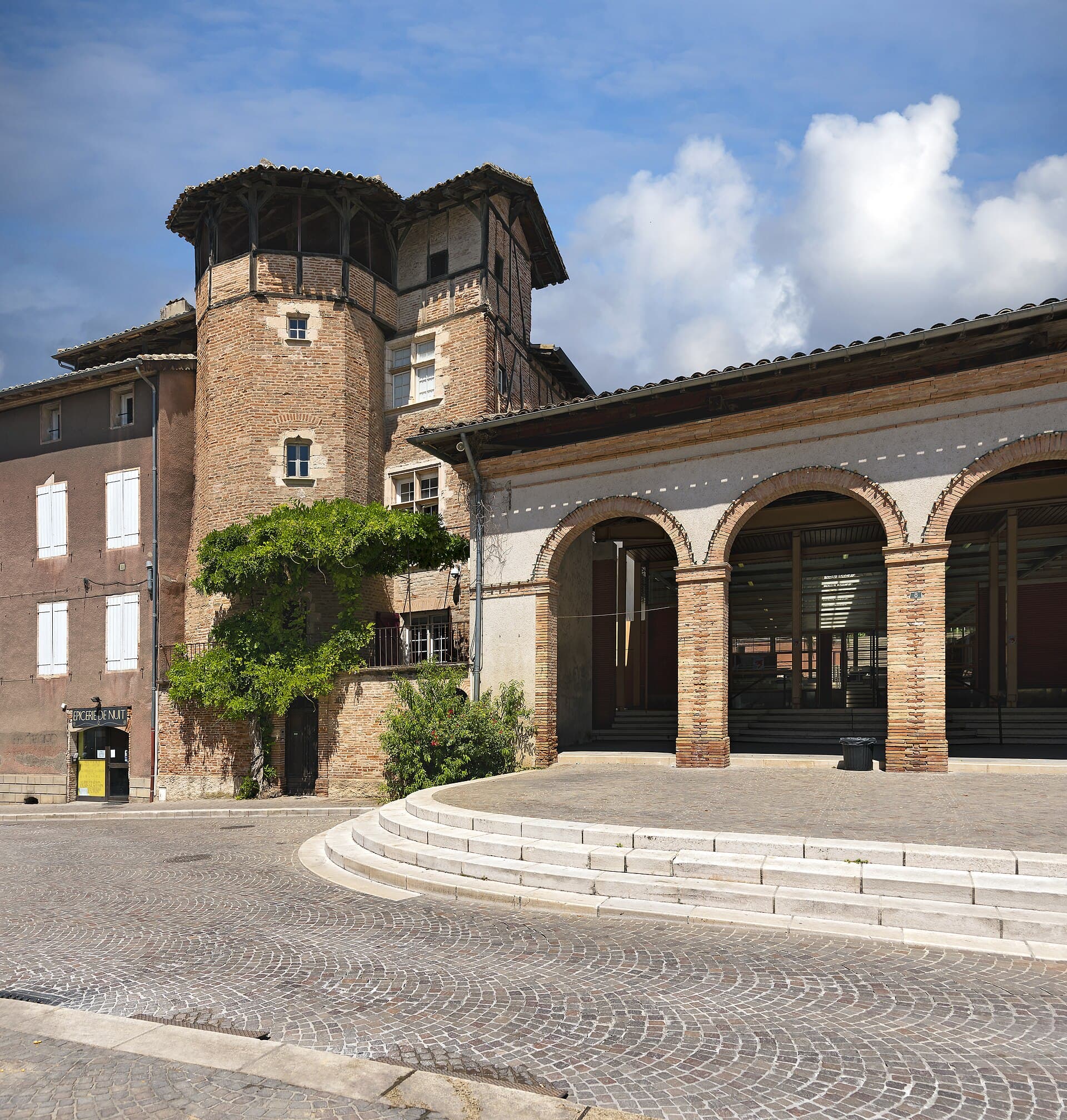 Didier Descouens / CC BY-SA 4.0, via Wikimedia Commons
Self-guided audio walking tour of Gaillac — GPS route, offline playback, story-driven narration in 32 languages.
“Where ancient vines murmur of Gascon splendor.”
Not the postcards. The stories even locals don't know — whispered in your ear, right where they happened.
Centuries ago, the monks of Gaillac's abbey received a rather generous daily allowance.
The Fine Arts Museum occupies a 17th-century château with a garden connected to French royalty.
Before Champagne was even a glimmer in a winemaker's eye, Gaillac was already perfecting a sparkling secret.
Discover every secret of Gaillac
Every address, every reveal in full — in your ear, right where it happened.
You pick your stops. You walk. The voice reveals what the others miss.


Your self-guided audio tour of Gaillac is ready — pick your landmarks, choose your language, and start the moment you arrive.
BuyLume has a built-in augmented-reality guide. Hold your phone up and its camera shows the street ahead of you, with a glowing arrow laid over the real view that always points to your next stop — no map to puzzle over, no wrong turns. Like everything in Lume, it works fully offline.
Gaillac, a town in the Tarn department of Southern France, offers a captivating blend of ancient history and viticultural heritage. Situated between Toulouse and Albi, the town is cradled by a bend in the Tarn River, which historically served as a vital trade route for its celebrated wines. With a population of just over 16,000, Gaillac maintains a charming, unhurried atmosphere, inviting visitors to explore its medieval streets and sun-dappled squares.
Often described as a town that 'punches above its weight,' Gaillac presents an extraordinary 10th-century abbey and a fine arts museum set within a magnificent park. The town's identity is inextricably linked to its vineyards, which are among the oldest in France, producing a diverse array of wines that reflect the unique terroir of the region. Gaillac's emblem, a rooster, is a testament to its long-standing winemaking tradition, granted in 1387 by the Counts of Toulouse to authenticate its wine barrels.
## From Roman Vines to Monastic Influence Gaillac's story begins long before its official founding. Archaeological evidence suggests that wine production was established here as early as the 1st century AD, making it one of the earliest viticultural centers in ancient Gaul. Roman merchants transported Gaillac wine to Bordeaux and Northern Europe via the Tarn and Garonne rivers. The town's name, meaning 'fertile place,' hints at its agricultural prowess from the start.
Following barbarian invasions that disrupted early settlement, Gaillac was reborn around the Benedictine monastery of Saint-Michel in the 10th century. The monks played a pivotal role in reviving and organizing the vineyards, establishing a reputation for Gaillac wines that spread throughout Northern Europe, particularly England, during the Middle Ages. By 1253, Gaillac was exporting wine to England, with King Henry III purchasing 20 barrels. The 16th century saw further prosperity through the wine trade and the cultivation of woad, a plant used for blue dye, both transported along the Tarn River.
## Challenges and Revival Gaillac's history was not without its struggles. The protectionist policies of Bordeaux merchants often hindered the export of 'haut pays' wines like Gaillac's. The region also endured religious wars, with a notable incident after the St. Bartholomew's Day massacre in 1572, where Gaillacois Catholics massacred 74 Huguenots in the town. The phylloxera epidemic in the late 19th century devastated many vineyards, leading farmers to diversify their crops. However, the community rallied in the 1970s, forming wine cooperatives that were instrumental in saving the region's wine production. Gaillac's white wines received AOC (Appellation d'Origine Contrôlée) status in 1938, with reds and rosés following in 1970, solidifying its place as a distinguished wine region.
Begin your exploration in Gaillac's old town, where medieval streets and half-timbered buildings reveal centuries of history. Pick up a free walking map from the Tourist Information Office on Place de la Libération to guide your stroll through areas like Barrio de la Portanelle, the oldest quarter, with its low stone buildings. Do not miss the 13th-century Hôtel Pierre de Brens and the Place du Griffoul, featuring a covered market and a fountain.
The Abbaye Saint-Michel, a 10th-century church, is a central landmark, showcasing a blend of Romanesque, Gothic, and Baroque architectural styles. Its interior, though relatively plain, features a ribbed ceiling, faded frescoes, and carved capitals. The abbey also houses the Maison des Vins, an ideal spot for wine tasting.
For art enthusiasts, the Musée des Beaux-Arts is housed within the Château de Foucaud, a 17th-century castle surrounded by a French-style park with terraces and fountains. The museum exhibits works by 19th and 20th-century regional artists. Other notable attractions include the Philadelphe Thomas Natural History Museum. Consider a boat trip on the Tarn River or a visit to nearby bastide towns like Lisle-sur-Tarn and Castelnau-de-Montmiral.
The best time to visit Gaillac for warm-weather activities is from early June to late September. During these months, the weather is generally warm with average daily high temperatures above 76°F (24°C). July is typically the warmest month, with an average high of 82°F (28°C) and clear skies. September offers pleasant warmth with average highs around 78°F (25°C) and less chance of rain compared to spring. Precipitation is lowest in July, making it ideal for outdoor exploration.
Gaillac is easily accessible, located about 40 minutes by train from Toulouse and 20 minutes from Albi. The train station is a 20-minute walk from the town center. For those driving, Gaillac is approximately 50 kilometers northeast of Toulouse. The town is walkable, and a free walking route map can be obtained from the Tourist Information Office on Place de la Libération. Many museums and attractions, including the Musée des Beaux-Arts and the Maison des Vins, observe seasonal opening hours and often close for lunch, so it is advisable to check schedules in advance. Gaillac offers a range of accommodations, from boutique hotels to rural gîtes.
Gaillac in Korean, in Chinese or in Hebrew — and 29 more languages, every stop narrated by a native voice. The widest language range of any self-guided audio tour.
Available in: