Ty Te Caerdydd
Esta casa de té en particular guarda un secreto real que atrae a visitantes de todo el mundo.
La historia completa se desbloquea en el tour
 Jorge Gobbi / CC BY 2.0, via Wikimedia Commons
Tour de audio autoguiado de Gaiman — ruta GPS a pie, reproducción offline, narración en 32 idiomas.
“Donde las tradiciones galesas florecen bajo el sol patagónico.”
No las postales. Las historias que ni los locales conocen — al oído, justo donde ocurrieron.
Esta casa de té en particular guarda un secreto real que atrae a visitantes de todo el mundo.
Debajo del pueblo se encuentra una reliquia del pasado de Gaiman, un túnel que alguna vez zumbó con un tipo de energía muy diferente.
Mientras que muchas casas de té ofrecen una deliciosa variedad, una en particular es reconocida por un desafío culinario que pocos anticipan.
Descubre todos los secretos de Gaiman
Cada dirección, cada revelación al completo — a tu oído, justo donde ocurrió.
Eliges tus paradas. Caminas. La voz te revela lo que los demás ignoran.

Tu tour de audioguía por Gaiman te espera — elige tus lugares, tu idioma y empieza al llegar.
ComprarLume incluye una guía de realidad aumentada. Levanta el móvil y su cámara muestra la calle que tienes delante, con una flecha luminosa sobre la imagen real que siempre apunta a tu próxima parada — sin mapas que descifrar, sin giros equivocados. Como todo en Lume, funciona completamente sin conexión.
Gaiman, un pequeño pueblo en la provincia de Chubut, Argentina, se erige como un testimonio de un capítulo único en la historia patagónica. Este tranquilo asentamiento, con una población de alrededor de 6.376 habitantes, es un legado viviente de los pioneros galeses que llegaron a fines del siglo XIX buscando preservar su idioma, cultura y tradiciones religiosas. El nombre del pueblo, derivado de la palabra tehuelche para 'piedra afilada', insinúa la presencia indígena que precedió a los colonos europeos.
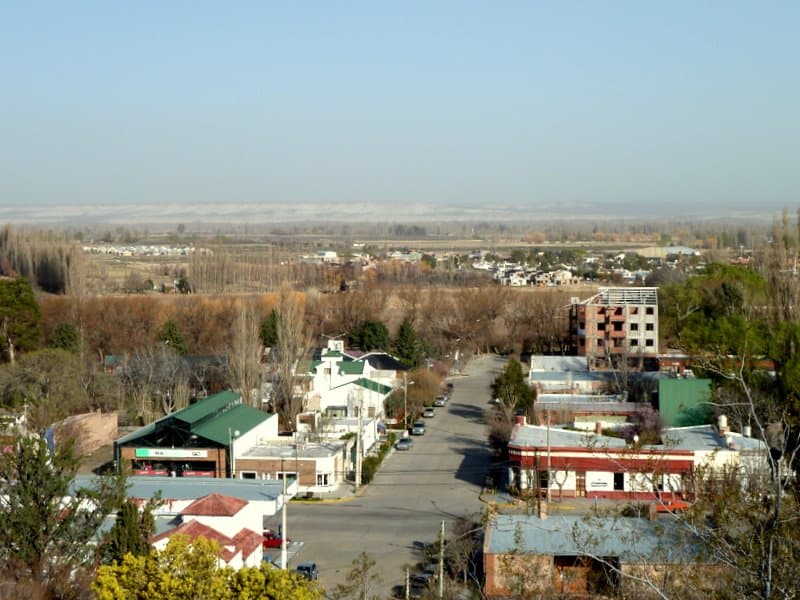
Hoy, Gaiman es un pintoresco oasis en la árida estepa patagónica, caracterizado por su distintiva arquitectura de ladrillo, casas cubiertas de hiedra y florecientes jardines de rosas y violetas, nutridos por las técnicas de riego introducidas por los galeses. Ofrece un escape sereno, invitando a los visitantes a pasear por sus tranquilas calles y retroceder en el tiempo. La perdurable identidad galesa del pueblo es evidente en sus carteles bilingües, banderas galesas y las numerosas casas de té que mantienen la preciada tradición del té galés por la tarde.
La historia de Gaiman comienza a mediados del siglo XIX cuando un grupo de colonos galeses, enfrentando opresión cultural y lingüística en Gales, buscó un nuevo hogar donde pudieran practicar libremente sus tradiciones. Un acuerdo con el gobierno argentino, deseoso de poblar la remota región patagónica, allanó el camino para su viaje. El 28 de julio de 1865, el barco Mimosa llegó a Puerto Madryn, transportando a 153 inmigrantes galeses. Se encontraron con un paisaje desolado, lejos de las tierras fértiles que habían imaginado.
A pesar de las dificultades iniciales, los colonos perseveraron, estableciendo comunidades a lo largo del río Chubut. Ingeniosamente construyeron canales de riego, algunos de los primeros en América del Sur, para transformar la tierra árida en campos cultivables. Para 1874, el asentamiento se expandió hacia el oeste, lo que llevó a la fundación de Gaiman. El pueblo rápidamente se convirtió en el corazón cultural y religioso de la colonia galesa, conocida como 'Y Wladfa Gymreig'. Se construyeron capillas y escuelas, solidificando el compromiso de la comunidad con su herencia. Gaiman obtuvo derechos municipales en 1885, convirtiéndose en el primer municipio electivo en Chubut.
A lo largo de finales del siglo XIX y principios del XX, Gaiman prosperó con la llegada de más inmigrantes galeses. La comunidad coexistió con el pueblo indígena Tehuelche, quienes les enseñaron habilidades de supervivencia, y luego se integró con argentinos de habla hispana. El Ferrocarril Central del Chubut, que llegó a Gaiman en 1908 y se extendió con la construcción del Túnel del Tren de Gaiman en 1914, impulsó aún más la agricultura y el comercio. Si bien el número de hablantes de galés ha disminuido con el tiempo, Gaiman sigue siendo un fuerte bastión de la cultura galesa en Argentina. El pueblo continúa albergando festivales galeses, servicios religiosos en galés y sus reconocidas casas de té, asegurando que el legado de sus fundadores perdure.
Comience su exploración en la Oficina de Información Turística de Gaiman para orientarse y obtener un mapa. Un corto paseo lo llevará al Túnel del Tren de Gaiman, un túnel ferroviario histórico que ofrece exhibiciones audiovisuales sobre el antiguo Ferrocarril de Chubut victoriano. Visite el Museo Histórico Regional Galés, ubicado en la antigua estación de tren, que exhibe más de 3.000 artefactos del asentamiento galés original. Justo al otro lado del río, puede ver desde el exterior las sencillas capillas de ladrillo Capel Bethel y Capilla Vieja, dos capillas protestantes galesas históricas. No se pierda Y Ty Cyntaf (La Primera Casa), una réplica de la casa de piedra construida por los primeros colonos de Gaiman en 1874, que ofrece una visión de la vida de los primeros pioneros. Para una comprensión más amplia de los habitantes anteriores de la región, el Museo Tehuelche-Mapuche ofrece información sobre las poblaciones indígenas de la Patagonia. A solo 8 kilómetros al sur del pueblo, el Parque Paleontológico Bryn Gwyn ofrece un fascinante viaje 40 millones de años al pasado con sus exhibiciones geológicas y paleontológicas. Por supuesto, ninguna visita está completa sin experimentar un tradicional té galés por la tarde en una de las muchas casas de té de Gaiman.
El clima más favorable en Gaiman se da durante enero, febrero, marzo, abril, octubre, noviembre y diciembre, con temperaturas que suelen oscilar entre los 21°C y los 30°C. Estos meses ofrecen condiciones suaves, ideales para explorar el pueblo y sus alrededores. Si bien puede haber algunas lluvias durante este período, generalmente no obstaculizarán las actividades al aire libre. La primavera (octubre y noviembre) y el otoño (marzo y abril) suelen considerarse las mejores épocas para visitar la Patagonia en general, ofreciendo un equilibrio entre clima agradable y menos multitudes.
Gaiman se encuentra en el noreste de la provincia de Chubut, aproximadamente a 17 kilómetros al oeste de Trelew y a 81 kilómetros de Puerto Madryn. El aeropuerto más cercano es el Aeropuerto Almirante Marcos A. Zar (REL) en Trelew, con vuelos diarios desde Buenos Aires. Desde Trelew, se puede llegar a Gaiman en coche en unos 15 minutos o en autobús, lo que lleva de 20 a 45 minutos dependiendo de la ruta. Si llega desde Puerto Madryn, el viaje es de aproximadamente una hora. Si bien el transporte público desde Trelew está disponible, los horarios pueden ser limitados los fines de semana. La mayoría de las tiendas y atracciones en Gaiman observan la siesta, cerrando por unas horas por la tarde. Es aconsejable consultar el sitio web de la Autoridad Portuaria de Puerto Madryn si visita durante la temporada de cruceros (diciembre a febrero), ya que algunas casas de té populares pueden estar completamente reservadas por excursiones privadas.
Gaiman en coreano, en chino o en hebreo — y 29 idiomas más, cada parada narrada por una voz nativa. La mayor variedad de idiomas de cualquier audioguía autoguiada.
Disponible en: