The fortress, named for the eagles that trace circles above its weathered walls, suggests a lofty perch. Yet, a deeper narrative is etched into its very foundations, linking it to a figure of immense historical weight.
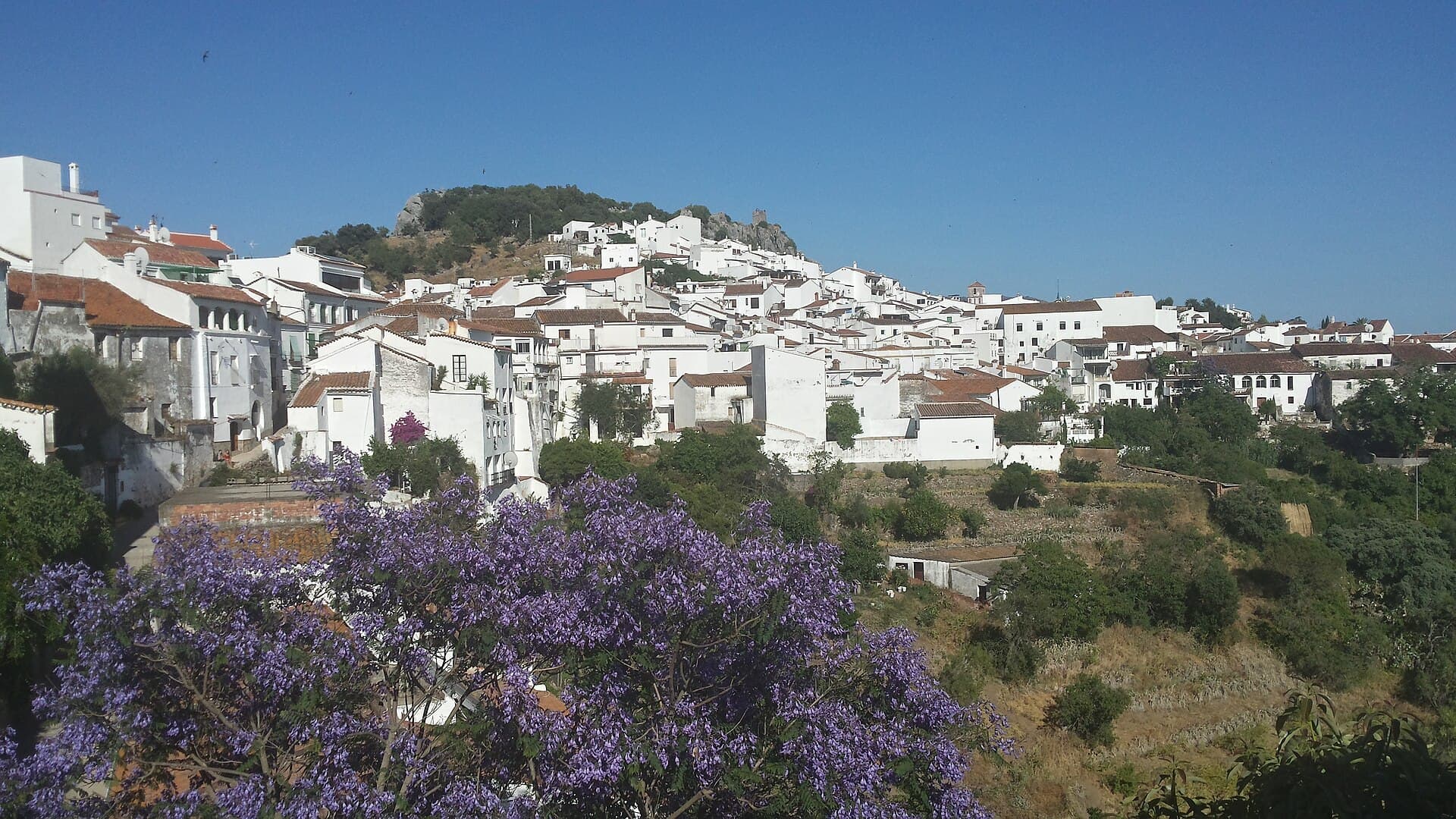
Rockybiggs / CC BY-SA 3.0, via Wikimedia CommonsGaucín
Self-guided audio walking tour of Gaucín — GPS route, offline playback, story-driven narration in 32 languages.
“Where ancient stones meet the expansive sky, overlooking a landscape that stretches to Africa.”
Gaucín, as no one tells it.
Not the postcards. The stories even locals don't know — whispered in your ear, right where they happened.
Strolling through Gaucín's slender, curving lanes, one might notice their intricate, almost maze-like pattern. This design is more than mere charm; it is a clever architectural choice with a surprising, practical purpose.
This small sanctuary, located within the castle grounds, houses a revered sculpture of the Holy Child. The account of its arrival in Gaucín is a story of divine intervention and a humble bookseller.
Discover every secret of Gaucín
Every address, every reveal in full — in your ear, right where it happened.
You pick your stops. You walk. The voice reveals what the others miss.
How long do you have in Gaucín?
Your self-guided audio tour of Gaucín is ready — pick your landmarks, choose your language, and start the moment you arrive.
BuyThe story of Gaucín
Gaucín, a distinctive white village, rises from the Serranía de Ronda mountains in Andalusia, Spain. It rests at an elevation of approximately 600 meters (nearly 2,000 feet) above sea level, providing sweeping views of the Genal Valley, the Mediterranean Sea, Gibraltar, and on clear days, even the Rif Mountains of Morocco. The village offers a quiet sanctuary, often embraced by artists, with its unhurried rhythm and authentic Andalusian character.
Its whitewashed dwellings, brightened by colorful blooms, line steep, winding pathways that reflect a profound historical journey. Gaucín is more than a place of scenic beauty; it stands as a testament to centuries of varied cultures, from Roman and Moorish influences to Christian traditions. This convergence of natural splendor and deep-seated history makes Gaucín a compelling destination for those seeking an immersive experience in southern Spain.
From Ancient Stronghold to White Village
The story of Gaucín reaches back to antiquity, with archaeological finds indicating Neolithic, Bronze Age, and Roman occupations. Its strategic placement atop a hilltop ridge made it a significant fortification for various civilizations. The Romans first established a castle here, though no remnants of this original structure survive today. They also used the area as a resting point for troops, with segments of their 'Path of Gibraltar' still discernible.
The village truly thrived under Moorish dominion, when it was known as 'Sair-Gauzan' or 'Gauzan,' meaning 'strong rock' or 'strategically located crag.' During this period, Gaucín served as a fortified outpost on the frontier between the Moorish Kingdom of Granada and the Christian Kingdom of Castile, its hilltop castle playing a vital defensive role. The Moors left a lasting imprint on the village's unique architecture and winding street layout.
In 1485, Gaucín yielded to Christian forces, marking a new phase in its history. However, the village continued to endure conflict, notably resisting Napoleon's invading army in the 19th century. French forces eventually pillaged the town, incinerating archives and even casting the sacred image of the Santo Niño from the castle walls. This era also saw widespread 'bandolerismo' (banditry) and 'contrabandismo' (smuggling), which reportedly inspired Prosper Mérimée's novella, Carmen. The Spanish Civil War also deeply affected Gaucín, with many citizens executed before the nationalists seized the town in 1936. Despite its turbulent past, Gaucín today is a tranquil community that has preserved its traditional Spanish character.
Begin your journey at the Castillo del Águila (Eagle's Castle), a fortification of Roman origin, later strengthened by the Moors. From its elevated position, you can absorb expansive views that extend across the surrounding countryside to the Mediterranean Sea, Gibraltar, and even Morocco. Within the castle grounds, you will also discover the Ermita de Santo Niño, a 17th-century hermitage housing a revered sculpture of the Holy Child.
Meander through Gaucín's appealing pathways to uncover the Church of San Sebastián, a historic 17th-century church displaying Baroque architecture and a quiet courtyard. The church's interior features three naves separated by substantial pillars and a richly gilded altarpiece. Gaucín is also recognized for its artistic community; explore the numerous art galleries and studios displaying contemporary paintings, traditional ceramics, and sculptures. For sweeping vistas of the whitewashed village descending the hillside, pause at the Mirador de Gaucín or the Mirador del Castillo del Águila. The municipal cemetery also merits a visit, offering insight into the village's social history and some of the finest views. For those who appreciate the outdoors, Gaucín provides numerous hiking trails through the Serranía de Ronda and the Genal Valley, with routes suitable for various fitness levels.
The most agreeable times to experience Gaucín are during spring and autumn, when temperatures are mild and the landscapes are in full bloom. Summers can be quite warm, with average daily highs above 78°F (25°C) from June to September, reaching their peak in August with an average high of 83°F (28°C). However, summer also brings lively festivals. Winters are cooler and windier, with average daily highs below 61°F (16°C) from November to March, and an average low of 41°F (5°C) in January. Despite the cooler temperatures, winter remains suitable for hiking and relaxation due to Gaucín's mild Mediterranean mountain climate.
Gaucín is approximately 35 kilometers inland from Estepona, and about 130 kilometers from Malaga Airport, the closest major airport. Securing a rental car is the most convenient way to arrive at the village, offering the freedom to explore the surrounding Andalusian countryside. There are no direct public transport connections to Gaucín. Once in the village, the center is easily navigable on foot, but a vehicle is advisable for venturing into the Genal Valley or nearby towns. Gaucín offers essential amenities, including several small supermarkets, a butcher, baker, and mini-markets with fresh produce. You will also find a doctor and dentist for minor needs, with the nearest hospital located in Ronda, approximately a 25-minute drive away. For dining, Gaucín presents a good array of bars and restaurants serving traditional Spanish cuisine, including local dishes like cocina de acinojos, migas, and gazpacho.
- How do I reach Gaucín?
- The simplest method to arrive in Gaucín is by renting a car from Malaga Airport, which is about 130 kilometers distant. There are no direct public transport routes to the village.
- When is the best time to experience Gaucín?
- Spring and autumn offer comfortable temperatures and flourishing landscapes, making them ideal for a visit. Summer is suitable for festivals but can be warm, while winter is milder than other parts of Spain and pleasant for hiking.
- What are the primary points of interest in Gaucín?
- Key places to explore include the Castillo del Águila, the Church of San Sebastián, the Ermita de Santo Niño, local art galleries, and various viewpoints offering expansive vistas.
- Is Gaucín appropriate for a quiet escape?
- Indeed, Gaucín is recognized for its tranquil atmosphere and rural setting, making it an excellent destination for those seeking a peaceful retreat away from bustling tourist areas.
- Are there opportunities for hiking in Gaucín?
- Gaucín is a haven for hikers, with numerous trails winding through the Serranía de Ronda and the Genal Valley, suitable for various levels of experience.
- Can I see Gibraltar and Africa from Gaucín?
- Yes, from many elevated points in Gaucín, especially from the Castillo del Águila and various miradors, you can observe the Rock of Gibraltar and, on clear days, the Rif Mountains of Morocco across the Strait.