Engelgasse (Callejón del Ángel)
Las casas que bordean esta encantadora y sinuosa calle esconden un sutil secreto en el diseño de sus ventanas.
La historia completa se desbloquea en el tour
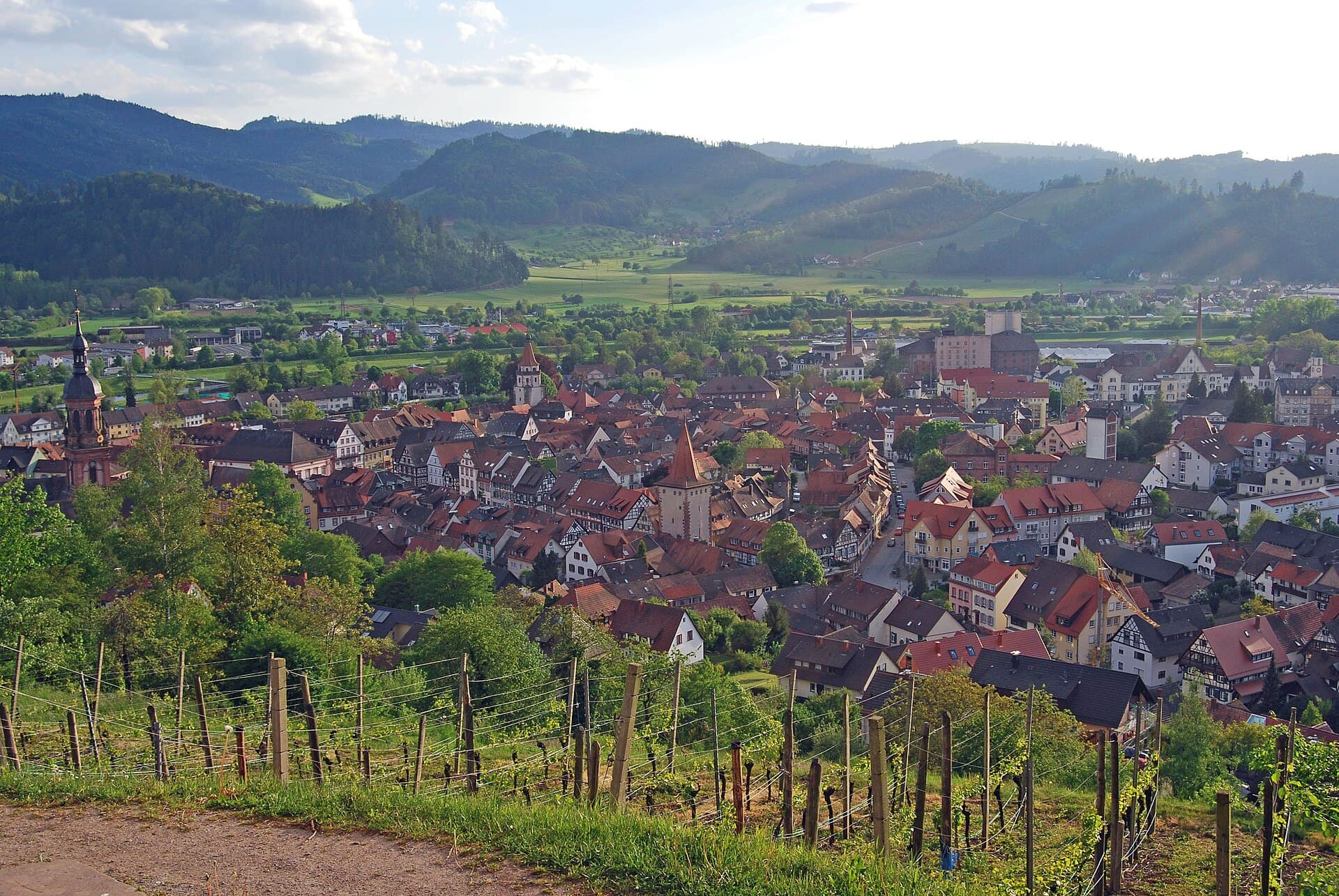 Gargolla / CC BY-SA 3.0, via Wikimedia Commons
Tour de audio autoguiado de Gengenbach — ruta GPS a pie, reproducción offline, narración en 32 idiomas.
“Donde las casas de entramado de madera se alzan como centinelas y comienza la Selva Negra.”
No las postales. Las historias que ni los locales conocen — al oído, justo donde ocurrieron.
Las casas que bordean esta encantadora y sinuosa calle esconden un sutil secreto en el diseño de sus ventanas.
Este edificio del siglo XVIII experimenta una notable transformación cada diciembre.
Un breve viaje desde Gengenbach revela una experiencia histórica distintiva e inmersiva.
Descubre todos los secretos de Gengenbach
Cada dirección, cada revelación al completo — a tu oído, justo donde ocurrió.
Eliges tus paradas. Caminas. La voz te revela lo que los demás ignoran.


Tu tour de audioguía por Gengenbach te espera — elige tus lugares, tu idioma y empieza al llegar.
ComprarLume incluye una guía de realidad aumentada. Levanta el móvil y su cámara muestra la calle que tienes delante, con una flecha luminosa sobre la imagen real que siempre apunta a tu próxima parada — sin mapas que descifrar, sin giros equivocados. Como todo en Lume, funciona completamente sin conexión.
Gengenbach, una ciudad de singular belleza en el extremo occidental de la Selva Negra en Alemania, se despliega como una página de un viejo cuento. Su centro histórico, o Altstadt, es un cautivador laberinto de caminos empedrados y casas de entramado de madera exquisitamente conservadas, muchas adornadas con flores brillantes.
Más allá de su atractivo visual, Gengenbach ofrece una atmósfera tranquila, invitando a los visitantes a pasear por sus calles y descubrir patios apartados y torres antiguas. Sirve como puerta de entrada a la Selva Negra central, con viñedos que ascienden por las laderas circundantes y el río Kinzig fluyendo cerca.
Esta pequeña ciudad, con una población de alrededor de 11.000 habitantes, lleva su larga historia con gracia, evidente en sus puertas medievales, su abadía barroca y sus festivales tradicionales. Ya sea que su interés resida en la historia, la cultura local o simplemente en absorber el sereno paisaje, Gengenbach ofrece un viaje memorable.
La tierra que rodea Gengenbach ha sido testigo de la presencia humana durante mucho tiempo, remontándose a la época romana. Sin embargo, la narrativa documentada de la ciudad comienza verdaderamente en el siglo VIII con el establecimiento de una abadía benedictina. Esta abadía creció rápidamente en importancia, convirtiéndose en el monasterio más grande de la región de Ortenau y, entre el 800 y el 820 d.C., en una posesión imperial.
A mediados del siglo XIV, Gengenbach se había convertido en una Ciudad Imperial Libre, logrando autonomía de la abadía y respondiendo directamente al emperador. Este período vio la construcción de las torres defensivas de la ciudad, muchas de las cuales aún se mantienen en pie, delimitando los límites del casco antiguo. Esta doble identidad —una abadía imperial y una ciudad imperial libre coexistiendo dentro de los mismos confines— fue una característica distintiva del carácter medieval de Gengenbach.
La ubicación estratégica de Gengenbach cerca de la frontera francesa la hizo susceptible a conflictos. La ciudad sufrió daños considerables durante la Guerra de los Treinta Años (1618-1648), cuando fue ocupada por fuerzas suecas. Más tarde, en 1689, las fuerzas francesas en retirada durante la Guerra de los Nueve Años redujeron en gran parte la ciudad a cenizas. A pesar de estas devastaciones, Gengenbach se recuperó. Muchas de las estructuras más antiguas visibles en el centro de la ciudad hoy datan de los siglos XVII y XVIII, un período de florecimiento económico y reconstrucción.
El estatus de la ciudad como Ciudad Imperial Libre concluyó a principios del siglo XIX cuando fue incorporada a la provincia de Baden. La posterior industrialización del valle del Kinzig y la llegada de las conexiones ferroviarias trajeron nuevas perspectivas económicas, aunque también marcó el fin del histórico comercio de transporte de madera por el río Kinzig.
En la década de 1990, el Altstadt de Gengenbach recibió protección bajo la Ley de Preservación Histórica, salvaguardando su esencia medieval. Hoy en día, la ciudad es celebrada por su centro histórico bien conservado, donde cada plaza, puerta y fachada refleja su perdurable narrativa. La elegante fachada barroca del antiguo edificio de la Abadía Benedictina y la distintiva aguja de la Stadtkirche Sankt Marien son características prominentes, con el interior de la iglesia mostrando vívidos frescos neorrománicos del siglo XIX. La dedicación de la ciudad a su patrimonio también es evidente en sus festivales tradicionales, como el carnaval alemánico "Fasnacht", donde los participantes visten atuendos tradicionales y máscaras de madera talladas.
Comience su viaje en el Altstadt, el centro histórico de Gengenbach, donde las calles empedradas serpentean entre casas de entramado de madera de colores brillantes. La Obertorturm del siglo XIII, una puerta defensiva medieval con un antiguo reloj de sol, conduce directamente a esta atractiva zona.
El Ayuntamiento (Rathaus), una elegante estructura barroca del siglo XVIII, sirve como punto focal de la plaza del mercado. En diciembre, sus 24 ventanas se transforman en el calendario de Adviento más grande del mundo. Cerca, la Stadtkirche Sankt Marien, la antigua iglesia de la abadía benedictina, revela un magnífico interior adornado con frescos neorrománicos del siglo XIX y detalles intrincados en oro.
Camine por Engelgasse (Callejón del Ángel), una vía peatonal reconocida por sus edificios medievales bien conservados. Observe las secciones restantes de las antiguas murallas de la ciudad y las diversas torres que una vez fortificaron Gengenbach, como la Torre de la Puerta de Kinzig.
Para aquellos interesados en la historia y la cultura local, Gengenbach ofrece varios museos. El Narrenmuseum en la Niggelturm exhibe artefactos de las festividades locales de Mardi Gras. El Flößerei- und Verkehrsmuseum narra la historia del transporte comercial de madera por el río Kinzig y el ferrocarril de la Selva Negra. El Museum in Kinzigtorturm ofrece una visión de la milicia local, mientras que el Museum Haus Löwenberg alberga exposiciones de arte y una colección permanente de marionetas históricas. También puede visitar la Abadía Benedictina, un complejo histórico que sirvió como el corazón espiritual de la ciudad durante generaciones.
Fuera de la ciudad, considere una excursión al Museo al Aire Libre de la Selva Negra Vogtsbauernhof, a poca distancia, que ofrece una vista fascinante de la vida tradicional de la Selva Negra. Los viñedos circundantes también brindan oportunidades para la degustación de vinos y paseos panorámicos.
Gengenbach recibe visitantes durante todo el año, y cada estación ofrece una atmósfera distinta. Para actividades al aire libre como el senderismo, los meses entre mayo y octubre ofrecen temperaturas agradables. El verano (junio a agosto) es el período de mayor afluencia turística, con temperaturas que oscilan entre 20°C y 30°C, ideal para explorar la ciudad y sus verdes alrededores. El otoño (septiembre a octubre) es particularmente agradable, con temperaturas suaves, menos multitudes y los vívidos colores otoñales de la Selva Negra. Diciembre es un momento especial para visitar, ya que la ciudad se transforma para su mercado navideño y el Ayuntamiento se convierte en el calendario de Adviento más grande del mundo. Los meses de invierno (noviembre a marzo) pueden ser fríos y nevados, pero ofrecen un ambiente hermoso y festivo.
El centro histórico de Gengenbach está diseñado para peatones y se explora mejor a pie, con la mayoría de los lugares de interés, tiendas y restaurantes a una distancia de 5 a 10 minutos a pie. La ciudad cuenta con buenas conexiones ferroviarias, situada en la línea Schwarzwaldbahn entre Offenburg y Singen, y es accesible a través de la carretera B33. Offenburg, una ciudad cercana más grande, ofrece conexiones interurbanas con la red ferroviaria alemana en general.
Si planea pasar la noche en Gengenbach, pregunte a su proveedor de alojamiento sobre la Tarjeta de Invitado KONUS. Esta tarjeta otorga viajes gratuitos en todos los autobuses y trenes públicos (2ª clase, excluyendo IC/ICE y ferrocarriles de montaña) en toda la región de la Selva Negra, ofreciendo una forma económica de visitar las ciudades cercanas. Si bien se aceptan tarjetas de crédito en muchos establecimientos, es aconsejable llevar algo de efectivo para tiendas más pequeñas y puestos de mercado. Se recomiendan zapatos cómodos para caminar, ya que las superficies de la ciudad pueden ser irregulares.
Gengenbach en coreano, en chino o en hebreo — y 29 idiomas más, cada parada narrada por una voz nativa. La mayor variedad de idiomas de cualquier audioguía autoguiada.
Disponible en: