Jardin des Ifs
Within the Jardin des Ifs, you can step inside a living, centuries-old sculpture.
Full story unlocks in the tour
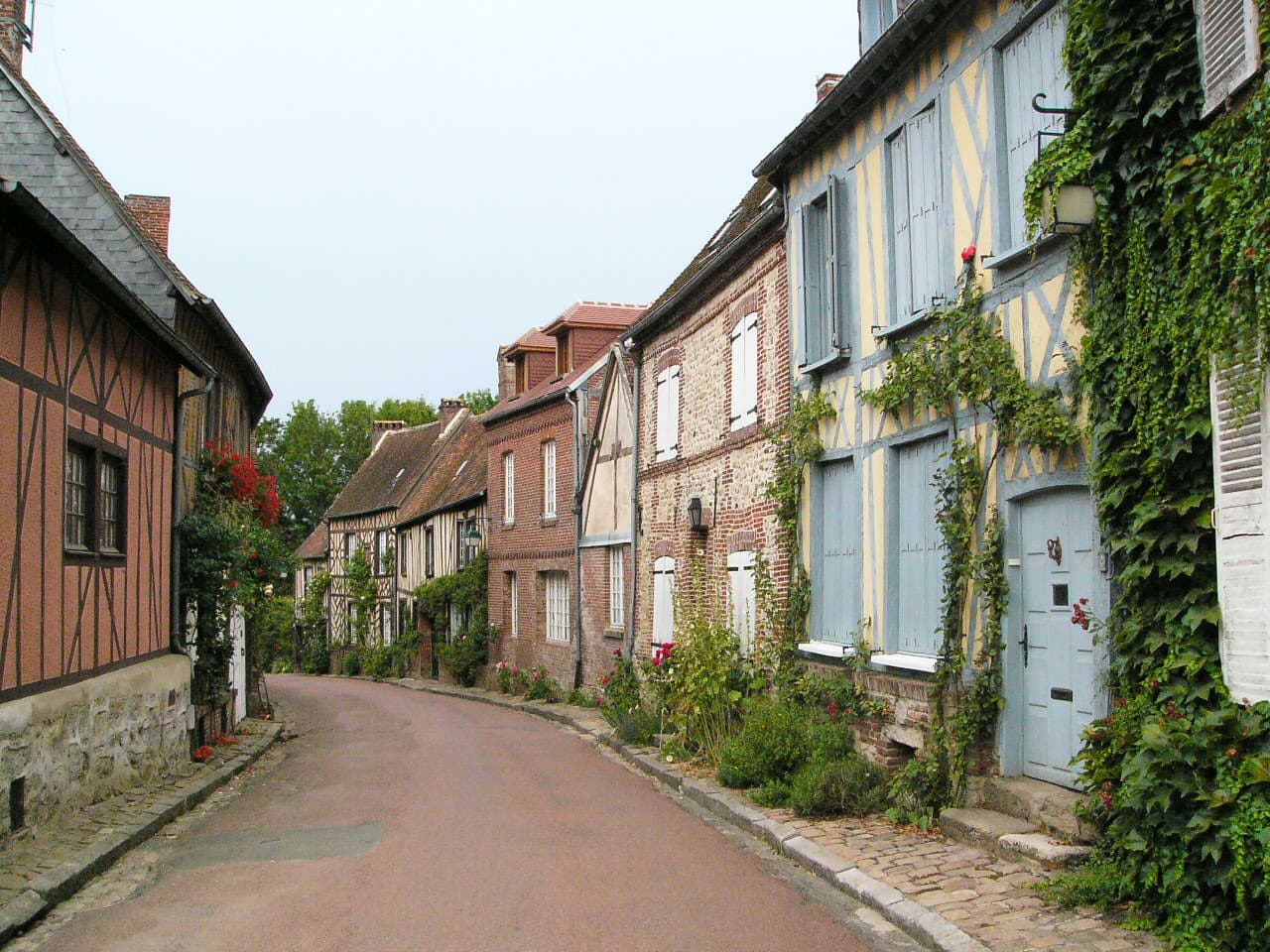 Claude Shoshany / CC BY-SA 3.0, via Wikimedia Commons
Self-guided audio walking tour of Gerberoy — GPS route, offline playback, story-driven narration in 32 languages.
“Where roses climb medieval walls and time slows to a whisper.”
Not the postcards. The stories even locals don't know — whispered in your ear, right where they happened.
Within the Jardin des Ifs, you can step inside a living, centuries-old sculpture.
The village's coat of arms has a surprising connection to its name, though the exact origin remains a bit of a puzzle.
One of Gerberoy's most historic streets carries a royal secret in its name.
Discover every secret of Gerberoy
Every address, every reveal in full — in your ear, right where it happened.
You pick your stops. You walk. The voice reveals what the others miss.


Your self-guided audio tour of Gerberoy is ready — pick your landmarks, choose your language, and start the moment you arrive.
BuyLume has a built-in augmented-reality guide. Hold your phone up and its camera shows the street ahead of you, with a glowing arrow laid over the real view that always points to your next stop — no map to puzzle over, no wrong turns. Like everything in Lume, it works fully offline.
Gerberoy, a designated 'Plus Beaux Village de France,' offers a step back in time, just 80 kilometers from Paris. This small village in the Oise department of Picardy is celebrated for its medieval character and a fairytale-like atmosphere. Its cobbled streets are lined with 17th and 18th-century houses, many half-timbered, adorned with an abundance of climbing roses, hydrangeas, and wisteria.
With fewer than 100 inhabitants, Gerberoy maintains a tranquil ambiance, feeling far removed from the bustle of modern life. The village's charm is so distinctive that it has inspired artists and continues to draw visitors seeking its picturesque views and serene gardens. It's a place where every corner offers a photo opportunity, and the scent of roses can literally intoxicate you in early summer.
Gerberoy's history stretches back over a thousand years, marked by a turbulent past as an important stronghold due to its elevated position. The first fortified castle was built in 923. It endured numerous sieges and assaults, frequently changing hands between the French and the English. Notable conflicts include the siege of 1078-79 between William the Conqueror and his son Robert Curthose, where William was wounded by his own son. During the Hundred Years' War, the English were defeated here in 1453.
After centuries of conflict, including the Wars of Religion, plague, and fires, Gerberoy went into decline and was largely abandoned by the 17th century. It remained a quiet, almost forgotten village until the early 20th century when it was rediscovered by post-impressionist painter Henri Le Sidaner. Le Sidaner, advised by sculptor Auguste Rodin, settled in Gerberoy in 1901 and was captivated by its beauty. He transformed the ruins of the old fortress into an Italian-style garden, which became a significant source of inspiration for his paintings.
Le Sidaner's passion for flowers was infectious; he encouraged villagers to plant climbing roses, a trend that led to Gerberoy becoming known as the 'village of a thousand rose bushes' or the 'cité des roses.' He also established the annual Rose Festival in 1928, an event that continues to draw thousands of visitors. This artistic intervention breathed new life into the medieval town, preserving its authenticity and transforming it into the enchanting floral destination it is today.
Wandering through Gerberoy's narrow, cobbled streets is an experience in itself, with 17th and 18th-century half-timbered and brick houses adorned with lively flowers. A key highlight is the Henri Le Sidaner Gardens, an Italianate-style terraced garden created by the painter on the ruins of the old fortress. These gardens, a classified Jardin Remarquable, feature various themed areas, white roses, and offer views over the village rooftops.
Another essential stop is the Jardin des Ifs, a historic garden known for its centuries-old topiary yews, including one so large you can stand inside it. The 11th-century Collégiale Saint-Pierre is a blend of Romanesque and Gothic architecture, rebuilt in the 15th century after destruction during the Hundred Years' War. Do not miss La Ruelle Saint-Amant, considered Gerberoy's most photogenic alley, leading to the striking blue cottage known as La Maison Bleue. Take a walk along the ramparts for panoramic views of the surrounding countryside.
The best time to experience Gerberoy's floral splendor is from late spring to the end of July, when the roses, hydrangeas, and wisteria are in full bloom. The village is particularly enchanting during the Rose Festival, held every first Sunday in June, a tradition started by Henri Le Sidaner in 1928. This event transforms the village into an open-air garden with rose growers, artisans, and musical entertainment. While summer is popular, visiting in September can offer a quieter experience with fewer tourists. Even in December, the village offers a unique, tranquil charm, though the floral displays will be absent.
Gerberoy is easily accessible, located approximately 80 kilometers from Paris and within a triangle formed by Beauvais, Rouen, and Amiens. While there are no hotels directly within the village, nearby accommodations are available. Parking within the village is prohibited during peak season; a free car park is available just outside the town, past a duck pond. The village is small and best explored on foot, allowing you to appreciate its cobbled streets and intricate details. There are no traffic lights, overhead wires, or large shops, contributing to its preserved, timeless atmosphere. Some establishments may not accept credit cards, so carrying some cash is advisable.
Gerberoy in Korean, in Chinese or in Hebrew — and 29 more languages, every stop narrated by a native voice. The widest language range of any self-guided audio tour.
Available in: