Tienda original de Amalia Erikson
Los distintivos bastones de caramelo rojos y blancos de Gränna, conocidos como 'polkagrisar', tienen un origen sorprendentemente resistente.
La historia completa se desbloquea en el tour
 Unknown author / Public domain, via Wikimedia Commons
Tour de audio autoguiado de Gränna — ruta GPS a pie, reproducción offline, narración en 32 idiomas.
“Donde la menta susurra desde piedras antiguas y un misterio polar perdura.”
No las postales. Las historias que ni los locales conocen — al oído, justo donde ocurrieron.
Los distintivos bastones de caramelo rojos y blancos de Gränna, conocidos como 'polkagrisar', tienen un origen sorprendentemente resistente.
Gränna es el origen inesperado de un ambicioso explorador polar cuya desafortunada expedición en globo al Polo Norte se convirtió en uno de los enigmas más fascinantes de la historia.
El segundo lago más grande de Suecia, que bordea Gränna, tiene una historia naval ligada a sus bosques de robles circundantes.
Descubre todos los secretos de Gränna
Cada dirección, cada revelación al completo — a tu oído, justo donde ocurrió.
Eliges tus paradas. Caminas. La voz te revela lo que los demás ignoran.


Tu tour de audioguía por Gränna te espera — elige tus lugares, tu idioma y empieza al llegar.
ComprarLume incluye una guía de realidad aumentada. Levanta el móvil y su cámara muestra la calle que tienes delante, con una flecha luminosa sobre la imagen real que siempre apunta a tu próxima parada — sin mapas que descifrar, sin giros equivocados. Como todo en Lume, funciona completamente sin conexión.
Gränna, un pintoresco pueblo en la orilla oriental del lago Vättern en el sur de Suecia, es un lugar donde la historia y la dulzura se entrelazan. Conocida mundialmente como el lugar de nacimiento de los distintivos caramelos de menta a rayas rojas y blancas, polkagrisar, la calle principal del pueblo, Brahegatan, es una animada procesión de talleres de dulces donde se puede presenciar la artesanía tradicional de primera mano. Pero Gränna ofrece más que solo delicias azucaradas; sus empinadas calles, atractivas casas de madera y las vistas panorámicas del lago Vättern y la isla de Visingsö crean un entorno idílico que cautiva a los visitantes.
Más allá de su renombre en confitería, Gränna es una puerta de entrada a fascinantes narrativas históricas y belleza natural. Es el punto de partida de los ferries a Visingsö, una isla tejida en la historia real sueca, y hogar del Museo Grenna, que narra la dramática y misteriosa expedición en globo ártico del hijo local Salomon August Andrée. Ya sea que le atraiga el aroma a menta, el encanto de un enigma polar o la tranquila belleza del paisaje sueco, Gränna ofrece una experiencia única e inolvidable.
La historia de Gränna comienza en 1652 cuando fue fundada por el Conde Per Brahe el Joven, una figura influyente que también gobernó la cercana isla de Visingsö. La ciudad fue originalmente llamada Brahe-Grenna, un testimonio del legado de su fundador. Durante el siglo XVII, la familia Brahe ostentó un poder significativo, y su influencia aún es visible en la región, particularmente con las ruinas del Castillo de Brahehus, construido para el Conde con vistas al lago Vättern.
Aunque la era del condado finalmente terminó, la afirmación más duradera de Gränna a la fama surgió a mediados del siglo XIX. En 1859, una viuda de 35 años llamada Amalia Erikson, que necesitaba mantenerse a sí misma y a su joven hija, recibió un permiso especial para abrir una confitería. Este fue un logro significativo en una época en la que a las mujeres generalmente no se les permitía poseer u operar negocios, lo que convirtió a Amalia en una de las empresarias pioneras de Suecia. Comenzó a hacer sus ahora célebres bastones de caramelo de menta a rayas rojas y blancas, conocidos como polkagrisar. Amalia mantuvo su receta en secreto, y su negocio floreció rápidamente, con viajeros entre Gotemburgo y Estocolmo haciendo un punto para detenerse en Gränna por sus deliciosas golosinas. La tradición que comenzó ha continuado durante más de 150 años, con numerosos talleres de dulces en Gränna que aún producen polkagrisar hoy en día.
Otro capítulo significativo en la historia de Gränna gira en torno a Salomon August Andrée, un ingeniero y explorador polar nacido en la localidad. En 1897, Andrée se embarcó en una atrevida y, en última instancia, trágica expedición para llegar al Polo Norte en globo de hidrógeno, acompañado por Nils Strindberg y Knut Frænkel. La expedición terminó en desastre, pereciendo los tres hombres. Sus restos y artefactos no fueron descubiertos hasta 1930 en Kvitøya, una remota isla glacial, dejando atrás un misterio fascinante que sigue cautivando a historiadores y aventureros por igual. El Museo Grenna dedica una parte significativa de sus exposiciones a este desafortunado viaje, preservando la historia de su ambición y trágico destino.
Comience su exploración de Gränna en Brahegatan, la calle principal del pueblo, donde el tentador aroma a menta llena el aire. Aquí, encontrará numerosos talleres de polkagris donde podrá observar a los fabricantes de dulces estirando, retorciendo y dando forma a mano a los distintivos bastones de caramelo rojos y blancos y, por supuesto, probar y comprar una variedad de sabores.
Para profundizar en la historia local y una extraordinaria historia de aventura, visite el Museo Grenna: Andréexpedition Polarcenter. Este museo está dedicado principalmente a la desafortunada expedición en globo al Polo Norte de 1897 de Salomon August Andrée, nativo de Gränna. Encontrará artefactos, fotografías y entradas de diario de la expedición, que ofrecen una mirada conmovedora a este misterio histórico. El museo también presenta exposiciones sobre la historia local, incluida la historia de Amalia Erikson y el polkagris.
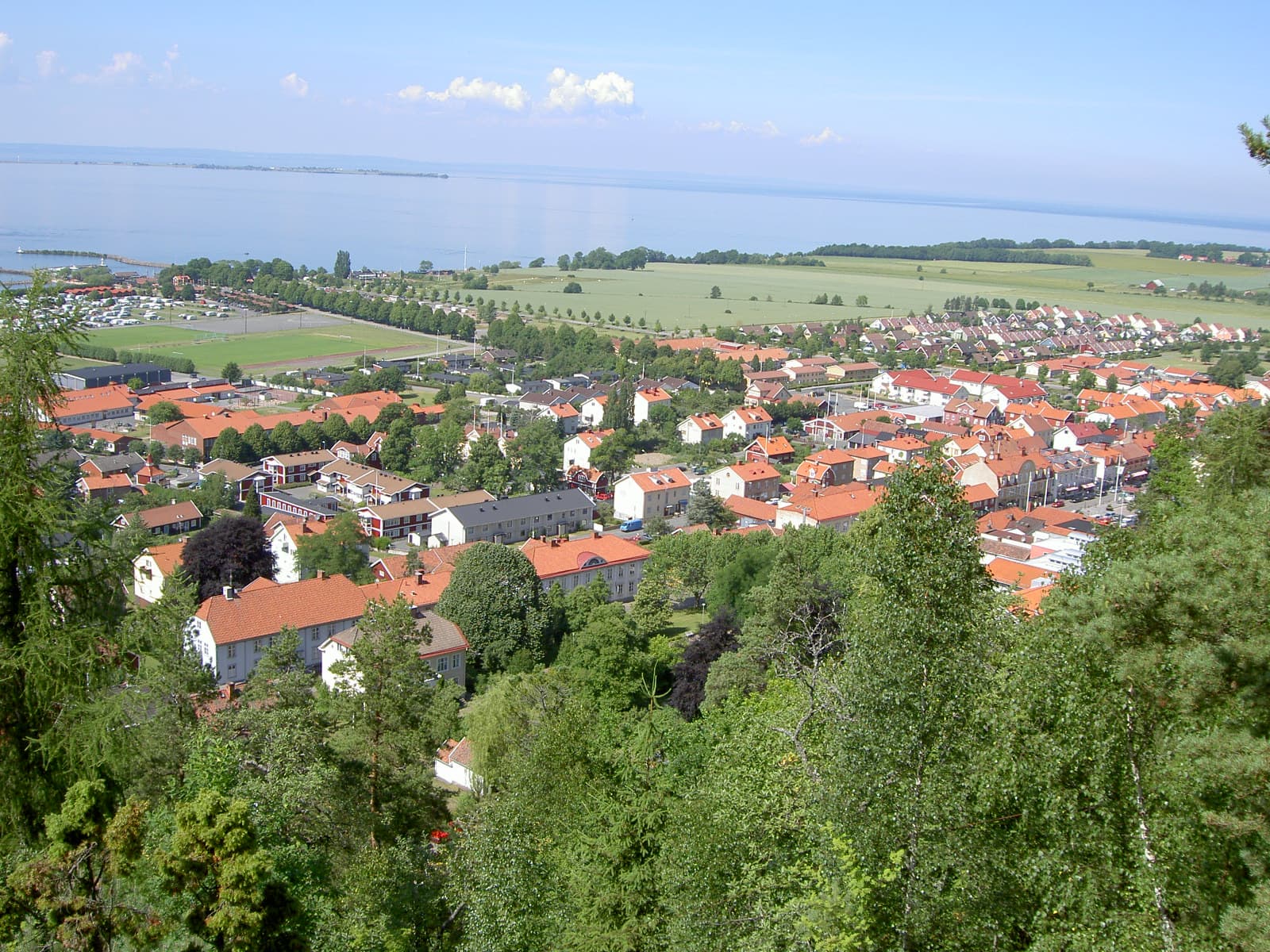
Ascenda la Montaña de Gränna (Grännaberget) para disfrutar de vistas panorámicas del lago Vättern, la isla de Visingsö y el paisaje circundante. Puede llegar a la cima mediante una empinada subida de 243 escalones desde cerca de la Iglesia de Gränna. Desde allí, un sendero adicional de 1,5 km conduce a la Torre Tegnér, que ofrece vistas aún más amplias.
Un corto viaje en ferry desde el puerto de Gränna le lleva a la isla de Visingsö, un destino rico en historia y belleza natural. Explore antiguas ruinas de castillos, históricos bosques de robles y disfrute de paseos en bicicleta o a pie por sus serenos paisajes. Los ferries salen con frecuencia durante todo el día.
Justo al sur de Gränna se encuentra el atractivo pueblo de Röttle, conocido por sus históricos molinos impulsados por el río Röttleån. Visite Rasmus kvarn para ver un molino en funcionamiento que aún muele harina utilizando energía hidroeléctrica en verano.
La mejor época para visitar Gränna es desde finales de primavera hasta principios de otoño, específicamente de mayo a septiembre. Durante estos meses, el clima es agradable, lo que lo hace ideal para actividades al aire libre alrededor del lago Vättern y para explorar las atracciones del pueblo. Las demostraciones de elaboración de dulces y las atracciones locales están completamente abiertas durante este período. Julio es típicamente el mes más cálido, con máximas promedio de alrededor de 21 °C (70 °F). Aunque los inviernos son fríos y nevados, con temperaturas que descienden hasta el punto de congelación, diciembre puede ofrecer un ambiente festivo único con los mercados navideños.
Gränna es de fácil acceso, situada en la autopista E4 justo al norte de Jönköping. Hay aparcamiento gratuito disponible en la plaza central, con límites de tiempo de 4 o 24 horas según la sección. Se pueden encontrar aparcamientos de pago adicionales, incluidas plazas para autocaravanas, cerca del puerto.
Los ferries a Visingsö salen cada hora del puerto de Gränna, y el viaje dura aproximadamente 25-30 minutos. Los billetes se pueden comprar en línea o en la Oficina del Puerto. Se recomienda reservar vehículos, especialmente durante la temporada alta.
Hay baños públicos disponibles en varios lugares de la ciudad, incluso cerca de la plaza central y la zona del puerto. Muchos cafés y restaurantes también ofrecen instalaciones para los clientes. El centro de la ciudad es transitable a pie, con sus atractivas calles de piedra, pero algunas zonas, como la Montaña de Gränna, implican subidas empinadas.
Gränna en coreano, en chino o en hebreo — y 29 idiomas más, cada parada narrada por una voz nativa. La mayor variedad de idiomas de cualquier audioguía autoguiada.
Disponible en: