Château de Hattonchâtel
The grand castle standing today is not quite as ancient as it first appears.
Full story unlocks in the tour
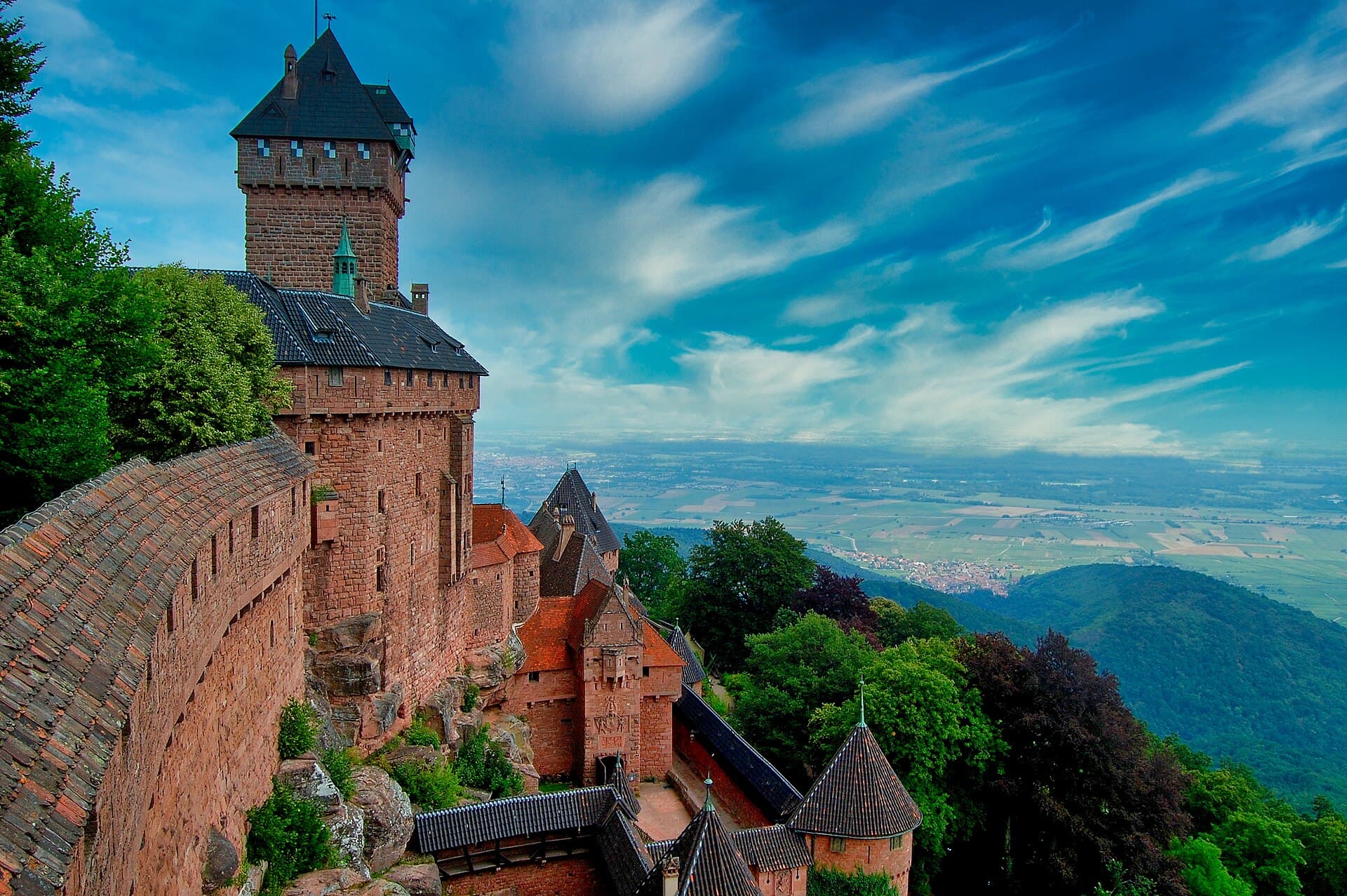 Drew de F Fawkes / cc by 2.0, via Wikimedia Commons
Self-guided audio walking tour of Hattonchâtel — GPS route, offline playback, story-driven narration in 32 languages.
“A Lorraine village, reborn from wartime devastation, where every stone tells a story.”
Not the postcards. The stories even locals don't know — whispered in your ear, right where they happened.
The grand castle standing today is not quite as ancient as it first appears.
Among the solemn figures of remembrance, a particular detail at the village's war memorial offers a unique perspective.
Within the village church rests a significant work of art that narrowly escaped destruction.
Discover every secret of Hattonchâtel
Every address, every reveal in full — in your ear, right where it happened.
You pick your stops. You walk. The voice reveals what the others miss.


Your self-guided audio tour of Hattonchâtel is ready — pick your landmarks, choose your language, and start the moment you arrive.
BuyLume has a built-in augmented-reality guide. Hold your phone up and its camera shows the street ahead of you, with a glowing arrow laid over the real view that always points to your next stop — no map to puzzle over, no wrong turns. Like everything in Lume, it works fully offline.
Hattonchâtel, a village in the Meuse department of France, offers a tangible connection to centuries of European history. Situated on a rocky promontory, it overlooks the Woëvre plain and Lake Madine, providing expansive views of the surrounding Lorraine countryside. The village, now part of the larger Vigneulles-lès-Hattonchâtel municipality, maintains a distinct identity, shaped by its strategic location and numerous periods of destruction and rebirth.
Walking through Hattonchâtel, you'll encounter a collection of architectural styles, from medieval remnants to Neo-Renaissance reconstructions, each telling a part of the village's enduring story. The village's resilience is evident in its meticulously restored buildings, a testament to both local determination and international philanthropy. Hattonchâtel invites visitors to explore its quiet streets, reflect on its past, and appreciate its unique character.
The origins of Hattonchâtel stretch back to the Carolingian era. Around 859 or 860, Hatton, the Bishop of Verdun, fortified this rocky promontory, establishing a castle that would eventually bear his name: Hattonchâtel, meaning 'Hatton's Castle'. This stronghold became the primary seat for the bishops of Verdun, who even minted their own coins here until 1546.
Throughout the Middle Ages, Hattonchâtel was a significant fortress. In the 10th century, Mathilde of Saxony, wife of Godfrey I of Verdun, famously defended the fortress against Lothair, the King of France, who had imprisoned her husband. However, the village faced numerous conflicts. In 1636, during the Thirty Years' War, retreating Swedish troops besieged and largely destroyed the town. The citadel was further dismantled in 1634 under the orders of Cardinal Richelieu.
The 20th century brought further devastation. During World War I, Hattonchâtel was severely affected and its medieval castle was destroyed in 1918. German troops occupied the village for nearly four years, capturing it on September 25, 1914. In September 1918, during the American offensive at St. Mihiel, the American 26th Division attacked and liberated the village. Following the war, Hattonchâtel underwent a remarkable reconstruction. Between 1923 and 1928, the Château de Hattonchâtel was entirely rebuilt in a Neo-Renaissance style, incorporating some 11th-century elements. This extensive work was financed by American benefactor Belle Skinner, who dedicated her efforts and resources to restoring the damaged village and its castle. The village of Hattonchâtel was an autonomous commune until 1973 when it was incorporated into Vigneulles-lès-Hattonchâtel.
Hattonchâtel offers several points of interest that reflect its long and complex history. The most prominent is the Château de Hattonchâtel, a Neo-Renaissance reconstruction that now operates as a private hotel, wedding, and conference center. While a private property, its exterior and commanding views over the Woëvre plain are notable.
Explore the Collegiate Church of Saint-Maur, which houses a significant 16th-century Passion altarpiece attributed to Ligier Richier. The church also features stained glass windows by Jacques Grüber. Adjacent to the church, you can see the remnants of a 14th-century cloister, with one gallery still standing.
Other historical structures include the Gothic house with arcades (Maison aux Arcades), which once served as a market, and the Maison à la Voûte (House with the Vault), dating from the 12th and 14th centuries. The village also has a wash-house, rebuilt in 1921, and a 16th-century calvary. Do not overlook the war memorial, a poignant reminder of the village's experience during World War I. For outdoor enthusiasts, the village is close to the Lorraine Regional Nature Park and Lake Madine, offering opportunities for hiking, water sports, and other activities.
The best times to visit Hattonchâtel, and France in general, are during spring (March to May) and autumn (September to November). These shoulder seasons typically offer pleasant weather and fewer crowds than the peak summer months. Summer (July and August) brings lively villages and festivals, but also higher temperatures, especially inland, and more tourists. Winter (November to March) can be cold and wet, with shorter hours for some attractions, but offers a quieter experience.
Hattonchâtel is located in the Meuse department of the Lorraine region, approximately 49 kilometers from Metz and 36 kilometers from Verdun. While the village itself is small, the nearby town of Vigneulles-lès-Hattonchâtel offers additional amenities. The Château de Hattonchâtel operates as a hotel, providing accommodation and dining. Several restaurants can be found within the vicinity, including options in Hattonchâtel, Heudicourt-sous-les-Côtes, and Vigneulles-lès-Hattonchâtel. For those interested in local produce, wine tasting events can be arranged at the Château.
The surrounding area, including the Lorraine Regional Nature Park and Lake Madine, provides opportunities for outdoor activities like hiking, cycling, and water sports. Consider renting a car for flexibility in exploring the region. The closest major cities, Metz, Nancy, and Verdun, are easily accessible for day trips and offer further historical and cultural attractions.
Hattonchâtel in Korean, in Chinese or in Hebrew — and 29 more languages, every stop narrated by a native voice. The widest language range of any self-guided audio tour.
Available in: