École élémentaire de Holly Springs
Avant que ce sol ne nourrisse de jeunes esprits, il a abrité l'essence même de l'identité de la ville.
L'histoire complète se débloque dans le tour
 lucianvenutian / CC BY-SA 2.0, via Wikimedia Commons
Visite audio autoguidée de Holly Springs — parcours GPS à pied, lecture hors ligne, narration en 32 langues.
“Là où les murmures d'une ancienne source rencontrent le rythme animé d'une ville en pleine croissance.”
Pas les cartes postales. Les histoires que même les habitants ignorent — soufflées à l'oreille, là où elles se sont passées.
Avant que ce sol ne nourrisse de jeunes esprits, il a abrité l'essence même de l'identité de la ville.
Parmi les marqueurs silencieux, une pierre évoque une tristesse du XIXe siècle qui a balayé la communauté.
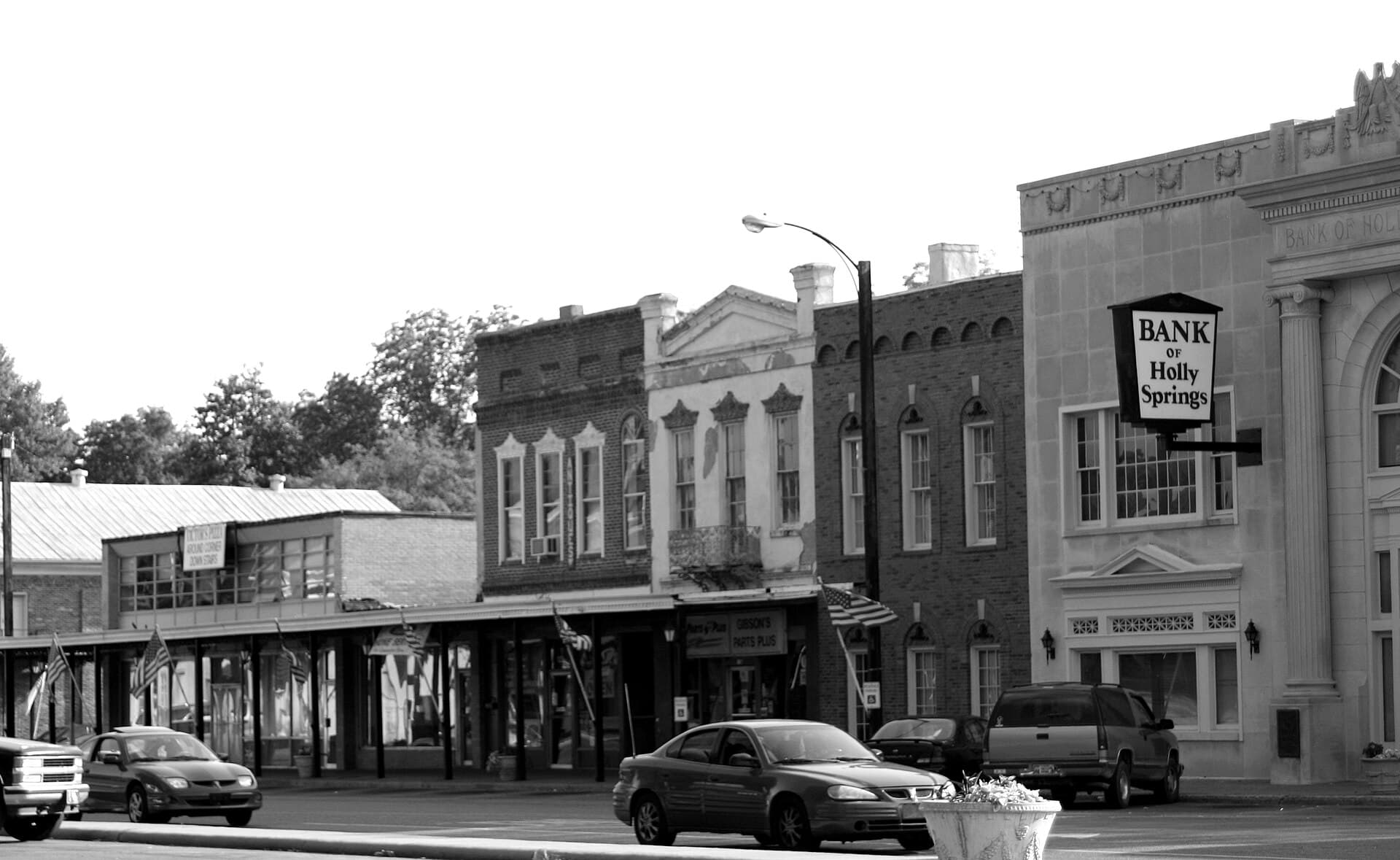
Observez les anciennes façades en briques du centre-ville ; elles portent la signature subtile et texturée d'un artisanat local disparu.
Découvrez tous les secrets de Holly Springs
Chaque adresse, chaque révélation en entier — dans ton oreille, là où elle s'est passée.
Tu choisis tes lieux. Tu marches. La voix te révèle ce que les autres ignorent.

Votre visite audioguidée de Holly Springs vous attend — choisissez vos lieux, votre langue, et lancez-vous dès votre arrivée.
AcheterHolly Springs, en Caroline du Nord, présente une fusion captivante de grâce sudiste et de vitalité contemporaine. Ce qui a commencé comme une modeste colonie autour d'un groupe de sources naturelles et de houx est devenu une communauté florissante. Promenez-vous dans son centre-ville historique, où des édifices du XIXe siècle soigneusement préservés abritent désormais des boutiques et des restaurants modernes, et vous sentirez les couches du temps qui ont façonné cet endroit. Le dévouement de la ville à son patrimoine est évident dans son architecture et les récits gravés dans ses paysages urbains.
Au-delà de son noyau historique, Holly Springs adopte une philosophie tournée vers l'avenir, avec des espaces verts, des équipements familiaux et une culture locale florissante. C'est un lieu où le passé est honoré, mais non stagnant, évoluant continuellement tout en conservant son caractère distinctif. Cet équilibre fait de Holly Springs une destination intrigante pour ceux qui recherchent à la fois des racines et du progrès.
L'histoire de Holly Springs commence non par une grande proclamation, mais par la simple générosité de la nature. La région, marquée par ses nombreuses sources naturelles et une abondance de houx, a attiré les premiers colons vers ce qui faisait alors partie du comté de Wake. À la fin des années 1700, une petite communauté agricole s'était enracinée, soutenue par la terre fertile et l'eau accessible. Les sources elles-mêmes sont devenues un point focal, un lieu de rassemblement qui a défini informellement la communauté naissante.
Le milieu du XIXe siècle a apporté un développement significatif. En 1845, l'église baptiste de Holly Springs a été établie, et en 1853, l'Académie de Holly Springs a ouvert ses portes, signalant un engagement croissant envers l'infrastructure communautaire et l'éducation. Ces institutions ont servi d'éléments fondamentaux pour la population en expansion. Cependant, le véritable catalyseur du développement formel de la ville est arrivé avec le cheval de fer. Dans les années 1870, le chemin de fer Raleigh and Augusta Air Line a posé des voies dans la région. La construction d'un dépôt ferroviaire à environ un mile au nord de la colonie de printemps d'origine s'est avérée être un moment charnière. Ce nouveau centre de transport a effectivement redirigé le centre commercial et social de la ville, attirant entreprises et résidents vers le chemin de fer.
Avec le chemin de fer est venue la reconnaissance officielle. En 1877, la ville de Holly Springs a été officiellement incorporée. Cet acte a inauguré une nouvelle ère d'autonomie et de croissance organisée. La fin du XIXe et le début du XXe siècle ont vu Holly Springs prospérer en tant que centre agricole, particulièrement reconnu pour sa production de tabac et de coton. Les briqueteries locales ont également prospéré, contribuant à la construction de nombreux bâtiments du centre-ville qui subsistent encore aujourd'hui. La Maison Leslie-Alford-Mims, une grande résidence construite en 1840, témoigne de cette période de prospérité, servant même un temps de pension de famille, reflétant l'esprit accueillant de la ville.
Le XXe siècle a apporté à la fois des défis et des transformations. Comme de nombreuses villes du Sud, Holly Springs a traversé des changements économiques et sociaux. Bien que ses fondations agricoles soient restées solides, la ville a commencé à se diversifier. La dernière partie du siècle et le début du XXIe siècle ont été témoins d'une croissance démographique et d'une modernisation considérables, alors que Holly Springs est devenue une zone résidentielle désirable au sein de la grande région métropolitaine de Raleigh. Malgré cette expansion rapide, la ville a fait des efforts délibérés pour préserver son noyau historique, veillant à ce que les échos de son passé continuent de résonner aux côtés de ses avancées contemporaines.
Commencez votre exploration au centre-ville de Holly Springs, où l'architecture durable se mêle aux commodités contemporaines. La Maison Leslie-Alford-Mims (110 Avent Ferry Rd) offre une fenêtre sur la vie d'avant-guerre et l'opulence précoce de la ville. Sa façade majestueuse et ses détails complexes en disent long sur l'époque. À proximité, le Centre culturel de Holly Springs (300 W Ballentine St) fonctionne comme un noyau pour les arts et les rassemblements communautaires, présentant souvent des expositions qui approfondissent l'histoire locale.
Pour un lien avec la genèse de la ville, recherchez l'emplacement approximatif des sources originales, commémoré près de l'école élémentaire de Holly Springs (1010 Holly Springs Rd). Bien que les sources elles-mêmes ne soient plus une caractéristique proéminente, le site marque la raison même de l'existence de la ville. Prenez un moment pour vous promener dans le cimetière de l'église baptiste de Holly Springs (400 W Holly Springs Rd), où les pierres tombales patinées racontent des histoires de générations passées, y compris certains des plus anciens résidents de la ville. Enfin, pour un aperçu du caractère local, explorez les boutiques et les restaurants qui bordent Main Street, beaucoup étant logés dans des bâtiments historiques magnifiquement entretenus.
Le printemps et l'automne offrent le temps le plus agréable pour traverser Holly Springs à pied, avec des températures confortables et des paysages verdoyants. Le printemps fait éclore les fleurs et la verdure animée, tandis que l'automne offre un air vif et un feuillage coloré. L'été peut être chaud et humide, mais les attractions intérieures et les parcs ombragés offrent toujours des expériences agréables. Les hivers sont généralement doux, permettant des visites toute l l'année, bien que certaines activités de plein air puissent être limitées.
Holly Springs est facilement accessible en voiture, située juste à côté de l'US-1 et de la NC-55. Le stationnement est généralement disponible dans les parkings désignés et le long de la rue dans le centre-ville. La ville est praticable à pied, en particulier son centre historique, mais une voiture est conseillée pour atteindre les attractions plus éloignées. Les options de transport en commun à Holly Springs sont limitées, mais des services de bus régionaux relient les villes voisines. Des toilettes sont disponibles dans les installations publiques comme le Centre culturel et diverses entreprises du centre-ville. De nombreux établissements locaux accueillent les familles, et plusieurs parcs offrent des équipements pour les enfants. Assurez-vous de vérifier les heures d'ouverture des attractions spécifiques avant votre visite, car elles peuvent varier.
Holly Springs en coréen, en chinois ou en hébreu — et dans 29 autres langues, chaque étape narrée par une voix native. La plus large gamme de langues de tous les audioguides autoguidés.
Disponible en :