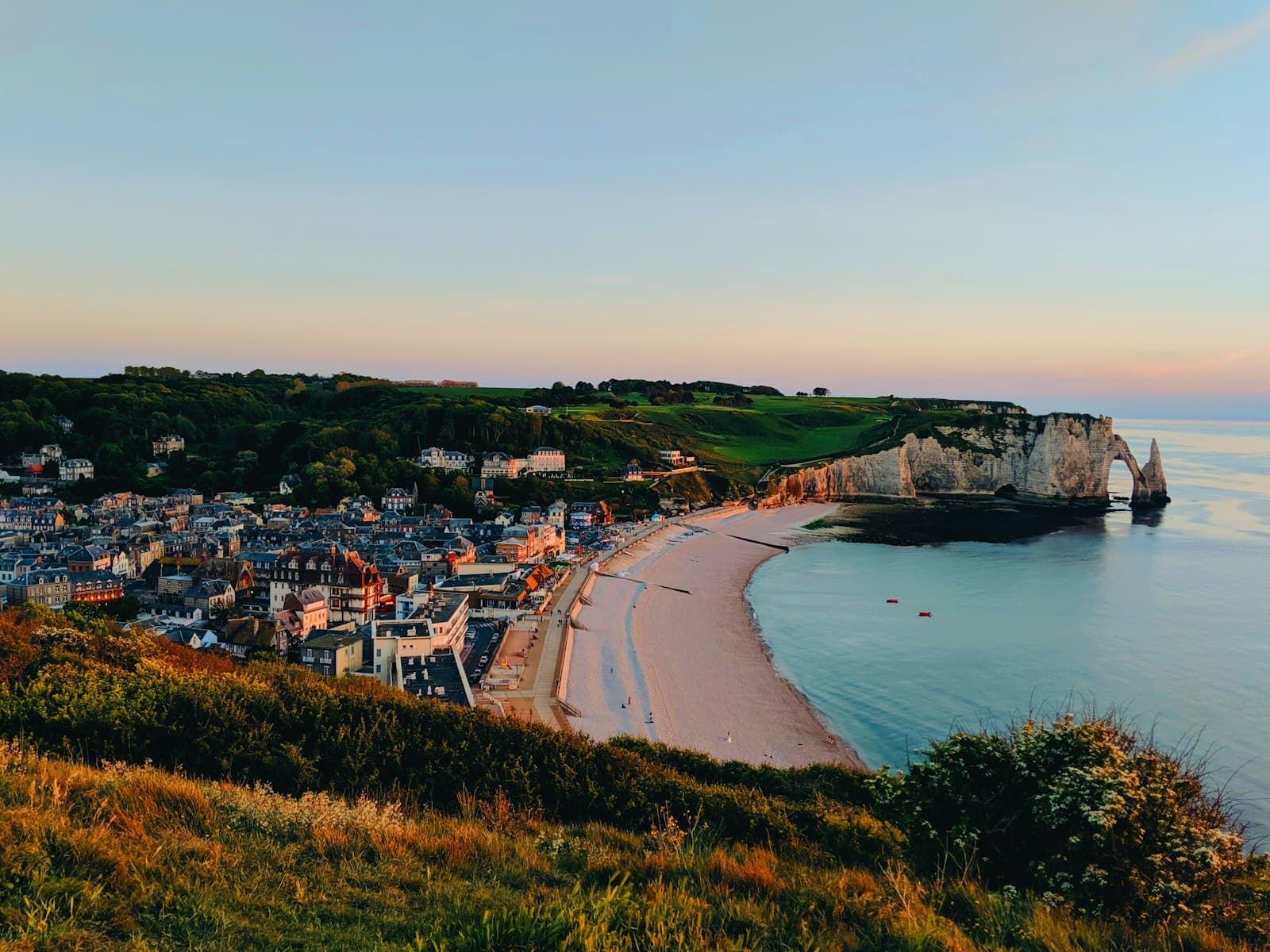
Île-aux-Moines, France--Pinpin 12:30, 15 August 2006 (UTC) / CC BY-SA 3.0, via Wikimedia Commons
FR

Île-aux-Moines

Self-guided audio walking tour of Île-aux-Moines — GPS route, offline playback, story-driven narration in 32 languages.

Where time slows, and the sea murmurs ancient secrets.

The secrets of Île-aux-Moines

Île-aux-Moines, as no one tells it.

Not the postcards. The stories even locals don't know — whispered in your ear, right where they happened.

3 secrets below. Many more wait inside the tour.
Kergonan Cromlech

Picture a horseshoe of stones, not just any stones, but megaliths that have endured for millennia. Yet, what distinguishes one particular stone, 'Le Moine,' so profoundly?

Full story unlocks in the tour
Between Île-aux-Moines and Île d'Arz

These two islands in the Gulf of Morbihan are separated by a channel. However, lore suggests they were once joined, and a broken heart bears the blame.

Full story unlocks in the tour
The island's original name

The island is known as 'Île-aux-Moines' in French, meaning 'Island of the Monks.' But its Breton name, 'Izenah,' offers a different, perhaps more practical, insight into its past.

Full story unlocks in the tour
The full tour

Discover every secret of Île-aux-Moines

Every address, every reveal in full — in your ear, right where it happened.

Get the key to Île-aux-Moines

You pick your stops. You walk. The voice reveals what the others miss.

Choose your time

How long do you have in Île-aux-Moines?

Your self-guided audio tour of Île-aux-Moines is ready — pick your landmarks, choose your language, and start the moment you arrive.

Buy
About Île-aux-Moines

The story of Île-aux-Moines

Île-aux-Moines, often called the 'Pearl of the Gulf of Morbihan,' stands as the largest of the 42 islands scattered across this distinctive inland sea in Brittany, France. Shaped like an irregular cross, the island extends approximately 7 kilometers long and 3.5 kilometers wide, with no point more than 450 meters from the sea. Its gentle microclimate cultivates an abundance of camellias, mimosas, palm trees, and fuchsias, lending it a verdant, exotic character. The island's tranquil, calm atmosphere, coupled with its car-free policy, makes it a cherished destination for those seeking quietude and a more deliberate pace of life.

Life on Île-aux-Moines centers on its natural splendor and enduring heritage. Visitors can wander its varied landscapes, from heather-covered hills and small woods with evocative names like Bois d'Amour (Wood of Love) to inviting beaches and coves. The island's allure is further enhanced by its traditional Breton houses, often adorned with flowers, and its well-preserved megalithic sites. Whether one chooses to traverse its paths on foot or cycle its many routes, Île-aux-Moines offers an enchanting escape where the fragrance of pine mingles with the sea air.

History

From Neolithic Settlements to Monastic Gifts

Île-aux-Moines possesses a history reaching back to the Neolithic period, with evidence of early human habitation found in its numerous dolmens and megalithic remains. Places like the Kergonan cromlech, a horseshoe formation of 24 standing stones, and the Penhap dolmen, a well-preserved burial chamber, attest to the island's ancient past. These structures, some dating between 3500 and 3000 BC, offer a tangible link to the island's earliest inhabitants, though the exact purpose of many of these megaliths remains a subject of archaeological discussion.

A Royal Grant and a Granary Island

The island's name, 'Île-aux-Moines' (Island of the Monks), stems from a significant historical event in the Middle Ages. In 854, Erispoë, King of Brittany, bestowed the island upon the Abbey of Saint-Sauveur de Redon. Despite this monastic connection, historical records suggest the monks did not extensively settle the island. Instead, Île-aux-Moines primarily served as a crucial granary, storing grains such as beans and peas. The island's Breton name, 'Izenah' (from 'Iniz Menah'), also reflects this historical function.

Becoming a Commune and Modern Development

In 1792, during the French Revolution, Île-aux-Moines was officially recognized as a commune, initially bearing the temporary name 'Isle-du-Morbihan.' The island's population, known as 'Ilois,' has historically comprised sailors, fishermen, and farmers. Over the centuries, the island has gradually shifted towards tourism, particularly in the 20th century. In 1924, the first 'Queen of the Islands' was elected, and efforts began to improve infrastructure, such as widening the landing slipway at Toulindac to accommodate the increasing number of passengers and goods. Today, while embracing its role as a tourist destination, the islanders remain dedicated to safeguarding their historical and natural heritage.

What to see

Île-aux-Moines presents a variety of sights, best explored on foot or by bicycle due to the absence of cars. Begin in the main village, a delightful area with flower-lined streets, traditional fishermen's houses, and a few shops and restaurants. The island is known for its megalithic sites, including the Kergonan Cromlech, a horseshoe-shaped alignment of 24 standing stones, and the Penhap Dolmen towards the southern tip. These ancient structures offer a glimpse into the island's Neolithic past.

Explore the island's varied landscapes along its many paths. Discover inviting beaches such as Grande Plage near the port, Plage du Vran for a secluded spot, or Goret Beach on the western coast. The island's cross shape provides numerous points offering sweeping views, including Pointe du Trec'h to the north, Pointe de Nioul to the south, and Pointe de Brouel to the east. Do not overlook the island's wooded areas, often referred to by poetic names like Bois d'Amour, Bois des Soupirs, and Bois des Regrets. For a distinctive experience, consider visiting an oyster farm for a tasting.

When to visit

The ideal time to visit Île-aux-Moines is during the spring (March to May) and autumn (September to October) for pleasant weather and fewer visitors. In spring, wildflowers bloom, and temperatures range from 10°C to 18°C, perfect for cycling and walking. Autumn offers mild temperatures between 13°C and 20°C, with landscapes turning golden. Summer (June to August) is the busiest season, with warm temperatures (20°C to 27°C) suitable for swimming and a lively atmosphere, though it can be more crowded. July typically brings mild, breezy weather with temperatures between 15°C and 23°C.

Practical

Access to Île-aux-Moines is primarily by ferry, as automobiles are not permitted on the island. The most frequent departures are from Port-Blanc in Baden, with a brief 5-minute crossing. Other departure points include Larmor-Baden and Kerners on the Rhuys peninsula, offering slightly longer, narrated journeys. Ferry tickets can be purchased at Port-Blanc or on board (off-season). To avoid crowds, especially in summer, plan your visit for weekdays and off-peak hours (avoiding 9-11 AM and 5-7 PM).

Once on the island, the best ways to traverse are on foot or by bicycle. Bike rental shops are available at the port. While there are no dedicated cycle lanes, bicycles are the predominant mode of transport. Public restrooms are available in the village square. For dining, the island offers a selection of restaurants and cafés, many specializing in seafood, with some providing sea views. Accommodation options include hotels, guesthouses, campsites, and vacation rentals.

Good to know
How do I get to Île-aux-Moines?
The easiest way to reach Île-aux-Moines is by a 5-minute ferry ride from Port-Blanc in Baden. Ferries operate frequently throughout the year, with increased departures in summer. Other options include longer crossings from Larmor-Baden or Kerners.
Are cars allowed on Île-aux-Moines?
No, cars are not permitted on Île-aux-Moines, which contributes to its tranquil atmosphere. The island is best explored on foot or by bicycle.
What are the main attractions on Île-aux-Moines?
Key attractions include the megalithic sites like the Kergonan Cromlech and Penhap Dolmen, charming village streets, various beaches (Grande Plage, Plage du Vran, Goret Beach), and scenic viewpoints such as Pointe du Trec'h and Pointe de Nioul.
Can I rent bikes on the island?
Yes, bicycles can be rented upon arrival at the jetty in the main village. This is a popular way to explore the island's many paths.
What kind of food can I expect on Île-aux-Moines?
The island's restaurants and cafés often specialize in fresh seafood, reflecting its coastal location. You can find traditional French cuisine, often with a focus on local ingredients.
What is the population of Île-aux-Moines?
As of January 1, 2024, the population of Île-aux-Moines is 646 inhabitants. The estimated population for 2023 was 630.
On the map
Île-aux-Moines
€9.90
No booking · activate anytime · 12h to walk it
Load on Wi-Fi, then walk offline — no roaming abroad
Get the key to Île-aux-Moines