The Name's Origin
Jastrzębie-Zdrój's name hints at a predatory bird and a natural phenomenon. But what's the legend behind the 'hawk'?
Full story unlocks in the tour
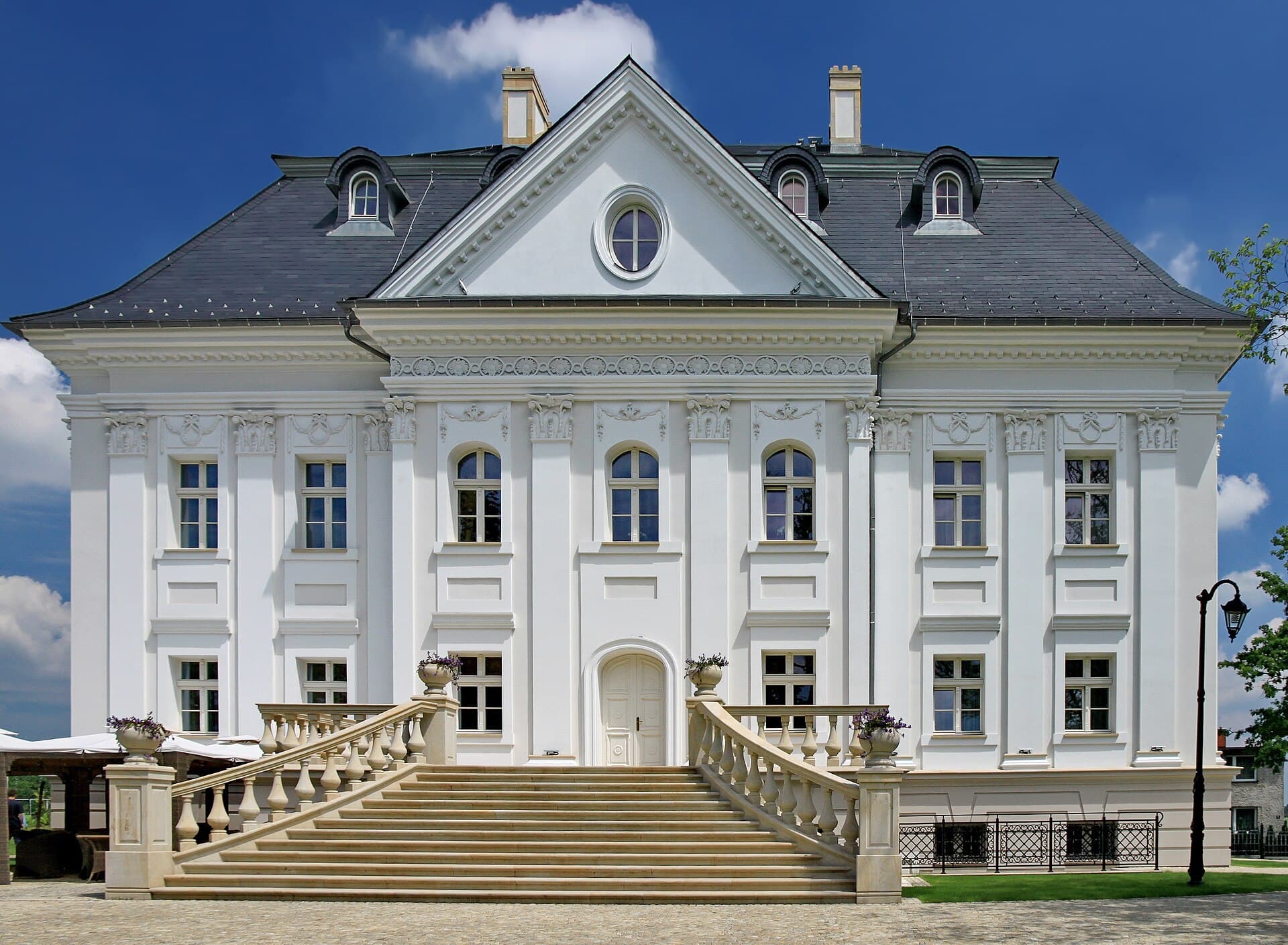 Hons084 / CC BY-SA 3.0 pl, via Wikimedia Commons
Self-guided audio walking tour of Jastrzębie-Zdrój — GPS route, offline playback, story-driven narration in 32 languages.
“Where healing waters met the deep earth, and history was forged anew.”
Not the postcards. The stories even locals don't know — whispered in your ear, right where they happened.
Jastrzębie-Zdrój's name hints at a predatory bird and a natural phenomenon. But what's the legend behind the 'hawk'?
This city was once a renowned European health resort. What caused its dramatic transformation into a major industrial center?
Beyond its spa and mining heritage, Jastrzębie-Zdrój played a pivotal role in modern Polish history. What significant event unfolded here in 1980?
Discover every secret of Jastrzębie-Zdrój
Every address, every reveal in full — in your ear, right where it happened.
You pick your stops. You walk. The voice reveals what the others miss.
Your self-guided audio tour of Jastrzębie-Zdrój is ready — pick your landmarks, choose your language, and start the moment you arrive.
BuyLume has a built-in augmented-reality guide. Hold your phone up and its camera shows the street ahead of you, with a glowing arrow laid over the real view that always points to your next stop — no map to puzzle over, no wrong turns. Like everything in Lume, it works fully offline.
Jastrzębie-Zdrój, a city in southern Poland, presents a compelling narrative of transformation. Once a celebrated health resort known for its therapeutic iodine and bromine springs, its destiny dramatically shifted with the discovery of extensive coking coal deposits in the mid-20th century. This transition from a tranquil spa village to a bustling industrial center, granted city rights in 1963, is etched into its very fabric.
Today, Jastrzębie-Zdrój offers a unique blend of its former spa elegance and its industrial heritage. Visitors can explore the remnants of its health resort past, including the historic Spa Park and its architectural marvels, while also delving into the profound impact of coal mining on the region. The city also holds a significant place in modern Polish history as one of the key sites of workers' protests in the early 1980s, which contributed to the rise of the Solidarity movement.
Its name, a combination of the Polish words for 'hawk' (jastrząb) and 'spa' or 'spring' (zdrój), hints at its dual identity and a legendary past. Jastrzębie-Zdrój serves as a testament to resilience and change, inviting exploration of its layered history and the forces that shaped it.
The earliest written documentation relating to the area of Jastrzębie-Zdrój dates back to around 1305. Some historians believe it was established during colonization under Magdeburg Law, possibly known as Hermansdorf (Herman's village) for a time. By the second half of the 15th century, the village was referred to as Jastrzębie. The name, meaning 'hawk' in Polish, is linked to a local legend of a 'Black Knight' who preyed on merchant caravans passing through the Moravian Gate.
In the mid-19th century, during trial excavations for hard coal between 1858 and 1860, natural springs rich in iodine and bromine were discovered. Recognizing their therapeutic potential, Count Königsdorff acquired the land in 1860 and proposed the construction of a health resort. This led to the opening of the Bad Königsdorff-Jastrzemb health resort in 1862, which quickly became one of Europe's most popular and prestigious health destinations. A Polish doctor, Mikołaj Witczak, further enhanced its reputation and facilities after taking over in 1896.
Following World War I, a plebiscite in Silesia in 1921 saw approximately 85% of Jastrzębie-Zdrój's inhabitants vote to join Poland, a decision supported by their participation in the Silesian uprisings. The town officially became part of Poland in 1922, and its Polish name was restored. However, the spa's golden age began to wane in the 1950s and 60s with the discovery and intensive exploitation of extensive coking coal deposits. Within just 12 years, five coal mines were established, fundamentally transforming the town's character. This industrial expansion accelerated the granting of city rights to Jastrzębie-Zdrój on June 30, 1963, when its population was only around 3,000.
Jastrzębie-Zdrój gained further national significance in the early 1980s as a key center for workers' protests. On September 3, 1980, the historic 'Jastrzębie Agreement' was signed here, a pivotal moment that paved the way for political and economic changes in Poland and contributed to the establishment of the Solidarity trade union. Today, Jastrzębie-Zdrój continues to evolve, balancing its historical layers with modern development, particularly in creating conditions for entrepreneurs and fostering a lively community life.
Begin your exploration in the Spa Park (Park Zdrojowy), the historical heart of the former health resort. Here, you can still experience the charm of the old spa through preserved monuments like the Spa House, Łazienki II, and the brine inhalatorium, where medicinal brines are sprayed near an illuminated fountain. The park also houses the City Museum and offers numerous walking paths.
Discover the city's industrial legacy at the Carbonarium, a modern exhibition that tells the story of coal from its cosmic origins to its impact on Jastrzębie-Zdrój's development. For a leisurely stroll, the pedestrian street on 1 Maja (First of May Street) was once the main spa promenade and is now lined with cafes, restaurants, and confectioneries. It also features an outdoor piano and the Bell Gallery, a vast collection of bells from around the world.
Another green space for relaxation is the Park at Żeromskiego Street, a smaller, more intimate alternative to the Spa Park, complete with an outdoor gym, benches, paths, and a pond with a charming bridge. For family-friendly activities, the Sunday Leisure Centre (OWN - Ośrodek Wypoczynku Niedzielnego) offers a graduation tower, a water playground, and a scenic park with a mini-stage. The city also provides year-round active options like the Jastor ice rink and various sports facilities.
The most pleasant times to visit Jastrzębie-Zdrój for general outdoor activities are typically from mid-June to late August, with a peak in the second week of August. During these summer months, temperatures are warm, averaging around 25-26°C (77-79°F) in July and August, and there are more hours of sunshine. Late spring (May-June) and early autumn (September-October) also offer comfortable weather with milder temperatures and fewer crowds, making them ideal for sightseeing and walking tours. July is generally the wettest month, while December is the driest.
Jastrzębie-Zdrój is located in the Silesian Voivodeship in southern Poland. The local currency is the Polish Złoty (PLN). Polish is the official language, though English may be understood in tourist areas. The city is well-connected within the Silesian region. Accommodation options include hotels like Hotel Pałac Borynia and Kompleks Dąbrówka, as well as various apartments and guesthouses. Dining ranges from traditional Polish cuisine, with places like 'Restauracja Konsum' recommended for its hearty dishes, to Italian pizzerias. For local events and cultural happenings, check the city's official website or local event listings, as there are often concerts, workshops, and festivals throughout the year.
Jastrzębie-Zdrój in Korean, in Chinese or in Hebrew — and 29 more languages, every stop narrated by a native voice. The widest language range of any self-guided audio tour.
Available in: