The French Watchtower
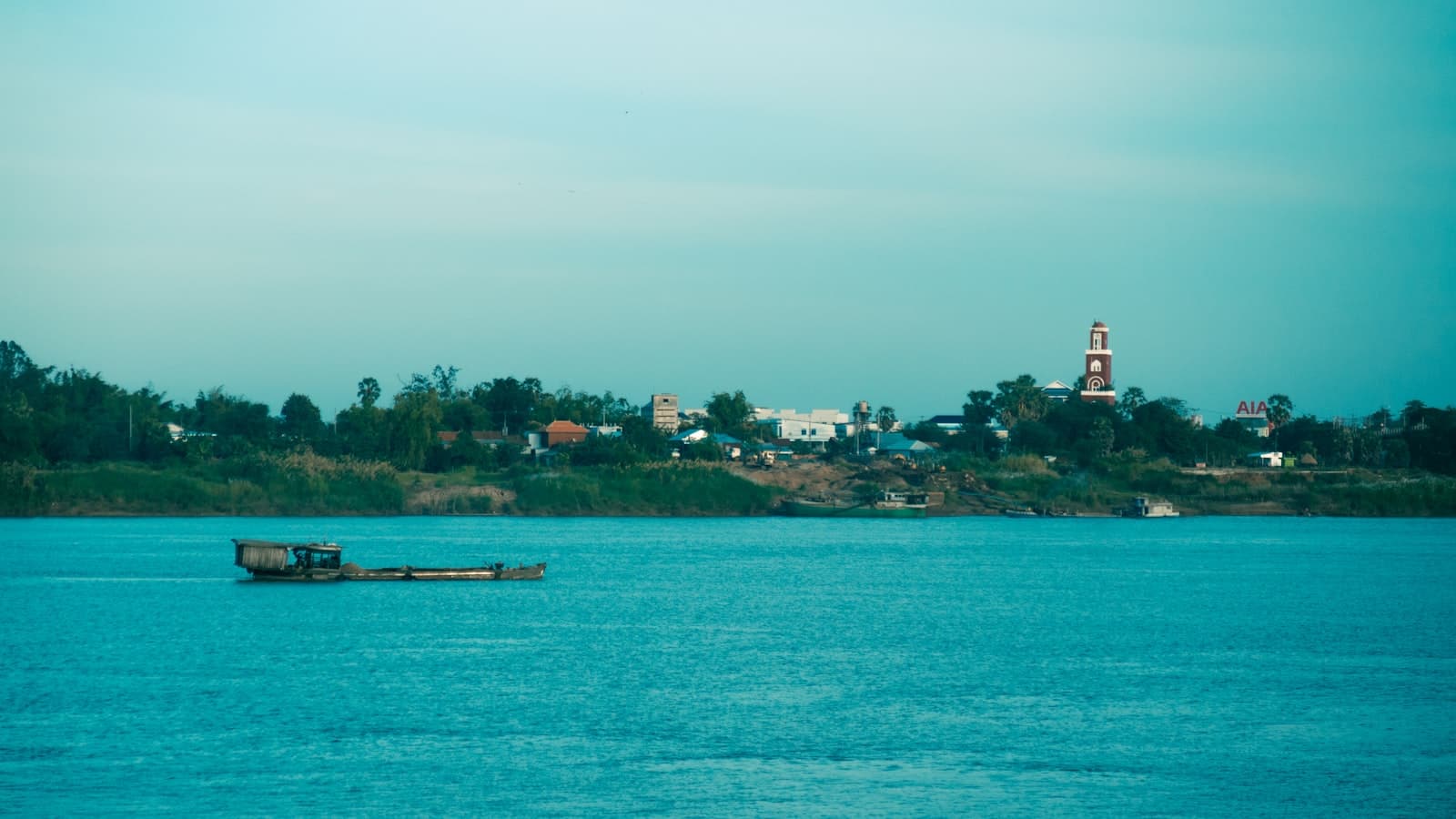
This isn't just an old tower by the river; it once played a crucial role in safeguarding Cambodia's colonial-era wealth.
Full story unlocks in the tour
 BluesyPete / CC BY-SA 3.0, via Wikimedia Commons
Self-guided audio walking tour of Kampong Cham — GPS route, offline playback, story-driven narration in 32 languages.
“Where the Mekong's rhythm meets colonial echoes and ancient whispers.”
Not the postcards. The stories even locals don't know — whispered in your ear, right where they happened.
This isn't just an old tower by the river; it once played a crucial role in safeguarding Cambodia's colonial-era wealth.
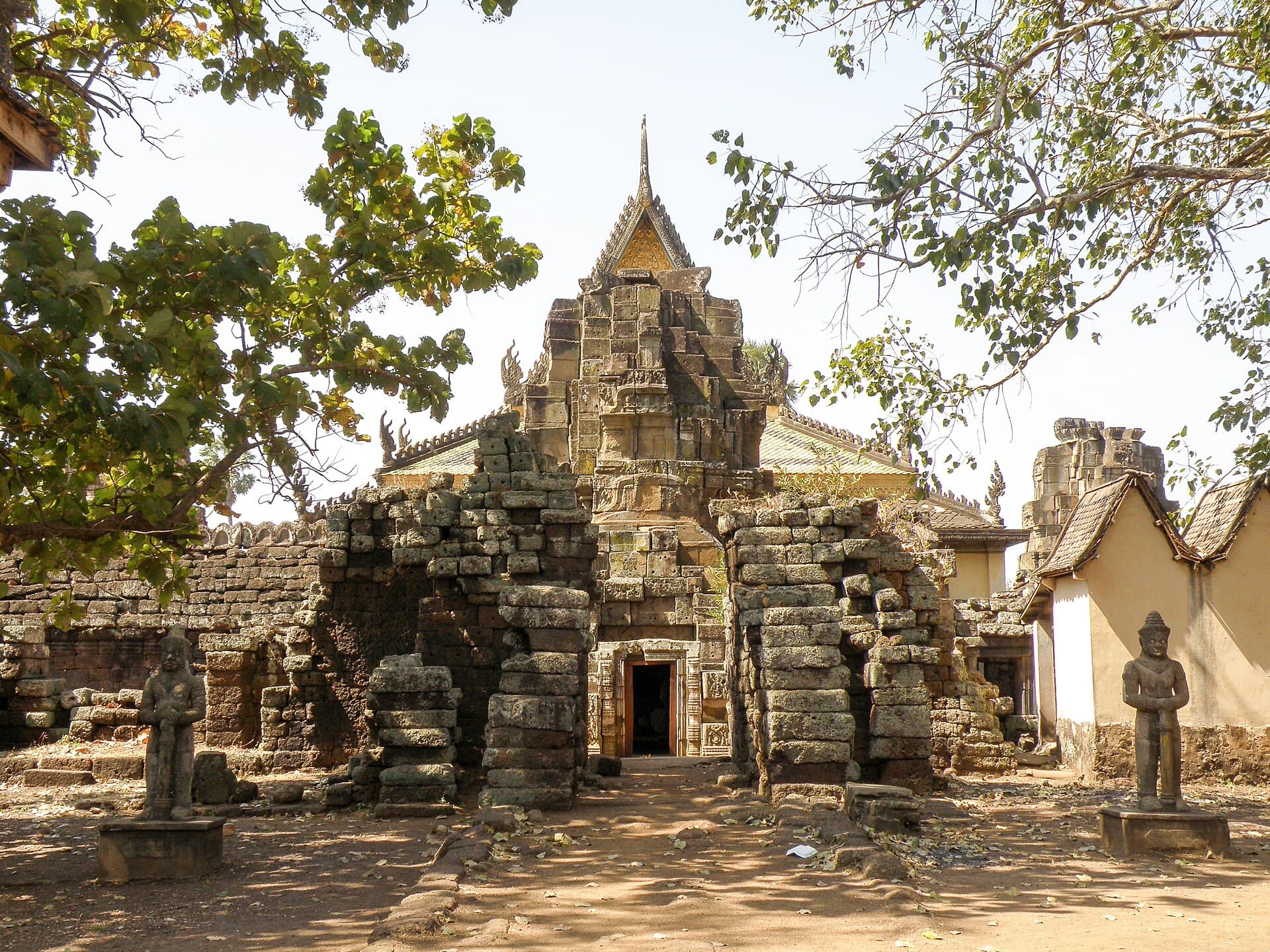
Within the ancient walls of this 11th-century temple, a lively, contemporary Buddhist pagoda thrives.
Imagine a bridge that vanishes and reappears with the changing seasons.
Discover every secret of Kampong Cham
Every address, every reveal in full — in your ear, right where it happened.
You pick your stops. You walk. The voice reveals what the others miss.

Your self-guided audio tour of Kampong Cham is ready — pick your landmarks, choose your language, and start the moment you arrive.
BuyLume has a built-in augmented-reality guide. Hold your phone up and its camera shows the street ahead of you, with a glowing arrow laid over the real view that always points to your next stop — no map to puzzle over, no wrong turns. Like everything in Lume, it works fully offline.
Kampong Cham, a provincial capital along the Mekong River, offers a compelling glimpse into Cambodia's authentic rhythms, far removed from the busy tourist paths of Phnom Penh and Siem Reap. This appealing city, whose name translates to "Cham Port," reflects its historical importance as a trading hub and a home for the Cham ethnic group. Here, a slower pace of life prevails, inviting visitors to wander tree-lined avenues, admire faded colonial architecture, and engage with exceptionally welcoming locals.
The city serves as a gateway to Cambodia's eastern provinces, making it an ideal stopover for those venturing further afield. With its blend of ancient temples, lively local markets, and scenic riverside vistas, Kampong Cham provides a rewarding experience for travelers seeking a deeper connection with Cambodian culture and history.
## Early Origins and Cham Influence Kampong Cham's history extends back to ancient times, serving as a vital trade and transportation hub during the Funan and Chenla Kingdoms. Its strategic position on the Mekong River facilitated extensive trade and cultural exchange, fostering a diverse population. The city's name itself, meaning "Cham Port," acknowledges the significant historical presence of the Cham people, an ethnic group with a distinct culture and language, who settled here in large numbers following the fall of the Kingdom of Champa.
## Khmer Empire and Religious Fusion During the Khmer Empire, the region was further enriched, with architectural marvels like Wat Nokor Bachey displaying a blend of Angkorian and Mahayana Buddhist styles. This 11th-century temple complex, attributed to King Suryavarman II or Jayavarman VII, was once a significant regional center. The presence of both Hindu and Buddhist elements within Wat Nokor reflects a period of religious unification and the complex interplay of beliefs in ancient Cambodia.
## Colonial Era and Economic Prosperity The late 19th and early 20th centuries saw Kampong Cham undergo significant development under French colonial rule. The city's well-maintained colonial architecture, with its colorful buildings and Chinese shophouses, stands as a testament to this era. Kampong Cham became a prosperous center for rubber and tobacco trade, earning a reputation as Cambodia's most cosmopolitan town in the 1930s and 1940s. The establishment of the vast Chup Rubber Plantation in 1921, capitalizing on the region's fertile red volcanic soils, further solidified its economic importance.
## Modern Developments and Enduring Spirit The region, like much of Cambodia, faced dark times during the Khmer Rouge regime, leaving deep scars on the local population and landscape, with sites like the Killing Fields serving as solemn reminders. In more recent history, the commissioning of the Kizuna Bridge in 2001 marked a significant turning point, making it the first bridge to span the Mekong River in Cambodia and transforming Kampong Cham into a key transit hub. Today, Kampong Cham continues to evolve, balancing its historical legacy with a tranquil, authentic Cambodian experience.
Begin your exploration with a leisurely stroll along the Mekong Riverfront, especially at dusk, when locals gather and food vendors set up their stalls. The city's main boulevard is lined with appealing colonial buildings and Chinese shophouses, offering glimpses of the shimmering Mekong down every side street. The Kampong Cham Central Market (Psar Thmei) provides a lively immersion into local life, with fresh produce, street food, and traditional crafts.
Just outside the city, discover the ancient temple complex of Wat Nokor Bachey, an 11th-century site that uniquely houses a modern Buddhist pagoda within its ancient walls. A short ride across the Mekong leads to the French Watchtower, often mistaken for a lighthouse, which offers expansive views from its steep interior staircase. Continue to Koh Paen Island, known for its seasonal bamboo bridge (now replaced by a more permanent structure), where you can cycle through picturesque rural villages, past traditional wooden houses and rice paddies. Further afield, the twin peaks of Phnom Pros and Phnom Srei (Man and Woman Hills) offer temples and vistas, alongside a sobering reminder of the Khmer Rouge era. Do not miss Wat Maha Leap, one of Cambodia's rare remaining wooden pagodas, displaying exquisite traditional craftsmanship.
The ideal time to visit Kampong Cham is during Cambodia's dry season, which spans from October to April. Specifically, from early December to early February offers clear, rainless days with comfortable temperatures between 18°C and 27°C, perfect for outdoor activities. The cooler months of November to January are particularly pleasant. Avoid March and April if possible, as these are the hottest months, with temperatures often reaching 40°C. While the wet season (May to September) brings lush greenery and fewer tourists, heavy rainfall, especially in August and September, can lead to flooding.
Kampong Cham offers a range of accommodation, from budget-friendly guesthouses to mid-range hotels, primarily concentrated near the riverfront. Dining experiences are largely authentic, with numerous local eateries and street food stalls providing delicious and affordable Khmer cuisine. The night market along the Mekong River is a delightful place to sample local delicacies. ATMs are available for both Cambodian Riel and US Dollars, and US Dollars are widely accepted for larger purchases. Bicycles are readily available for rent, providing an excellent way to navigate the city and nearby Koh Paen Island.
Kampong Cham in Korean, in Chinese or in Hebrew — and 29 more languages, every stop narrated by a native voice. The widest language range of any self-guided audio tour.
Available in: