The White Lady Statue on Kep Beach
A striking white statue on Kep Beach gazes out to sea, but the story behind her is not one of serene beauty.
Full story unlocks in the tour
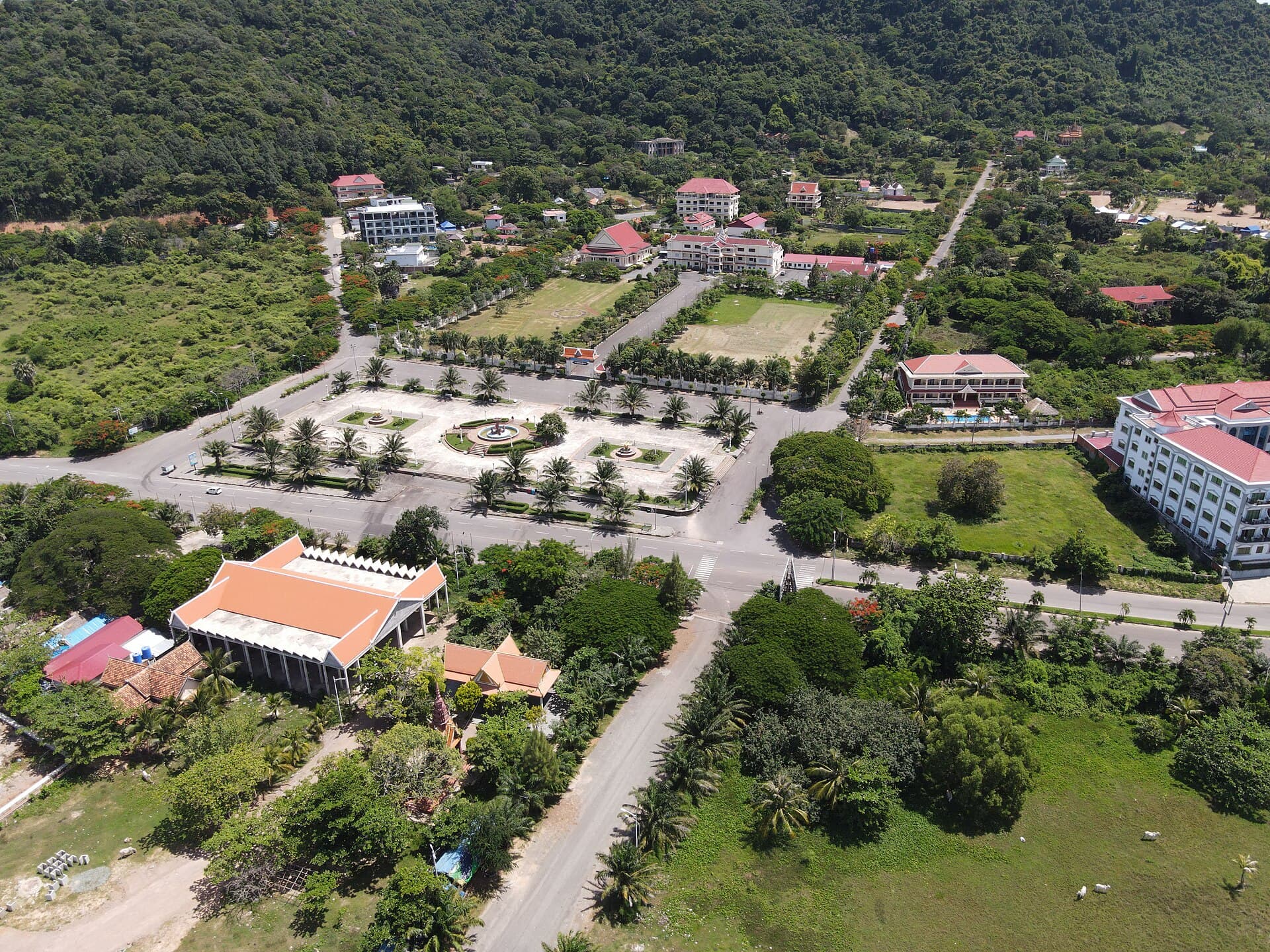 Kiensvay / CC BY-SA 3.0, via Wikimedia Commons
Self-guided audio walking tour of Kep — GPS route, offline playback, story-driven narration in 32 languages.
“Where crumbling colonial dreams meet the freshest catch of the day.”
Not the postcards. The stories even locals don't know — whispered in your ear, right where they happened.
A striking white statue on Kep Beach gazes out to sea, but the story behind her is not one of serene beauty.
Dotting the hillsides of Kep are the spectral remains of grand mansions, slowly being swallowed by the jungle. They speak of a glamorous past, but also a sudden, tragic end.
Kep is synonymous with one particular crustacean, celebrated in a prominent statue. This is more than just a quirky landmark.
Discover every secret of Kep
Every address, every reveal in full — in your ear, right where it happened.
You pick your stops. You walk. The voice reveals what the others miss.


Your self-guided audio tour of Kep is ready — pick your landmarks, choose your language, and start the moment you arrive.
BuyLume has a built-in augmented-reality guide. Hold your phone up and its camera shows the street ahead of you, with a glowing arrow laid over the real view that always points to your next stop — no map to puzzle over, no wrong turns. Like everything in Lume, it works fully offline.
Kep, a coastal town on Cambodia's southern shoreline, offers a serene escape from the country's more bustling destinations. Once a glamorous seaside retreat for the French and Cambodian elite, its past is etched into the landscape, with elegant yet decaying villas hinting at a bygone era. Today, Kep has re-emerged as a tranquil haven, celebrated for its fresh seafood, particularly the famous blue crab, and its relaxed atmosphere.
Life here revolves around the sea and the surrounding countryside. Visitors can explore the active Crab Market, relax on its quiet beaches, or venture into the lush trails of Kep National Park. With its unique blend of history, local livelihoods, and a celebrated culinary scene, Kep provides an authentic glimpse into Cambodia's coastal heritage and natural beauty.
Kep's story begins as a small fishing community, sustained by the rich waters of the Gulf of Thailand. Its transformation began in 1908 when the French established it as Kep-sur-Mer, a prestigious seaside resort for the colonial elite. This era saw the construction of elegant villas and holiday homes along the coast, turning Kep into Cambodia's most famous beach town.
During the 1950s and 1960s, Kep continued to flourish as an exclusive retreat for Cambodia's royalty and wealthy citizens. The town became known for its stylish modernist villas, a unique architectural style developed between 1953 and 1970, which hosted lavish parties and embodied a period of national confidence and cultural aspiration.
However, this golden age was abruptly halted in the 1970s with the rise of the Khmer Rouge. Many residents fled, and the beautiful villas were abandoned, some destroyed as 'symbols of the elite' or left to be reclaimed by the jungle. For decades, Kep remained a quiet, almost forgotten place, bearing the scars of civil war and neglect.
In recent years, Kep has experienced a resurgence, though with a different character. It has maintained a quieter identity, focusing on nature, culture, and quality of life, rather than rapid urbanization and mass tourism. Today, the crumbling remains of its colonial past stand as atmospheric reminders, some being restored, while the town embraces its reputation for fresh seafood, serene beaches, and a relaxed pace of life.
Kep offers a blend of coastal charm, historical intrigue, and natural beauty. The Kep Crab Market is an essential stop, where local fishermen bring in their daily catch, and waterfront restaurants serve freshly prepared blue crab, often seasoned with renowned Kampot pepper. A short walk from the market, you'll find the Blue Crab Statue, a fitting tribute to the town's most famous delicacy.
For relaxation, Kep Beach provides a crescent of golden sand and calm waters, perfect for a leisurely stroll or a dip. At its eastern end stands the poignant White Lady Statue, gazing out to sea. Explore the atmospheric abandoned villas scattered across the hillsides, remnants of Kep's glamorous past, now partially reclaimed by nature. Many offer glimpses into a unique architectural style.
Nature lovers can hike through Kep National Park, where well-marked trails wind through tropical forests, leading to panoramic viewpoints overlooking the Gulf of Thailand and distant islands. A popular excursion is a boat trip to Rabbit Island (Koh Tonsay), a peaceful island with quiet beaches, hammocks, and simple seaside restaurants, offering a tranquil escape. Nearby, you can also visit Kampot Pepper Plantations to learn about the cultivation of this world-famous spice and enjoy a tasting.
The best time to visit Kep is during the dry season, which runs from October to May. During these months, you'll experience warm temperatures, low humidity, and abundant sunshine, creating ideal conditions for beach activities, island hopping to Koh Tonsay, and hiking in Kep National Park. November to February offers particularly pleasant, cooler temperatures. While the wet season (early May to September) brings regular tropical showers, it also transforms the countryside into lush greenery and means fewer tourists and lower prices. The Crab Market operates year-round.
Kep is easily accessible by road, typically via bus, minivan, or taxi from Kampot (around 30 minutes away) or Phnom Penh (approximately 3.5 to 4 hours). The official currencies are the Cambodian Riel and the US Dollar, with most larger purchases made in USD. ATMs are available in Kep, though some may charge higher fees. Medical services are basic in Kep, with better facilities available in nearby Kampot or Phnom Penh. A tourist visa for Cambodia can be obtained upon arrival at land borders for most nationalities, requiring two photos and a fee. It's advisable to carry smaller denominations of US dollars and Riel for local purchases and be aware that torn or defaced US dollar bills may not be accepted.
Kep in Korean, in Chinese or in Hebrew — and 29 more languages, every stop narrated by a native voice. The widest language range of any self-guided audio tour.
Available in: