Kampi Village
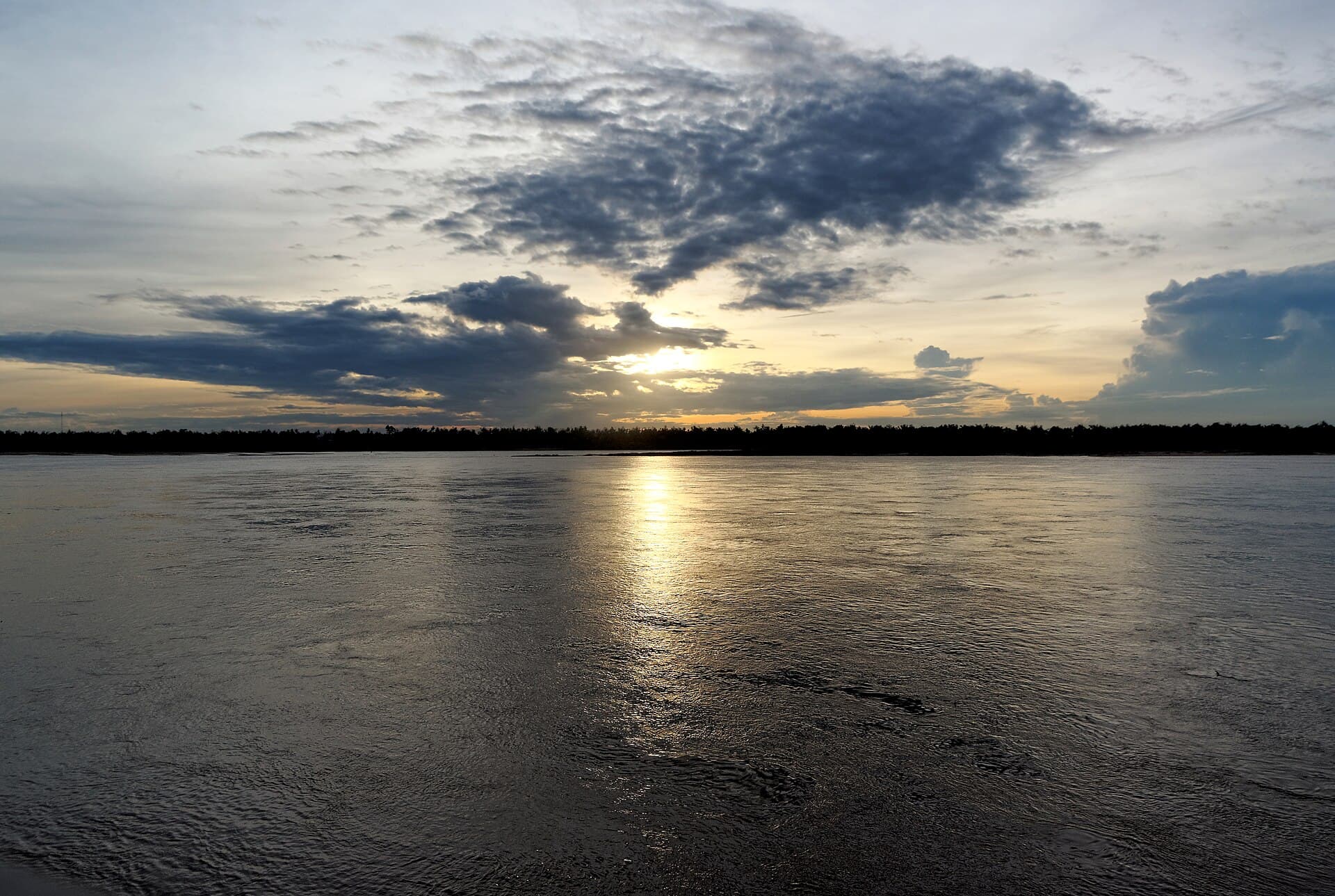
The primary location for observing Kratié's celebrated river dwellers comes with a local practice for their conservation.
Full story unlocks in the tour
 Jakub Hałun / CC BY-SA 4.0, via Wikimedia Commons
Self-guided audio walking tour of Kratié — GPS route, offline playback, story-driven narration in 32 languages.
“Where the Mekong's currents carry whispers of ancient kingdoms and rare river giants.”
Not the postcards. The stories even locals don't know — whispered in your ear, right where they happened.
The primary location for observing Kratié's celebrated river dwellers comes with a local practice for their conservation.
One of Cambodia's oldest pagodas safeguards a history of preservation and a contemporary purpose.
This pagoda's designation presents a numerical puzzle, its origins entwined with royal sorrow and a mythical reptile.
Discover every secret of Kratié
Every address, every reveal in full — in your ear, right where it happened.
You pick your stops. You walk. The voice reveals what the others miss.
Your self-guided audio tour of Kratié is ready — pick your landmarks, choose your language, and start the moment you arrive.
BuyLume has a built-in augmented-reality guide. Hold your phone up and its camera shows the street ahead of you, with a glowing arrow laid over the real view that always points to your next stop — no map to puzzle over, no wrong turns. Like everything in Lume, it works fully offline.
Kratié, often pronounced "Kra-cheh," is a tranquil riverside town in northeastern Cambodia, offering a refreshing contrast to the country's more active destinations. Life here unfolds at the gentle pace of the Mekong River, which flows prominently through the province. The town itself is characterized by a central marketplace and a collection of weathered yet appealing French colonial buildings that line the riverfront, particularly evocative during sunset.
Beyond its relaxed ambiance, Kratié is a crucial sanctuary for the critically endangered Irrawaddy dolphins, drawing visitors eager to witness these elusive freshwater creatures in their natural environment. The province also serves as a gateway to exploring rural Cambodian life, with opportunities to visit peaceful islands like Koh Trong, ancient pagodas, and lively local markets. It's a destination for those seeking an authentic glimpse into Cambodian culture, nature, and history, away from the well-traveled tourist routes.
The area now known as Kratié possesses a deep historical lineage, tracing back to the early first-millennium Kingdom of Funan. By the 6th century, Funan was absorbed by the Chenla empire, and Sampheak Borak, the former Royal Capital during the Chenla Era, was located in what is now Sambo District within Kratié province. This period also saw the construction of several temples in the 8th century, including Khvas Pi, Pram, and Koh Kring, which featured intricate deities and ancient halls.
The 16th century brought the construction of the Vihear Sasar Muayroy Pagoda, widely known as the 100-Pillar Pagoda, a site rich in Khmer legend, particularly the tale of Venerable Monk Thun and a crocodile. This pagoda was initially built on the site of the former royal palace temple of Sam Phu Borak. Moving forward to the 18th and 19th centuries, Wat Rokar Kandal emerged, a wooden pagoda that stands today as one of Cambodia's oldest preserved pagodas, having retained much of its original structure.
During the 19th century, Kratié came under French colonial rule, becoming an important trading post and administrative center due to its strategic location along the Mekong River. The town's architecture still reflects this period, with French-style buildings dotting the landscape. However, the 20th century brought significant upheaval. Intense fighting occurred in Kratié during the Vietnam and Cambodian Civil Wars, and the province was extensively bombed as part of the United States' "Operation Menu" in 1969-1970, targeting Vietnamese supply routes. The marks of this conflict are still visible in the countryside, where large craters, some now water-filled, remain. Following the Khmer Rouge regime, the province embarked on a slow process of recovery, with initiatives to recover unexploded ordnance and de-mine the area continuing since the mid-2000s. Today, Kratié is recognized for its natural beauty, historical sites, and efforts in eco-tourism.
Begin your exploration with a boat trip from Kampi Village to observe the critically endangered Irrawaddy dolphins, a truly unique wildlife experience. Afterwards, visit the nearby Kampi River Rapids, a popular local picnic spot, where you can sample Chak Chreng, a local snail delicacy.
Take a short ferry ride to Koh Trong Island, a peaceful rural haven where you can cycle or explore by horse cart, visiting stilt houses and sandy river beaches. Back in town, wander through the central market, a lively hub for fresh produce and local goods, and explore the two smaller night market areas for an evening cultural experience.
Discover Kratié's spiritual heritage by visiting its pagodas. Wat Rokar Kandal, an 18th-century wooden pagoda, displays traditional crafts and offers insights into Cambodian Buddhist life. Further afield, the 100-Pillar Pagoda (Wat Sorsor Mouy Roy) in Sambo District, built on the site of an ancient royal palace, offers a glimpse into Khmer legends and history. For expansive views of Kratié and the Mekong, climb to the Phnom Sambok Pagoda, where monk statues line the ascent.
The optimal time to visit Kratié is during Cambodia's dry season, which spans from November to April. Specifically, the cooler dry months from November to February offer the most comfortable weather for outdoor activities, with pleasant temperatures and low humidity. This period is ideal for dolphin watching, as lower water levels in the Mekong concentrate the Irrawaddy dolphins, making sightings easier. Roads are also more passable during this time, facilitating exploration of surrounding areas and islands. While Kratié can be visited year-round, the wet season (May to October) brings higher humidity and frequent rainfall, though it offers lush landscapes and fewer crowds for those who don't mind the rain.
Kratié is located approximately 240 kilometers north of Phnom Penh, and roughly 140 kilometers south of Stung Treng. Travel from Phnom Penh typically takes at least four hours by taxi, and longer by bus or minivan. For exploring the town and surrounding areas, renting a bicycle, motorbike, or a tuk-tuk is recommended, as attractions are somewhat spread out. Accommodation options, including guesthouses and hotels, are primarily found along the Mekong Riverfront, many within walking distance of the bus station. For a more serene experience, consider staying on Koh Trong Island. While Kratié is generally considered safe, exercise caution in remote areas. Access to medical care is limited, so travelers with medical conditions should be prepared. Remember to respect local customs, particularly regarding touching the head, which is considered taboo.
Kratié in Korean, in Chinese or in Hebrew — and 29 more languages, every stop narrated by a native voice. The widest language range of any self-guided audio tour.
Available in: