Bieszczady Mountains
The Bieszczady Mountains were once a far less wild place than they are today.
Full story unlocks in the tour
 Dwxn / CC BY-SA 4.0, via Wikimedia Commons
Self-guided audio walking tour of Kazimierz Bieszczady — GPS route, offline playback, story-driven narration in 32 languages.
“Where the wild calls and forgotten stories echo.”
Not the postcards. The stories even locals don't know — whispered in your ear, right where they happened.
The Bieszczady Mountains were once a far less wild place than they are today.
The Bieszczady forests hold a secret language, understood by few.
The Bieszczady Mountains were once home to a unique ethnic group, whose presence was abruptly ended.
Discover every secret of Kazimierz Bieszczady
Every address, every reveal in full — in your ear, right where it happened.
You pick your stops. You walk. The voice reveals what the others miss.

Your self-guided audio tour of Kazimierz Bieszczady is ready — pick your landmarks, choose your language, and start the moment you arrive.
BuyLume has a built-in augmented-reality guide. Hold your phone up and its camera shows the street ahead of you, with a glowing arrow laid over the real view that always points to your next stop — no map to puzzle over, no wrong turns. Like everything in Lume, it works fully offline.
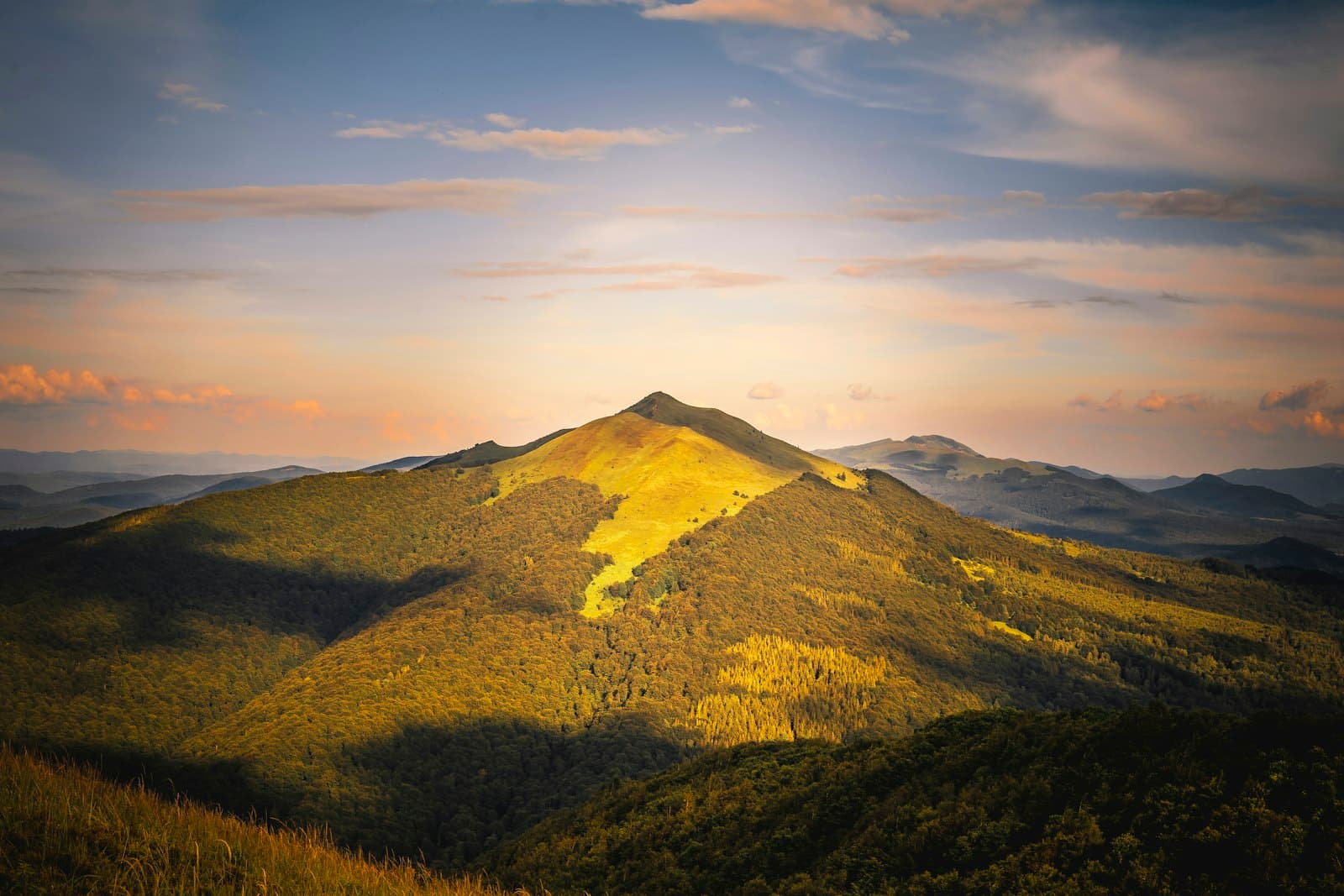
The Bieszczady Mountains, in the extreme southeastern corner of Poland, are a realm where untamed nature reigns supreme. This region, part of the Podkarpackie Voivodeship, is characterized by its rolling mountain meadows, deep forests of beech and fir, and a remarkably sparse population. Often referred to as the 'Polish Western' due to its wild and somewhat desolate character, Bieszczady offers a profound escape for those seeking solitude and a deep connection with the natural world.
Beyond its dramatic landscapes, Bieszczady holds a complex and often poignant history. It's a place where the echoes of forgotten villages and displaced communities resonate beneath the verdant hills. Today, it's a sanctuary for wildlife, including European bison, bears, and wolves, making it a prime destination for nature enthusiasts and hikers.
The history of the Bieszczady Mountains is one of constant flux and diverse inhabitants, dating back to prehistoric times. In the pre-Roman era, various tribes, including Celts, Goths, and Vandals, roamed this strategically important region of the Carpathian Mountains. Following the fall of the Roman Empire, Hungarians and West Slavs moved into the area, leading to a period of contention between Poland, Kievan Rus', and Hungary. The region was first mentioned in chronicles in 981 when Vladimir the Great of Kievan Rus' took control. It alternated between Polish and Rus' rule, with Casimir III of Poland recovering it in 1340.
For centuries, the Bieszczady Mountains were home to a unique ethnic group known as the Boykos, who constituted approximately 75% of the Polish Bieszczady population until the mid-20th century. However, the post-World War II period brought a dramatic and tragic shift. In 1947, the killing of Polish General Karol Świerczewski by the Ukrainian Insurgent Army became the catalyst for 'Operation Vistula.' This was a forced resettlement of the Ukrainian minority, including the Boykos and Lemkos, from the region. The Soviet-installed Polish communist authorities aimed to prevent any support for the Ukrainian Insurgent Army. As a result, around 141,000 people were resettled, many villages were burned down, and the region became almost entirely depopulated.
In the decades following Operation Vistula, the Bieszczady Mountains transformed into the wild, sparsely populated area we see today. New Polish settlers arrived, but the population remained significantly lower than before 1947. In 2002, then-President Aleksander Kwaśniewski expressed regret for Operation Vistula. The region has since become a crucial ecological zone. In 1991, the UNESCO East Carpathian Biosphere Reserve was established, encompassing a large part of the area and extending into Slovakia and Ukraine. This reserve includes the Bieszczady National Park in Poland, providing a vital habitat for diverse wildlife, including black storks, brown bears, wolves, and bison. The remnants of former villages, with their foundations and overgrown orchards, serve as poignant reminders of the region's complex past, inviting reflection on the human stories etched into this now-wild landscape.
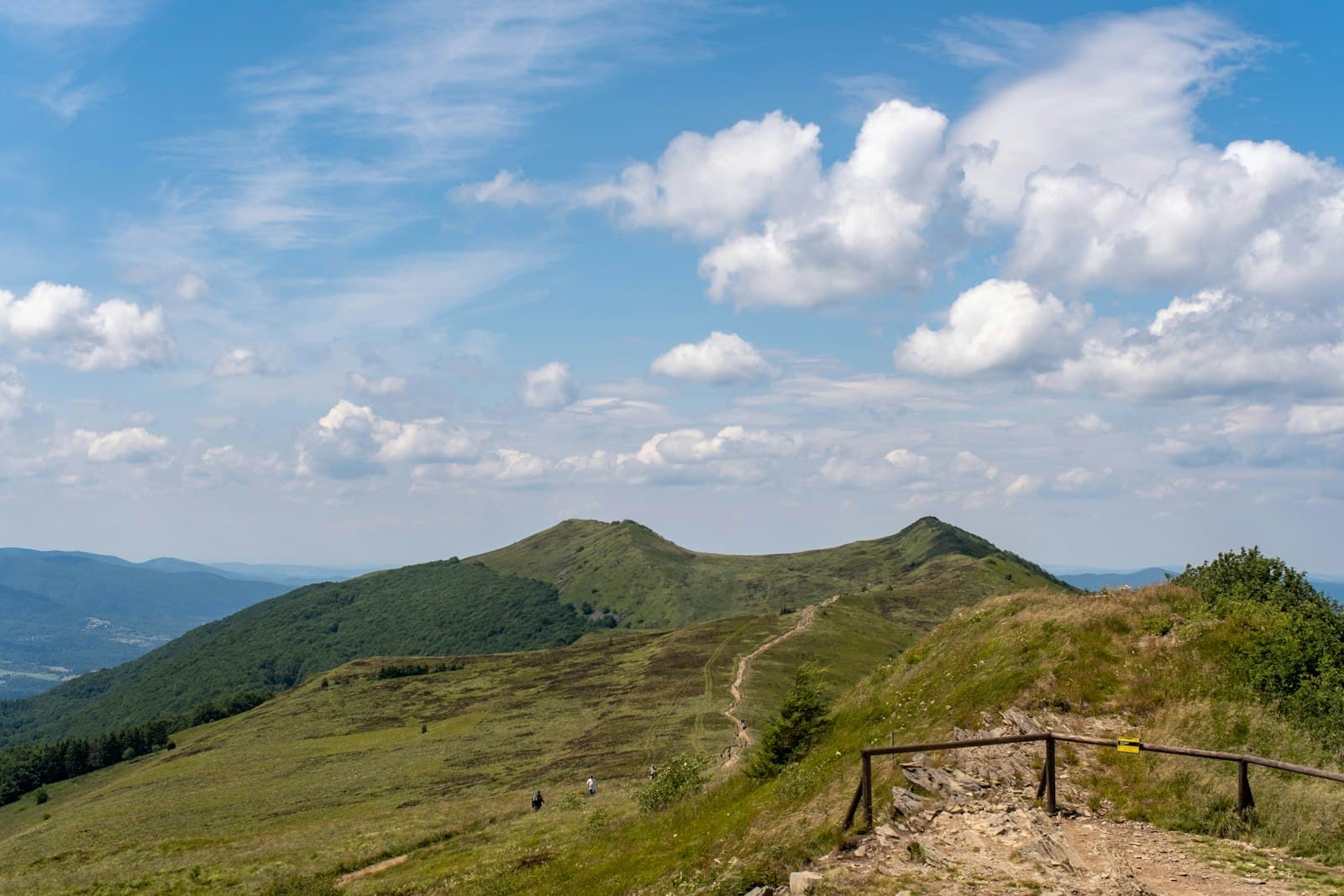
The Bieszczady Mountains offer a wealth of natural and historical attractions. Explore the expansive mountain meadows, known as Połoniny, particularly Połonina Caryńska and Połonina Wetlińska, which provide sweeping panoramic views of the Bieszczady range. For avid hikers, conquering Tarnica, the highest peak in Bieszczady, offers unparalleled 360-degree vistas.
Beyond the peaks, discover the region's unique cultural heritage by visiting the historic wooden Orthodox churches scattered throughout various villages. Many of these still hold Greek Catholic or Orthodox services, serving as living monuments. Notable examples include the wooden church of Ascension of the Lord in Ulucz, one of the oldest in Poland, and Orthodox churches in Równia and Smolnik. For a deeper dive into the region's past, the Museum of Folk Architecture in Sanok, one of Europe's largest open-air museums, showcases the life of different ethnic groups from the 19th and early 20th centuries with its collection of 200 restored buildings. Do not miss the Solina Water Dam, Poland's highest dam, offering opportunities for water sports and scenic cruises on Lake Solina.
The Bieszczady Mountains are captivating year-round, but the best time for warm-weather activities and hiking is from late spring to early autumn. Autumn offers brilliant colors and fewer crowds, making it ideal for inspiring mountain vistas. Summer provides excellent hiking weather, though be prepared for rapidly changing conditions. Winter transforms Bieszczady into a snow-covered wonderland, perfect for those seeking extreme conditions and unique winter experiences, but requires careful preparation for cold and challenging driving.
A private car is the most convenient way to reach the Bieszczady Mountains, with a drive of 4-5 hours from Kraków. For those relying on public transportation, trains stop in Sanok, approximately 70 km from the main mountainous areas, with buses available for onward travel during the summer. The region is excellent for RV and tent camping, with designated parking and campgrounds around Lake Solina, but remember that overnight stays in the wild within the national park are prohibited. Sturdy hiking boots are essential due to challenging trails, and packing layers is advisable for variable mountain weather. Cash is often preferred, especially in more remote towns. Consider hiring a local guide for wildlife excursions and to discover less-traveled scenic spots.
Kazimierz Bieszczady in Korean, in Chinese or in Hebrew — and 29 more languages, every stop narrated by a native voice. The widest language range of any self-guided audio tour.
Available in: