Kelibia Fort's Foundation
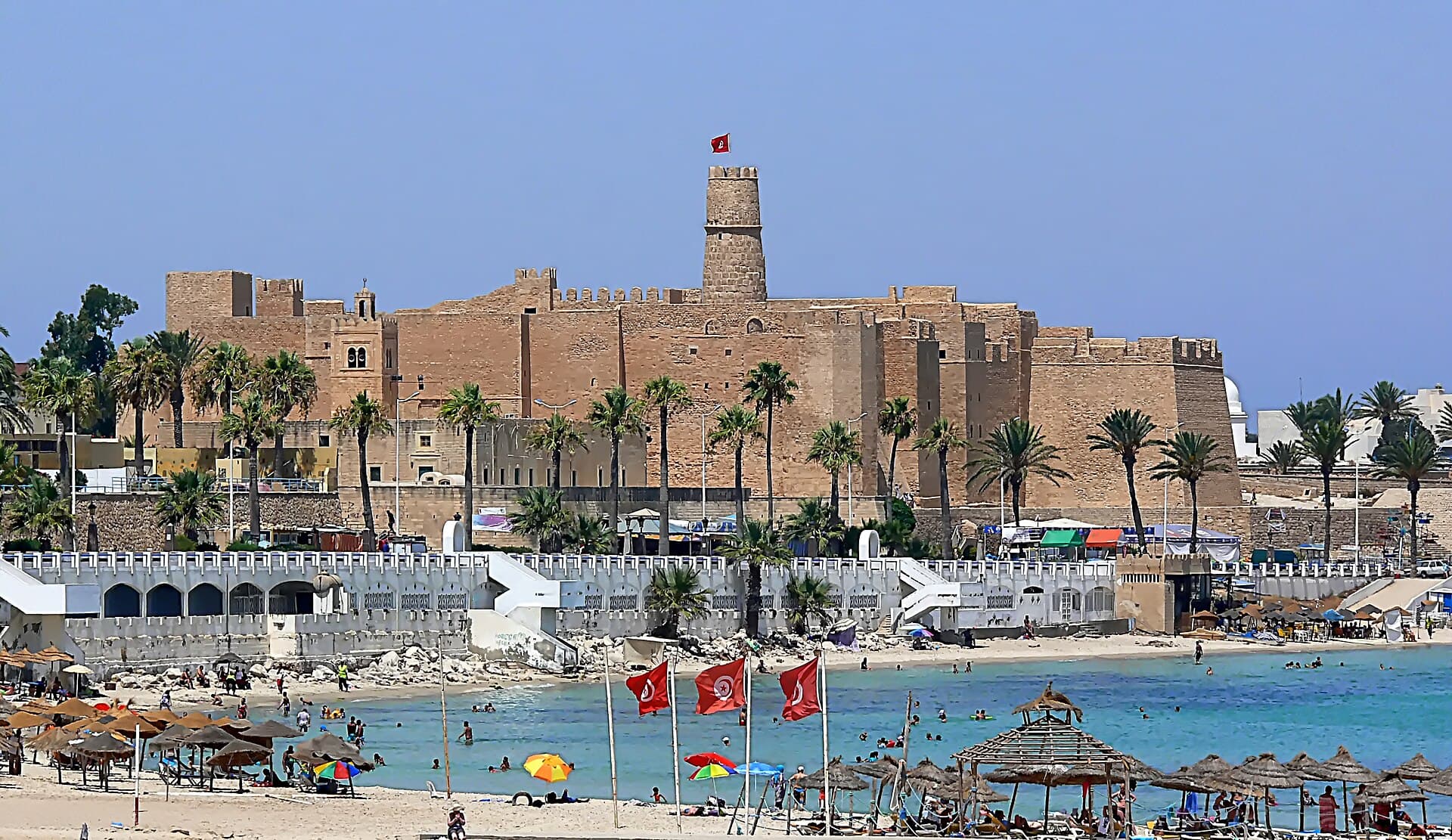
The formidable Kelibia Fort standing today isn't the first stronghold on this strategic headland. Its origins reach back to a time long before Roman legions marched through North Africa.
Full story unlocks in the tour
 Ad Meskens / cc by-sa 3.0, via Wikimedia Commons
Self-guided audio walking tour of Kelibia — GPS route, offline playback, story-driven narration in 32 languages.
“Where ancient stones recount the passage of empires and the Mediterranean gleams.”
Not the postcards. The stories even locals don't know — whispered in your ear, right where they happened.
The formidable Kelibia Fort standing today isn't the first stronghold on this strategic headland. Its origins reach back to a time long before Roman legions marched through North Africa.
The city's ancient Roman designation, 'Clypea' or 'Clupea,' is more than just a sound. It conveys a story about its very form.
The Byzantine fort, a forerunner to the current edifice, played a crucial role in a desperate withdrawal against Arab conquerors.
Discover every secret of Kelibia
Every address, every reveal in full — in your ear, right where it happened.
You pick your stops. You walk. The voice reveals what the others miss.
Your self-guided audio tour of Kelibia is ready — pick your landmarks, choose your language, and start the moment you arrive.
BuyLume has a built-in augmented-reality guide. Hold your phone up and its camera shows the street ahead of you, with a glowing arrow laid over the real view that always points to your next stop — no map to puzzle over, no wrong turns. Like everything in Lume, it works fully offline.
Kelibia, known in ancient times as Aspis or Clypea, is a coastal town on Tunisia's Cap Bon peninsula, a finger of land reaching out towards Sicily. It is a place where the Mediterranean's clear waters meet a long history, offering a blend of natural beauty, local culture, and a tangible sense of the past. Less frequented by tourists than its neighbors, Kelibia provides a relaxed pace and an authentic Tunisian coastal experience.
The town is dominated by the imposing Kelibia Fort, a historical landmark that has stood for centuries, offering expansive views of the coastline and the active fishing port below. Beyond the fort, you will find clean white-sand beaches, celebrated for their clear waters, ideal for swimming and sunbathing. Kelibia is also known for its fresh seafood and the highly regarded local Muscat de Kélibia wine, making it a delightful destination for those interested in local flavors.
## From Punic Stronghold to Byzantine Refuge Kelibia's story begins in the 5th century BC, when the Phoenicians, and later the Carthaginians, established a fortified settlement known as Aspis. Its strategic location on the Cap Bon peninsula made it a vital trading post and military stronghold within the extensive network of Punic colonies. The city played a significant role in the Punic Wars, notably enduring the Siege of Aspis in 255 BC during the First Punic War.
After Carthage's fall in 146 BC, the Romans plundered and destroyed Kelibia, renaming it Clypea or Clupea. For many years, only ruins remained until the Byzantines, in 580 AD, constructed a modest quadrangular fort on the site of the destroyed fortress, primarily to protect an ancient rainwater reservoir. This fort became a final line of defense for Byzantine troops departing from Arab conquerors in 698 AD.
## A Shifting Tide of Empires From the late 10th to the early 12th century, Kelibia changed hands repeatedly, passing between Arabs and Normans. In 1112, Amir Yahya Abu Tahir ibn Tamim reconquered the city and began the reconstruction of a substantial fortress on the site of the Byzantine fort. This period saw the creation of a 200-meter passage connecting the fortress to the city, and many of the present structures of the fort date from this Zirid era. The fort successfully repelled a Norman siege in 1148, a rare triumph that preserved Kelibia's autonomy from the Kingdom of Sicily.
By the 16th century, Kelibia found itself central to the power struggle between the Ottoman Empire and Habsburg Spain for control in North Africa. The Hafsid dynasty and later the Ottomans further reinforced the citadel, known locally as Borj Khalifa, to defend against invasions and pirate attacks. The French Protectorate in the late 19th century introduced modernization, including the construction of a lighthouse and a marine distress signal transmission system in 1881. During World War II, the fortress was under German control from 1942-1943.
Today, Kelibia Fort stands as the largest surviving Muslim fortification in Tunisia, a testament to its enduring strategic importance and the many civilizations that have shaped its walls.
The undisputed centerpiece of Kelibia is the Kelibia Fort, also known as Borj Khalifa. Situated 150 meters above the Mediterranean, this ancient citadel offers expansive views of the coastline, the town, and on clear days, even Sicily. Explore its robust stone walls, watchtowers, and inner courtyards, imagining the events that unfolded within.
Beyond the fort, Kelibia's fishing port is an active hub, especially in the early morning when fishermen return with their catch. You can observe traditional 'lamparo' fishing, where lights attract blue fish, or simply enjoy the lively atmosphere and fresh seafood at local restaurants.
Kelibia is known for its clean beaches, particularly Plage El Mansoura, recognized for its clear waters and soft white sand. These beaches are ideal for swimming, sunbathing, and relaxation.
For a deeper look into ancient times, the archaeological site of Kerkouane, a UNESCO World Heritage site, is a worthwhile day trip. It is the only Punic city in the world that was never occupied by the Romans, offering a singular glimpse into Punic civilization with its well-preserved ruins and museum.
Consider a walk along the Corniche and Harbour Promenade, especially in the evening, to absorb the local atmosphere and enjoy street food. The Kelibia Lighthouse on Cape Bon also provides sweeping coastal views.
The optimal time to visit Kelibia is from late spring to early autumn, specifically May to September. During these months, the weather is warm and suitable for beach activities and exploring outdoor historical sites. The Mediterranean climate is at its most pleasant, with average daily highs ranging from 74°F (23°C) in May to 89°F (32°C) in August. July is the clearest month, and rainfall is minimal. For warm-weather activities like swimming, late June to early September is ideal.
Kelibia is situated on the Cap Bon peninsula, approximately 105 kilometers (65 miles) from Tunis. The most convenient way to reach Kelibia from Tunis is by car, a scenic 1.5 to 2-hour drive. Shared taxis (louages) are also available from Tunis's Bab Alioua station. While Kelibia does not have its own airport, Tunis-Carthage Airport (TUN) is the closest, about 77 km away.
Accommodation options range from budget-friendly guesthouses to mid-range hotels and vacation rentals, with many located in the quieter La Corniche area or the active Medina. When visiting religious sites, modest attire is advisable. It is courteous to greet people with a handshake or a nod and to use your right hand when eating or passing objects. For staying connected, local SIM cards with data are readily available.
Kelibia in Korean, in Chinese or in Hebrew — and 29 more languages, every stop narrated by a native voice. The widest language range of any self-guided audio tour.
Available in: