Knin Fortress
This imposing fortress, one of Europe's largest, once held a surprising number of distinct communities within its walls.
Full story unlocks in the tour
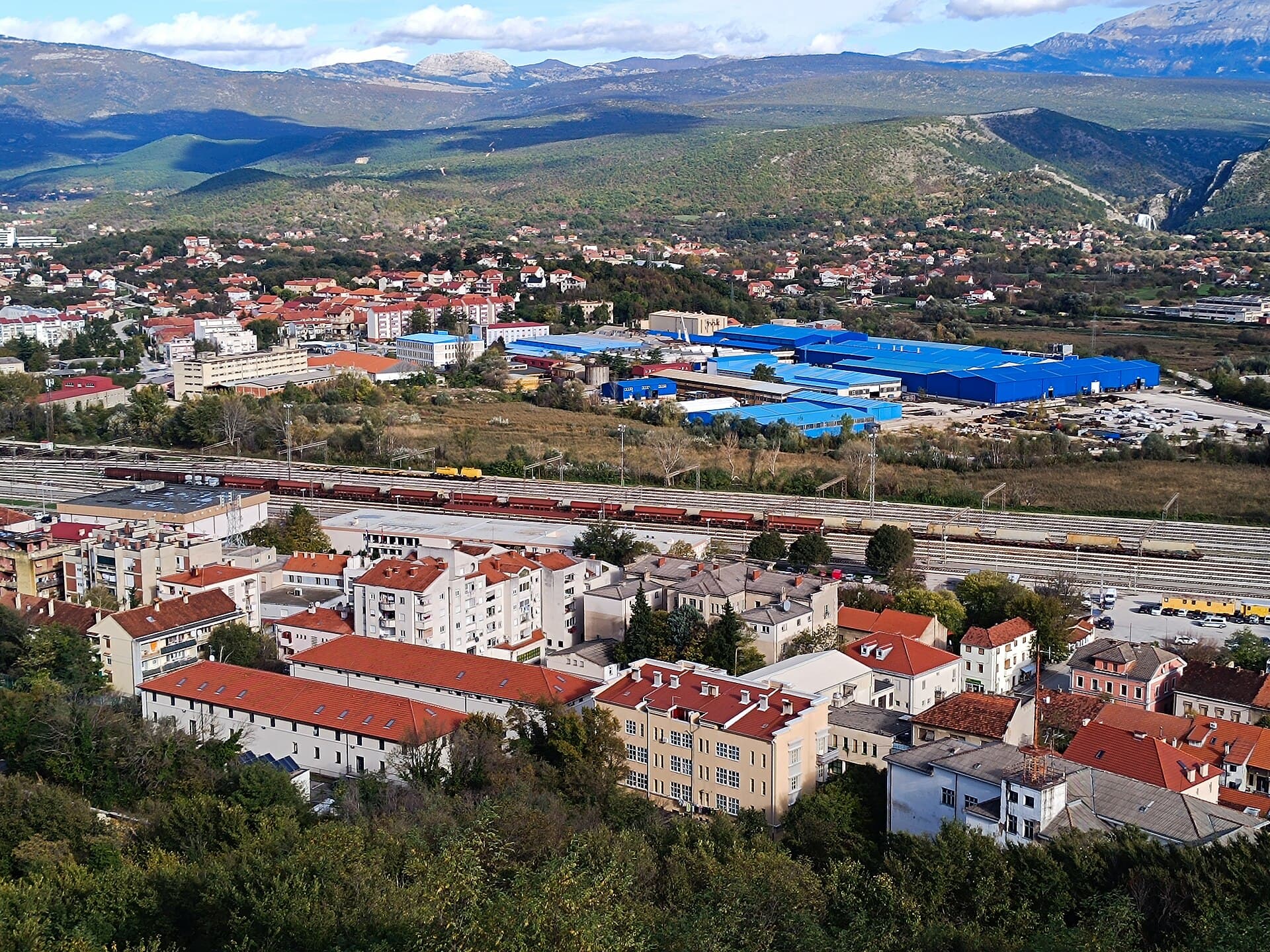 CroatianPalpatine / CC BY-SA 4.0, via Wikimedia Commons
Self-guided audio walking tour of Knin — GPS route, offline playback, story-driven narration in 32 languages.
“Where ancient stones meet wild waters, Knin guards the heart of Croatia.”
Not the postcards. The stories even locals don't know — whispered in your ear, right where they happened.
This imposing fortress, one of Europe's largest, once held a surprising number of distinct communities within its walls.
The impressive Krčić waterfall, a local landmark, has a secret that only reveals itself in certain seasons.
Knin is proudly known as the 'City of Croatian Kings,' but it also held a very different, controversial title in more recent history.
Discover every secret of Knin
Every address, every reveal in full — in your ear, right where it happened.
You pick your stops. You walk. The voice reveals what the others miss.

Your self-guided audio tour of Knin is ready — pick your landmarks, choose your language, and start the moment you arrive.
BuyLume has a built-in augmented-reality guide. Hold your phone up and its camera shows the street ahead of you, with a glowing arrow laid over the real view that always points to your next stop — no map to puzzle over, no wrong turns. Like everything in Lume, it works fully offline.
Knin, often referred to as the "City of Croatian Kings," is a historically significant town in the Dalmatian hinterland of Croatia. It serves as an important crossroads on the rail and road routes connecting Zagreb and Split. Crowned by one of the largest fortresses in Europe, Knin offers a compelling blend of ancient history, dramatic landscapes, and a spirit of resilience.
Surrounded by mountains and seven rivers, including the source of the renowned Krka River, Knin is a destination for those seeking a deeper understanding of Croatia's past and a connection with its natural beauty. From exploring medieval ramparts to hiking along river canyons, Knin presents a unique inland experience away from the bustling coastal resorts.
## A Royal Seat and a Strategic Crossroads Knin's story stretches back to the Stone Age, with a settlement and later a castle growing in this strategically vital location. It first appears in historical records in the 10th century as the center of the Knin county.
Its golden age arrived in the 11th century when King Demetrius Zvonimir made Knin his permanent royal residence around 1080, solidifying its reputation as the "City of Croatian Kings." During this period, Knin was not only a political capital but also a formidable military fort, controlling crucial trade routes between Dalmatia and the Balkans. A royal bishop's seat was even established nearby, with bishops serving as special advisors to the king.
However, Knin's strategic importance also made it a prize for various powers. After the Croatian kingdom entered a state union with Hungary in the 12th century, Knin lost its royal capital status but remained a significant administrative and military center. Over the centuries, it fell under the control of Hungarians, Turks, Venetians, French, and Austrians, each leaving their mark on the formidable Knin Fortress.
## The Scars of Modern History The 20th century brought a new, turbulent chapter to Knin's history. During the Croatian War of Independence (1991-1995), Knin became the main stronghold and briefly the capital of the self-proclaimed Republic of Serbian Krajina. This period saw widespread acts of violence and the expulsion of a significant portion of the Croatian population. The war culminated in Operation Storm on August 5, 1995, when Croatian forces liberated the city. This date is now a national holiday in Croatia, celebrated as Victory and Homeland Thanksgiving Day.
In the aftermath of the war, Knin embarked on a journey of reconstruction and revitalization. Today, the city has transformed, with visible improvements in infrastructure and a renewed focus on its historical and natural heritage, eager to share its story with visitors.
The undeniable centerpiece of Knin is its colossal Knin Fortress, the second-largest fortress in Croatia and one of the largest in Europe. Rising atop Spas hill, it offers sweeping panoramic views of the town, the Dinara mountain, and the winding Krka and Krčić rivers. Explore its extensive ramparts, historic buildings, and on-site museums to delve into a millennium of history.
Beyond the fortress, the Krčić Waterfall (Topoljski buk), a spectacular 22-meter cascade, is a popular natural attraction, especially lively in spring. The source of the Krka River, a designated nature monument, is also nearby, offering scenic walks. For those interested in ancient history, the Roman settlement of Burnum, with its impressive amphitheater, is a short drive away.
In the town center, explore the charming Old Town with its narrow streets and historic buildings, including the Church of St. Anthony. The Church of Our Lady of the Great Croatian Baptismal Vow is also worth a visit as the largest Croatian church. For outdoor enthusiasts, the surrounding countryside offers numerous hiking and cycling routes, particularly along the rivers towards Krka National Park.
The ideal times to visit Knin are during the spring and early autumn months. These seasons offer mild and pleasant temperatures, perfect for exploring the fortress and engaging in outdoor activities like hiking and cycling. In early spring, the Krčić waterfall is at its most powerful due to melting snow and rain. Late spring and early fall also bring fewer visitors, offering a quieter and more authentic experience. Summers can be very hot and dry, with the Krčić river often drying up.
Knin is well-connected by both rail and bus routes, making it accessible from major Croatian cities like Zagreb and Split. The train journey, while slow, is notably scenic. If driving, Knin is approximately 1.5 hours from Zadar, making it a feasible day trip, often combined with a visit to Krka National Park.
When exploring Knin Fortress, comfortable shoes are highly recommended due to the rough terrain and steep climb. Allow at least an hour or two to fully experience the ramparts and museums. The town itself is small and walkable, with a few churches, monuments, bars, and reasonably priced restaurants. Local markets offer fresh produce and crafts, providing a taste of local life.
Knin in Korean, in Chinese or in Hebrew — and 29 more languages, every stop narrated by a native voice. The widest language range of any self-guided audio tour.
Available in: