The Téléphérique des Glaciers de la Meije
Before the iconic cable car ever ferried skiers up La Meije, a rather explosive idea was floated to make the summit more accessible.
Full story unlocks in the tour
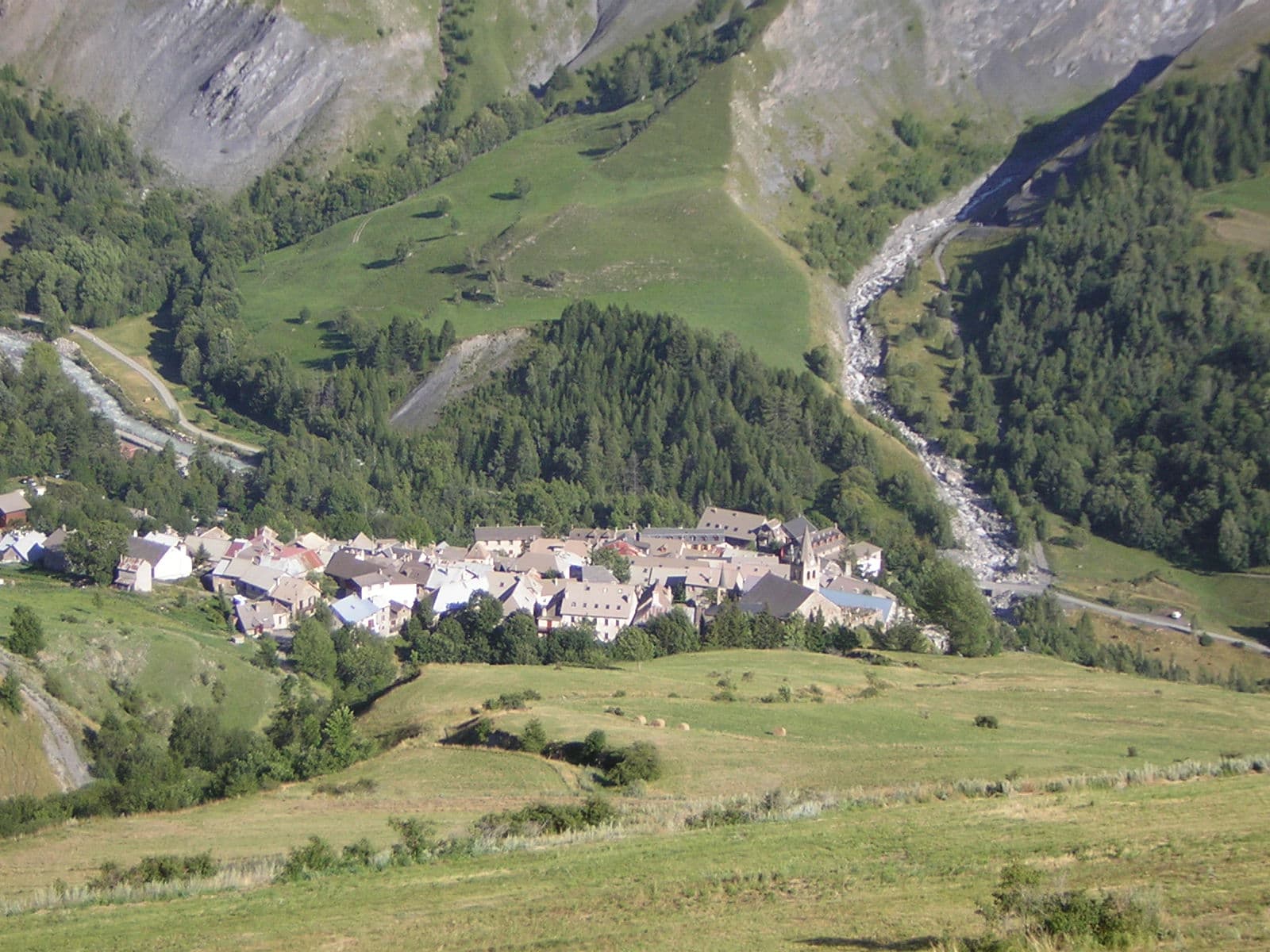 Parisette / CC BY-SA 3.0, via Wikimedia Commons
Self-guided audio walking tour of La Grave — GPS route, offline playback, story-driven narration in 32 languages.
“Where the wild heart of the Alps beats freely.”
Not the postcards. The stories even locals don't know — whispered in your ear, right where they happened.
Before the iconic cable car ever ferried skiers up La Meije, a rather explosive idea was floated to make the summit more accessible.
For decades, those in the know went to great lengths to keep La Grave's extreme terrain under wraps.
The very infrastructure that defines La Grave's skiing was once the target of a dramatic act of protest.
Discover every secret of La Grave
Every address, every reveal in full — in your ear, right where it happened.
You pick your stops. You walk. The voice reveals what the others miss.


Your self-guided audio tour of La Grave is ready — pick your landmarks, choose your language, and start the moment you arrive.
BuyLume has a built-in augmented-reality guide. Hold your phone up and its camera shows the street ahead of you, with a glowing arrow laid over the real view that always points to your next stop — no map to puzzle over, no wrong turns. Like everything in Lume, it works fully offline.
La Grave, a village in the Hautes-Alpes department of southeastern France, sits at an elevation of 1,450 meters (4,757 feet) at the foot of the imposing La Meije massif. This commune is recognized as one of "Les Plus Beaux Villages de France" (The Most Beautiful Villages of France), preserving a heritage of traditional stone architecture. The village's name itself, "La Grave," comes from the Occitan word grava, meaning "gravel" or "alluvial deposits," reflecting its rocky, steep setting overlooking the Romanche River.
La Grave is often referred to as La Grave-la-Meije, emphasizing its profound connection to the iconic 3,983-meter (13,068-foot) peak that dominates its skyline. Unlike conventional ski resorts, La Grave is renowned for its untamed, unpatrolled, and ungroomed off-piste terrain, making it a mecca for experienced freeride skiers and mountaineers. The village serves as a gateway to the Écrins National Park, offering a vast natural playground for outdoor enthusiasts in both winter and summer.
The village maintains a pastoral pace, with narrow streets, traditional stone houses, and a few local establishments like a bakery and butchery. Its unique character and commitment to preserving its natural state mean you won't find large resort complexes or extensive commercial developments here. Instead, La Grave offers an authentic alpine experience, where the raw beauty of the mountains takes precedence.
The history of La Grave stretches back to antiquity, with evidence of human occupation in the Haute-Romanche valley. During the Middle Ages, La Grave grew to become the administrative and commercial center of the Haut-Oisans region, reputedly larger in population than Bourg d'Oisans. Life in this high-mountain environment was dictated by a harsh climate, with a rhythm described as "nine months of winter, three months of hell" for its agricultural inhabitants. The cold season often led men to specialize in peddling, a means of survival in the isolated valleys.
The construction of the Col du Lautaret road during the Second Empire significantly reduced the isolation of the Haute-Romanche. This development, while accelerating rural exodus, also marked the beginnings of summer tourism. Inns and coach houses emerged, catering to both road travelers and the early mountaineers who began to explore the challenging peaks of the Dauphiné Alps. The mid-19th century saw a surge in alpinism, with English climbers initially leading the charge in discovering the Alps. However, the French sought to reclaim their pride with the ascent of La Meije, a technically difficult peak that was one of the last great Alpine summits to be conquered in 1877.
The idea of a cable car linking La Grave to the summit of La Meije dates back over a century, with ambitious, if sometimes outlandish, proposals. More serious plans emerged in the 1950s, driven by the desire to develop tourism and replace declining agricultural livelihoods. The Téléphérique des Glaciers de la Meije, designed by Denis Creissels, began operations in stages, with the first leg opening in 1976. This single, two-stage pulse gondola system, which transports visitors to an altitude of 3,200 meters, transformed La Grave into a premier destination for off-piste skiing and mountaineering. The area's reputation for extreme, unpatrolled terrain grew, attracting a dedicated community of freeride enthusiasts. Despite its appeal, the cable car has faced challenges, including a dynamite attack in 1976 and a period of bankruptcy in 1986 before Creissels himself stepped in to ensure its continued operation.
La Grave offers a concentrated experience, focusing on its natural grandeur and authentic village life. The village of La Grave itself, a member of "Les Plus Beaux Villages de France," is worth exploring for its traditional stone houses and narrow streets known as "trabucs." At the heart of the village is the 11th-century Église Notre-Dame-de-l'Assomption, a Romanesque church with distinctive architecture and commanding views of the glaciers. Nearby, the Pénitents Blancs Chapel completes a historic religious ensemble.
The Téléphérique des Glaciers de la Meije is the central attraction, transporting visitors from the village up to 3,200 meters (10,500 feet) at the Col des Ruillans. From here, the panoramic views of the surrounding mountains, including the majestic La Meije and the Girose glacier, are exceptional. In summer, an ice cave on the Girose glacier can be visited. The cable car also provides access to numerous hiking trails and mountaineering routes.
Beyond the immediate village, consider visiting the small hamlets above La Grave, such as Le Chazelet, Ventelon, Les Terrasses, and Les Hières, which offer different perspectives of the valley and access to further hiking opportunities. The Jardin Alpin du Lautaret, a remarkable high-altitude botanical garden, is just 2 kilometers away. For those interested in the broader alpine landscape, the Écrins National Park provides a wealth of natural beauty and outdoor activities.
La Grave offers distinct experiences depending on the season. For winter sports, particularly off-piste skiing and mountaineering, the best time to visit is from December to April. March is often considered ideal for high-altitude skiing, with excellent snow cover and longer days. December and January offer lighter snow and quieter crowds, while February sees good snow conditions with fewer crowds outside of school holidays. The area is known for consistent snowfall, with December typically being the snowiest month.
For warm-weather activities like hiking, mountain biking, and climbing, the period from early June to late September is most favorable. July is typically the hottest month, with clear skies and average high temperatures around 82°F (28°C). August also offers good conditions, with temperatures ranging from 45-65°F (7-19°C).
La Grave is approximately 2.5 to 3 hours by car from the international airports of Lyon (LYS) and Geneva (GVA). Car rental is an option, but be aware that winter road closures due to weather can occur on the route from Grenoble to La Grave. Public transport is also available, with trains or buses connecting Geneva and Lyon to Grenoble, from where further connections to La Grave can be made.
Accommodation in La Grave consists primarily of small hotels, guesthouses, independent chalets, and apartments, reflecting the village's authentic character rather than large resort complexes. When skiing, especially off-piste, hiring a qualified mountain guide is highly recommended due to the unpatrolled and ungroomed terrain, glacier hazards, and potential for avalanches. Essential gear for winter activities often includes ropes, ice axes, and crampons. The official tourist office for La Grave – La Meije can provide comprehensive visitor information.
La Grave in Korean, in Chinese or in Hebrew — and 29 more languages, every stop narrated by a native voice. The widest language range of any self-guided audio tour.
Available in: