El Hotel des Deux Magots
Observe el frontón de este venerable hotel y distinguirá dos monos esculpidos.
La historia completa se desbloquea en el tour
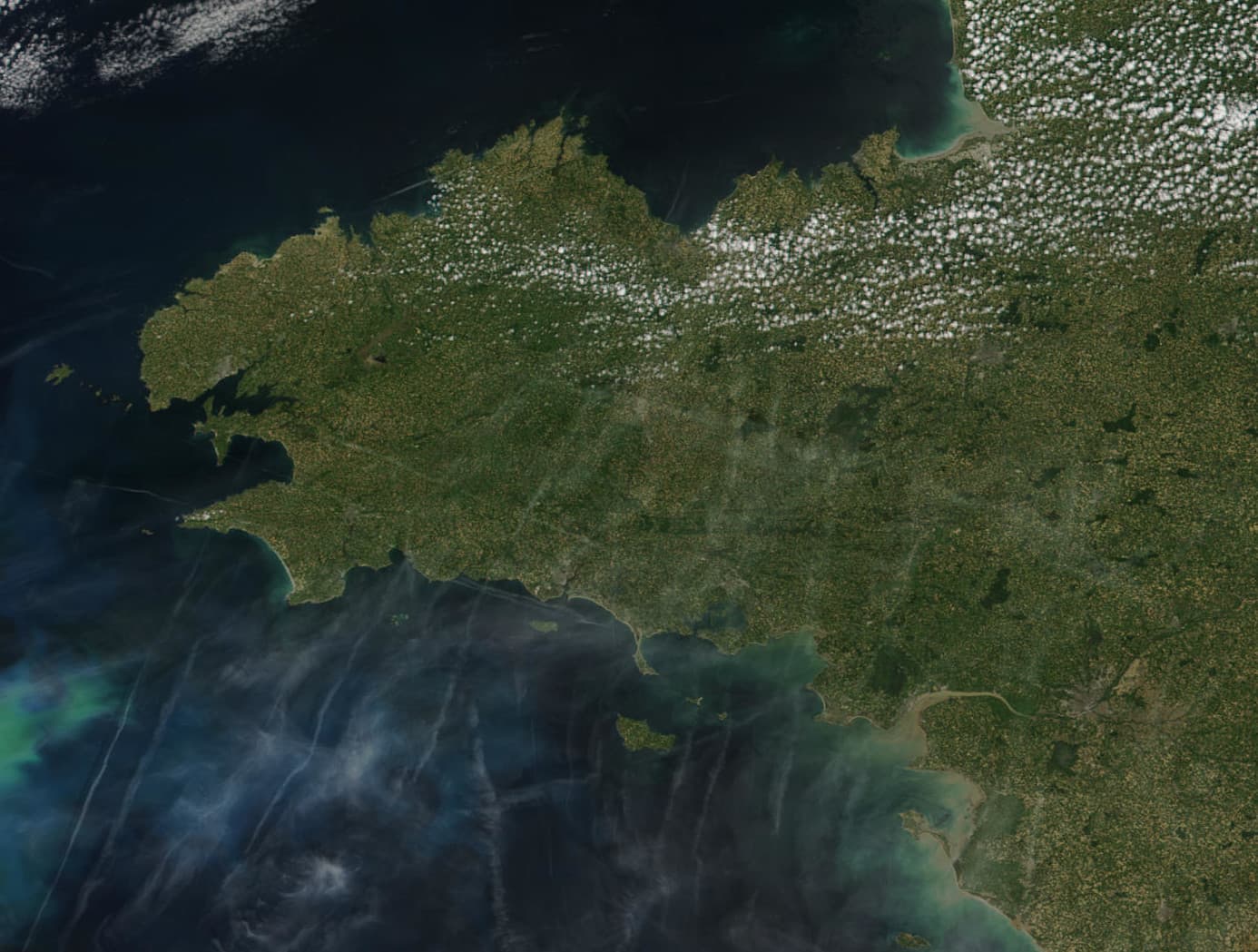 Credit: Jacques Descloitres, MODIS Rapid Response Team, NASA/GSFC / public domain, via Wikimedia Commons
Tour de audio autoguiado de La Roche-Bernard — ruta GPS a pie, reproducción offline, narración en 32 idiomas.
“Donde el río Vilaine se encuentra con piedras ancestrales y relatos marineros.”
No las postales. Las historias que ni los locales conocen — al oído, justo donde ocurrieron.
Observe el frontón de este venerable hotel y distinguirá dos monos esculpidos.
Esta acogedora plaza, ahora un nexo de talleres artesanales, una vez tuvo un propósito más sombrío.
Busque pequeñas y caprichosas figurillas, de aproximadamente 30 cm de altura, adornando casas y alféizares.
Descubre todos los secretos de La Roche-Bernard
Cada dirección, cada revelación al completo — a tu oído, justo donde ocurrió.
Eliges tus paradas. Caminas. La voz te revela lo que los demás ignoran.


Tu tour de audioguía por La Roche-Bernard te espera — elige tus lugares, tu idioma y empieza al llegar.
ComprarLume incluye una guía de realidad aumentada. Levanta el móvil y su cámara muestra la calle que tienes delante, con una flecha luminosa sobre la imagen real que siempre apunta a tu próxima parada — sin mapas que descifrar, sin giros equivocados. Como todo en Lume, funciona completamente sin conexión.
La Roche-Bernard, una 'Petite Cité de Caractère' en el sur de Bretaña, le invita a un viaje a través del tiempo donde la herencia marítima y el carácter medieval convergen. Situada en un promontorio rocoso con vistas al río Vilaine, esta ciudad en el departamento de Morbihan se distingue por sus calles tranquilas, talleres artesanales y un animado puerto. La posición estratégica de la ciudad en el río Vilaine ha moldeado su identidad, evolucionando de un concurrido puerto comercial en la Edad Media a un popular puerto deportivo en la actualidad.
Dividida en una ciudad alta y una zona portuaria, La Roche-Bernard invita a la exploración, con sus antiguas residencias aferradas a las orillas del río y una red de callejones que conducen a amplios miradores. El ambiente de la ciudad combina importancia histórica con esplendor natural, lo que la convierte en un destino atractivo para quienes buscan tanto el descubrimiento cultural como las actividades al aire libre.
Los orígenes de La Roche-Bernard se remontan al año 919 d.C., cuando un jefe vikingo llamado Bern-hart reconoció el potencial defensivo estratégico del afloramiento rocoso con vistas al río Vilaine. Fortificó la zona y estableció un asentamiento, dando a la ciudad su nombre perdurable. Este acto fundacional sentó las bases para el crecimiento de La Roche-Bernard como un puerto significativo.
Durante la Edad Media, el puerto de la ciudad floreció, dedicándose al comercio de cereales, vino y sal. Su posición en la confluencia de rutas fluviales y terrestres desde Nantes, Vannes y Redon también fomentó su papel como lugar para recibir y salvaguardar a los viajeros. La ciudad se convirtió en una de las baronías del Ducado de Bretaña, subrayando su importancia regional.
Una transformación notable ocurrió en 1547 cuando la ciudad, influenciada por el Señor François de Coligny, abrazó el protestantismo, aunque gradualmente volvió al catolicismo. El siglo XVII vio el astillero de La Roche-Bernard ganar prominencia cuando el Cardenal Richelieu encargó la construcción de la Couronne, un prestigioso buque para la Marina Real, en 1629.
El puerto comercial alcanzó su apogeo en el siglo XIX. Sin embargo, la llegada del ferrocarril introdujo una competencia significativa, lo que llevó a una disminución de su actividad comercial. En la década de 1960, la ciudad se adaptó transformando su puerto para acomodar embarcaciones de recreo y centrándose en el turismo, un movimiento que sigue dando forma a su economía hoy en día. Los restos del primer puente colgante de madera en Francia, construido en 1839, dan testimonio del pasado de ingeniería de la ciudad, con el actual e impresionante puente colgante que ofrece vistas panorámicas del Vilaine.
Comience su exploración en el Puerto Viejo (Vieux Port), un punto central de actividad ahora bordeado de veleros y yates. Pasee por los muelles o considere un paseo en barco por el río Vilaine. Ascienda al site du rocher para disfrutar de amplias vistas del río y el paisaje circundante.
Pasee por la Rue du Ruicard, una pintoresca calle con casas de entramado de madera y talleres artesanales, que ofrece una visión del pasado medieval de la ciudad. Descubra la Place du Bouffay, una plaza rodeada de casas con entramado de madera del siglo XV. La Maison du Canon, una casa del siglo XVI con un reloj y un campanario, se distingue por sus características históricas.
Visite el Musée de la Vilaine Maritime, ubicado en el Castillo de Basses-Fosses de varias plantas, que narra la historia local relacionada con el río, la pesca y la construcción naval. El Pont de La Roche-Bernard, un impresionante puente colgante, ofrece vistas panorámicas y excelentes oportunidades para tomar fotografías, especialmente al atardecer.
Para aquellos interesados en la artesanía local, la ciudad mantiene una próspera escena artística con numerosos talleres y galerías que exhiben cerámica, cristalería, pinturas y textiles. La Capilla de Notre-Dame, construida en 1063 y reconstruida más tarde en los siglos XII y XVI, es otro monumento histórico notable.
El momento más agradable para visitar La Roche-Bernard es entre mayo y septiembre, cuando el clima es templado y la ciudad está activa con actividades al aire libre y festivales. El verano ofrece un ambiente particularmente animado con eventos culturales y mercados. Para una experiencia más tranquila, la primavera y el otoño brindan condiciones cómodas para apreciar la belleza natural de la ciudad. Las temperaturas diurnas en agosto alcanzan alrededor de 24°C (75°F), mientras que en enero se registran máximas más frescas de 10°C (50°F).
La Roche-Bernard es fácilmente accesible en coche, situada cerca de la autopista N165, aproximadamente a una hora de Nantes y a 40 minutos de Vannes. Si bien los autobuses regionales conectan con las ciudades cercanas, se recomienda un coche para explorar los alrededores. El estacionamiento es conveniente, con varios aparcamientos gratuitos y de pago cerca del centro de la ciudad y el puerto, incluyendo el Quai de la Douane y la Place de la Poste.
Las opciones gastronómicas van desde las tradicionales creperías bretonas hasta establecimientos de alta cocina. Asegúrese de probar las galettes (crepes salados de trigo sarraceno), mariscos frescos y kouign-amann (un pastel bretón mantecoso). Las opciones populares incluyen Auberge des Deux Magots para platos regionales y Le Sarah B. para una cocina refinada con vistas al río. La ciudad también alberga un mercado semanal todos los jueves por la mañana en la ciudad alta, que ofrece productos locales.
La Roche-Bernard en coreano, en chino o en hebreo — y 29 idiomas más, cada parada narrada por una voz nativa. La mayor variedad de idiomas de cualquier audioguía autoguiada.
Disponible en: