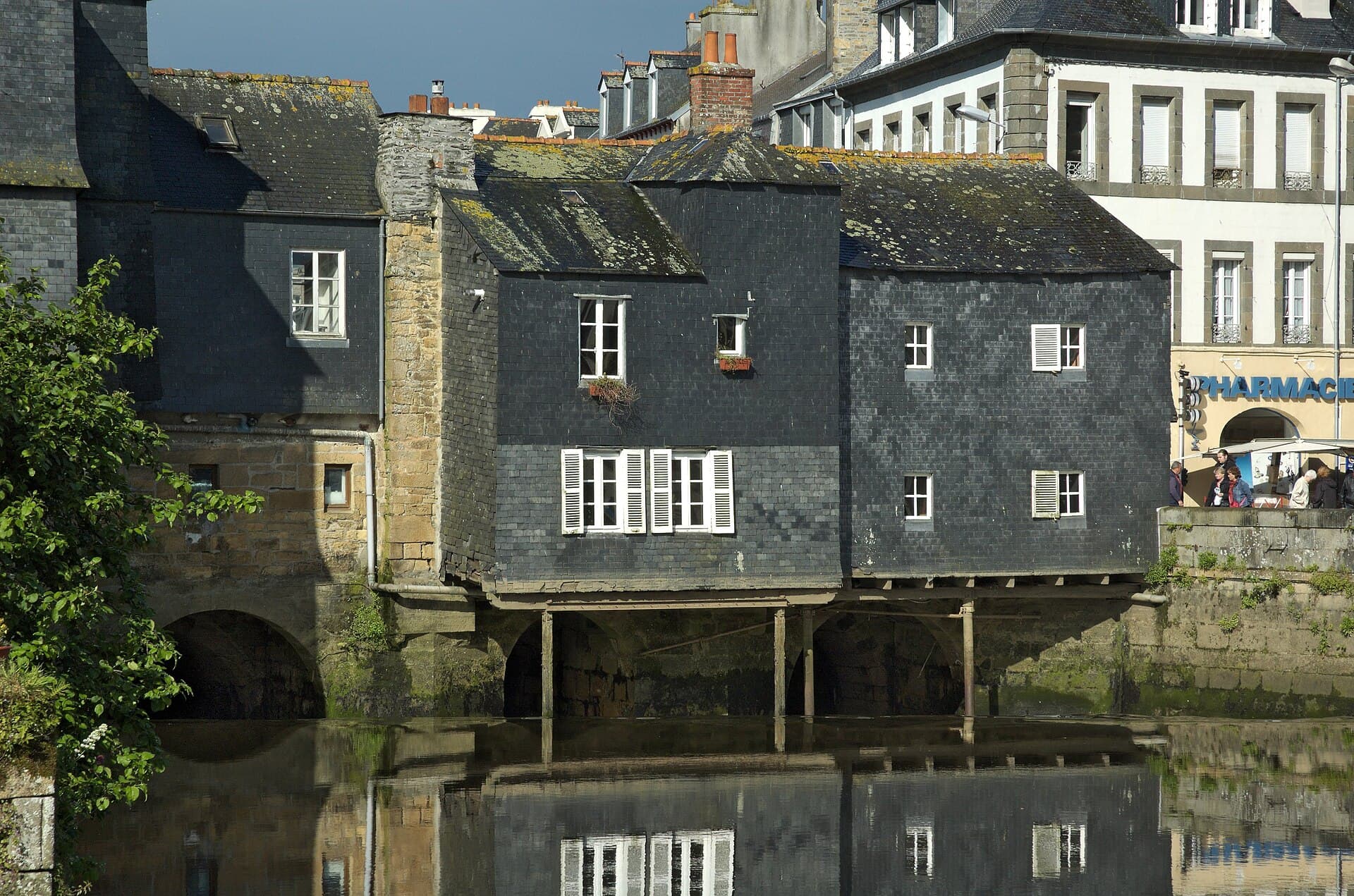
Pont de Rohan
This 500-year-old bridge, one of Europe's last inhabited spans, holds a unique secret beneath its arches.
Full story unlocks in the tour
 Ghouston / CC0, via Wikimedia Commons
Self-guided audio walking tour of Landerneau — GPS route, offline playback, story-driven narration in 32 languages.
“Where a river divides ancient lands and houses stand on water.”
Not the postcards. The stories even locals don't know — whispered in your ear, right where they happened.
This 500-year-old bridge, one of Europe's last inhabited spans, holds a unique secret beneath its arches.
This grand merchant's house carries a dual identity, even in its very name.
Landerneau is often called 'City of the Moon,' a poetic title with a surprising origin tied to a medieval coat of arms.
Discover every secret of Landerneau
Every address, every reveal in full — in your ear, right where it happened.
You pick your stops. You walk. The voice reveals what the others miss.


Your self-guided audio tour of Landerneau is ready — pick your landmarks, choose your language, and start the moment you arrive.
BuyLume has a built-in augmented-reality guide. Hold your phone up and its camera shows the street ahead of you, with a glowing arrow laid over the real view that always points to your next stop — no map to puzzle over, no wrong turns. Like everything in Lume, it works fully offline.
Landerneau, a town in Brittany, France, is bisected by the Élorn River, creating a distinctive landscape where buildings appear to float on the water. This ancient port town, with its enduring maritime character, invites exploration of its quaysides and the unique architecture that lines the riverbanks. The town's atmosphere is shaped by the ebb and flow of the tides, a constant reminder of its deep connection to the sea.
Walking through Landerneau, one encounters a blend of medieval charm and everyday life. The town's structures, many dating back centuries, tell stories of merchants, sailors, and the enduring spirit of the Breton people. The sound of the river, the scent of the sea, and the sight of historic facades combine to create a vivid sense of place, offering a genuine encounter with a town shaped by its waters.
## Early Beginnings and Strategic Importance Landerneau's origins trace back to antiquity, with evidence of Roman presence in the area. Its strategic position at the navigable limit of the Élorn River, connecting the interior to the Brest roadstead, made it a crucial hub for trade and defense. During the Middle Ages, the town developed around its port, becoming a significant center for the export of linen, canvas, and agricultural products from the fertile Léon region.
## The Rohan Influence The powerful Rohan family played a pivotal role in Landerneau's development. From the 14th century onwards, they held sway over the town, fostering its economic growth and leaving an indelible architectural mark. The Pont de Rohan, the town's most iconic structure, stands as a testament to their influence and the town's prosperity during this period. The Rohan lords' patronage attracted artisans and merchants, further solidifying Landerneau's status as a commercial powerhouse.
## Religious and Economic Flourishing The 16th and 17th centuries marked a golden age for Landerneau. The town's prosperity, fueled by its maritime trade and the wealth of its merchant class, led to the construction of impressive religious buildings. The Parish Closes, particularly those of Saint-Houardon and Saint-Thomas, exemplify the artistic and architectural achievements of this era. These intricate structures, adorned with detailed sculptures, reflect the deep faith and economic affluence of the community. The town's markets thrived, drawing traders from across Brittany and beyond, making Landerneau a lively center of commerce.
## Decline and Revival The 18th century brought a period of decline for Landerneau, as the silting of the Élorn River hampered navigation and the rise of Brest as a major naval port shifted economic focus. However, the 19th century saw a resurgence, particularly with the arrival of the railway, which reconnected Landerneau to broader markets. The town adapted, diversifying its industries and maintaining its role as a regional service center. Today, Landerneau continues to evolve, balancing its historical legacy with modern developments, ensuring its enduring appeal as a distinctive Breton town.
Begin your exploration at the Pont de Rohan, a truly unique inhabited bridge where houses directly overlook the Élorn River. Observe the daily tides flowing beneath its arches. Wander along the quays, taking in the reflections of the old buildings on the water. Visit the Maison de la Sénéchaussée, also known as the 'Maison de la Duchesse Anne,' a grand merchant's house with a kersantite Christ statue on its staircase side. Explore the Parish Closes of Saint-Houardon and Saint-Thomas, exceptional examples of Breton religious architecture with their intricate calvaries and ossuaries. The Fonds Hélène & Édouard Leclerc pour la Culture, housed in a former Capuchin convent, presents contemporary art exhibitions, offering a modern counterpoint to the town's ancient structures. Take time to simply stroll through the narrow streets, discovering the timber-framed houses and the quiet courtyards that reveal the town's enduring character.
The late spring and summer months, from May to September, offer the most agreeable weather for exploring Landerneau. During this period, the days are longer and warmer, ideal for walking along the river and discovering the town's outdoor attractions. The cultural calendar also tends to be more active, with various events and exhibitions taking place.
Landerneau is readily accessible by train, with regular services connecting it to Brest and other major Breton towns. If traveling by car, parking is available at several designated areas around the town center. The town is best explored on foot, allowing you to appreciate its riverside charm and historic architecture. Many local shops and restaurants accept credit cards, but it's always useful to have some euros for smaller purchases. Tourist information is available at the local office, where you can obtain maps and advice on current events.
Landerneau in Korean, in Chinese or in Hebrew — and 29 more languages, every stop narrated by a native voice. The widest language range of any self-guided audio tour.
Available in: