Château de Laval
L'imposant donjon médiéval du Château de Laval recèle un ancien secret au cœur de sa structure défensive.
L'histoire complète se débloque dans le tour
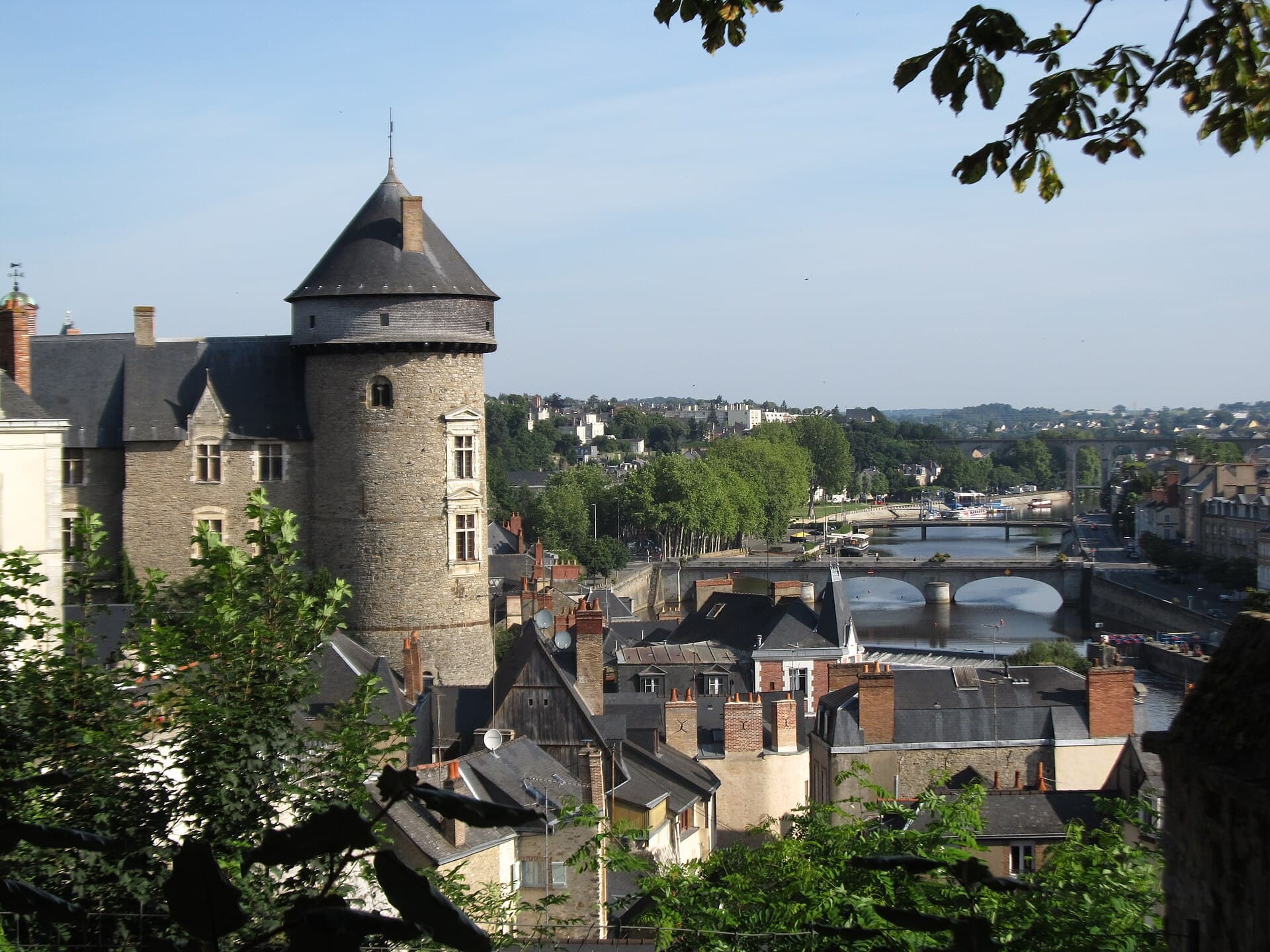 Celeste (permission given to User:Oie blanche) / CC BY 3.0, via Wikimedia Commons
Visite audio autoguidée de Laval — parcours GPS à pied, lecture hors ligne, narration en 32 langues.
“Là où les pierres médiévales rencontrent le doux courant de la Mayenne.”
Pas les cartes postales. Les histoires que même les habitants ignorent — soufflées à l'oreille, là où elles se sont passées.
L'imposant donjon médiéval du Château de Laval recèle un ancien secret au cœur de sa structure défensive.
Laval abritait autrefois une flotte unique de blanchisseries flottantes, et un bateau en particulier détient une distinction surprenante.
Au-delà de sa grande architecture, la Cathédrale de Laval contient un détail artistique particulier qui fait allusion à une période turbulente de l'histoire de France.
Découvrez tous les secrets de Laval
Chaque adresse, chaque révélation en entier — dans ton oreille, là où elle s'est passée.
Tu choisis tes lieux. Tu marches. La voix te révèle ce que les autres ignorent.


Votre visite audioguidée de Laval vous attend — choisissez vos lieux, votre langue, et lancez-vous dès votre arrivée.
AcheterLume intègre un guide en réalité augmentée. Levez votre téléphone : sa caméra montre la rue devant vous, avec une flèche lumineuse posée sur l'image réelle qui pointe toujours vers votre prochain arrêt — aucune carte à déchiffrer, aucun mauvais virage. Comme tout dans Lume, ça fonctionne entièrement hors-ligne.
Laval, capitale du département français de la Mayenne, est une ville où des siècles d'histoire sont gravés dans ses pierres et se reflètent dans les eaux tranquilles de la Mayenne. Cette destination captivante de l'ouest de la France, faisant partie de la région Pays de la Loire, offre un mélange de patrimoine médiéval, d'expression artistique et d'une atmosphère fluviale détendue. Ses racines remontent au XIe siècle, lorsqu'un château fut construit sur un promontoire rocheux surplombant un gué stratégique de la rivière, donnant naissance à la ville elle-même.
Aujourd'hui, Laval invite les visiteurs à flâner dans ses rues étroites, à admirer ses maisons à colombages et à explorer ses monuments architecturaux significatifs. La ville est également le lieu de naissance d'Henri Rousseau, le célèbre peintre naïf, et son héritage artistique est célébré dans un musée dédié. Des promenades en bateau sur la Mayenne à la découverte de musées uniques et de jardins sereins, Laval offre une expérience riche et engageante pour ceux qui recherchent une escapade tranquille mais culturellement résonnante dans la campagne française.
L'histoire de Laval commence vers l'an 1000, avec la construction d'un château à motte par Guy Ier de Dénéré sur un éperon rocheux surplombant un gué sur la Mayenne. Cet emplacement stratégique, contrôlant un point de passage vital sur la voie romaine reliant Le Mans à la Bretagne, fut la genèse de la ville. Au XIe siècle, Laval était officiellement devenue une ville et la place forte de la puissante Maison de Laval, une famille qui exercera une influence significative dans le Maine et en Bretagne tout au long du Moyen Âge.
Au fil des siècles, les fortifications en bois initiales du château furent remplacées par de la pierre. L'impressionnant donjon cylindrique, datant du XIIIe siècle, témoigne de cette architecture défensive médiévale. Les remparts de la ville, également construits au début du XIIIe siècle, s'étendaient autrefois sur plus de 1 100 mètres et comportaient 27 tours, bien qu'il n'en reste aujourd'hui qu'une section et la porte Beucheresse. Au XIVe siècle, une aile résidentielle fut ajoutée au château, et au début du XVIe siècle, des éléments architecturaux de la Renaissance, tels que de grandes fenêtres ornées de pierre de tuffeau, commencèrent à apparaître.
La prospérité économique de Laval pendant le Moyen Âge et la Renaissance fut largement alimentée par son industrie textile florissante. Vers 1300, les comtes de Laval développèrent la production de lin, et la ville devint un centre important pour la Renaissance française. Les célèbres 'toiles de Laval' étaient exportées à travers l'Europe et même vers les Amériques, permettant aux riches marchands de construire les élégantes demeures qui bordent encore le centre historique. Cependant, cette période de croissance ne fut pas sans conflits ; pendant la Guerre de Cent Ans en 1428, les forces anglaises capturèrent la ville, avant qu'elle ne soit libérée par les forces françaises l'année suivante.
Le XIXe siècle apporta une expansion urbaine au-delà des murs médiévaux, avec la construction de quais le long de la Mayenne et de nouveaux ponts. La ville vit également l'arrivée du chemin de fer en 1855, stimulant davantage l'industrialisation. Le château, qui avait servi de prison pendant la Révolution française, fut réaffecté dans les années 1920 pour abriter un musée. En 1993, le Ministère français de la Culture a reconnu l'engagement de Laval à préserver son patrimoine architectural en lui accordant le statut honorifique de "Ville d'Art et d'Histoire."
Le charme de Laval se découvre au mieux en explorant son cœur historique bien préservé. Commencez par le Château de Laval, un château médiéval remarquable avec une fondation du XIe siècle et un imposant donjon cylindrique du XIIIe siècle. Le château abrite désormais le Musée d'Art Naïf et des Arts Singuliers (MANAS), une collection unique célébrant Henri Rousseau, originaire de Laval, et d'autres artistes naïfs. Vous pouvez explorer le musée et la cour du château, et des visites guidées offrent l'accès à la chapelle basse médiévale et au donjon.
Flânez dans la Vieille Ville, un réseau de rues étroites bordées de maisons à colombages des XVe et XVIe siècles, ainsi que de demeures Renaissance et néoclassiques. Des rues clés comme la Rue de la Trinité et la Grande Rue offrent des aperçus de l'architecture traditionnelle, y compris l'ornée Maison du Grand Veneur. Le Pont Vieux, un pont de pierre médiéval, offre des vues emblématiques du château se reflétant dans la Mayenne. Pour l'architecture religieuse, visitez la Cathédrale de Laval, qui présente un mélange de styles roman, gothique, Renaissance et baroque, et la Basilique Notre-Dame d'Avesnières de style roman.
Au-delà du centre historique, le Jardin de la Perrine est un jardin botanique présentant des aménagements paysagers à la française et à l'anglaise, une roseraie et une orangerie, offrant des vues panoramiques sur la ville. Pour une expérience culturelle unique, visitez le Lactopôle André-Besnier, le plus grand musée laitier du monde, qui explore l'histoire et les processus de la production laitière.
Les meilleures périodes pour visiter Laval sont au printemps (avril à juin) et au début de l'automne (septembre à octobre). Pendant ces mois, le temps est doux et agréable, ce qui est idéal pour explorer les quartiers historiques de la ville et profiter des activités de plein air le long de la Mayenne. Les étés (juillet et août) sont confortables, avec des températures diurnes moyennes d'environ 24°C, parfaites pour les promenades et les visites, bien que les soirées puissent être plus fraîches. Bien que les hivers soient frais et humides, avec des températures moyennes d'environ 6–7°C, la période de Noël offre une atmosphère magique avec ses marchés festifs et ses lumières.
Laval est bien desservie et facilement accessible. En train, des liaisons TGV directes depuis Paris prennent environ 1h30. En voiture, la ville est à environ deux heures de Paris via l'autoroute A81. L'aéroport le plus proche est l'aéroport de Rennes–Saint-Jacques, à environ 70 kilomètres, avec des options de location de voiture et de train vers Laval.
À Laval, des parkings publics sont disponibles près des principales attractions, certains offrant un parking gratuit les week-ends et jours fériés. Le centre-ville est accessible à pied, et des visites à pied ou audioguidées peuvent être réservées à l'office de tourisme. Pour explorer la Mayenne, les promenades en bateau, la location de kayaks et le cyclisme le long du Chemin de Halage (chemin de halage) sont des activités populaires. La monnaie locale est l'Euro (€). Bien que le français soit la langue principale, l'anglais peut être parlé dans les zones touristiques.
Laval en coréen, en chinois ou en hébreu — et dans 29 autres langues, chaque étape narrée par une voix native. La plus large gamme de langues de tous les audioguides autoguidés.
Disponible en :