Château de Lavardin
The imposing remnants of Lavardin's castle hold a secret about a powerful count and a king's fury.
Full story unlocks in the tour
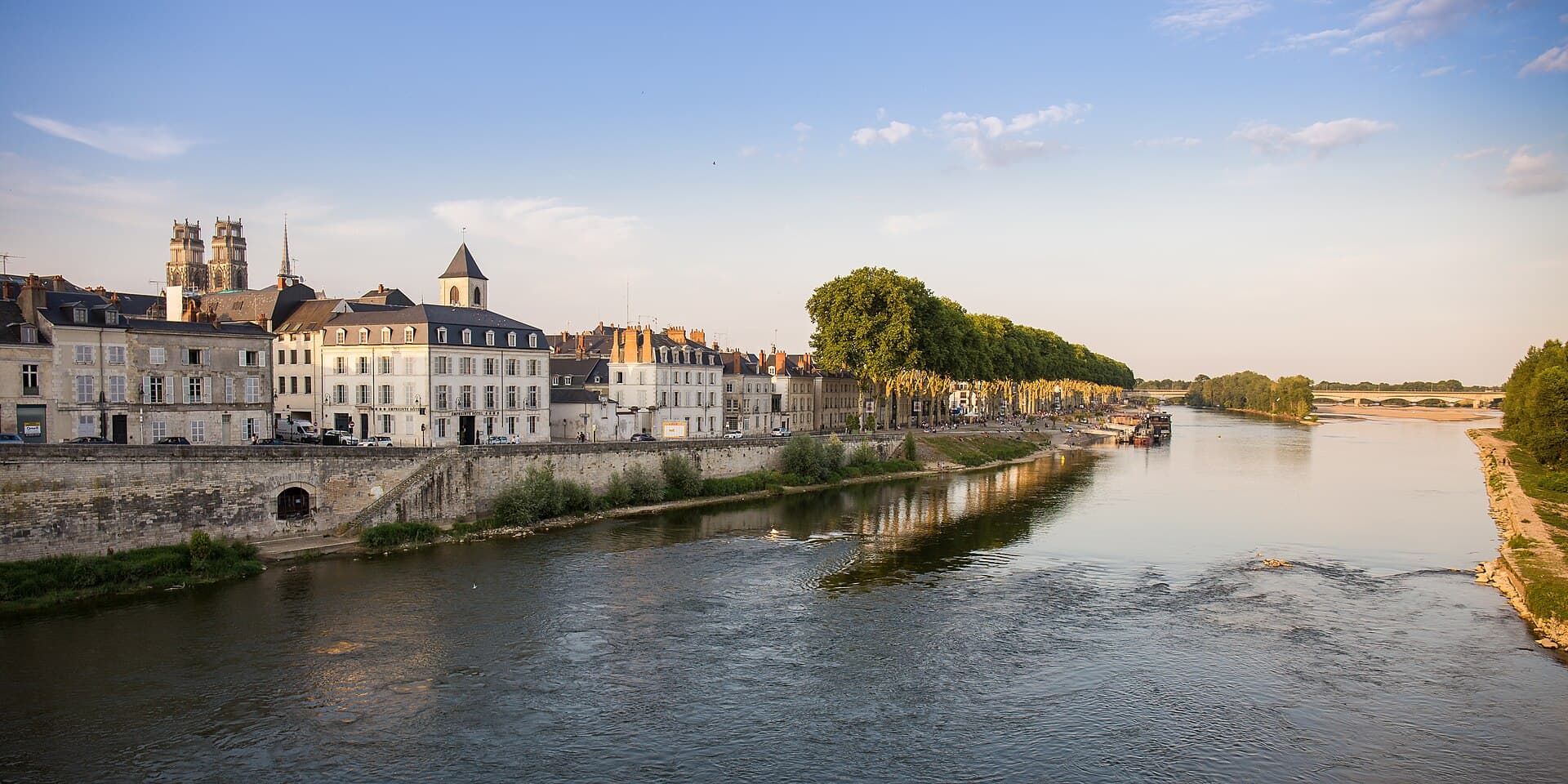 Nono vlf / cc by-sa 4.0, via Wikimedia Commons
Self-guided audio walking tour of Lavardin — GPS route, offline playback, story-driven narration in 32 languages.
“Where ancient stones recount eras, and frescoes glow with forgotten light.”
Not the postcards. The stories even locals don't know — whispered in your ear, right where they happened.
The imposing remnants of Lavardin's castle hold a secret about a powerful count and a king's fury.
The lively frescoes within the village church were once deliberately obscured for centuries.
Some of Lavardin's distinctive cave houses offer an annual glimpse into a living, ancient tradition.
Discover every secret of Lavardin
Every address, every reveal in full — in your ear, right where it happened.
You pick your stops. You walk. The voice reveals what the others miss.


Your self-guided audio tour of Lavardin is ready — pick your landmarks, choose your language, and start the moment you arrive.
BuyLume has a built-in augmented-reality guide. Hold your phone up and its camera shows the street ahead of you, with a glowing arrow laid over the real view that always points to your next stop — no map to puzzle over, no wrong turns. Like everything in Lume, it works fully offline.
Lavardin, officially recognized as one of "The Most Beautiful Villages of France," is a captivating medieval village in the Loir-et-Cher department, part of the Centre-Val de Loire region. Situated on the banks of the Loir River, not far from Montoire-sur-Loir, the village presents a picturesque tableau of ancient houses with slate roofs and flower-lined streets. It offers a slower pace of life, connected to nature, with a close-knit community and local traditions.
The village is dominated by the dramatic ruins of its feudal castle, situated on a rocky promontory above the Loir. Beyond the castle, Lavardin's appeal extends to its Romanesque Church of Saint-Genest, renowned for its medieval frescoes, and a Gothic bridge spanning the Loir. The presence of troglodytic dwellings, carved into the rock, adds another singular layer to its architectural character, blending Renaissance residences with ancient cave homes.
Visitors are invited to wander its winding streets, explore its historical sites, and take in the scenic views of the Loir Valley. Lavardin's commitment to preserving its medieval character ensures an immersive journey into another era, making it a highly touristic yet tranquil destination.
Lavardin's history stretches back to prehistoric times, with evidence of habitation on the castle promontory, including a Merovingian cemetery. The village began to fortify as early as the 10th century. Around 1030, Salomon I of Lavardin became the first lord, and his descendants held sway for the next three centuries. The Church of Saint-Genest was constructed in the mid-to-late 11th century, initially serving as a priory church.
The Château de Lavardin, originally built in the early 11th century, was sold to the Count of Vendôme around 1130, becoming his primary fortress by the late 12th century. It was significantly altered in the 14th and 15th centuries, with additions like three strong towers between the late 12th and 13th centuries. Jean VII de Bourbon-la Marche, Count of Vendôme, undertook major renovations around 1380, and further work in the early 15th century added the elegant staircase and vaults to the keep. The castle even hosted King Charles VII and his mistress Agnès Sorel in 1448.
However, the castle's fortunes turned during the Wars of Religion. In 1589, it was taken by members of the Catholic League. The following year, King Henri IV, frustrated by the defiance of his subjects in the Loir Valley, ordered the castle's dismantling. Since 1945, the ruins have been classified as a Historic Monument. Efforts to restore and secure the site are ongoing, with a goal to reopen the castle fully to the public by 2027.
Despite the castle's destruction, Lavardin has largely retained its medieval character. The village's architectural heritage includes Renaissance residences alongside its unique troglodytic houses. Lavardin's enduring appeal has also drawn renowned painters since the early 20th century, including Busson and Sauvage.
Begin your exploration at the Château de Lavardin, whose imposing ruins stand sentinel over the village. While partially undergoing restoration, you can still admire its formidable presence, including the remains of its keep, guard room, and defensive walls. A climb to the castle offers expansive views of the village and the Loir Valley.
Descend to the Church of Saint-Genest, an 11th-century Romanesque church celebrated for its extensive and well-preserved frescoes and wall paintings dating from the 12th to 16th centuries. Inside, marvel at scenes depicting the Baptism of Christ, the Tree of Jesse, and various saints. A pamphlet is available at the church entrance to help decipher the symbolism of these ancient artworks.
Stroll across the Gothic bridge over the Loir River, an eight-arched stone structure built at the end of the 12th century. From here, you can capture postcard-perfect views of the village and castle. Follow the Poet's Walk (Rotte aux Biques path) along the Loir, a scenic route lined with weeping willows that leads to a superb viewpoint over Lavardin. Along this path, you'll also encounter some of Lavardin's distinctive troglodytic houses.
Do not miss the small museum under the town hall (the former Priory Saint-Genest), which chronicles the history of Lavardin and its castle. The village itself is a delight to wander, with its pretty old houses, some featuring 16th-century details like half-timbering and ornate windows.
The ideal times to visit Lavardin are during spring (April-May) and autumn (September-October). During these seasons, the weather is generally pleasant, and crowds are smaller. Spring brings blooming flowers and blossoms, while autumn showcases rich fall colors, particularly in the vineyards. Summer (July-August) offers lively villages and longer hours at sights, but it can be warm and busy with vacationing Europeans. If you wish to experience the distinctive 'Troglos Days' when private cave homes are open, plan your visit for the end of September. Winter travel is quieter, though some tourist activities may have reduced hours.
Lavardin is situated approximately 20 kilometers southwest of Vendôme and 40 kilometers north of Tours in the Loir-et-Cher department. If traveling by car, free parking is available. For those using public transport, Le Mans is an hour from Paris by TGV, and Lavardin is less than an hour's drive from Le Mans. Ryanair offers flights to Tours, which is a 45-minute drive from the village. The village is also accessible by bike, as it lies on the bicycle path to Santiago de Compostela.
While the Château de Lavardin is undergoing restoration, parts of it can be visited during specific hours: May (weekends and holidays), June-September (10 AM-12 PM, 2 PM-6 PM, closed Mondays), and October (weekends only). During other times, visits may be possible by appointment. The Church of Saint-Genest is generally accessible, and a free document is available inside to explain the frescoes. Lavardin has a small population of around 179 residents. While a small restaurant may be available, it's advisable to check opening hours, especially during off-peak seasons.
Lavardin in Korean, in Chinese or in Hebrew — and 29 more languages, every stop narrated by a native voice. The widest language range of any self-guided audio tour.
Available in: