Cathédrale de Limburg
L'extérieur rouge et blanc vif de la cathédrale de Limburg n'est pas qu'un choix artistique moderne.
L'histoire complète se débloque dans le tour
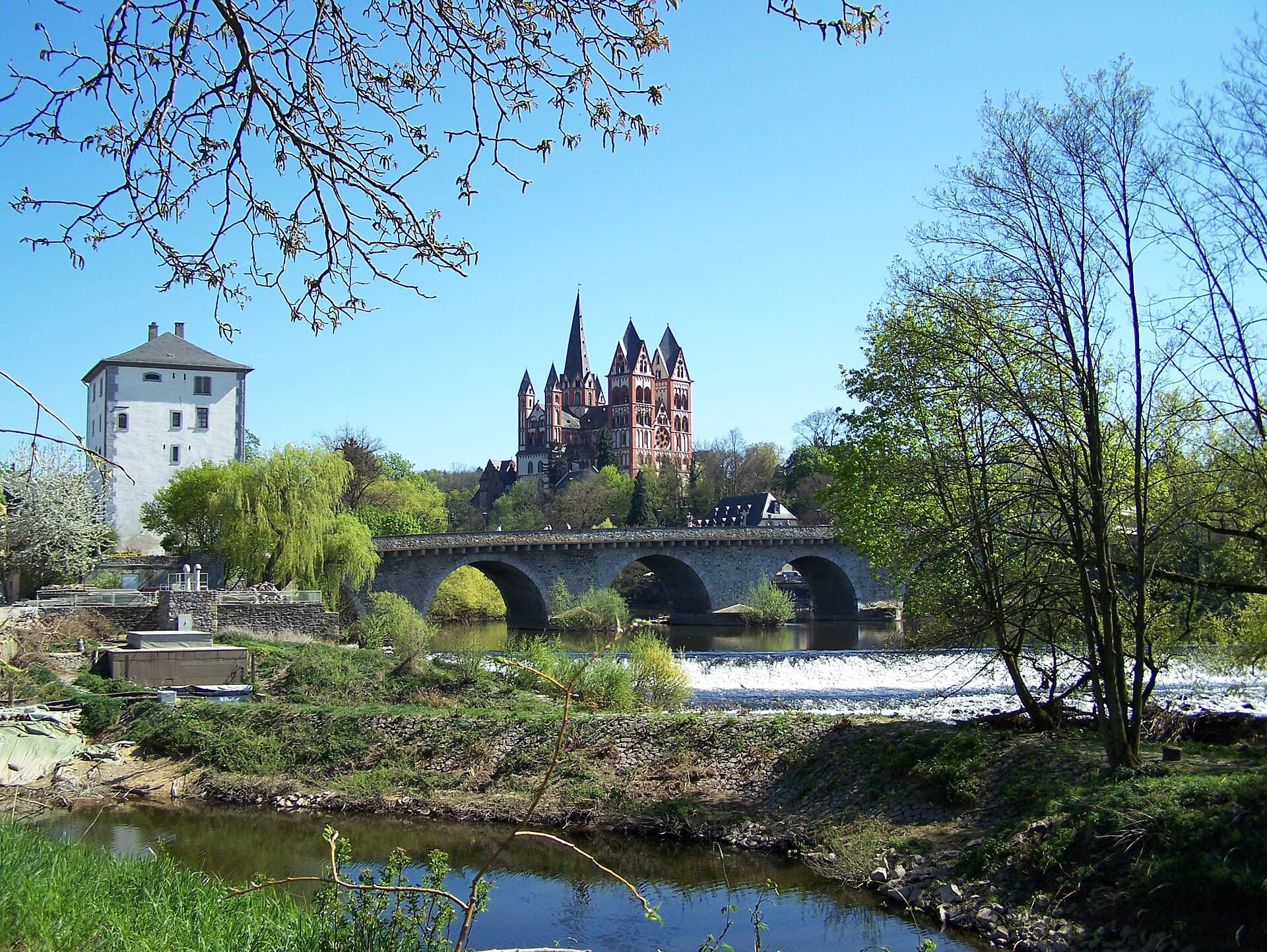 Danny Busch, DannyBusch at German Wikipedia / CC BY-SA 3.0, via Wikimedia Commons
Visite audio autoguidée de Limbourg-sur-la-Lahn — parcours GPS à pied, lecture hors ligne, narration en 32 langues.
“Là où les fresques médiévales brillent et les vieilles charpentes racontent leurs histoires.”
Pas les cartes postales. Les histoires que même les habitants ignorent — soufflées à l'oreille, là où elles se sont passées.
L'extérieur rouge et blanc vif de la cathédrale de Limburg n'est pas qu'un choix artistique moderne.
Le Vieux Pont sur la Lahn n'a pas toujours été la solide structure de pierre que l'on voit aujourd'hui.
Une maison à colombages discrète à Limburg détient un record surprenant.
Découvrez tous les secrets de Limbourg-sur-la-Lahn
Chaque adresse, chaque révélation en entier — dans ton oreille, là où elle s'est passée.
Tu choisis tes lieux. Tu marches. La voix te révèle ce que les autres ignorent.
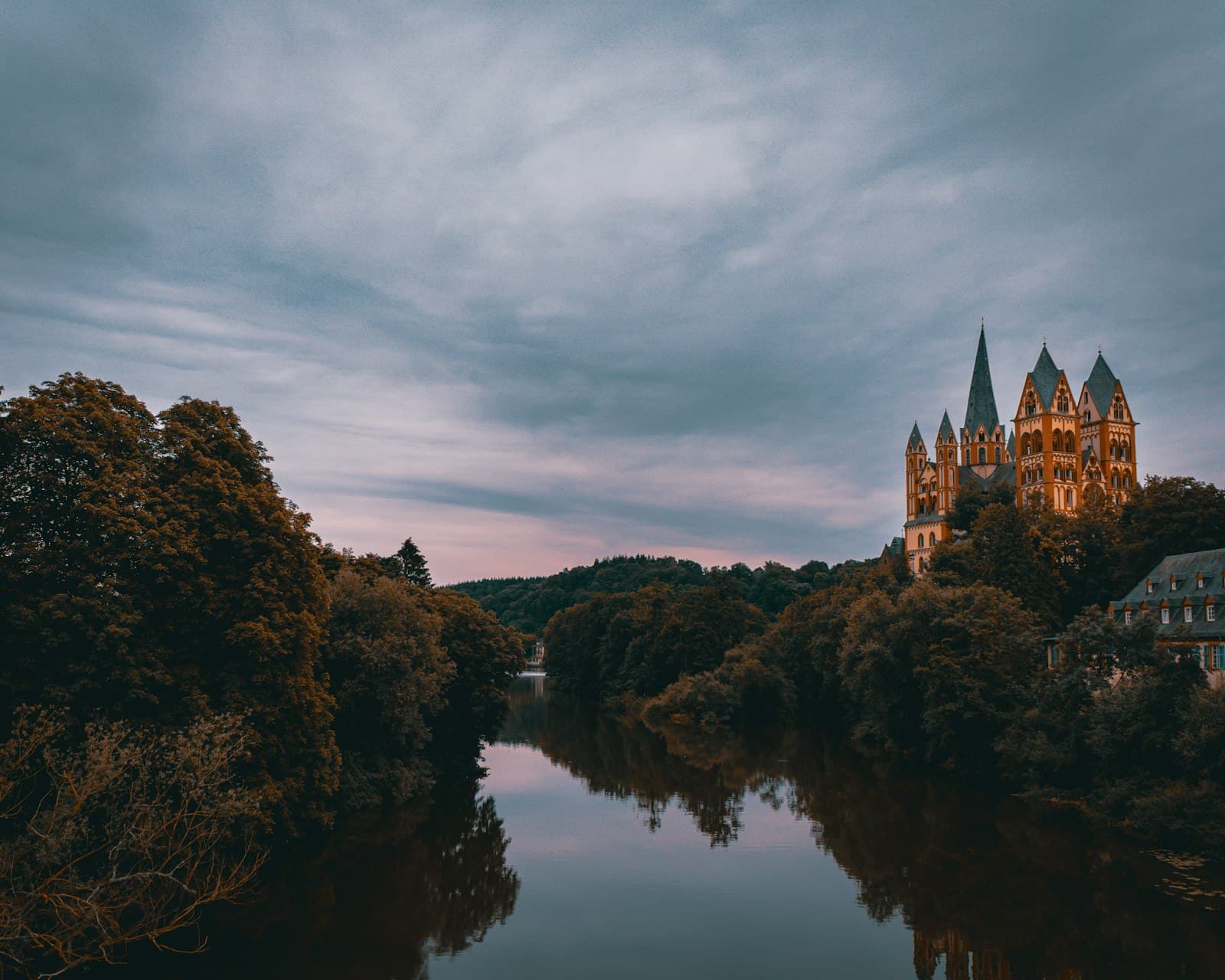
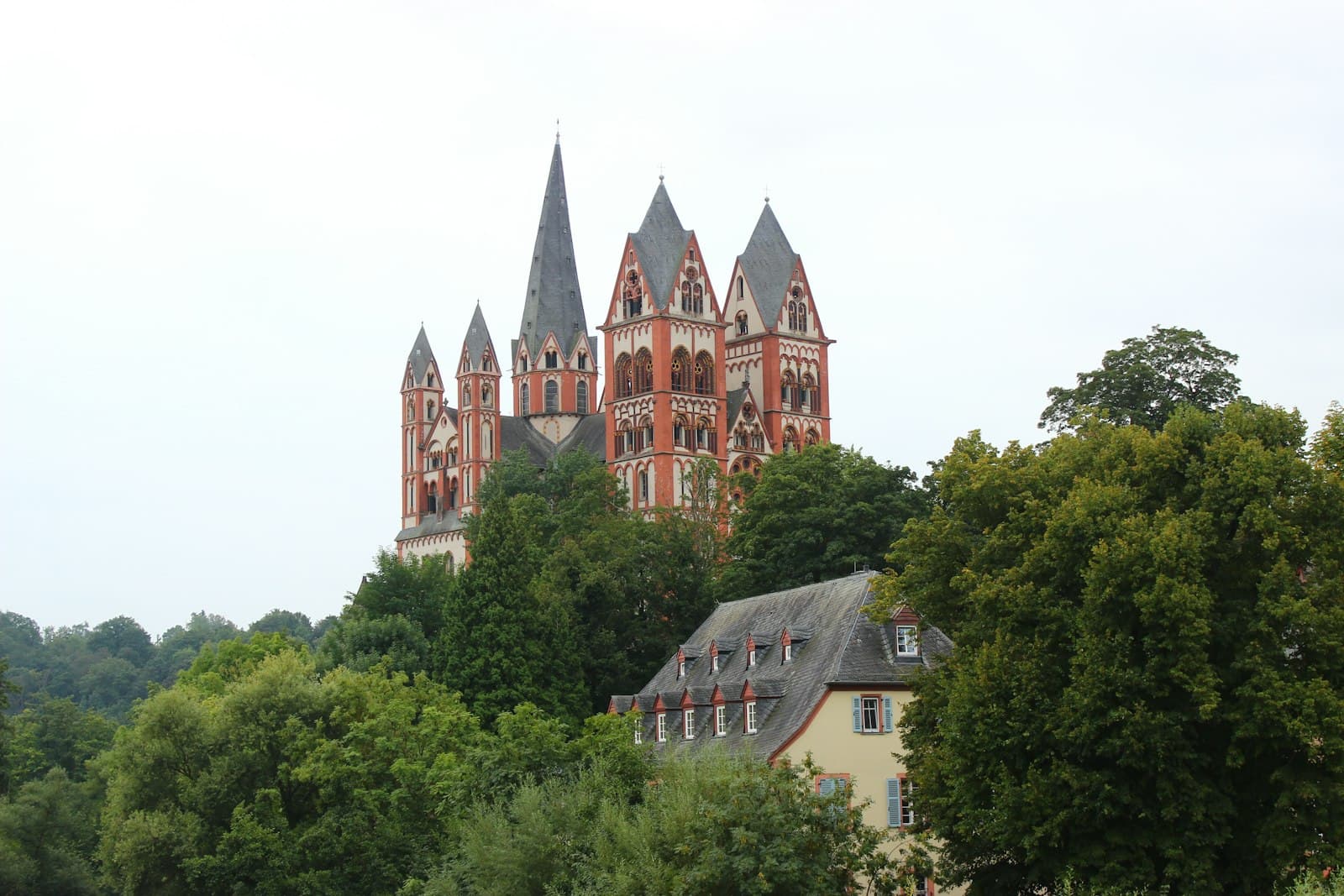
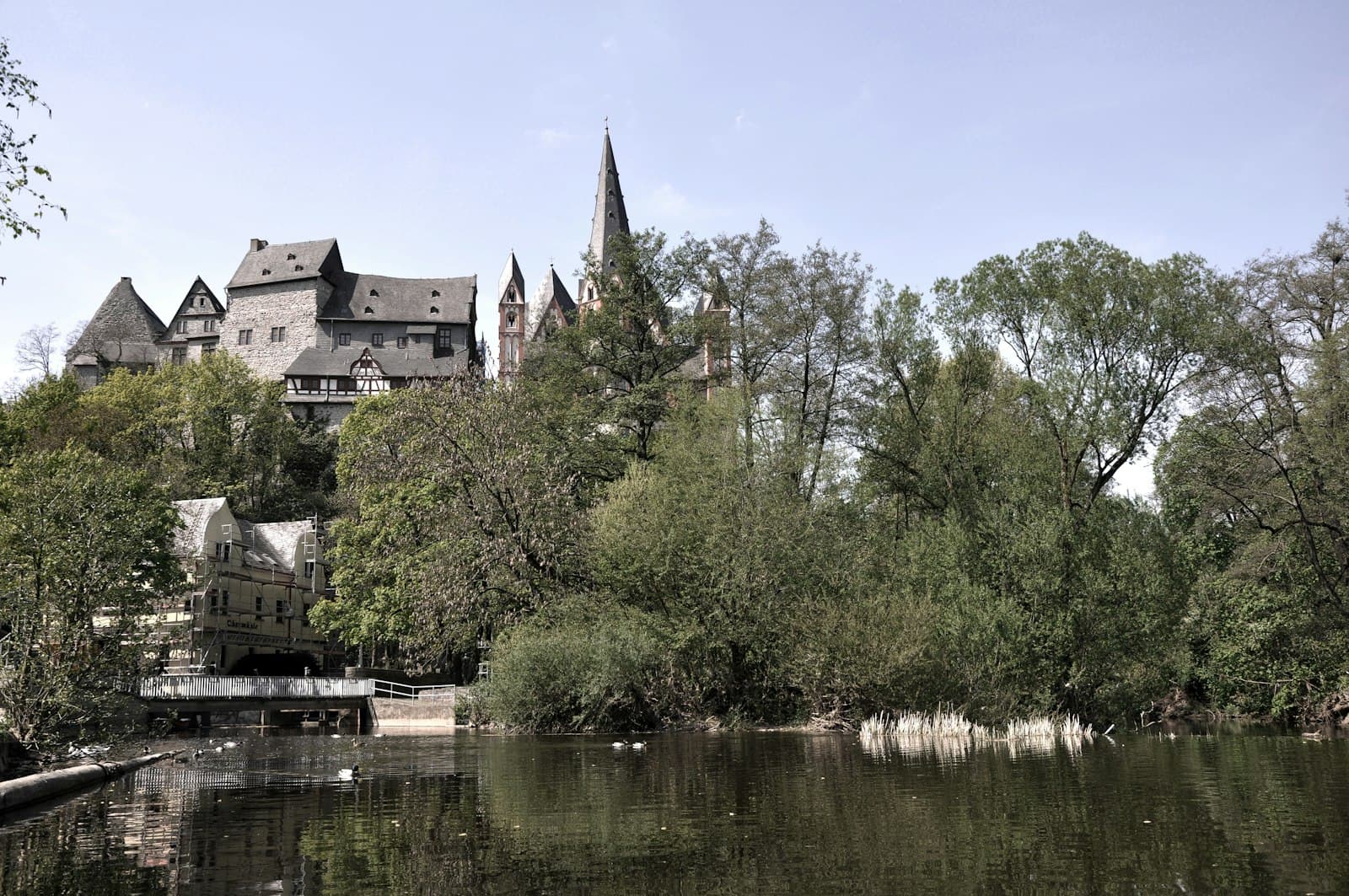
Votre visite audioguidée de Limbourg-sur-la-Lahn vous attend — choisissez vos lieux, votre langue, et lancez-vous dès votre arrivée.
AcheterLimburg an der Lahn, une ville captivante de Hesse, en Allemagne, donne l'impression d'un voyage dans une peinture médiévale vivante. Sa silhouette est dominée par la majestueuse cathédrale de Limburg, un chef-d'œuvre de l'architecture romane tardive avec ses sept flèches distinctives et sa façade rouge et blanc vif. Cette petite ville, d'environ 34 000 habitants, offre l'un des ensembles de maisons à colombages du XIIIe au XVIIIe siècle les plus complets et les mieux conservés d'Allemagne.
Promenez-vous dans la vieille ville compacte et charmante de Limburg, où des ruelles étroites et sinueuses mènent devant des façades tordues peintes de teintes joyeuses. C'est un endroit qui se découvre le mieux à pied, vous permettant de dénicher des siècles d'histoire à chaque coin de rue. Souvent négligée au profit de destinations allemandes plus grandes, Limburg offre un aperçu authentique de l'Allemagne médiévale sans les foules.
Stratégiquement située entre Francfort et Cologne, Limburg a historiquement prospéré en tant que centre commercial vital grâce à sa position sur la Via Publica et la rivière Lahn. Aujourd'hui, elle reste une étape pratique et enrichissante pour les voyageurs explorant les points forts culturels et naturels de la Hesse et de la campagne environnante des basses montagnes, qui offre de nombreuses opportunités de marche, de cyclisme et de canoë.
Les origines de Limburg an der Lahn remontent au VIIe siècle, lorsqu'un château fut d'abord établi sur les rochers surplombant la rivière Lahn, probablement pour protéger un gué vital. L'histoire documentée officielle de la ville commence en 910 après J.-C., avec sa première mention sous le nom de 'Lintpurc' lorsque Louis l'Enfant accorda à Konrad Kurzbold un domaine pour construire un monastère dédié à Saint-Georges. Ce monastère devint le noyau autour duquel la colonie se développa.
Au XIIe siècle, la situation stratégique de Limburg sur la Via Publica, une route commerciale cruciale reliant Cologne et Francfort, et sa position sur la rivière Lahn, propulsèrent sa croissance. La construction d'un pont en bois sur la Lahn en 1150 renforça encore son importance en tant que carrefour commercial. Le droit de percevoir des péages sur le pont, confirmé par l'empereur Charles IV en 1357, apporta des revenus significatifs au trésor de la ville.
Limburg reçut sa charte de ville en 1214, et peu après, la construction de l'emblématique cathédrale Saint-Georges commença vers 1200, culminant avec sa consécration en 1235. Cette période vit également l'érection du château de Limburg sous sa forme actuelle et le développement de remparts en pierre, reflétant la prospérité grandissante et les besoins défensifs de la ville.
Malgré sa floraison médiévale, Limburg connut des périodes de déclin. Un grand incendie de ville en 1289 entraîna une reconstruction extensive, façonnant une grande partie de l'apparence actuelle de la vieille ville. La Peste Noire ravagea la ville au milieu du XIVe siècle, et un changement dans les principales routes commerciales, couplé à l'essor de Francfort, contribua à une diminution de son importance commerciale. En 1420, Limburg passa entièrement sous la propriété de l'Électorat de Trèves.
Le XVIIe siècle apporta la Guerre de Trente Ans, au cours de laquelle les troupes suédoises occupèrent et endommagèrent des parties de la ville, y compris le poste de douane sur le Vieux Pont sur la Lahn. Cependant, l'importance sous-jacente de Limburg lui permit de survivre à ces périodes tumultueuses.
Le XIXe siècle marqua un tournant pour Limburg. En 1806, elle devint partie du nouveau Duché de Nassau et fut élevée au rang de siège épiscopal catholique en 1827. L'arrivée du chemin de fer en 1862 donna un nouvel élan au développement économique, connectant Limburg à un réseau plus large.
Remarquablement, Limburg an der Lahn fut largement épargnée par les destructions généralisées de la Seconde Guerre mondiale, un sort qui frappa de nombreuses autres villes allemandes. Cette heureuse circonstance signifie que son cœur médiéval, y compris la cathédrale et de nombreuses maisons à colombages, reste exceptionnellement bien préservé. Des règles strictes de protection des monuments, connues sous le nom de 'Modèle de Limburg' de rénovation urbaine, mises en œuvre dans les années 1970, ont assuré l'intégrité de son environnement historique, en faisant un véritable musée vivant.
Le charme de Limburg s'apprécie le mieux en flânant dans ses rues historiques. Commencez par la Limburger Dom (Cathédrale Saint-Georges), une basilique romane tardive frappante avec sept flèches, dramatiquement située sur un rocher calcaire au-dessus de la rivière Lahn. Admirez son extérieur rouge et blanc vif, une restauration de ses couleurs originales du XIIIe siècle, et entrez pour voir les fresques médiévales et les vitraux. Ne manquez pas la tombe de Konrad Kurzbold, le fondateur du monastère.
Descendez de la cathédrale dans la Vieille Ville (Altstadt), un labyrinthe de ruelles étroites et sinueuses bordées de maisons à colombages magnifiquement conservées datant du XIIIe au XVIIIe siècle. Cherchez Römer 2-4-6, considérée comme la plus ancienne maison à colombages indépendante d'Allemagne (construite en 1289), et la Haus der sieben Laster (Maison des sept péchés capitaux), avec sa façade sculptée intrigante.
L'Alte Lahnbrücke (Vieux Pont sur la Lahn), un pont de pierre du XIVe siècle, offre des vues pittoresques sur la rivière Lahn et la cathédrale qui domine. C'est un endroit idéal pour les photographies, surtout au lever ou au coucher du soleil. Le long des rives de la rivière, vous pouvez également apercevoir deux roues à aubes historiques.
Pour une immersion plus profonde dans l'histoire et l'art locaux, visitez le Musée Diocésain et Trésor (Diözesanmuseum Limburg), situé près de la cathédrale, qui abrite de l'art religieux et des artefacts datant du Xe siècle. Bien qu'une grande partie du château original de Limburg soit en ruines, des vestiges peuvent être explorés.
Enfin, prenez un moment sur le charmant Fischmarkt (Marché aux Poissons), une place entourée de bâtiments médiévaux colorés, parfait pour un café et observer les gens.
Le meilleur moment pour visiter Limburg an der Lahn pour les activités par temps chaud est de mi-juin à début septembre. Pendant ces mois d'été, les températures maximales quotidiennes moyennes sont de 22-24°C (72-75°F), créant des conditions idéales pour flâner dans la ville et faire du tourisme. Le printemps et l'automne offrent également un temps de transition agréable et doux. Bien que les hivers soient frais et humides, avec des températures autour de zéro, décembre apporte un charme festif avec les marchés de Noël.
Limburg an der Lahn est facilement accessible. Elle se trouve à environ une heure de route de Francfort et un peu plus d'une heure de Cologne, située près de l'autoroute A3. Pour ceux qui voyagent en train, des liaisons ICE à grande vitesse sont disponibles depuis Francfort et Cologne.
Une fois à Limburg, le cœur médiéval est piétonnier, alors prévoyez de vous garer en dehors de la vieille ville si vous venez en voiture. La ville est compacte et se découvre le mieux à pied ; une promenade tranquille à travers les principaux sites prend environ 2-3 heures, bien que s'attarder dans les cafés ou les musées puisse facilement prolonger votre séjour. Des chaussures confortables sont fortement recommandées en raison des rues pavées et des pentes douces.
La monnaie officielle est l'Euro (EUR). Bien que les cartes bancaires soient largement acceptées, il est conseillé d'avoir de l'argent liquide sur soi. Des distributeurs automatiques de billets sont facilement disponibles dans toute la ville.
Limbourg-sur-la-Lahn en coréen, en chinois ou en hébreu — et dans 29 autres langues, chaque étape narrée par une voix native. La plus large gamme de langues de tous les audioguides autoguidés.
Disponible en :