Whistler House Museum of Art
James McNeill Whistler, the painter of 'Whistler's Mother,' was born in Lowell, but he wasn't exactly proud of his hometown.
Full story unlocks in the tour
 Quintin Soloviev / CC BY 4.0, via Wikimedia Commons
Self-guided audio walking tour of Lowell — GPS route, offline playback, story-driven narration in 32 languages.
“Where industrial might met human ingenuity, Lowell's canals still hum with stories.”
Not the postcards. The stories even locals don't know — whispered in your ear, right where they happened.
James McNeill Whistler, the painter of 'Whistler's Mother,' was born in Lowell, but he wasn't exactly proud of his hometown.
Some say Edgar Allan Poe penned parts of a famous poem within these walls.
The extensive canal system that powered Lowell's mills had an unexpected and critical backup plan.
Discover every secret of Lowell
Every address, every reveal in full — in your ear, right where it happened.
You pick your stops. You walk. The voice reveals what the others miss.


Your self-guided audio tour of Lowell is ready — pick your landmarks, choose your language, and start the moment you arrive.
BuyLume has a built-in augmented-reality guide. Hold your phone up and its camera shows the street ahead of you, with a glowing arrow laid over the real view that always points to your next stop — no map to puzzle over, no wrong turns. Like everything in Lume, it works fully offline.
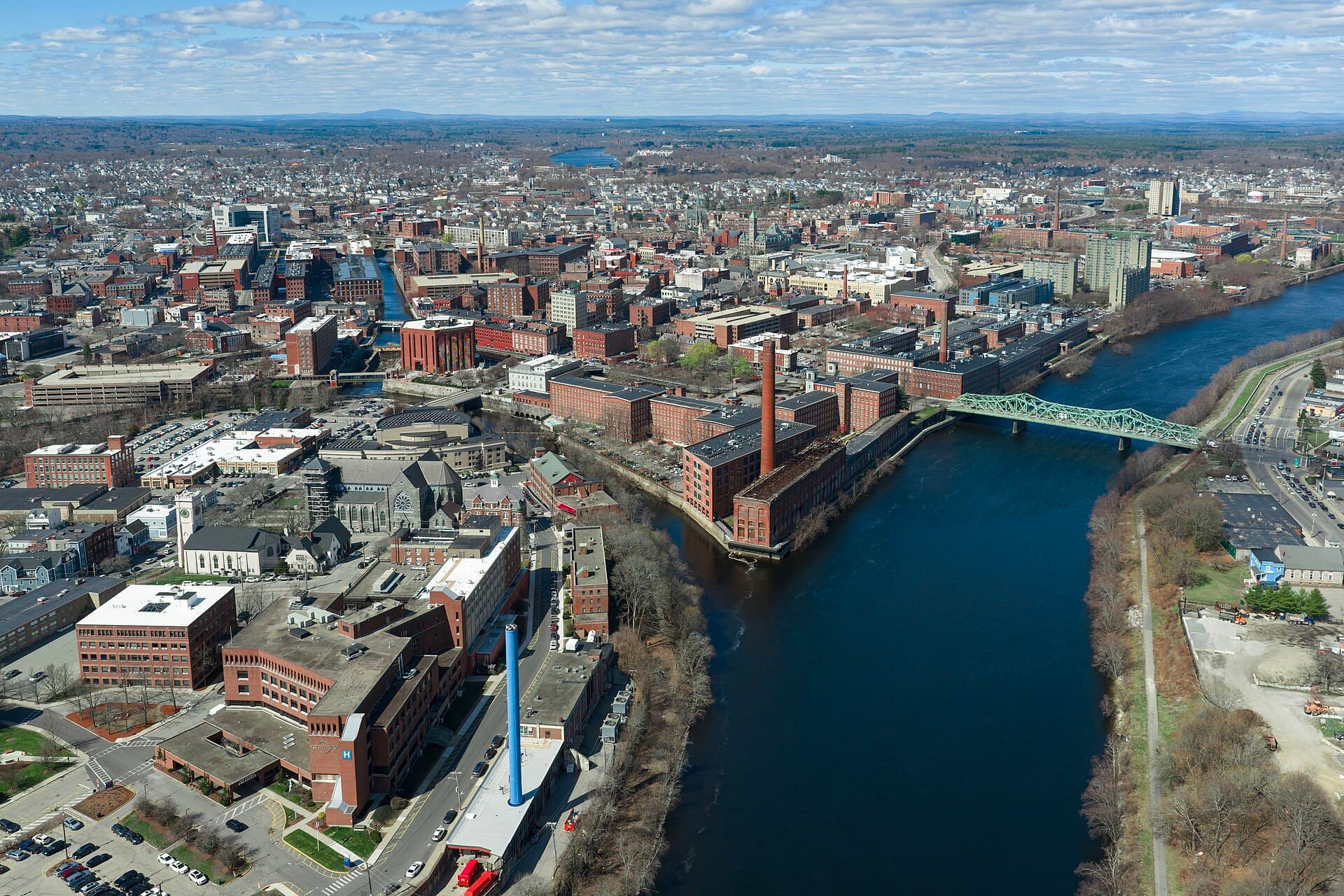
Lowell, Massachusetts, a city approximately 27 miles northwest of Boston, holds a significant place in American history as the nation's first planned industrial city. It emerged in the early 19th century, transforming from a farming community into a powerhouse of cotton textile manufacturing, driven by the waterpower of the Merrimack River and an intricate canal system. This ambitious undertaking, often referred to as 'The Lowell Experiment,' established a model for industrial development and urban planning that drew attention from across the globe.
Today, Lowell is a city that embraces its industrial past while fostering a contemporary identity. The red brick architecture of its downtown, the dramatic Pawtucket Falls, and the miles of canals serve as tangible reminders of its boom years. The city's resurgence in the late 20th century, fueled by new technological and educational opportunities like UMass Lowell and a diverse influx of immigrants, has created a unique cultural landscape. Lowell is now a dynamic urban center, blending historic mill buildings with a thriving arts scene, diverse culinary offerings, and a strong multicultural community.
Lowell's story begins in the early 19th century, a period when America was transitioning from an agrarian society to an industrial nation. The area, originally known as East Chelmsford, was strategically chosen for its location at the junction of the Concord and Merrimack rivers, where the Pawtucket Falls offered significant waterpower potential. In 1821, the Lowell Manufacturing Company was chartered, marking the true genesis of the industrial city.
Francis Cabot Lowell, the city's namesake, was a pivotal figure in this transformation. He adapted English engineering plans for water-powered turbines and looms, bringing large-scale textile manufacturing to the United States. The 'Lowell System' was a distinctive employment model, primarily recruiting young, unmarried women from rural New England farms, known as 'Lowell Mill Girls.' These women were provided with boarding, educational opportunities, and wages, a system seen as an improvement over the harsh conditions in other industrial centers. By the 1850s, Lowell had become the second-largest city in Massachusetts and the largest industrial complex in the United States, with its mills housing thousands of power looms and producing a significant portion of the country's textiles.
Waves of immigrants, including Irish workers who dug the canals and built the mills, later contributed to Lowell's workforce and cultural landscape. However, after World War I, the city's factories began to decline, and the Great Depression further impacted its economy. The mills slowly shuttered, with the last original mill closing in 1958. This period of deindustrialization led to economic hardship and a struggle to redefine the city's identity.
Lowell's resurgence began in the late 20th century, driven by new technological and educational ventures like Wang Industries and UMass Lowell. Preservation efforts also gained momentum, culminating in the establishment of Lowell National Historical Park in 1978, the first urban national park of its kind. This park played a crucial role in preserving the city's industrial heritage and serving as a catalyst for revitalization. Today, Lowell continues to evolve, embracing its multicultural population, which includes the second-highest population of Southeast Asians in America, and fostering a burgeoning arts and cultural community.
Begin your exploration at the Lowell National Historical Park, an urban national park that tells the story of America's Industrial Revolution. The park encompasses preserved textile mills, canals, and worker housing. Take a guided tour to experience operating looms and learn about the lives of the mill workers. The Boott Cotton Mills Museum, located within the park, offers an immersive experience with the thunderous roar of operating 19th-century textile machinery. You can also enjoy canal boat tours and trolley rides that bring the city's 19th-century story to life.
For art enthusiasts, the Whistler House Museum of Art is a memorable stop. It is the birthplace of artist James McNeill Whistler and showcases 19th and early 20th-century American art, with a focus on Lowell and New England artists. The New England Quilt Museum is another unique cultural attraction. Explore Kerouac Park, a commemorative space dedicated to Beat Generation author Jack Kerouac, a Lowell native. The Merrimack Riverwalk offers scenic pathways for walking or jogging with views of the river and surrounding landscape. Do not miss the Lowell Folk Festival, one of the largest free folk festivals in the United States, celebrating diverse music, dance, and crafts.
The best time to visit Lowell for warm-weather activities is from mid-June to mid-September. During these months, temperatures are comfortable, ranging from 65°F to 86°F (18°C to 30°C), with moderate humidity and abundant sunshine. This period is ideal for exploring outdoor attractions like the Lowell National Historical Park, enjoying canal tours, and attending the Lowell Folk Festival. Spring (May) and early fall (September) also offer pleasant weather with mild temperatures, though spring can have more cloud cover and occasional rain. Winters are cold with moderate snowfall, making outdoor activities less comfortable.
Lowell is easily accessible by automobile via Interstate 495, US Route 3, and various Massachusetts routes. For public transit, the Lowell Regional Transit Authority (LRTA) provides bus services within the city and surrounding areas. The Lowell National Historical Park offers a free streetcar shuttle connecting its various sites in the city center. When planning your visit, consider dedicating at least three days to fully experience Lowell's offerings. Accommodation options include hotels and vacation rentals. Many of the city's attractions, including the Lowell National Historical Park Visitor Center and most park sites (excluding the Boott Cotton Mills Museum), offer free admission. For information on city services, including tax and water bills, the city's website provides detailed FAQs.
Lowell in Korean, in Chinese or in Hebrew — and 29 more languages, every stop narrated by a native voice. The widest language range of any self-guided audio tour.
Available in: