Iglesia de la Encarnación
Montefrío presents an architectural distinction, remarkable even within a nation celebrated for its grand churches.
Full story unlocks in the tour
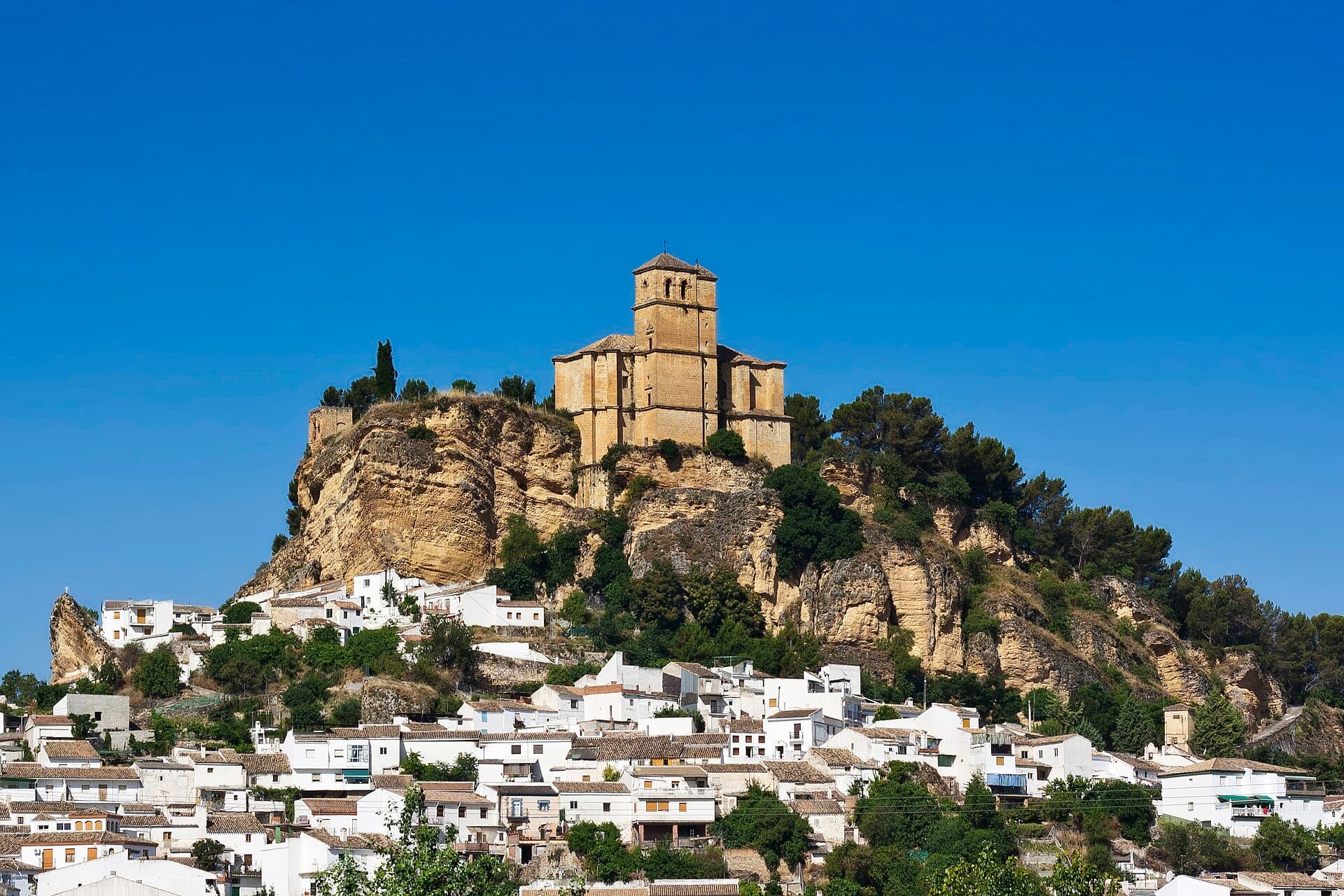 Daniel Sebastián Cueto / CC BY-SA 2.0, via Wikimedia Commons
Self-guided audio walking tour of Montefrío — GPS route, offline playback, story-driven narration in 32 languages.
“Where ancient history meets sweeping vistas, an Andalusian revelation.”
Not the postcards. The stories even locals don't know — whispered in your ear, right where they happened.
Montefrío presents an architectural distinction, remarkable even within a nation celebrated for its grand churches.
This tranquil Andalusian village captured the attention of a globally recognized publication, inspiring a local gesture of appreciation.
Beyond its olive groves, Montefrío safeguards a culinary tradition that has garnered national praise.
Discover every secret of Montefrío
Every address, every reveal in full — in your ear, right where it happened.
You pick your stops. You walk. The voice reveals what the others miss.

Your self-guided audio tour of Montefrío is ready — pick your landmarks, choose your language, and start the moment you arrive.
BuyLume has a built-in augmented-reality guide. Hold your phone up and its camera shows the street ahead of you, with a glowing arrow laid over the real view that always points to your next stop — no map to puzzle over, no wrong turns. Like everything in Lume, it works fully offline.
Montefrío, a white village in the Granada province of Andalusia, unfurls a landscape where olive groves stretch to the horizon, broken only by the sharp outline of its venerable monuments. The town's name, meaning 'cold mountain' in Spanish, hints at its elevation and the crisp air found here. Designated a historic and artistic site in 1982, Montefrío has carefully preserved its character, inviting visitors to wander through its narrow, winding lanes and uncover its singular appeal.
This town offers a distinct sense of Granada's spirit, with its whitewashed walls and traditional ceramics. It is a place where time seems to slow, fostering a deeper connection with the surroundings. Montefrío has earned international acclaim, particularly from National Geographic, for its dramatic views, drawing photographers and travelers seeking a truly expressive Spanish encounter.
Montefrío's narrative extends to prehistoric times, with evidence of early human habitation found in the area. The archaeological site of Las Peñas de los Gitanos, merely 5 kilometers beyond the town, represents one of Andalucía's most complete and significant Neolithic sites, featuring five cave shelters and necropoleis. Traces of Roman and Visigothic communities have also been unearthed here, alongside megalithic tombs.
During the Middle Ages, Montefrío became a pivotal frontier fortress for the Nasrid kingdom of Granada. Constructed between the Sierra de Priego and Sierra Parapanda, its strategic location allowed it to oversee the open valley, serving as a vital defensive bulwark against Christian forces for nearly 150 years. The Moorish fortress, erected in 1352 under Yusuf I by the same architect who designed the Alcazaba at the Alhambra, was central to this defense. It earned the moniker 'the last frontier of al-Andalus' due to its endurance.
The town ultimately yielded to the Catholic Monarchs in 1486, just six years prior to the conquest of Granada. Following its capture, the majestic Iglesia de la Villa was constructed upon the remnants of the Arab fort between 1486 and 1507. This metamorphosis from a Muslim stronghold to a Christian emblem marks a significant era in Montefrío's past, a story still evident in its architecture and urban design.
Begin your journey at the Mirador National Geographic Vista, offering the renowned panoramic view that brought Montefrío international recognition. Ascend the 111 steps to the Iglesia de la Villa and Castillo de Montefrío Ruins, a Gothic-Renaissance church built upon a former Moorish fortress, now housing an exhibition on the Catholic conquest.
Descend into the town to discover the Iglesia de la Encarnación, Spain's only entirely circular church, an 18th-century architectural wonder drawing inspiration from Rome's Pantheon. Explore the narrow lanes of the historic center, reflecting its Arab heritage. Visit the Montefrío Olive Oil Museum for insights into olive cultivation and a tasting of local oils. For those intrigued by ancient history, the Las Peñas de los Gitanos Neolithic Site, a short drive away, presents prehistoric tombs and Roman and Visigothic remains.
The most agreeable times to visit Montefrío are during spring (April, May, June) and autumn (September, October). In these months, temperatures are mild, and the weather is generally comfortable for exploration. Summers (July and August) are quite warm and arid, with July being the sunniest month, ideal for those who appreciate high temperatures. Winters are mild, though cooler than coastal regions, with some precipitation.
Montefrío is situated in the northwest of the Granada province, approximately 50 kilometers from the capital. While direct buses operate from Granada, a rental car is advisable for exploring the surrounding viewpoints and archaeological sites like Peña de los Gitanos. The town center provides amenities such as shops, bars, and restaurants. Typical business hours are 9:00 AM to 2:00 PM and 5:00 PM to 8:00 PM, Monday to Friday. The local Tourist Office is located in Plaza de España. Montefrío is recognized for its local products, including artisanal cheeses and award-winning extra virgin olive oil.
Montefrío in Korean, in Chinese or in Hebrew — and 29 more languages, every stop narrated by a native voice. The widest language range of any self-guided audio tour.
Available in: