Château des Adhémar
This medieval stronghold, now a beacon for contemporary art, once served a starkly different, much harsher purpose.
Full story unlocks in the tour
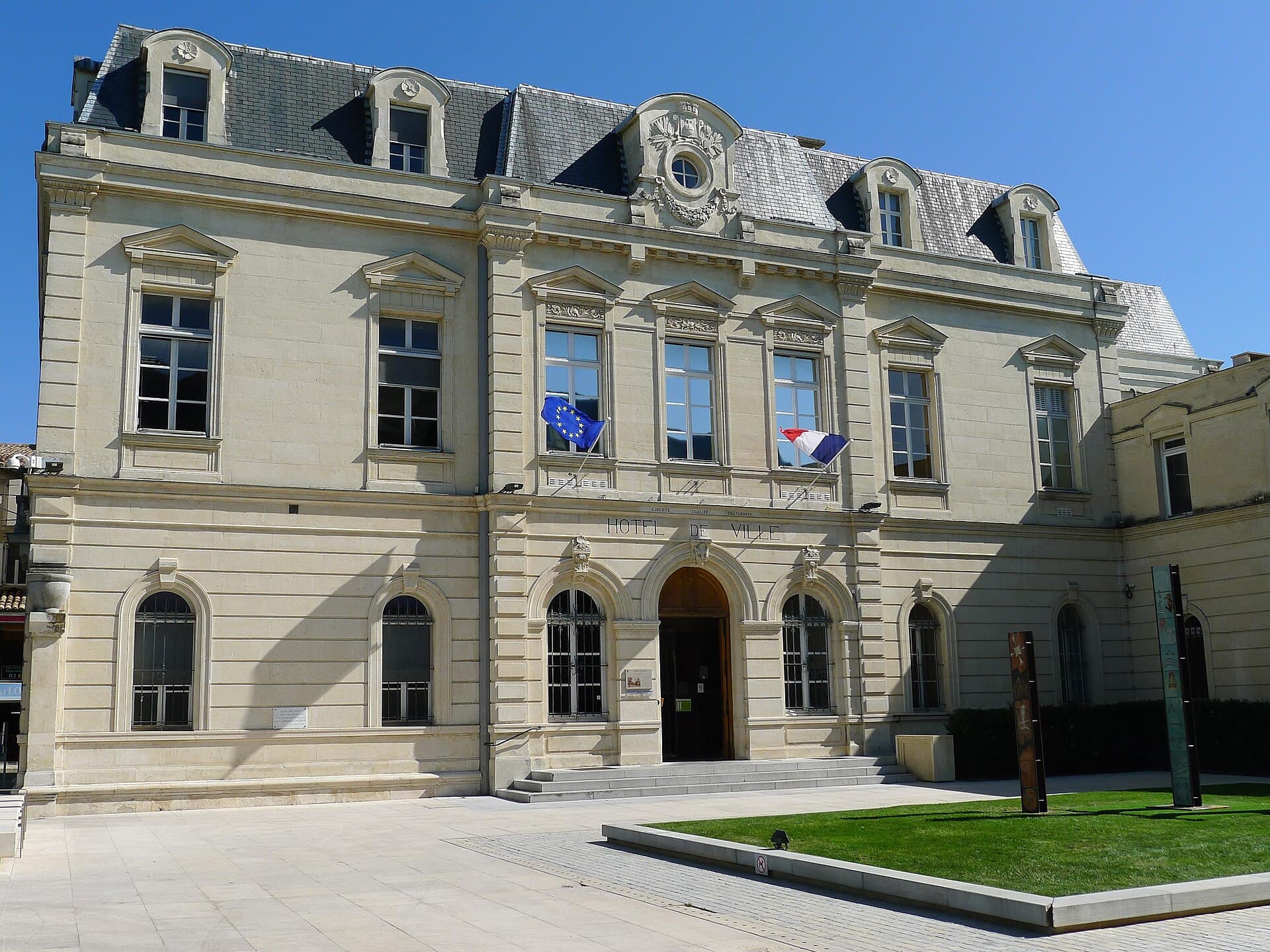 Sequajectrof / CC BY-SA 3.0, via Wikimedia Commons
Self-guided audio walking tour of Montélimar — GPS route, offline playback, story-driven narration in 32 languages.
“Montélimar: Where the Rhône Valley opens into the sun-drenched landscapes of Provence, and the air carries the scent of honey and almonds.”
Not the postcards. The stories even locals don't know — whispered in your ear, right where they happened.
This medieval stronghold, now a beacon for contemporary art, once served a starkly different, much harsher purpose.
The city's celebrated nougat ascended to global recognition, championed by a former mayor with a particular fondness for its sweetness.
Before the swift passage of the A7 autoroute, another road delivered Montélimar's nougat to countless travelers, though not without a lingering, sweet inconvenience.
Discover every secret of Montélimar
Every address, every reveal in full — in your ear, right where it happened.
You pick your stops. You walk. The voice reveals what the others miss.


Your self-guided audio tour of Montélimar is ready — pick your landmarks, choose your language, and start the moment you arrive.
BuyLume has a built-in augmented-reality guide. Hold your phone up and its camera shows the street ahead of you, with a glowing arrow laid over the real view that always points to your next stop — no map to puzzle over, no wrong turns. Like everything in Lume, it works fully offline.
Montélimar, frequently described as the entrance to Provence, is an inviting town in southeastern France, situated within the Drôme department. It lies near the convergence of the Roubion and Rhône rivers, approximately an hour and a half's drive from both Lyon and Marseille. The town is recognized globally as the center of nougat production, a confection crafted from almonds, honey, and egg whites. Its historic core, with its pedestrian pathways and soft-hued residences, exudes a delightful Provençal character.
Beyond its renowned sweet, Montélimar presents a fusion of historical intrigue and natural splendor. The town is encircled by scenic vistas, including fields of lavender and verdant forests, characteristic of the Drôme Provençale. Visitors can explore medieval structures, engage in outdoor pursuits such as cycling and walking, and absorb the unhurried rhythm of southern France. Montélimar's advantageous position in the Rhône Valley has shaped its past and continues to render it an appealing stop for those seeking both culinary pleasures and cultural exploration.
Montélimar's origins trace back to Roman times, when it was identified as Acunum. The town's contemporary name evolved from the medieval period, when it was known as Mons Adhemaris or Monteil d'Adhémar, after the influential local Adhémar family. This family gained prominence in the 10th century and constructed a significant residence, the Château des Adhémar, which remains a central landmark today.
Throughout its existence, Montélimar maintained strategic importance. It became part of the Holy Roman Empire in 1032 and was under papal governance for a period between 1340 and 1447. The town also experienced conflict, being seized by the Huguenots in 1587. The Château des Adhémar, originally a fortified dwelling from the 12th century, was transformed into a citadel with robust bastions in the late 16th century. Subsequently, it served as a prison for over a century, from 1791 to 1926, before its restoration and conversion into an exhibition space for contemporary art.
The town's most celebrated culinary contribution, nougat, has a lineage extending to ancient Mediterranean civilizations, where honey and nuts were combined in sweet preparations. Almond trees were cultivated in Provence as early as the 14th and 15th centuries, and by the 17th century, Montélimar became closely associated with nougat fabrication. Local confectioners refined the recipe, incorporating almonds, honey, and egg whites, distinguishing Montélimar nougat from other varieties. Its reputation expanded considerably in the early 18th century when Louis, Duke of Bourgogne, and Charles, Duke of Berry, were presented with a generous quantity of nougat during a stop in Montélimar in 1701. Further enhancing its standing was Émile Loubet, a former mayor and later President of France, who actively promoted the sweet to dignitaries and royalty at the turn of the 20th century. The construction of the A7 autoroute in 1968 further solidified Montélimar's connection with nougat, as nougatiers established shops at the expansive rest area to cater to travelers.
Begin your exploration at the Château des Adhémar, a 12th-century medieval castle that now functions as a contemporary art center. From its elevated position, you can take in sweeping views of the Rhône valley. Afterwards, wander through the pedestrianized historic center, characterized by its appealing pastel-hued houses and narrow passages. The Place des Clercs and other squares offer pleasant spots to pause.
No visit to Montélimar is complete without experiencing its famous nougat. Explore one of the many nougat factories, such as Arnaud Soubeyran, which features a museum detailing the history and creation of this sweet. You can observe the artisanal process of nougat making and, naturally, sample the various types. For a distinctive experience, visit the Musée de la Miniature, housed in the chapel of the old hospital, displaying over 300 miniatures from across the globe. The Porte Saint Martin, a 17th-century gateway, is another historical architectural detail worth observing. If your visit coincides with a Saturday morning, the energetic weekly market in the city center provides an excellent chance to discover local produce, cheeses, and artisanal goods.
Montélimar enjoys approximately 300 days of sunshine annually, making it an inviting destination for much of the year. The most comfortable period to visit is during spring, from mid-April to mid-June, when temperatures are mild and flowers are in bloom. September is also a pleasant month, though it can bring more rain. Summers, from mid-June to August, are warm to hot, with July being the warmest month, ideal for outdoor pursuits and local celebrations like the Fête du Nougat. Winters are generally mild, offering a good time to explore museums and local cuisine without large gatherings.
Montélimar is readily accessible and well-connected. It is situated on the A7 motorway, with exits N°16 and 17 providing direct access. The town has a train station (Gare SNCF de Montélimar) with services connecting to various national and regional destinations, including direct trains to Paris. Bus services, including FlixBus and BlaBlaCar Bus, also operate to and from Montélimar. The historic and shopping center is largely pedestrianized, making it easy to navigate on foot. For those arriving by car, complimentary parking options are available within a short walk of the center. Be aware that many shops and restaurants may be closed on Sundays and Mondays. The local currency is the Euro.
Montélimar in Korean, in Chinese or in Hebrew — and 29 more languages, every stop narrated by a native voice. The widest language range of any self-guided audio tour.
Available in: