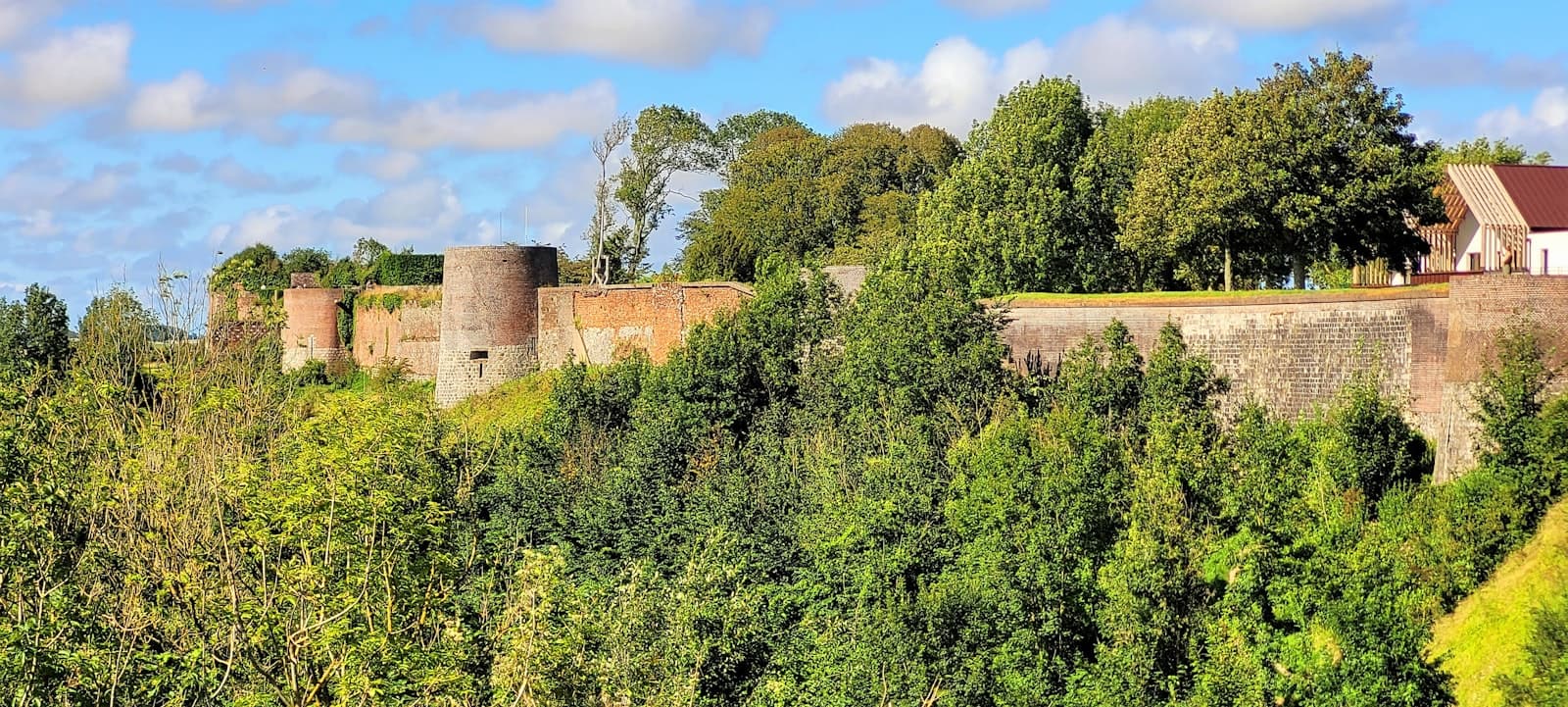
Mazmorras del Château de Montreuil-Bellay
Durante la Revolución Francesa, el formidable Château de Montreuil-Bellay tuvo un propósito más oscuro.
La historia completa se desbloquea en el tour
 Père Igor / CC BY-SA 3.0, via Wikimedia Commons
Tour de audio autoguiado de Montreuil-Bellay — ruta GPS a pie, reproducción offline, narración en 32 idiomas.
“Donde el poder medieval se encuentra con el encanto de los viñedos a lo largo del Thouet.”
No las postales. Las historias que ni los locales conocen — al oído, justo donde ocurrieron.
Durante la Revolución Francesa, el formidable Château de Montreuil-Bellay tuvo un propósito más oscuro.
Las grandes cocinas del castillo no son solo para exhibir; cuentan una historia de siglos de vida lujosa.
Los puentes que cruzan el río Thouet en Montreuil-Bellay tienen una historia particularmente inestable.
Descubre todos los secretos de Montreuil-Bellay
Cada dirección, cada revelación al completo — a tu oído, justo donde ocurrió.
Eliges tus paradas. Caminas. La voz te revela lo que los demás ignoran.
Tu tour de audioguía por Montreuil-Bellay te espera — elige tus lugares, tu idioma y empieza al llegar.
ComprarLume incluye una guía de realidad aumentada. Levanta el móvil y su cámara muestra la calle que tienes delante, con una flecha luminosa sobre la imagen real que siempre apunta a tu próxima parada — sin mapas que descifrar, sin giros equivocados. Como todo en Lume, funciona completamente sin conexión.
Montreuil-Bellay, una "Petite Cité de Caractère" en el Valle del Loira, ofrece un viaje en el tiempo con su patrimonio medieval bien conservado. Este cautivador pueblo, con vistas al río Thouet, se define por su impresionante castillo, murallas medievales y evocadoras calles. Rodeado de viñedos, presenta una mezcla de historia, belleza escénica y producción de vino local.
La ubicación estratégica del pueblo en el cruce de Anjou, Turena y Poitou ha moldeado su profundo pasado. Desde sus orígenes como un pueblo galorromano hasta su desarrollo como una fortaleza medieval fortificada, Montreuil-Bellay ha sido testigo de siglos de cambios. Hoy, los visitantes pueden explorar su núcleo histórico, pasear por las orillas del río y descubrir la viticultura local que contribuye a los renombrados vinos de Saumur.
Montreuil-Bellay es reconocido por su excepcional importancia histórica y arquitectónica, lo que le ha valido la etiqueta de "Petite Cité de Caractère". Su encantador casco antiguo, sus antiguos puentes y sus casas de piedra crean una atmósfera atemporal, invitando a la exploración y apreciación de su carácter único.
La historia de Montreuil-Bellay comienza sobre los cimientos de un pueblo galorromano, estratégicamente situado en una colina con vistas al río Thouet. En el siglo XI, Foulques Nerra, el Conde de Anjou, un guerrero incansable conocido como el "Halcón Negro", fortificó este sitio, construyendo la primera ciudadela. La confió a su vasallo, Giraud Berlay, quien se convirtió en el primer Señor de Bellay, prestando su nombre al asentamiento en evolución.
Montreuil-Bellay rápidamente ganó reputación como una fortaleza inexpugnable, convirtiéndose en un punto crítico en los conflictos entre las coronas inglesa y francesa. Famosamente resistió un asedio de tres años entre 1148 y 1151 antes de caer finalmente ante Geoffroy Plantagenêt, Conde de Anjou. Tras la derrota inglesa a principios del siglo XIII, el feudo regresó a un descendiente de la familia Berlay, y comenzaron extensas renovaciones.
El siglo XV marcó un período de significativo desarrollo arquitectónico, en gran parte bajo la influencia de Jacques II d'Harcourt y Guillaume IV d'Harcourt. Durante este tiempo, se reforzó el recinto urbano, se construyeron espectaculares puertas fortificadas y se edificó el hospital de Saint-Jean. La ubicación estratégica del pueblo en la intersección de las rutas a Angers, Poitiers, Saumur y Thouars fomentó su crecimiento como centro administrativo y comercial. La navegabilidad del río Thouet, mejorada a mediados del siglo XV, impulsó aún más el comercio, permitiendo que vinos, cereales y piedra de toba fueran transportados a nuevos mercados, incluido París.
Las Guerras de Religión francesas en el siglo XVI, seguidas de hambrunas y plagas, ralentizaron temporalmente el crecimiento económico del pueblo. Sin embargo, el comercio se reanudó en el siglo XVII. Durante la Revolución Francesa, el Château de Montreuil-Bellay fue incautado y transformado en una prisión para mujeres sospechosas de ser realistas. En 1822, un rico empresario de Saumur, Adrien Niveleau, adquirió la propiedad. Su hija más tarde emprendió una importante restauración, rehaciendo algunas habitaciones al estilo Trovador. Los descendientes del sobrino de su marido son los actuales propietarios, y el castillo sigue siendo un monumento histórico de propiedad privada, habitado por la misma familia desde 1822. Hoy, Montreuil-Bellay es reconocido como uno de los "Desvíos más bellos" de Francia y una "Petite Cité de Caractère", celebrado por su excepcional patrimonio medieval y su entorno verde a lo largo del Thouet.
Montreuil-Bellay invita a la exploración, con su impresionante Château de Montreuil-Bellay como pieza central. Esta fortaleza medieval y renacentista, con sus 15 torres y murallas fortificadas, ofrece un vistazo a siglos de historia. Los visitantes pueden explorar los grandes salones, las cocinas medievales, las impresionantes murallas que ofrecen vistas sobre el pueblo y el río Thouet, e incluso las bodegas subterráneas.
Pasee por el casco antiguo para descubrir sus bien conservadas murallas medievales, incluida la Porte Saint-Jean del siglo XV. La encantadora Place du Marché, bordeada de cafés, y las tradicionales casas de piedra de toba, características del Valle del Loira, aumentan el atractivo del pueblo. La Église Notre-Dame del siglo XV, una maravilla arquitectónica gótica con vidrieras y un techo abovedado, espera ser descubierta.
Más allá del castillo y el pueblo, Montreuil-Bellay está rodeado por los viñedos de la región vinícola de Saumur. Los visitantes pueden explorar bodegas familiares como Domaine de Rocheville, Château de la Durandière y Domaine du Haut Bellay para degustaciones y para aprender sobre la elaboración del vino. Para los entusiastas del aire libre, el piragüismo o el kayak en el río Thouet ofrece vistas únicas del castillo y el pueblo. El Moulin Hydronef (Museo del Molino Hydronef) ofrece una visión de la historia de la molienda y el comercio fluvial. También puede visitar la Mansión Fourneux, una señoría del siglo XVI con un parque.
Las épocas más agradables para visitar Montreuil-Bellay son la primavera (abril-junio) y el otoño (septiembre-octubre). Durante estos meses, el clima es templado y los viñedos circundantes son particularmente pintorescos. El verano (julio-agosto) también es hermoso, aunque puede estar más concurrido de turistas. Para aquellos que prefieren una experiencia más tranquila, visitar en invierno ofrece una atmósfera pacífica, con menos gente y la oportunidad de disfrutar de la gastronomía local junto al fuego. Las temperaturas diurnas en primavera oscilan entre 5°C y 17°C, mientras que en verano se registran máximas de 27°C y mínimas de 14°C.
Montreuil-Bellay se encuentra aproximadamente a 15 km al sur de Saumur, lo que lo convierte en una excursión de un día accesible dentro del Valle del Loira. El pueblo tiene su propia estación de tren con conexiones a Saumur, Angers y Tours. En coche, está a unos 40 minutos de Angers y a una hora de Tours. Los entusiastas del ciclismo pueden llegar a Montreuil-Bellay a través de la ruta ciclista Loire à Vélo.
Hay aparcamiento disponible en el centro histórico y sus alrededores, con un cómodo aparcamiento cerca del castillo. La Oficina de Turismo de Montreuil-Bellay, abierta los lunes, martes, miércoles y sábados, ofrece información para visitantes, un punto de acceso Wi-Fi gratuito y una selección de productos locales. También proporcionan entradas para atracciones locales a tarifas preferenciales y consigna de equipaje.
Montreuil-Bellay en coreano, en chino o en hebreo — y 29 idiomas más, cada parada narrada por una voz nativa. La mayor variedad de idiomas de cualquier audioguía autoguiada.
Disponible en: