Maison dite de la Duchesse Anne
Le nom de cette remarquable "maison à lanterne" du XVIe siècle pourrait vous faire croire qu'il s'agissait d'une résidence royale.
L'histoire complète se débloque dans le tour
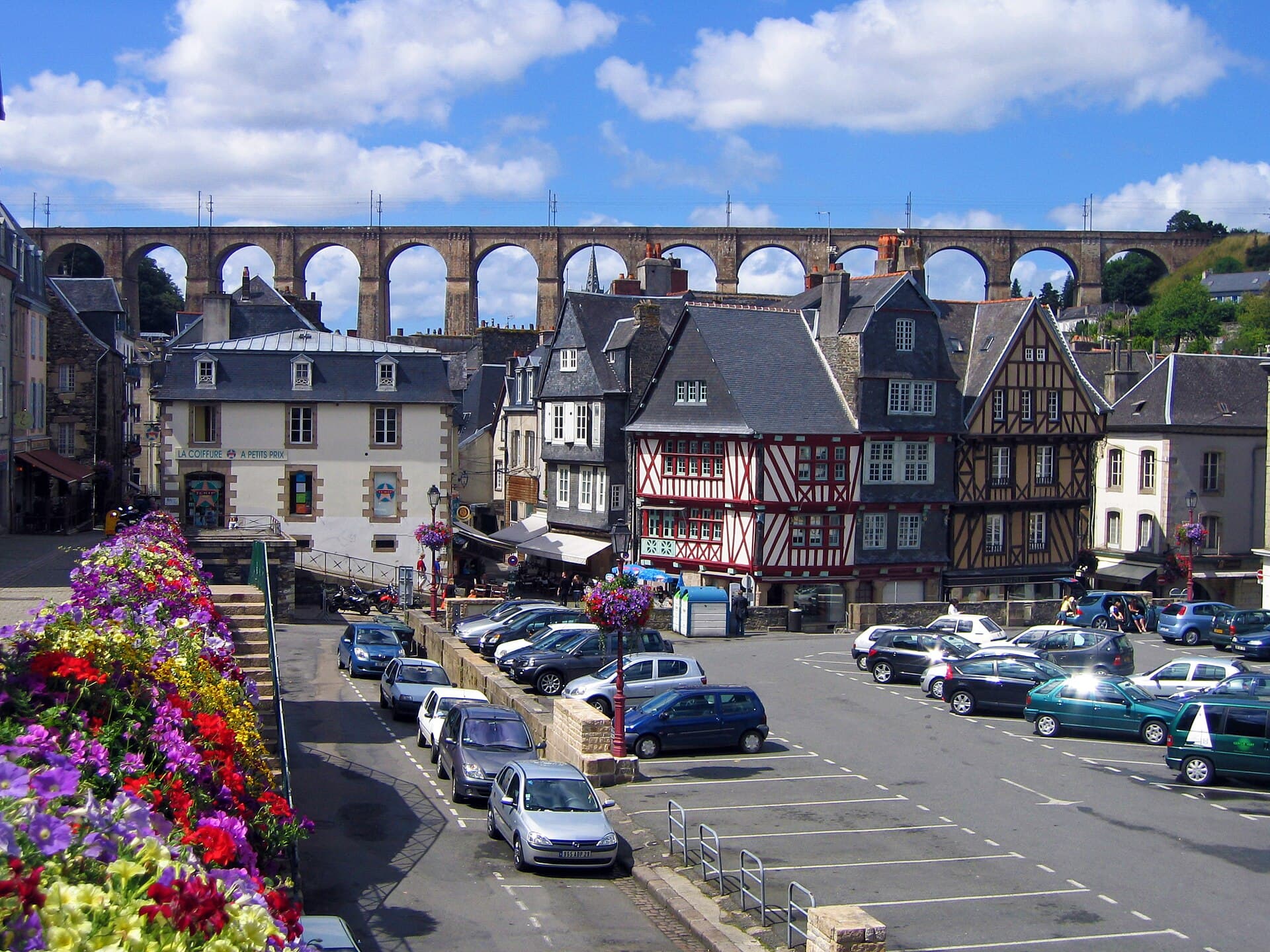 Thesupermat / CC BY-SA 3.0, via Wikimedia Commons
Visite audio autoguidée de Morlaix — parcours GPS à pied, lecture hors ligne, narration en 32 langues.
“Là où un viaduc monumental rencontre des ruelles médiévales et des murmures maritimes.”
Pas les cartes postales. Les histoires que même les habitants ignorent — soufflées à l'oreille, là où elles se sont passées.
Le nom de cette remarquable "maison à lanterne" du XVIe siècle pourrait vous faire croire qu'il s'agissait d'une résidence royale.
Cet imposant viaduc ferroviaire du XIXe siècle, symbole emblématique de Morlaix, a rencontré une opposition surprenante lors de sa planification.
Au-delà de son charme médiéval, Morlaix a embrassé une expression artistique contemporaine qui pourrait vous surprendre.
Découvrez tous les secrets de Morlaix
Chaque adresse, chaque révélation en entier — dans ton oreille, là où elle s'est passée.
Tu choisis tes lieux. Tu marches. La voix te révèle ce que les autres ignorent.
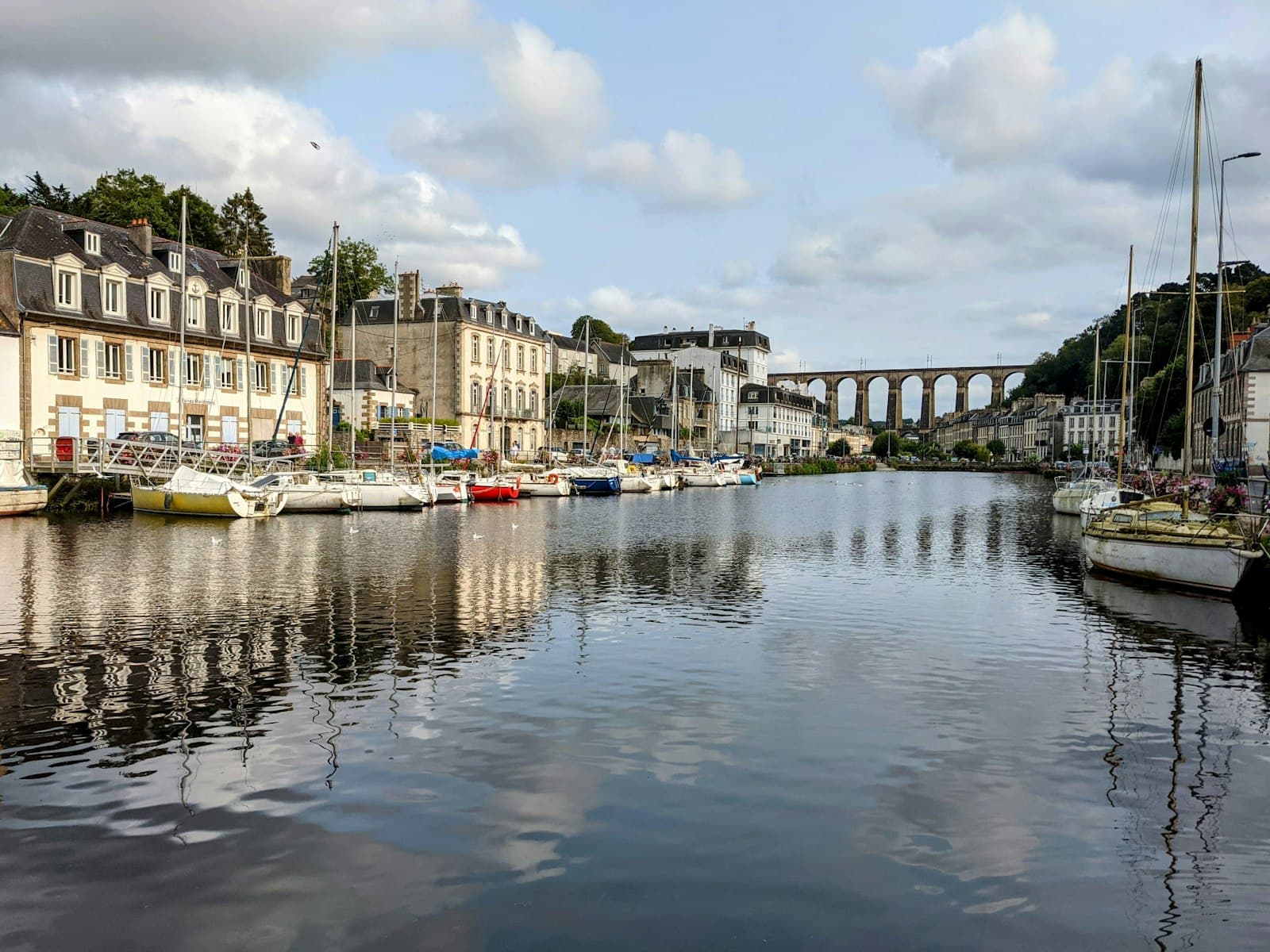


Votre visite audioguidée de Morlaix vous attend — choisissez vos lieux, votre langue, et lancez-vous dès votre arrivée.
AcheterLume intègre un guide en réalité augmentée. Levez votre téléphone : sa caméra montre la rue devant vous, avec une flèche lumineuse posée sur l'image réelle qui pointe toujours vers votre prochain arrêt — aucune carte à déchiffrer, aucun mauvais virage. Comme tout dans Lume, ça fonctionne entièrement hors-ligne.
Morlaix, ville bretonne, est définie par son spectaculaire viaduc ferroviaire du XIXe siècle. Cette merveille architecturale s'étend sur 292 mètres et s'élève à 62 mètres au-dessus du centre-ville, un point de repère proéminent offrant des vues imprenables sur la vieille ville et le port de plaisance depuis son niveau piétonnier inférieur.
Le caractère de la ville s'étend à ses rues médiévales, où des maisons à pans de bois, certaines datant du XVIe siècle, bordent des ruelles sinueuses. Ces uniques "maisons à pondalez" (maisons à lanterne) témoignent du passé prospère de Morlaix en tant que port de commerce. Située au confluent des rivières Jarlot et Queffleuth, qui forment l'estuaire de la rivière de Morlaix, l'héritage maritime de la ville est évident dans son port de plaisance animé et ses liens historiques avec la Manche.
Morlaix offre un mélange d'exploration historique, d'expériences culturelles et d'accès à la beauté naturelle de la Baie de Morlaix et des Monts d'Arrée voisins. De l'exploration des ruelles anciennes à la découverte de l'art urbain contemporain et à la dégustation de la cuisine locale, Morlaix présente une expérience multifacette pour les visiteurs.
## De l'établissement romain à la capitale du lin Les origines de Morlaix remontent à l'époque gallo-romaine, des preuves suggérant un établissement romain peut-être connu sous le nom de 'Mons Relaxus' ou 'mont reposant'. Aux Xe et XIe siècles, elle a commencé à prendre forme en tant que centre fortifié, les Comtes de Léon érigeant le premier château pour contrôler le passage de la rivière et protéger l'entrée de la vallée.
## Port médiéval et conflits anglais La croissance de la ville a été considérablement influencée par ses avantages géographiques et stratégiques. Située au confluent de deux rivières formant un estuaire, Morlaix a développé un port naturel en eaux profondes, protégé des tempêtes tout en offrant un accès direct à la Manche. Cela en a fait un important centre maritime, permettant aux navires de naviguer à l'intérieur des terres à marée haute pour un déchargement en toute sécurité au centre-ville. Sa situation stratégique à la frontière des régions du Léon et du Trégor lui a également conféré une importance administrative pour les Ducs de Bretagne.
Morlaix, cependant, n'a pas été sans conflits. Elle fut capturée par les Anglais en 1187 et de nouveau en 1522. Suite à l'attaque de 1522, la construction du Fort du Taureau dans la baie commença en 1542 pour protéger le port des invasions maritimes ultérieures.
## L'âge d'or du lin et l'architecture unique La prospérité économique de Morlaix a véritablement prospéré du XVe au XVIIe siècle, grâce au commerce international, en particulier la production et l'exportation de lin de haute qualité connu sous le nom de "crées". Ce commerce lucratif a conduit à l'émergence d'une riche classe marchande, qui a investi sa fortune dans l'architecture distinctive de la ville. Les exemples les plus notables sont les "maisons à pondalez", des bâtiments à pans de bois avec des cours intérieures, des cheminées monumentales et des escaliers à vis complexes. Ces maisons, avec leurs étages supérieurs en encorbellement, créaient des trottoirs abrités en dessous. Morlaix contient la plus forte concentration de ces maisons uniques dans le Finistère, avec 152 exemples.
## Industrialisation du XIXe siècle et Seconde Guerre mondiale Le commerce maritime a continué à stimuler l'économie locale, conduisant à la construction d'un port au centre-ville dans les années 1730. Au XIXe siècle, Morlaix a vu la construction de son emblématique viaduc ferroviaire entre 1861 et 1863. Cette impressionnante prouesse d'ingénierie, de 62 mètres de haut et 292 mètres de long, a été construite en seulement deux ans et demi pour transporter la ligne de chemin de fer Paris-Brest. Pendant la Seconde Guerre mondiale, le viaduc a été la cible de bombardements stratégiques alliés en 1943, causant des victimes civiles, mais il a été rapidement réparé. En 1975, le Viaduc de Morlaix a été classé monument historique.
Commencez votre exploration au Viaduc de Morlaix, un pont ferroviaire à deux niveaux offrant des vues impressionnantes depuis son niveau piétonnier inférieur sur la ville, le port de plaisance et l'estuaire. De là, descendez dans la Vieille Ville, un labyrinthe de ruelles étroites et sinueuses connues sous le nom de venelles. L'office de tourisme fournit des brochures pour des visites autoguidées de ces rues pittoresques, qui révèlent le caractère médiéval de la ville.
Recherchez la distinctive Maison à Pondalez, un excellent exemple des uniques "maisons à lanterne" de Morlaix construites par de riches marchands de lin au XVIe siècle. La Maison dite de la Duchesse Anne est une autre maison à lanterne bien conservée, dotée d'une cheminée monumentale et d'un escalier à vis en chêne richement sculpté. Toutes deux offrent un aperçu du passé prospère de la ville et font partie des musées de Morlaix.
Explorez le Port de Plaisance de Morlaix, une zone animée proche du centre-ville qui reflète la longue histoire maritime de Morlaix. Pour les amateurs d'art, le Musée des Beaux-Arts, également connu sous le nom de Musée des Jacobins, est logé dans un ancien couvent et présente des collections d'art à l'intérieur d'un bâtiment de maison à lanterne. Découvrez la scène florissante du street art, avec des fresques murales ajoutant une touche contemporaine au cadre historique.
Au-delà de la ville, envisagez une excursion en bateau jusqu'au Château du Taureau, une forteresse du XVIe siècle dans la Baie de Morlaix, ou visitez le Cairn de Barnenez, le plus ancien et le plus grand mausolée mégalithique d'Europe, antérieur aux pyramides égyptiennes.
La meilleure période pour visiter Morlaix pour les activités par temps chaud et les visites touristiques est de fin juin à début septembre. Pendant ces mois, les températures sont confortables, oscillant entre 19°C et 21°C, août étant le mois le plus chaud. Bien que les précipitations soient courantes toute l'année, juillet et août connaissent généralement les plus faibles pluies. Le printemps (avril à mai) offre un temps doux et des paysages fleuris avec moins de monde, ce qui est idéal pour explorer les sentiers côtiers et les villes médiévales. L'automne offre de magnifiques feuillages et une expérience plus calme. L'hiver est généralement doux mais humide et venteux, offrant une atmosphère paisible pour explorer les sites historiques sans la foule de la haute saison.
Morlaix est accessible par divers moyens. L'aéroport le plus proche est l'aéroport de Brest Bretagne, à environ 50 minutes, avec des liaisons vers les grandes villes françaises et européennes. La ville est bien desservie par le train, avec des services TGV réguliers vers Paris (environ 3,5 heures), Rennes et Brest. En voiture, Morlaix est accessible via la N12, une route majeure traversant la Bretagne.
Une fois à Morlaix, la ville est mieux explorée à pied, en particulier ses ruelles médiévales. L'office de tourisme, situé à la Maison Penanault au 10 place Charles de Gaulle, propose des cartes et des informations, y compris des itinéraires guidés pour explorer les venelles. Le stationnement est disponible, avec quelques options gratuites pour de courtes durées et un stationnement en "zone bleue" nécessitant un disque. Les transports en commun partent également près de l'Office de Tourisme.
Pour la restauration, Morlaix offre un éventail d'options, y compris des crêperies traditionnelles et des restaurants servant des spécialités locales comme le kig ha farz, un plat breton copieux à base de viandes et de sarrasin. Le marché du dimanche sur la Place Allende est un endroit animé pour trouver des produits frais, des fruits de mer et de l'artisanat local.
Morlaix en coréen, en chinois ou en hébreu — et dans 29 autres langues, chaque étape narrée par une voix native. La plus large gamme de langues de tous les audioguides autoguidés.
Disponible en :