Château Saint-Jean
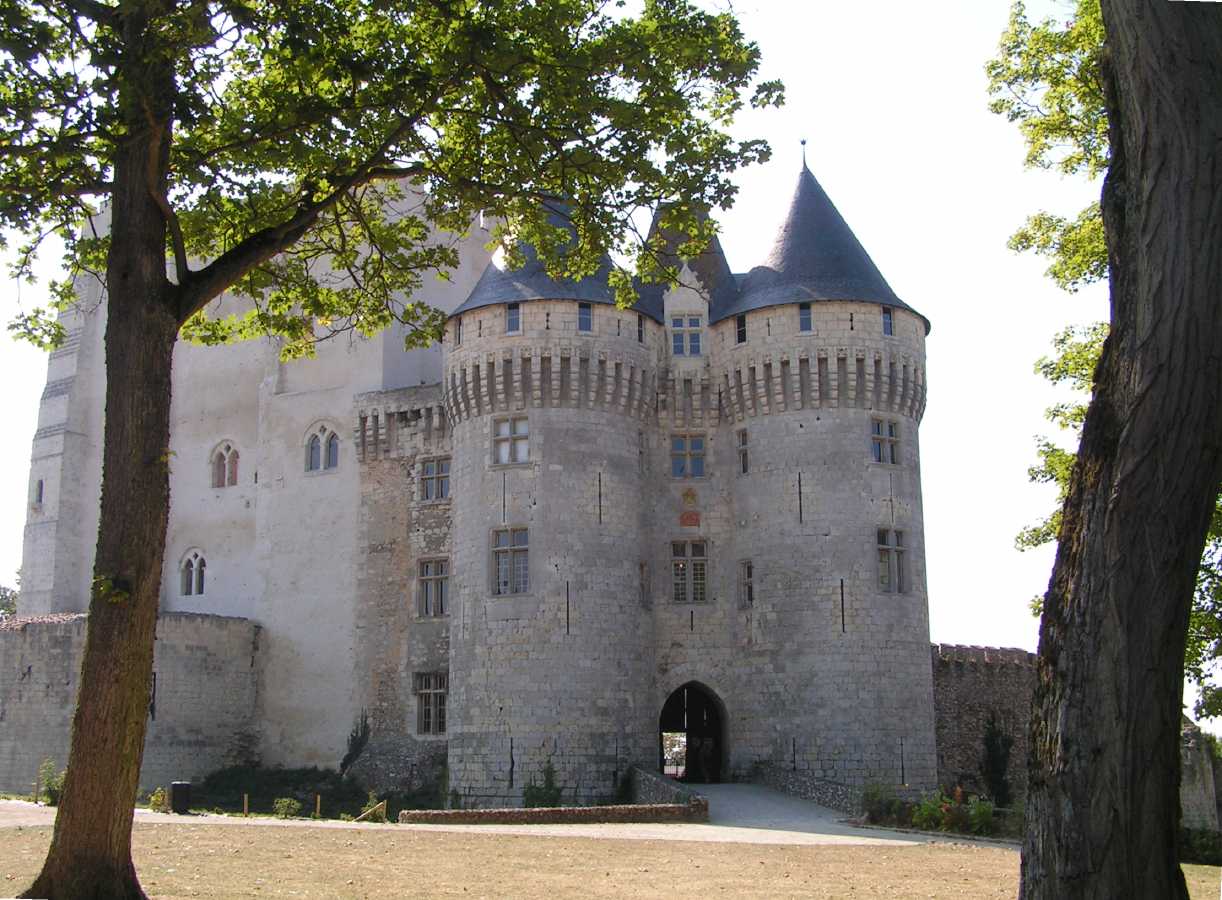
The imposing Château Saint-Jean, a sentinel over Nogent-le-Rotrou, holds a secret within its ancient walls that connects it to a powerful French minister.
Full story unlocks in the tour
 No machine-readable author provided. Roby~commonswiki assumed (based on copyright claims). / CC BY-SA 2.5, via Wikimedia Commons
Self-guided audio walking tour of Nogent-le-Rotrou — GPS route, offline playback, story-driven narration in 32 languages.
“Where medieval might meets serene Perche charm.”
Not the postcards. The stories even locals don't know — whispered in your ear, right where they happened.
The imposing Château Saint-Jean, a sentinel over Nogent-le-Rotrou, holds a secret within its ancient walls that connects it to a powerful French minister.
Wandering through the historic Paty district, you might notice a peculiar architectural detail that hints at a time when the town was a strategic borderland.
The lively Saturday market at Place Saint-Pol offers a bounty of local produce, but one particular sweet treat carries a nostalgic echo of Nogent's past.
Discover every secret of Nogent-le-Rotrou
Every address, every reveal in full — in your ear, right where it happened.
You pick your stops. You walk. The voice reveals what the others miss.

Your self-guided audio tour of Nogent-le-Rotrou is ready — pick your landmarks, choose your language, and start the moment you arrive.
BuyLume has a built-in augmented-reality guide. Hold your phone up and its camera shows the street ahead of you, with a glowing arrow laid over the real view that always points to your next stop — no map to puzzle over, no wrong turns. Like everything in Lume, it works fully offline.
Nogent-le-Rotrou, a sub-prefecture in the Eure-et-Loir department of northern France, is a town where history gracefully intertwines with the tranquil beauty of the Perche Regional Natural Park. Situated on the Huisne River, approximately 150 kilometers southwest of Paris, this recommended detour offers a captivating blend of medieval heritage and verdant landscapes. The town's identity is deeply rooted in its past as the former capital of the Perche, a legacy powerfully embodied by the Château Saint-Jean, which stands as a silent guardian over the town and the surrounding valleys.
Visitors to Nogent-le-Rotrou are invited to explore a destination that encourages a slower pace, allowing for appreciation of its historical architecture, appealing streets, and the serene countryside that defines the Perche region. From exploring ancient castles to discovering local markets and enjoying outdoor activities, Nogent-le-Rotrou provides a genuine experience of French provincial life, away from the bustling metropolises.
The history of Nogent-le-Rotrou stretches back to Gallo-Roman times, with archaeological remnants like Roman ovens and foundation remains discovered within the city. Originally known as 'Nogionum' or 'Novigentum' (meaning 'new town' or 'new people'), the town's strategic importance became evident with the construction of its defining landmark, the Château Saint-Jean.
The town owes the latter part of its name to Rotrou I, Count of Perche, who initiated the construction of a wooden keep around 980. This early fortification was later replaced by an imposing stone keep around 1040 by Rotrou II, making it one of the oldest standing stone keeps in France. The castle's position on a raised plateau, offering views across five valleys, was crucial for controlling the 'Marches du Perche,' a buffer zone between the Kingdom of France and the Duchy of Normandy. Over the 12th and 13th centuries, the castle was further fortified with a ring of walls and towers.
During the Hundred Years' War, the Château Saint-Jean was captured and partially burned by the English in 1428. However, it saw significant restoration and embellishment in the 15th century, with an entrance featuring two large round towers and renewed living quarters. The 16th century brought further architectural enhancements, particularly in the Paty district, where many Renaissance-style townhouses can still be admired today. In the early 17th century, the overlordship of Nogent-le-Rotrou was acquired by the Duke of Sully, Maximilien de Béthune, financial minister to King Henry IV, whose tomb now rests within the hospital courtyard.
While the castle was abandoned from the 17th century onwards, it was eventually acquired by the town and partially restored in recent years, now housing the Museum of the History of Perche. Nogent-le-Rotrou's economy was historically tied to agriculture, and while industrial employment, particularly in the automotive sector, saw growth in the late 20th century, the town remains deeply connected to its agricultural roots within the Perche Regional Natural Park. Today, it continues to be a lively center for local markets and cultural events, celebrating its enduring past and the unique identity of the Perche region.
The most prominent landmark in Nogent-le-Rotrou is the Château Saint-Jean, an ancient fortified castle that dominates the Huisne Valley. Its imposing 11th-century keep is among the oldest in France and houses the Museum of the History of Perche, offering insights into the castle and the region. The castle grounds also feature interpretive gardens themed around medieval and Renaissance history. Below the castle, the Paty district is a maze of cobbled streets lined with timber-framed houses and Renaissance-era mansions, including the 16th-century Maison du Bailli.
Nogent-le-Rotrou also features several significant religious buildings. The Church of Saint-Laurent, built in the 15th and 16th centuries, is notable for its richly crafted interior, including a 15th-century Entombment. The Church of Saint-Hilaire is the oldest in the city, despite 16th-century alterations. Remnants of the 12th-century Saint-Denis Priory also stand, now housing the Maison de la Justice et du Droit. For a unique historical monument, visit the tomb of the Duke of Sully and his wife, located in a small building within the hospital courtyard.
The town's lively weekly market takes place every Saturday morning at Place Saint-Pol and Saturday afternoon at Place du 11 Aout, offering local produce and goods. Beyond the town, the Perche Regional Natural Park offers opportunities for exploring green hills, forests, and other historical sites like the Thiron-Gardais Abbey Gardens.
The best time to visit Nogent-le-Rotrou for warm-weather activities is from late June to early September. During these months, temperatures are comfortable, averaging between 56°F and 78°F (13°C and 26°C), and skies are clearer. Spring (May to early June) and early autumn (September to October) also offer pleasant weather with fewer crowds, making them ideal for sightseeing and enjoying the natural beauty of the Perche region. While rain can occur year-round, it typically comes in short showers.
Nogent-le-Rotrou is located in the Eure-et-Loir department, approximately 150 kilometers southwest of Paris. It is accessible by car via the A11 motorway, which passes 20 kilometers south of the town, and by regular train services from Montparnasse station in Paris, with a travel time of about 1 hour and 30 minutes. The town itself is compact and easily explored on foot, though a limited urban bus service is available.
The Office de Tourisme et de Commerce du Perche provides visitor information, guided tours, and details on local events. Parking in Nogent-le-Rotrou is often restricted to 1.5 hours in some areas. For accommodations, options include hotels, bed & breakfasts, and vacation rentals, some of which are pet-friendly.
Nogent-le-Rotrou in Korean, in Chinese or in Hebrew — and 29 more languages, every stop narrated by a native voice. The widest language range of any self-guided audio tour.
Available in: