Pont Roman
Este antiguo puente no es tan romano como su nombre sugiere.
La historia completa se desbloquea en el tour
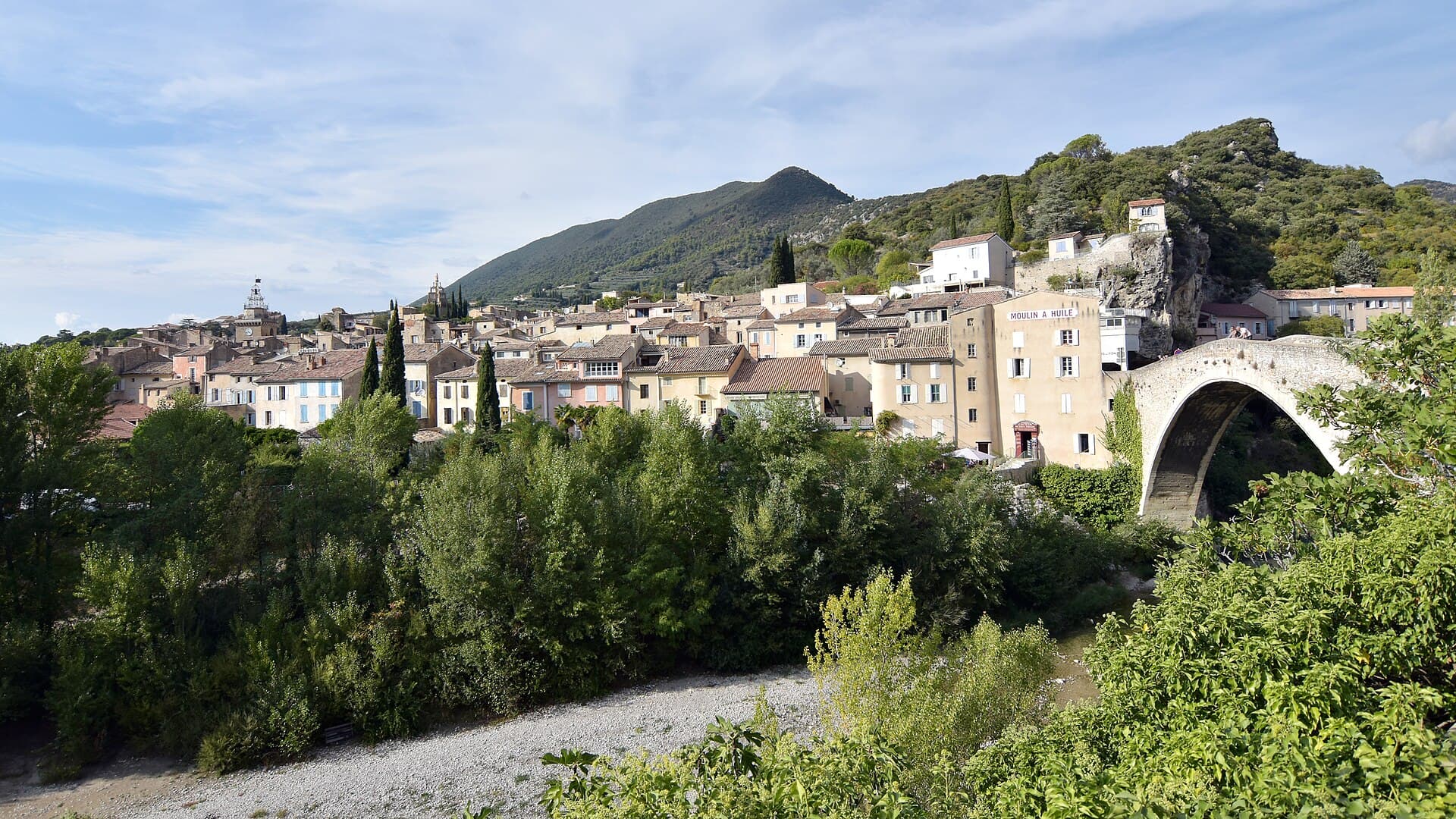 BlueBreezeWiki / CC BY-SA 3.0, via Wikimedia Commons
Tour de audio autoguiado de Nyons — ruta GPS a pie, reproducción offline, narración en 32 idiomas.
“Donde el sol madura las aceitunas y el tiempo se ralentiza a un ritmo provenzal.”
No las postales. Las historias que ni los locales conocen — al oído, justo donde ocurrieron.
Este antiguo puente no es tan romano como su nombre sugiere.
La torre que vigila Nyons tiene una sorprendente segunda vida.
Nyons ostenta una distinción única en el mundo del aceite de oliva francés.
Descubre todos los secretos de Nyons
Cada dirección, cada revelación al completo — a tu oído, justo donde ocurrió.
Eliges tus paradas. Caminas. La voz te revela lo que los demás ignoran.


Tu tour de audioguía por Nyons te espera — elige tus lugares, tu idioma y empieza al llegar.
ComprarLume incluye una guía de realidad aumentada. Levanta el móvil y su cámara muestra la calle que tienes delante, con una flecha luminosa sobre la imagen real que siempre apunta a tu próxima parada — sin mapas que descifrar, sin giros equivocados. Como todo en Lume, funciona completamente sin conexión.
Nyons, a menudo llamada la "Pequeña Niza" debido a su microclima, es una ciudad en la región de Drôme Provenzal, en el sureste de Francia. Protegida por un anillo de colinas en el Valle del Eygues, disfruta de abundante sol, inviernos suaves y veranos cálidos, sin el fuerte viento Mistral que afecta a otras partes de la Provenza. Este entorno favorable ha hecho que Nyons sea célebre por sus olivares y las distintivas aceitunas negras y el aceite de oliva que aquí se producen.
La ciudad ofrece una mezcla de encanto histórico y un estilo de vida provenzal relajado. Su centro medieval, conocido como el Quartier des Forts, presenta callejones estrechos, edificios antiguos y pasajes cubiertos. Nyons también es un "Destino Gastronómico Notable" reconocido y ha sido incluida entre los "Desvíos Más Bellos de Francia".
El fértil Valle del Eygues ha atraído asentamientos humanos desde la era neolítica, con hallazgos arqueológicos que datan de hace más de 5.000 años. Griegos y romanos también dejaron su huella, con evidencia de establecimientos agrícolas y la pequeña ciudad de Noiomagus, la capital de la tribu Voconce, situada en una calzada romana que conectaba Vaison con Luc.
Durante la Edad Media, Nyons fue inicialmente una dependencia de la Abadía de Saint-Césaire en Arlés. Más tarde, quedó bajo la protección de los Barones de Montauban en el siglo XII, antes de ser cedida al Rey de Francia en 1349. El siglo XIV trajo prosperidad, lo que llevó a la construcción de estructuras significativas como el Pont Roman y la Place des Arcades.
Nyons desempeñó un papel notable durante las Guerras de Religión en los siglos XVI y XVII, convirtiéndose en un importante bastión protestante. Se construyó una ciudadela alrededor de 1580 para fortificar la ciudad, aunque fue destruida más tarde en 1633 por orden de Luis XIII. A pesar de los períodos de conflicto y peste, Nyons mantuvo su identidad y privilegios. La ciudad ha sido un lugar de vacaciones reconocido desde el siglo XIX, continuando el desarrollo de sus alojamientos y atracciones turísticas.
El olivo ha sido fundamental para la identidad de Nyons durante siglos. El microclima único de la región, caracterizado por abundante sol y protección contra vientos fuertes, resultó ideal para el cultivo del olivo. Aunque el cultivo de olivos experimentó un declive a principios del siglo XX debido a la competencia de los aceites de semillas, y una severa helada en 1956 devastó muchos árboles, los productores locales trabajaron para preservar este patrimonio. Esta dedicación llevó a que Nyons recibiera la primera AOC (Appellation d'Origine Contrôlée) de Francia para su aceite de oliva en 1994, específicamente para el aceite derivado de la variedad de aceituna 'Tanche'. Hoy en día, los olivares siguen siendo una característica definitoria del paisaje de Nyonsais, con aproximadamente 160.000 olivos en el área de la AOC.
Comience su exploración en el Pont Roman, un puente de piedra de un solo arco que data del siglo XIV, que abarca 42 metros sobre el río Eygues. Desde aquí, adéntrese en el Quartier des Forts, el casco antiguo medieval de Nyons, con sus laberínticos callejones, edificios antiguos y pasajes abovedados. Descubra la Place des Arcades, una plaza del siglo XIV que sigue siendo el corazón de la ciudad, donde se celebran mercados y está rodeada de cafés.
Ascienda a la Tour Randonne, una torre defensiva del siglo XIII convertida posteriormente en capilla, que ofrece vistas panorámicas de Nyons y los valles circundantes. Para una inmersión más profunda en la cultura local, visite el Musée de l'Olivier (Museo del Olivo) para aprender sobre el cultivo y procesamiento del olivo, o el Museo de Historia y Arqueología de Nyons y las Baronías para explorar artefactos regionales desde la Prehistoria hasta la Edad Media. No se pierda la Scourtinerie, la última fábrica en Francia que produce esteras tradicionales para prensar aceitunas. Los Antiguos Molinos de Aceite de Oliva y la Histórica Fábrica de Jabón de Nyons también ofrecen una visión de los métodos de producción tradicionales. Para los entusiastas del aire libre, el Sendero de los Olivos es un paseo señalizado de 4 km a través de olivares con vistas panorámicas.
Nyons goza de un clima mediterráneo con abundante sol, lo que la convierte en un destino atractivo durante gran parte del año. La mejor época para actividades de clima cálido es de mediados de junio a mediados de septiembre, siendo julio el mes más caluroso, con máximas promedio de 27 °C (81 °F). Para un clima confortable, considere visitar entre mayo y septiembre. Julio es también el mes más seco y soleado, con un promedio de 325 horas de sol. El tradicional mercado de los jueves por la mañana y un mercado provenzal los domingos durante el verano son eventos animados.
Nyons está situada en el departamento de Drôme, aproximadamente a 100 kilómetros al sur de Valence y a 60 kilómetros al norte de Aviñón. Si viaja desde París, tome un tren a Montelimar (aproximadamente 3 horas) y luego un autobús a Nyons (aproximadamente 1 hora). Aunque hay hoteles disponibles, a menudo se recomienda alquilar una casa de vacaciones, idealmente con piscina, especialmente si visita en agosto, cuando muchas familias francesas toman sus vacaciones. La oficina de turismo de la ciudad, situada en la Place de la Libération, ofrece una gran cantidad de información, incluyendo rutas temáticas para caminar, andar en bicicleta y conducir, y está abierta todo el año con horarios ampliados en verano.
Nyons es una ciudad transitable a pie, con muchas atracciones fácilmente accesibles. El día principal de mercado es el jueves por la mañana, y un mercado provenzal también tiene lugar los domingos por la mañana durante la temporada de verano.
Nyons en coreano, en chino o en hebreo — y 29 idiomas más, cada parada narrada por una voz nativa. La mayor variedad de idiomas de cualquier audioguía autoguiada.
Disponible en: