Odunpazarı Modern Museum (OMM)
The striking, stacked wooden architecture of the OMM doesn't just look contemporary; it holds a profound connection to the very houses it stands among.
Full story unlocks in the tour
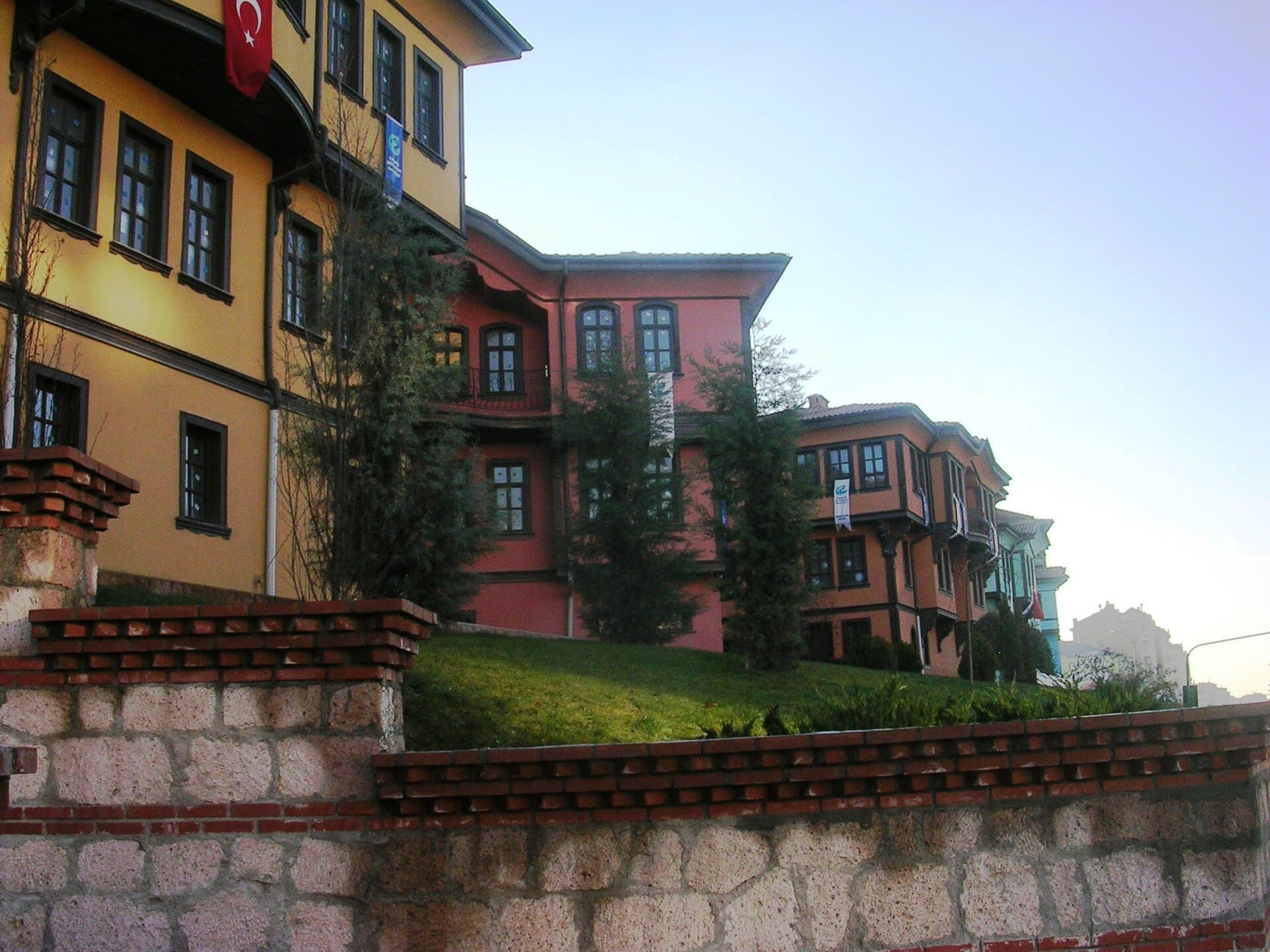 Honacan at Turkish Wikipedia / CC BY-SA 3.0, via Wikimedia Commons
Self-guided audio walking tour of Odunpazarı — GPS route, offline playback, story-driven narration in 32 languages.
“Where Ottoman echoes meet modern art.”
Not the postcards. The stories even locals don't know — whispered in your ear, right where they happened.
The striking, stacked wooden architecture of the OMM doesn't just look contemporary; it holds a profound connection to the very houses it stands among.
This bustling bazaar, now a center for local crafts, began its life with a different kind of activity—one involving hooves and weary travelers.
The name of this 16th-century Ottoman complex, 'Kurşunlu,' provides a literal clue to its distinctive appearance.
Discover every secret of Odunpazarı
Every address, every reveal in full — in your ear, right where it happened.
You pick your stops. You walk. The voice reveals what the others miss.


Your self-guided audio tour of Odunpazarı is ready — pick your landmarks, choose your language, and start the moment you arrive.
BuyLume has a built-in augmented-reality guide. Hold your phone up and its camera shows the street ahead of you, with a glowing arrow laid over the real view that always points to your next stop — no map to puzzle over, no wrong turns. Like everything in Lume, it works fully offline.
Odunpazarı, meaning 'Wood Market,' is a captivating historical district in Eskişehir, Turkey, where centuries of Ottoman heritage are beautifully preserved and vibrantly alive. Situated on the southern hills, it stands as the city's oldest settlement, a stark contrast to Eskişehir's otherwise flat landscape. Its streets wind through a collection of meticulously restored wooden houses, each painted in a spectrum of pastel hues—pinks, yellows, and blues—creating a picturesque, almost painterly, streetscape.
More than just an architectural marvel, Odunpazarı functions as a living open-air museum, inviting visitors to step back in time. Here, traditional Ottoman civil architecture, characterized by two- or three-story buildings with distinctive bay windows (cumbas) and timber frames filled with adobe, offers a tangible link to the past. The district seamlessly blends its profound history with a dynamic contemporary art scene, making it a cultural treasure trove that attracts an average of 400,000 tourists annually.
From its ancient origins as a strategic encampment to its current status on the UNESCO World Heritage Tentative List, Odunpazarı offers a unique journey through Turkish history, art, and craftsmanship. It's a place where every corner tells a story, where the aroma of traditional cuisine mingles with the scent of carved meerschaum, and where the past and present coexist in harmonious contrast.
Odunpazarı's story begins not with grand palaces, but with a practical necessity that gave the district its enduring name: 'Wood Market.' In the Ottoman era, villagers from the surrounding mountains would bring timber to this central square for sale, establishing it as a vital commercial hub. However, its historical significance dates back even further, to the Dorylaion War in 1097, when I. Izzeddin Kilicarslan set up his camp here, a pivotal event that ultimately led to the founding of Eskişehir itself.
As one of the rare urban areas in Turkey constructed entirely by Turks, Odunpazarı has maintained its distinct character through centuries. The district preserves the architectural heritage of traditional Anatolian Turkish houses, with their winding streets, dead-end alleys, and adjacent wooden homes featuring characteristic bay windows. The oldest structure still standing is the Alaeddin Mosque, dating back to the second half of the 13th century, a testament to the district's deep roots in Turkish-Islamic culture.
Throughout the Seljuk, Ottoman, and Republic periods, Odunpazarı continued to evolve, accumulating a wealth of historical relics. The 16th-century Kurşunlu Complex, commissioned by Ottoman vizier Çoban Mustafa Paşa and built between 1517 and 1525, became a spiritual and cultural heart, its lead-covered dome a distinctive landmark. The complex, designed possibly by Acem Ali (head architect before Mimar Sinan), originally included a mosque, dervish lodge, public kitchen, madrasah, and caravanserai.
A significant turning point for the district occurred in the early 20th century. Following major fires in Eskişehir's market center in 1905 and 1922, many administrative and commercial institutions relocated to Odunpazarı, spurring its development. Recognizing its invaluable cultural and historical significance, the Ministry of Culture declared Odunpazarı a historical and urban conservation site in 1973. Extensive preservation projects have since been undertaken, restoring hundreds of houses, mosques, and other historical structures, breathing new life into the district while safeguarding its heritage. Today, Odunpazarı is recognized on the UNESCO World Heritage Tentative List, a testament to its enduring legacy as a lively, living urban environment.
Odunpazarı is best explored on foot, allowing you to wander its narrow streets and soak in the atmosphere. The Historic Odunpazarı Houses are the district's most iconic symbol, showcasing perfectly preserved examples of Ottoman civil architecture with their colorful facades and distinctive bay windows.
The Kurşunlu Complex and Mosque, a 16th-century Ottoman masterpiece, is the spiritual and cultural heart of the area. Within its grounds, you'll find the Meerschaum Museum, the only one of its kind globally, exhibiting exquisite carvings from Eskişehir's signature white stone. Do not miss the hot glass-blowing workshop here, where artisans demonstrate their craft.
For contemporary art enthusiasts, the Odunpazarı Modern Museum (OMM) is a vital stop. Designed by Kengo Kuma and Associates, its stacked wooden architecture is a modern marvel that harmonizes with the traditional surroundings. Nearby, the Yılmaz Büyükerşen Wax Sculptures Museum offers a unique opportunity to see lifelike replicas of historical figures and celebrities.
Immerse yourself in local crafts at the Atlıhan Handicrafts Bazaar, a beautifully restored 19th-century inn now filled with shops selling meerschaum products, ceramics, and other artisanal goods. Other notable stops include the Contemporary Glass Arts Museum, showcasing intricate glasswork, and the Tayfun Talipoğlu Typewriter Museum, a quirky collection for those curious about the evolution of typewriters. For a literary interlude, visit the Ataol Behramoğlu Library, housed in a historic blue mansion.
The best times to visit Odunpazarı are during spring (April-May) and autumn (September-October). During these shoulder seasons, the weather is pleasantly mild, making it ideal for exploring the district's outdoor attractions and streets without the intense summer heat or winter chill. Spring brings blooming wildflowers and bright colors, while autumn offers comfortable temperatures and fewer crowds. While summer can be warm, it is lively with outdoor events, and winter, though cold and potentially snowy, offers a cozy atmosphere in cafes and less crowded museums.
Odunpazarı is easily accessible from Eskişehir's city center. You can reach the district by tram or bus, followed by a short walk, or by taxi. For those arriving from other cities, the high-speed train (YHT) to Eskişehir is the most convenient option. Once in Odunpazarı, the district is highly walkable, with most attractions concentrated in a small area, though some streets can be steep.
Allow at least one full day to explore Odunpazarı thoroughly, or 1.5 days if you plan to visit multiple museums. Walking through the streets and admiring the exterior of the historic houses is free, but individual museums may have admission fees. Many historic mansions have been converted into boutique hotels, cafes, and craft workshops, offering opportunities for dining and unique souvenirs. Do not forget to sample local culinary specialties like çibörek, balaban kebab, and Met halva.
Odunpazarı in Korean, in Chinese or in Hebrew — and 29 more languages, every stop narrated by a native voice. The widest language range of any self-guided audio tour.
Available in: