Gran Mezquita de Sivrihisar
Esta mezquita, declarada Patrimonio de la Humanidad por la UNESCO, esconde un secreto en sus cimientos.
La historia completa se desbloquea en el tour
 Orberk Demir Orlu / CC BY-SA 4.0, via Wikimedia Commons
Tour de audio autoguiado de Sivrihisar — ruta GPS a pie, reproducción offline, narración en 32 idiomas.
“Donde las piedras antiguas relatan imperios y el arte contemporáneo da vida a avenidas centenarias.”
No las postales. Las historias que ni los locales conocen — al oído, justo donde ocurrieron.
Esta mezquita, declarada Patrimonio de la Humanidad por la UNESCO, esconde un secreto en sus cimientos.
La prominente torre del reloj de la ciudad es más que un simple reloj; marca una aspiración histórica específica.
Una de las iglesias armenias más grandes de Anatolia ha adoptado un sorprendente nuevo propósito.
Descubre todos los secretos de Sivrihisar
Cada dirección, cada revelación al completo — a tu oído, justo donde ocurrió.
Eliges tus paradas. Caminas. La voz te revela lo que los demás ignoran.


Tu tour de audioguía por Sivrihisar te espera — elige tus lugares, tu idioma y empieza al llegar.
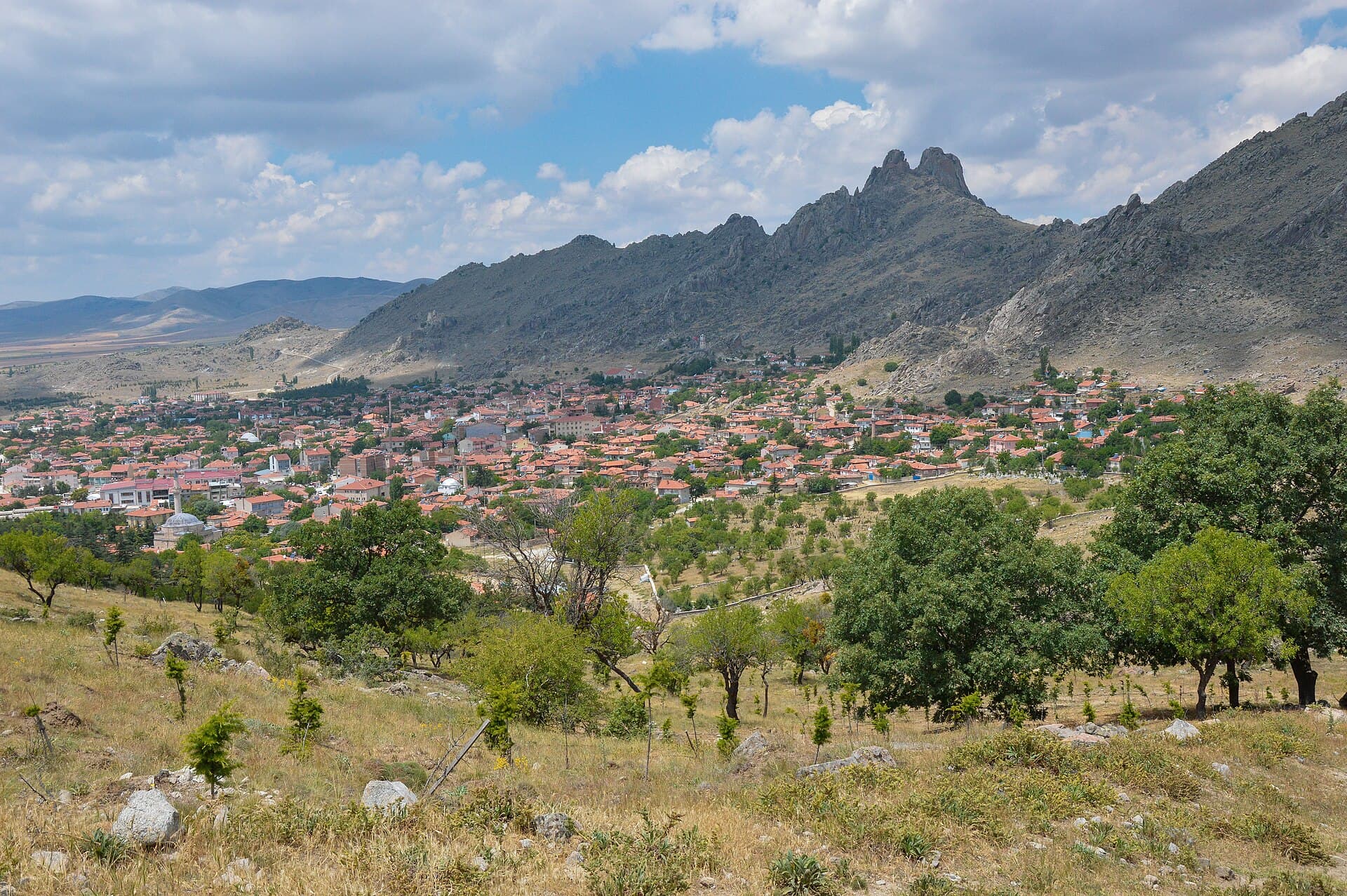
ComprarSivrihisar, una ciudad en la provincia turca de Eskişehir, se asienta a una altitud de 1.070 metros, acunada por una escarpada cresta de granito que da nombre a la ciudad: "fortaleza afilada y puntiaguda". Este antiguo asentamiento, uno de los más venerables de Anatolia Central, ofrece un pasaje a través del tiempo, donde monarcas frigios, emperadores romanos, sultanes selyúcidas y pachás otomanos han inscrito su presencia. A pesar de su profunda herencia y su posición estratégica en la confluencia de las principales carreteras que conectan Ankara, Eskişehir e Izmir, Sivrihisar sigue siendo un destino tranquilo, a menudo pasado por alto por el turismo convencional.
Sin embargo, para aquellos que viajan aquí, Sivrihisar despliega una convincente fusión de historia, cultura y expresión artística inesperada. Desde su Gran Mezquita, declarada Patrimonio de la Humanidad por la UNESCO, con su distintiva arquitectura de madera, hasta una de las iglesias armenias más grandes de Anatolia, la ciudad invita a una exploración más profunda. Pasee por su bien conservado barrio histórico, donde las casas tradicionales bordean estrechas callejuelas, y descubra un museo de escultura al aire libre que infunde arte contemporáneo en un entorno antiguo. Sivrihisar no es simplemente una colección de lugares históricos; es un testimonio vivo de los estratos de civilización que han dado forma a Anatolia, ofreciendo un encuentro auténtico y sin prisas para el viajero inquisitivo.
## Desde los orígenes frigios hasta el dominio otomano La historia de Sivrihisar se extiende hasta la antigüedad, con sus orígenes posiblemente vinculados a los hititas. Durante la era frigia, alrededor del 700 a.C., el asentamiento era conocido como Spaleia y creció en prominencia como un nexo militar y comercial. Fue el rey Midas de Frigia quien fundó Pessinus, una antigua ciudad a solo 13 km al sur de la moderna Sivrihisar, que evolucionó hasta convertirse en un importante centro religioso y cultural, particularmente para el culto a Cibeles.
Bajo el gobierno romano y bizantino, Sivrihisar, entonces identificada como Palia o Justinianópolis, continuó floreciendo, incluso sirviendo como centro del cristianismo y obispado. Se dice que el influyente emperador bizantino, Justiniano, otorgó su nombre al distrito. Tras la Batalla de Manzikert en 1071, los turcos selyúcidas llegaron a Anatolia, asegurando Sivrihisar en 1074. La establecieron como un beylik fronterizo llamado Karahisar, un período durante el cual se construyeron numerosas mezquitas, madrazas y baños.
Sivrihisar se integró en el Imperio Otomano en 1289. Osman Bey, el fundador del Imperio Otomano, confió la administración de toda la región de Eskişehir, incluida Sivrihisar, a su hermano Gündüz Bey, y aproximadamente 3.000 tribus turcomanas se asentaron en el área circundante. La ciudad permaneció bajo control otomano hasta su liberación de la ocupación griega el 20 de septiembre de 1921, durante la Guerra de Independencia turca. Hoy, Sivrihisar se erige como un testimonio de este pasado en capas, con influencias arquitectónicas y culturales de cada época aún evidentes en todas sus calles.
Sivrihisar ofrece una dosis concentrada de historia y cultura dentro de su casco antiguo, fácilmente transitable. La Gran Mezquita de Sivrihisar (Ulu Camii) es una visita crucial, un sitio del Patrimonio Mundial de la UNESCO reconocido por su distintiva arquitectura hipóstila de madera. Construida en 1231-1232, su interior se apoya en 67 columnas de madera, algunas de las cuales descansan sobre antiguos capiteles que se cree que provienen de Pessinus. El minbar de madera de la mezquita, elaborado en 1245, representa una obra maestra de la ebanistería selyúcida.
Elevada en una ladera con vistas a la ciudad se encuentra la Torre del Reloj de Sivrihisar (Saat Kulesi), un hito de 12 metros de altura erigido en 1899. Un paseo marítimo se extiende hasta una terraza de observación con suelo de cristal que ofrece amplias vistas de la ciudad y sus escarpados alrededores.
Otro sitio histórico significativo es la Iglesia Armenia Surp Yerrortutyun (Iglesia de la Santísima Trinidad). Construida originalmente en 1650 y reconstruida en 1881 después de un incendio, se encuentra entre las iglesias armenias más grandes de Anatolia. Hoy en día, su patio alberga un museo de escultura al aire libre.
Para echar un vistazo a la vida y la historia local, visite la Mansión Zaimağa (Zaimağa Konağı), una mansión restaurada de 1902 que una vez recibió a la Asamblea Nacional Turca durante la Guerra de Independencia. No se pierda el Museo de Escultura al Aire Libre de Sivrihisar, donde esculturas contemporáneas del artista local Metin Yurdanur se entrelazan con el tejido histórico de la ciudad, retratando diversas profesiones y figuras históricas.
Justo fuera de la ciudad, a unos 16 km al sur, se encuentran los restos de la Antigua Ciudad de Pessinus. Esta ciudad frigia y romana sirvió como centro del culto a Cibeles, y aunque en gran parte se compone de cimientos de piedra, ofrece una conexión convincente con el profundo pasado de la región.
Las estaciones de transición, particularmente la primavera (abril a mayo) y el otoño (septiembre a octubre), generalmente ofrecen los momentos más favorables para visitar Sivrihisar. Durante estos meses, el clima es agradablemente cálido, con temperaturas que oscilan entre los 20°C y los 30°C, lo que lo hace ideal para explorar sitios históricos y pasear por la ciudad sin el intenso calor del verano. La primavera se despliega con flores en flor y paisajes verdes, mientras que el otoño presenta hermosos colores y un ambiente más tranquilo. Los veranos (junio a agosto) pueden ser bastante calurosos, con máximas promedio en julio que alcanzan los 28°C, lo que podría hacer que el turismo extenso fuera incómodo. Los inviernos (noviembre a marzo) son fríos, nevados y parcialmente nublados, con mínimas promedio en enero alrededor de -5°C, y muchos hoteles costeros cierran durante este período, aunque la ubicación interior de Sivrihisar significa que experimenta un invierno más pronunciado.
Sivrihisar es accesible por carretera, situada en la intersección de las principales autopistas turcas (E90 y E96). Aunque los autobuses interurbanos suelen pasar de largo por la ciudad, se puede llegar a Sivrihisar tomando un autobús desde ciudades más grandes como Eskişehir o Ankara. Un minibús de Eskişehir a Sivrihisar tarda aproximadamente una hora y cuesta alrededor de 110 liras turcas. Desde Estambul, el viaje en autobús dura aproximadamente 6 horas y 10 minutos, incluyendo traslados.
Una vez en Sivrihisar, el casco antiguo es compacto y se puede explorar fácilmente a pie. Para los lugares más alejados, es recomendable un vehículo. Las opciones de alojamiento en Sivrihisar son limitadas, pero incluyen hoteles como Çini Otel 1, Çini Otel 2 y Osmanlı Otel. La cocina local es un punto destacado, con especialidades como el Sivrihisar Dövme Sucuk (salchicha rebozada), Kelem Dolması (rollos de col) y Muska Baklava (baklava en forma de amuleto). El Çibörek, un pastel frito con carne picada, y el Met Helvası, un postre dulce de pasta de sésamo, también son populares en la región más amplia de Eskişehir.
Sivrihisar en coreano, en chino o en hebreo — y 29 idiomas más, cada parada narrada por una voz nativa. La mayor variedad de idiomas de cualquier audioguía autoguiada.
Disponible en: