Pont du Diable (Puente del Diablo)
Olargues alberga uno de los varios 'Puentes del Diablo' en Francia, cada uno con una historia de origen similar e intrigante.
La historia completa se desbloquea en el tour
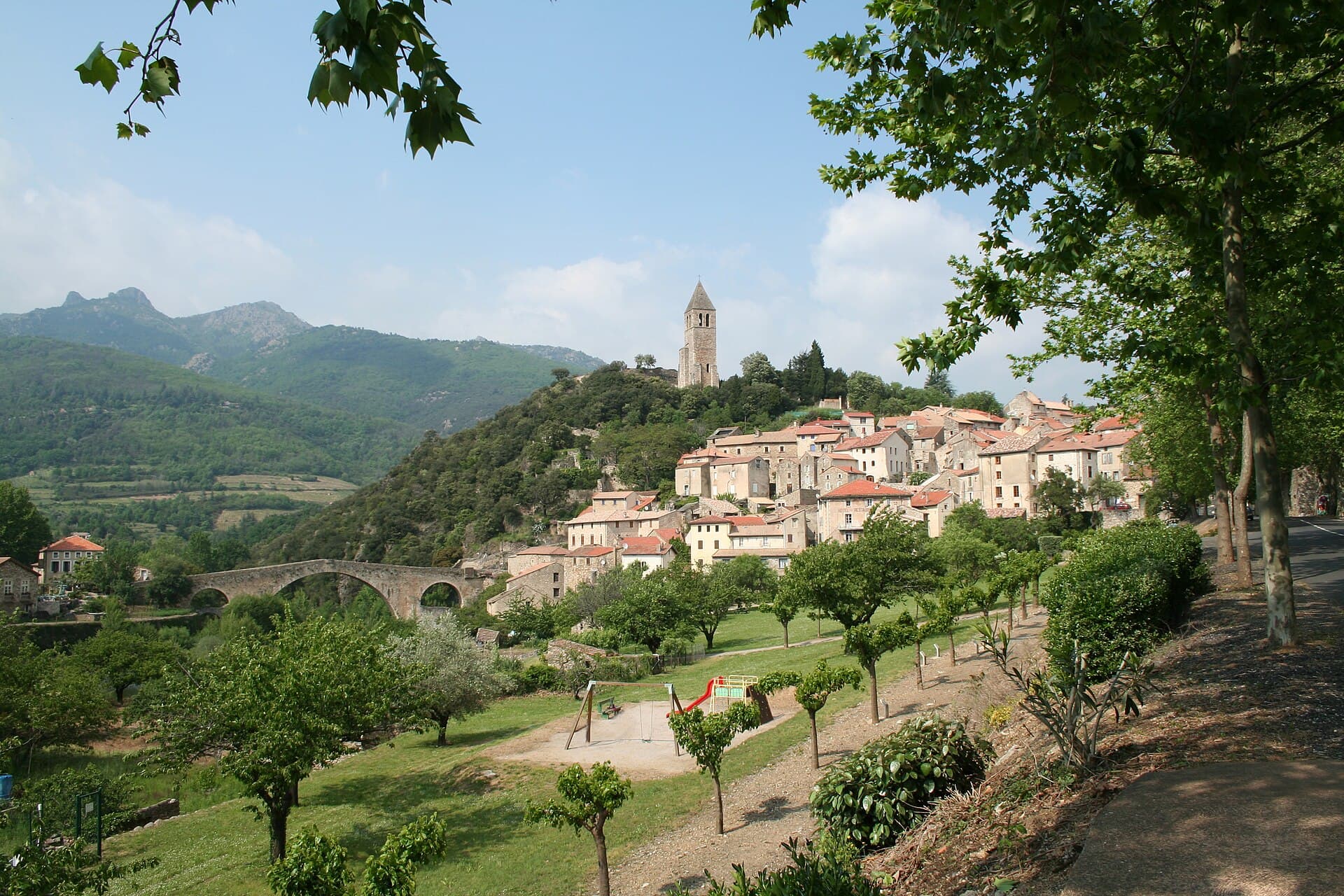 Fagairolles 34 / CC BY-SA 4.0, via Wikimedia Commons
Tour de audio autoguiado de Olargues — ruta GPS a pie, reproducción offline, narración en 32 idiomas.
“Donde los antiguos puentes de piedra se encuentran con leyendas perdurables y valles bañados por el sol.”
No las postales. Las historias que ni los locales conocen — al oído, justo donde ocurrieron.
Olargues alberga uno de los varios 'Puentes del Diablo' en Francia, cada uno con una historia de origen similar e intrigante.
Lo que alguna vez fue una bulliciosa estación de tren en Olargues ahora cumple una función comunitaria sorprendentemente ordinaria, pero esencial.
El distintivo campanario que se alza como centinela sobre Olargues guarda un secreto sobre su propósito original.
Descubre todos los secretos de Olargues
Cada dirección, cada revelación al completo — a tu oído, justo donde ocurrió.
Eliges tus paradas. Caminas. La voz te revela lo que los demás ignoran.


Tu tour de audioguía por Olargues te espera — elige tus lugares, tu idioma y empieza al llegar.
ComprarLume incluye una guía de realidad aumentada. Levanta el móvil y su cámara muestra la calle que tienes delante, con una flecha luminosa sobre la imagen real que siempre apunta a tu próxima parada — sin mapas que descifrar, sin giros equivocados. Como todo en Lume, funciona completamente sin conexión.
Olargues, reconocido oficialmente como uno de "Les Plus Beaux Villages de France" (Los Pueblos Más Bonitos de Francia), es una maravilla medieval suspendida en un afloramiento rocoso sobre el río Jaur. Casi completamente rodeado por el río, el pueblo presenta una silueta llamativa contra el telón de fondo del Parque Natural Regional del Haut-Languedoc y el Macizo de Espinouse. Sus antiguos edificios de piedra, calles sinuosas y pasajes cubiertos invitan a los visitantes a retroceder en el tiempo, ofreciendo un vistazo a siglos de vida y un ritmo tranquilo y sin prisas.
El encanto del pueblo se extiende más allá de su patrimonio arquitectónico a su entorno natural. El paisaje alrededor de Olargues es un conjunto verde de castaños y cerezos, junto con viñedos y olivares, que florecen bajo el sol mediterráneo. Sirve como una base ideal para explorar la diversa belleza natural del Haut-Languedoc, con oportunidades para actividades al aire libre entre ríos, gargantas y lagos.
La historia de Olargues se remonta al siglo XII, cuando comenzó como un asentamiento fortificado con la construcción de un castillo feudal. Las murallas circundantes se añadieron en el siglo XIII, solidificando su papel como una estratégica ciudad económica y militar a lo largo de la carretera medieval entre Nimes y Toulouse. Antes del pueblo medieval, un priorato se alzaba cerca de lo que hoy es la Rue du Balad.
Olargues soportó varios asedios y períodos de conflicto a lo largo de los siglos. La ciudadela, incluyendo gran parte del castillo y la original Iglesia de Saint-Laurent del siglo XII, fue en gran parte destruida en el siglo XVII por orden del Cardenal Richelieu en 1629. Sin embargo, la antigua torre del homenaje del castillo se transformó en un campanario en el siglo XV, un testimonio del espíritu perdurable del pueblo.
No fue hasta el siglo XVIII que Olargues experimentó un resurgimiento, impulsado por la prosperidad de la agricultura local y las industrias artesanales. La actual Iglesia de Saint-Laurent, que data de 1688, fue construida utilizando piedras de las murallas en ruinas. Hoy en día, Olargues conserva cuidadosamente su carácter medieval, invitando a los visitantes a descubrir su pasado a través de su arquitectura y tradiciones.
Comience su exploración en el Pont du Diable (Puente del Diablo), un puente de piedra estrecho y jorobado del siglo XII con dos arcos sobre el río Jaur. Esta estructura es un Monumento Histórico clasificado y está abierta solo para peatones, ofreciendo vistas del pueblo. Desde el puente, se puede ver el pueblo ascendiendo por la ladera rocosa.
Ascienda por las sinuosas calles del pueblo, admirando las casas con entramado de madera, algunas que datan de los siglos XIII, XV y XVI. Busque la Escalier de la Commanderie, una pintoresca escalera que pasa por debajo de una arcada del siglo XIV, que conduce al Museo de Arte y Tradiciones Populares. En el punto más alto del pueblo se encuentra el campanario, un vestigio del torreón del castillo feudal, que ofrece vistas panorámicas del macizo de Caroux y el valle circundante.
Otros edificios religiosos notables incluyen la Capilla de Saint-Etienne (ubicada cerca del Museo de Arte y Tradiciones Populares), la rural Capilla de Saint-Martin-des-Œufs y la Iglesia de Saint-Laurent, que data de 1688. También se puede ver el antiguo molino señorial.
La mejor época para visitar Olargues y disfrutar de un clima agradable y soleado es de abril a octubre. Durante estos meses, las temperaturas son agradables y las precipitaciones moderadas, lo que lo hace ideal para explorar el pueblo y realizar actividades al aire libre. Julio y agosto registran temperaturas diurnas promedio de alrededor de 29-30 °C (84-86 °F), con noches de alrededor de 18-19 °C (61-66 °F). Las precipitaciones son más bajas en julio y agosto. Para aquellos interesados en eventos, el verano trae festivales de música como Moments d'Orgues y Festibaloche en agosto, y un mercado orgánico el 15 de agosto. Abril alberga el Radon Bikes Epic Enduro, un evento de ciclismo de montaña, y el festival Caroux Outdoor.
Olargues es una comuna rural con una población de 488 habitantes en 2023. Si bien el transporte público a Olargues es limitado, alquilar un coche brinda la libertad de explorar el pueblo y el Parque Natural Regional del Haut-Languedoc circundante. Hay estacionamiento disponible dentro del pueblo, incluyendo espacios adaptados y reservados. El pueblo también es accesible para personas con discapacidad, con información sobre instalaciones adaptadas y rutas recomendadas disponibles en la plataforma Handivisites.
Para comer, el restaurante Les Fleurs d'Olargues ofrece una hermosa vista del pueblo y el Puente del Diablo. Los alojamientos incluyen encantadoras casas de huéspedes y casas rurales. El pueblo cuenta con un centro de información turística y se ofrecen visitas guiadas en julio y agosto, o durante todo el año con reserva previa.
Olargues en coreano, en chino o en hebreo — y 29 idiomas más, cada parada narrada por una voz nativa. La mayor variedad de idiomas de cualquier audioguía autoguiada.
Disponible en: