Olvera's Cemetery
You might not expect a cemetery to be a highlight, but Olvera's holds a surprising distinction.
Full story unlocks in the tour
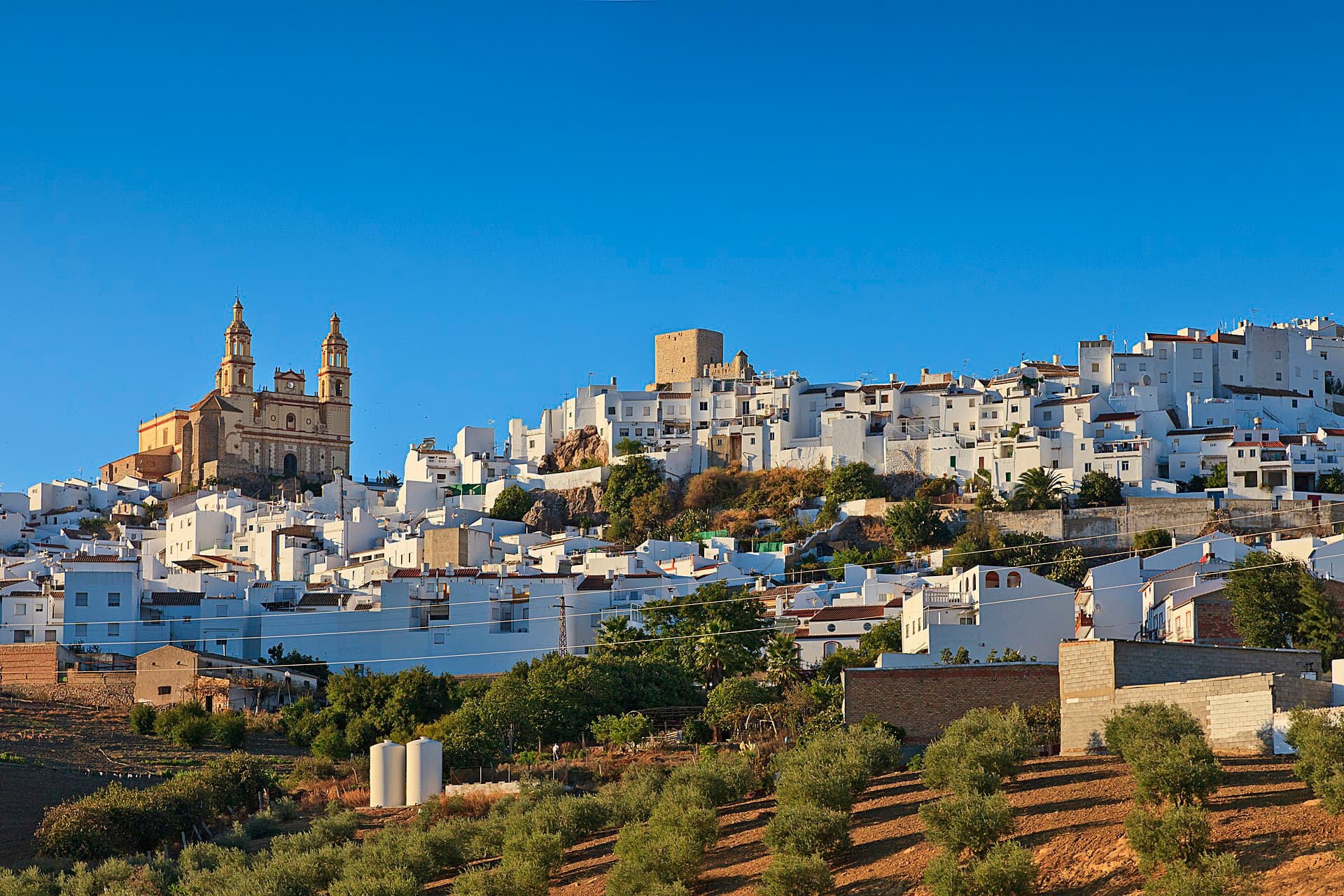 Tomas Fano / CC BY-SA 2.0, via Wikimedia Commons
Self-guided audio walking tour of Olvera — GPS route, offline playback, story-driven narration in 32 languages.
“Where a white village rises from an olive sea, crowned by castle and church.”
Not the postcards. The stories even locals don't know — whispered in your ear, right where they happened.
You might not expect a cemetery to be a highlight, but Olvera's holds a surprising distinction.
A scenic cycling and walking path here has an unusual origin story, stemming from a railway line that never quite reached its destination.
One of Olvera's notable historical figures left his mark not in Spain, but thousands of miles away in the New World.
Discover every secret of Olvera
Every address, every reveal in full — in your ear, right where it happened.
You pick your stops. You walk. The voice reveals what the others miss.


Your self-guided audio tour of Olvera is ready — pick your landmarks, choose your language, and start the moment you arrive.
BuyLume has a built-in augmented-reality guide. Hold your phone up and its camera shows the street ahead of you, with a glowing arrow laid over the real view that always points to your next stop — no map to puzzle over, no wrong turns. Like everything in Lume, it works fully offline.
Olvera, a striking white village in the heart of Andalusia, rises dramatically from a sea of olive groves in the Sierra de Cádiz. It is often considered the 'tip' of the Ruta de los Pueblos Blancos, or Route of the White Villages, a popular trail winding through the hills of the Sierra de Grazalema Natural Park. Declared an Artistic and Historic Monument in 1983, Olvera presents a timeless Andalusian character with its narrow, whitewashed streets, leading up to an iconic skyline dominated by a Moorish castle and a grand neoclassical church.
This working town, with a population of around 8,500, offers a genuine glimpse into Spanish village life, less crowded than some of its more famous neighbors. Its strategic hilltop location, 538 meters above sea level, provides expansive views of the surrounding countryside, a landscape productive with olive trees that are said to yield some of Andalusia's finest olive oils. Olvera serves as an excellent base for exploring the diverse natural beauty of the region, including the nearby Grazalema Natural Park.
## From Ancient Settlements to Frontier Outpost Human settlement in the area of Olvera dates back over two thousand years, with archaeological findings suggesting activity as far back as the Palaeolithic era, at least twelve thousand years ago. The Phoenicians and Romans later established a town, which the Romans called either Hippa or Hippo Nova. Its first mention in history appears in the 1st century ACE writings of Pliny.
The town's more recent, visible history is deeply intertwined with its time under Moorish rule. The Berbers, often referred to as Moors, began constructing the town, possibly calling it Wubira or Uriwila, as a defensive garrison. Olvera marked the frontier of the Nasrid Kingdom of Granada, a strategic position that necessitated its robust fortifications. The 12th-century Moorish castle, still a prominent landmark, was a key part of these frontier defenses.
In 1327, after a hard-fought siege, Castilian troops led by Alfonso XI captured Olvera, bringing it under Christian control. The town then passed through the hands of powerful families, including the Guzmán family and later the Dukes of Osuna. The magnificent neoclassical Church of Nuestra Señora de la Encarnación, built between 1822 and 1843 on the foundations of a Gothic-Mudejar church, stands as a testament to this later Christian influence and the patronage of the Dukes of Osuna.
Olvera experienced a brief economic boom between 1927 and 1930 with the construction of a railway line, though it was never completed. This unfinished line has since been transformed into the Vía Verde de la Sierra, a popular recreational route. The town was declared a center of artistic and historic importance in 1983, recognizing its cultural heritage and well-preserved architecture.
Olvera's dramatic skyline is its most recognizable feature, dominated by the Moorish Castle and the Iglesia de Nuestra Señora de la Encarnación. The 12th-century castle, with its unique layout adapting to the rocky peak, offers sweeping views of the olive groves and surrounding countryside. You can explore its keep, a section of the wall, and an ancient water cistern. Adjacent to the castle, the grand neoclassical church, completed in 1843, is notable for its two tall towers and an Italian marble altar.
Begin your exploration by walking up Calle Calzada, a charming street adorned with flowerpots on whitewashed walls that leads to the main plaza. The Plaza de la Iglesia, located at the top, offers broad views and is where you will find the tourist office in the Edificio la Cilla. This building also houses the "Olvera, La Frontera y los Castillos" museum, which tells the story of the region's frontier history.
Wander through the Barrio de la Villa, the oldest part of Olvera, which retains its Moorish character with narrow, winding lanes and glimpses of the old town walls. For outdoor enthusiasts, the Vía Verde de la Sierra offers a 36.5-kilometer car-free route for cycling and walking through natural landscapes, including tunnels and viaducts. Do not miss the Peñón de Zaframagón, a natural reserve known for its large colony of griffon vultures, located about 14 kilometers from town.
The best times to visit Olvera are during the spring (March to May) and fall (September to November) when the weather is mild and comfortable. Spring brings wildflowers and pleasant temperatures between 15°C and 25°C, ideal for outdoor activities. Fall offers cooler weather and autumnal colors, with temperatures ranging from 15°C to 23°C. Summers (June to August) can be hot, reaching up to 35°C, but are good for local festivals like the Feria de Olvera in mid-August. Winters (December to February) are cooler and wetter, with temperatures from 10°C to 15°C.
Olvera is accessible by car via the A-384 highway, approximately 130 km from Seville and 100 km from Malaga. Renting a car offers flexibility for exploring the surrounding white villages. There are also bus services connecting Olvera to nearby cities like Seville, Malaga, and Ronda. Parking is generally straightforward in Olvera, with options available near the main attractions.
Once in town, the old quarter is steep and cobbled, so comfortable walking shoes are recommended. A free minibus service operates Monday to Friday within the village. A combined ticket for the castle and the "Olvera, La Frontera y los Castillos" museum can be purchased at the tourist office in La Cilla, located on the Plaza de la Iglesia.
Olvera in Korean, in Chinese or in Hebrew — and 29 more languages, every stop narrated by a native voice. The widest language range of any self-guided audio tour.
Available in: