Paderborn Cathedral
Observe a specific window within Paderborn Cathedral's cloister, and you'll encounter an image that has intrigued onlookers for centuries.
Full story unlocks in the tour
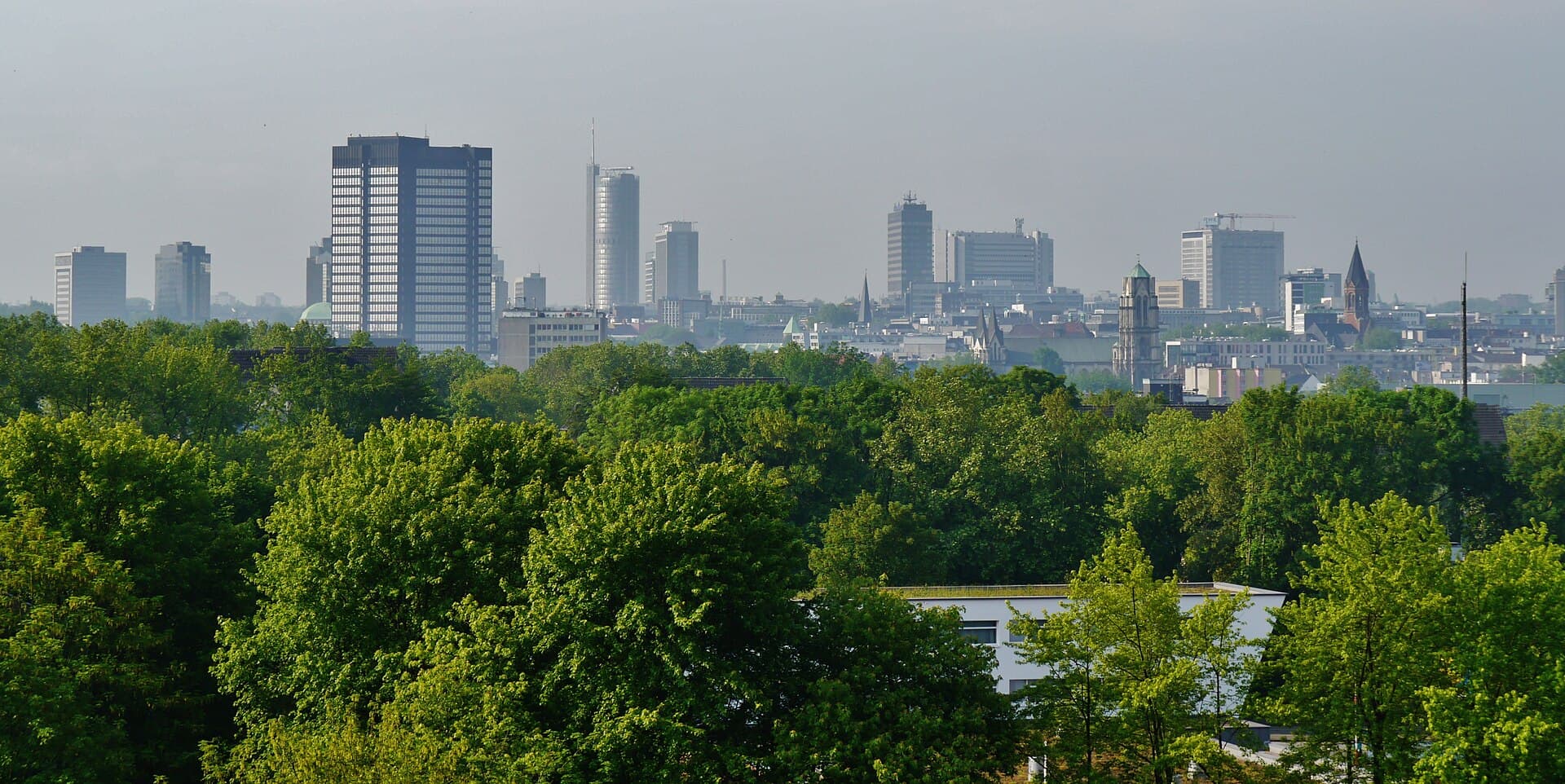 Photo of Essen, via Wikimedia Commons
Self-guided audio walking tour of Paderborn — GPS route, offline playback, story-driven narration in 32 languages.
“Where ancient springs animate a city's enduring spirit.”
Not the postcards. The stories even locals don't know — whispered in your ear, right where they happened.
Observe a specific window within Paderborn Cathedral's cloister, and you'll encounter an image that has intrigued onlookers for centuries.
Paderborn takes its name from a river that is remarkably brief, yet its genesis is even more distinctive.
One might anticipate the world's most expansive computer museum to reside in Silicon Valley, but it is actually found in this historical German city.
Discover every secret of Paderborn
Every address, every reveal in full — in your ear, right where it happened.
You pick your stops. You walk. The voice reveals what the others miss.


Your self-guided audio tour of Paderborn is ready — pick your landmarks, choose your language, and start the moment you arrive.
BuyLume has a built-in augmented-reality guide. Hold your phone up and its camera shows the street ahead of you, with a glowing arrow laid over the real view that always points to your next stop — no map to puzzle over, no wrong turns. Like everything in Lume, it works fully offline.
Paderborn, a city in eastern North Rhine-Westphalia, Germany, presents a compelling fusion of ancient eras and contemporary ingenuity. Its very name, derived from the Pader River and the old German word 'Born' (source), speaks to its singular natural origins: over 200 springs emerge directly in the city center to form Germany's shortest river. This distinctive landscape has sculpted Paderborn's identity for over 1,200 years.
Severely damaged during World War II, Paderborn has remarkably reconstructed itself, safeguarding and restoring many of its historical treasures. From the imposing Paderborn Cathedral, a testament to Romanesque and Gothic architecture, to the rebuilt Imperial Palace of Charlemagne, the city invites visitors to journey through time. Yet, Paderborn is also a forward-looking center, home to the world's largest computer museum, the Heinz Nixdorf MuseumsForum, showcasing its deep connections to information technology.
Beyond its architectural and technological wonders, Paderborn cultivates a lively cultural scene, including one of Germany's oldest and largest folk festivals, the Libori. With its green spaces, charming half-timbered houses, and a welcoming atmosphere, Paderborn offers a rich and varied experience for those seeking to uncover Germany's lesser-known, yet deeply significant, destinations.
## From Imperial Assembly to Prince-Bishopric Paderborn's recorded history commences in 777 AD, when Charlemagne, King of the Franks, established a fortified residence (Pfalz) and convened the first Imperial Diet on Saxon soil here. This strategic location, at the source of the Pader River, swiftly gained prominence. A pivotal moment occurred in 799 when Charlemagne met Pope Leo III in Paderborn, an encounter that prepared the ground for the Holy Roman Empire and Charlemagne's coronation as emperor the following year.
Soon after, in 799, Paderborn became the heart of a bishopric, with Hathumar becoming its first bishop in 806. This established the city's enduring religious significance. In 836, the relics of Saint Liborius were transported from Le Mans, France, to Paderborn, an event that not only solidified the new faith among the Saxons but also created Europe's oldest documented town twinning.
By approximately 1100, the Bishop of Paderborn had ascended to the status of a prince of the Holy Roman Empire, transforming the bishopric into an ecclesiastical principality that wielded considerable influence in North Germany. This period saw the construction and reconstruction of the impressive Paderborn Cathedral, which, despite fires and damage, evolved into the Romanesque-Gothic masterpiece seen today. Bishop Meinwerk, consecrated in 1009, is considered the 'second founder' of the diocese, profoundly shaping the city's architectural landscape with projects like St. Bartholomew's Chapel.
## Reformation, War, and Rebirth The city experienced periods of both flourishing and conflict. It joined the Hanseatic League in the 13th century, acquiring privileges as a free Imperial town. However, the Reformation brought religious discord. While citizens initially embraced Protestant doctrines, the Catholic faith was forcibly re-established in 1604 by Prince-Bishop Theodor von Fürstenberg. The bishopric endured ravages during the Thirty Years' War and the Seven Years' War.
In 1802, the Prince-Bishopric was secularized and became part of Prussia. After a brief period as part of the Kingdom of Westphalia, it was restored to Prussia in 1813. The Diocese of Paderborn, though dissolved as a state, was re-established ecclesiastically in 1821 and elevated to an archdiocese in 1930.
The 20th century brought immense devastation. Paderborn was heavily bombarded by Allied aircraft in 1944 and 1945, resulting in 85% destruction of the city, including many historical buildings. However, the city embarked on a remarkable journey of reconstruction, meticulously restoring its heritage and emerging as a modern center for information technology, with companies like Diebold Nixdorf maintaining a significant presence.
Begin your exploration at the Paderborn Cathedral (Hoher Dom Ss. Maria, Liborius und Kilian), a striking Romanesque-Gothic edifice with a 92-meter Romanesque tower. Inside, discover the expansive crypt, one of Germany's largest, housing the relics of St. Liborius. Do not overlook the renowned 'Three Hares Window' in the cloister and the intricate Paradise Portal.
Adjacent to the cathedral, delve into the city's origins at the Imperial Palace Museum (Museum in der Kaiserpfalz), constructed on the site of Charlemagne's original palace. Here, you can explore archaeological findings that illuminate the city's pivotal role in the Holy Roman Empire.
Wander through the Paderquellen (Pader Springs), where over 200 springs converge to form the Pader River, creating a serene and picturesque parkland. Nearby, visit the Adam and Eve House, Paderborn's oldest half-timbered house, which now hosts the City History Museum.
For a glimpse into the region's Renaissance architecture, proceed to the Rathaus (City Hall), a beautifully restored three-gabled building. Just beyond the city center, the moated Schloss Neuhaus (Neuhaus Castle), a former residence of the Prince-Bishops, offers Baroque gardens and cultural events.
Finally, for a journey through technological history, visit the Heinz Nixdorf MuseumsForum (HNF), the world's largest computer museum, displaying 5,000 years of information technology.
The most agreeable time to visit Paderborn for pleasant weather and outdoor pursuits is from May through September, with a peak from late June to late August when temperatures are mild. July is typically the warmest month, with average highs around 23-24°C. For those desiring fewer crowds and a different, cooler experience, the months of December through March offer good value. If your visit coincides with late July, prepare for the lively Libori festival, but remember to secure accommodations well in advance as the city draws over a million visitors.
Paderborn is readily accessible by car via the Autobahn A33 and by train, with connections to major German cities like Cologne, Düsseldorf, Leipzig, and Dresden. Paderborn/Lippstadt Airport (PAD) is situated approximately 15 kilometers from the city center, with taxi and bus services available. Once within the city, public buses are at hand, but Paderborn is also a pedestrian-friendly and bicycle-friendly city, making exploration on foot or by bike a pleasant choice.
Accommodation options are reasonably priced compared to larger German cities, but if visiting during the Libori festival in late July, booking months ahead is essential. While Paderbornians may initially appear reserved, they are generally welcoming and helpful. The local cuisine offers traditional German dishes like schnitzel and bratwurst, alongside international options. Do not forget to sample the local Paderborner beer.
Paderborn in Korean, in Chinese or in Hebrew — and 29 more languages, every stop narrated by a native voice. The widest language range of any self-guided audio tour.
Available in: