Muttental Valley
A local account describes a chance discovery in the Muttental Valley that ignited Witten's industrial ascent.
Full story unlocks in the tour
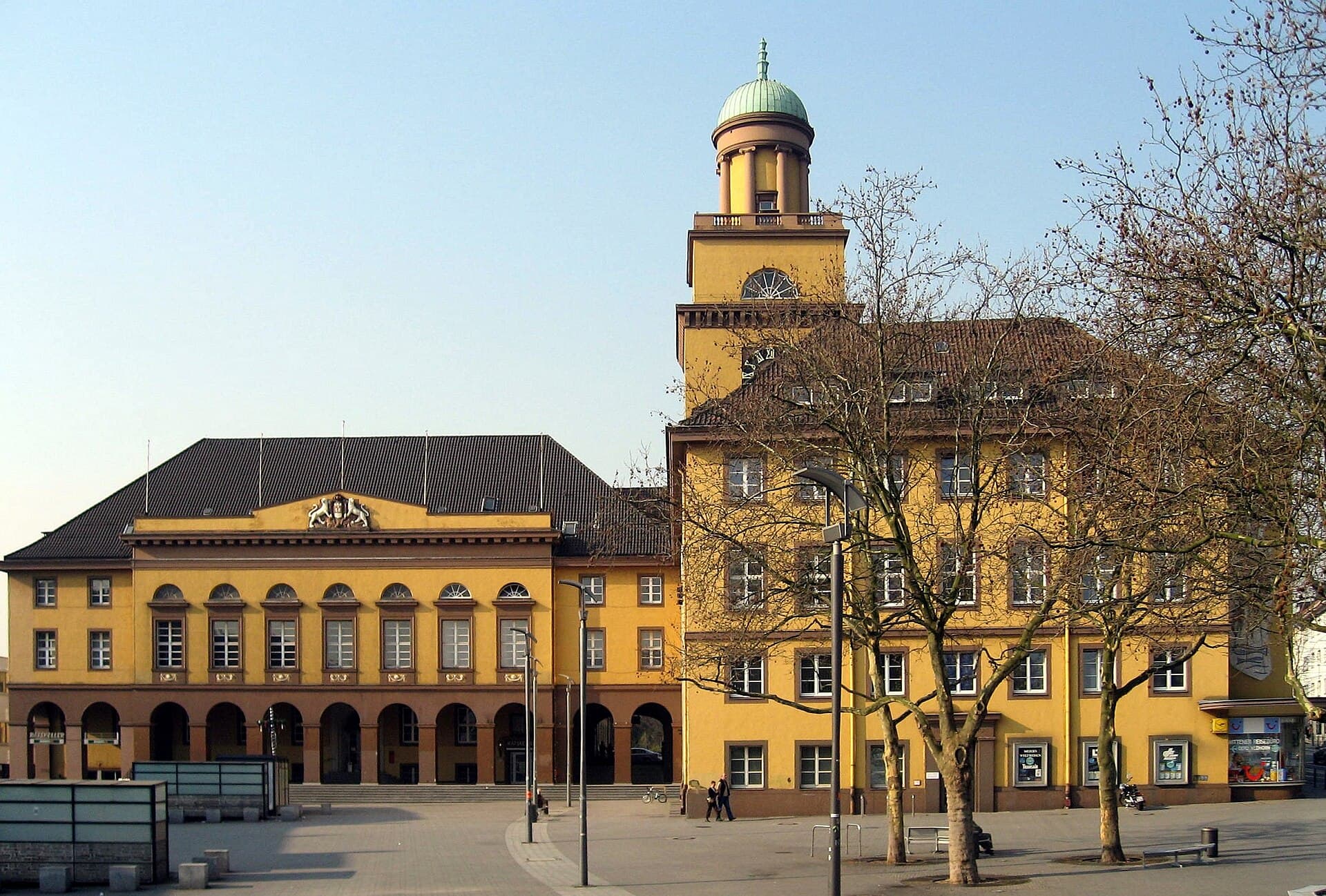 Mathias Bigge / CC BY-SA 2.5, via Wikimedia Commons
Self-guided audio walking tour of Witten — GPS route, offline playback, story-driven narration in 32 languages.
“Where industrial strength meets green serenity and an inventive spirit.”
Not the postcards. The stories even locals don't know — whispered in your ear, right where they happened.
A local account describes a chance discovery in the Muttental Valley that ignited Witten's industrial ascent.
The architect who conceived Witten's Marienkirche also played a crucial role in one of Germany's most celebrated cathedrals.
Witten was once internationally recognized for explosives, but its legacy includes a calamitous event.
Discover every secret of Witten
Every address, every reveal in full — in your ear, right where it happened.
You pick your stops. You walk. The voice reveals what the others miss.


Your self-guided audio tour of Witten is ready — pick your landmarks, choose your language, and start the moment you arrive.
BuyLume has a built-in augmented-reality guide. Hold your phone up and its camera shows the street ahead of you, with a glowing arrow laid over the real view that always points to your next stop — no map to puzzle over, no wrong turns. Like everything in Lume, it works fully offline.
Witten, a city in Germany's North Rhine-Westphalia, extends along the Ruhr River, situated between the larger cities of Dortmund and Bochum. Often called the "cradle of Ruhr industry," Witten's identity is deeply interwoven with its coal mining past, yet it presents a surprising convergence of industrial heritage and verdant landscapes. Today, it stands as a dynamic university city, housing the first private university in Germany, the University of Witten/Herdecke.
With nearly 100,000 inhabitants, Witten offers a distinct appeal, characterized by its varied districts rather than a single defined center. From exploring historic mines to cruising the Ruhr River or wandering through expansive parks, Witten provides a refreshing experience for those seeking both cultural depth and natural beauty within the active Ruhr region.
Witten's recorded history extends back to 1214, though the borough of Herbede, later integrated into the city, has an even earlier mention in 851. For centuries, it remained a modest settlement, but a pivotal moment arrived in 1578 when it officially became a mining town. A local account suggests that the discovery of coal in the Muttental Valley, sparked by a swineherd's observation of glowing stones in his campfire, established the foundation for Witten's future. This natural resource propelled Witten into becoming a significant center of the Ruhr mining industry by the mid-19th century.
The 18th century brought further momentum to Witten's industrial growth when Frederick the Great declared the Ruhr River navigable in the 1770s, easing coal transport. By the late 19th century, Witten gained international recognition for producing Roburit dynamite, a product used in coal mines across the globe. However, this industrial capability also brought sorrow, as evidenced by a devastating explosion at the Roburit factory in 1906, claiming 41 lives. Witten was granted its municipal rights in 1825 and later separated from Bochum in 1899.
During World War II, Witten endured severe damage, but like much of Germany, it was meticulously reconstructed along modern lines in the post-war era. In 1943, forced laborers were sent to the town by the Nazis. In 1946, Witten became part of the newly established state of North Rhine-Westphalia. A significant administrative reorganization in 1975 saw Herbede incorporated into Witten, and the city joined the Ennepe-Ruhr-Kreis district, becoming its largest city.
While its industrial origins remain a defining characteristic, modern Witten has diversified its economy beyond coal and steel, with strong growth in health economics, training, science, and research. The establishment of the University of Witten/Herdecke in 1980, Germany's first private university, has been a key driver in this transformation, fostering a center for science and technology. Today, Witten balances its industrial past with a commitment to sustainable development and a high quality of life, featuring extensive green spaces and water areas that constitute two-thirds of the city.
Begin your exploration at the LWL Industrial Museum Zeche Nachtigall, one of the Ruhr's earliest coal mines, where you can descend into a genuine coal seam and experience the region's industrial past firsthand. For expansive views of the Ruhr Valley, ascend the Berger Denkmal, a 20-meter sandstone tower offering wide vistas. Nearby, uncover the romantic ruins of Burg Hardenstein, a medieval castle on a bend of the river.
Take a leisurely cruise on the MS Schwalbe II along the Ruhr River, passing landmarks like the Herbede Lock and Burg Hardenstein. Cycle or walk the Rheinischer Esel, a former railway line now a scenic path connecting Witten with Bochum-Langendreer and Dortmund-Löttringhausen. Immerse yourself in art at the Märkisches Museum, housed in a striking reinforced concrete building, featuring a notable collection of 20th-century German paintings and graphic art.
For a touch of nature, visit Hohenstein Park, offering deer and boar enclosures, a petting zoo, and walking trails. The Marienkirche, a Neo-Romanesque church designed by the architect who completed Cologne Cathedral, displays a radiant Christ Pantocrator in its dome. Finally, enjoy the recreational offerings of Lake Kemnade, a favored spot for boat trips and watersports.
The most favorable time to visit Witten for general outdoor activities and pleasant weather is from late June to early September, with a peak in the first week of August. During these months, temperatures are comfortable, averaging around 72-75°F (22-24°C) in July. Spring (April-June) and early autumn (September-October) also offer mild temperatures and fewer crowds, ideal for exploring the natural landscapes and cultural sites. Winters (December-March) are cold and often cloudy, with average lows around 32-33°F (0-1°C).
Witten is well-connected to Germany's Autobahn network via the A43 and A44 motorways. The city's central train station, Witten Hauptbahnhof, provides regional train connections to major cities like Hagen, Bochum, Essen, and Dortmund, as well as an InterCity line to Frankfurt. Local public transport is managed by BOGESTRA and VER, consisting of two tram lines (309 and 310) and numerous bus routes that cover most of the city, operating roughly from 5:00 AM to 11:00 PM, with limited night bus services on weekends. For those arriving by air, Dortmund Airport (DTM) is about 21 km away, while Düsseldorf Airport (DUS) is a more practical option for broader connections, approximately 43 km distant. While the city center is walkable, a car can be advantageous for exploring the wider region. Parking is available in lots, garages, or on the side of the road, though some residential streets require permits.
Witten in Korean, in Chinese or in Hebrew — and 29 more languages, every stop narrated by a native voice. The widest language range of any self-guided audio tour.
Available in: