Before Picton became a scenic ferry hub, it played a significant role in a controversial industry, one that shaped its early economy and left an indelible mark on the region.
Mr Bullitt / CC BY 2.5, via Wikimedia CommonsPicton
Self-guided audio walking tour of Picton — GPS route, offline playback, story-driven narration in 32 languages.
“Where the sounds meet the sea, and secrets murmur on the breeze.”
Picton, as no one tells it.
Not the postcards. The stories even locals don't know — whispered in your ear, right where they happened.
Wandering through Picton's town center, you might notice a peculiar pattern in some of its street names, a subtle nod to a grand, yet ultimately incomplete, colonial vision.
Picton once held the prestigious title of provincial capital, a role it lost after a surprisingly dramatic political maneuver involving a marathon speech.
Discover every secret of Picton
Every address, every reveal in full — in your ear, right where it happened.
You pick your stops. You walk. The voice reveals what the others miss.
How long do you have in Picton?
Your self-guided audio tour of Picton is ready — pick your landmarks, choose your language, and start the moment you arrive.
BuyThe story of Picton
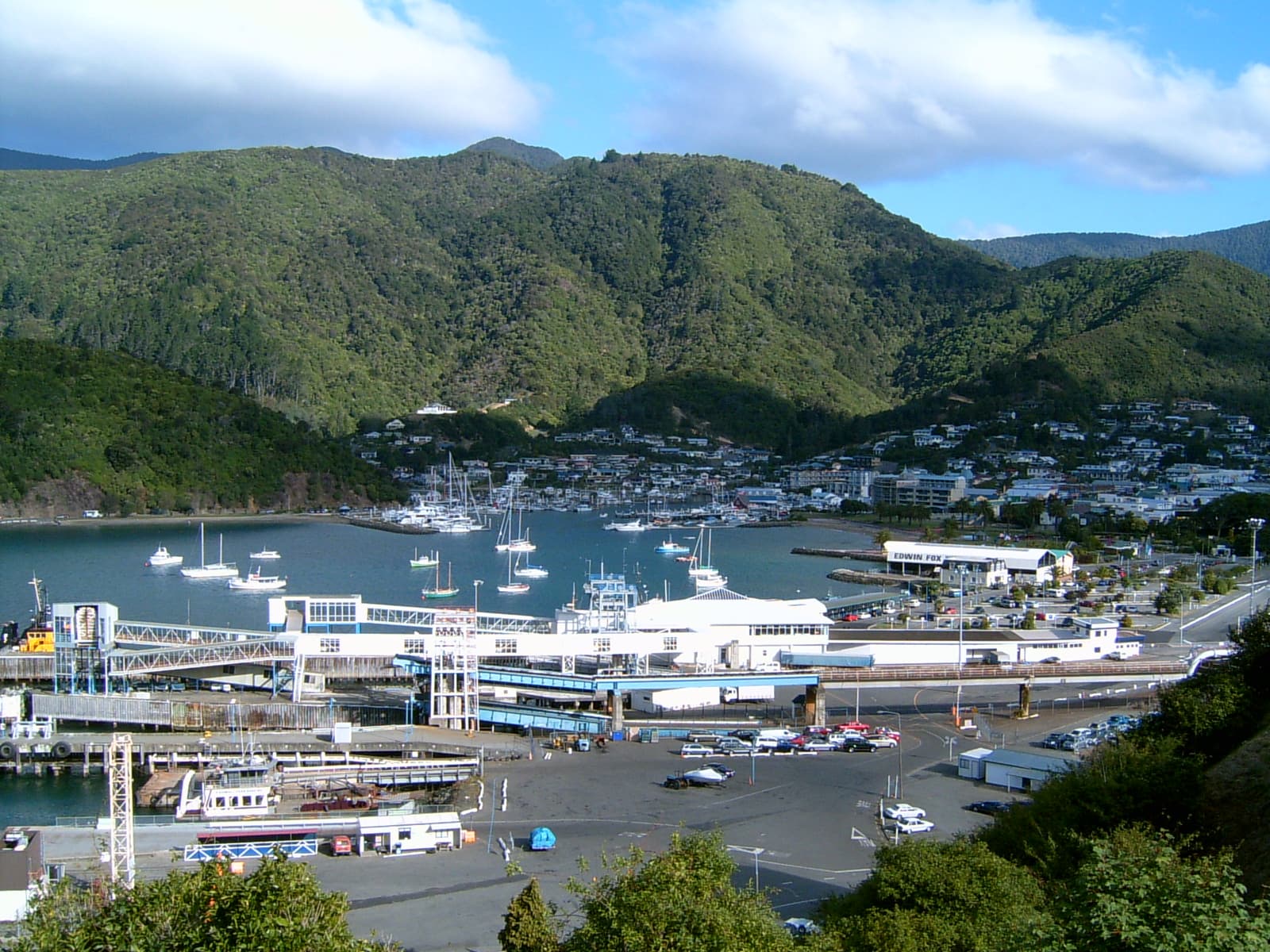
Picton, or Waitohi in Māori, serves as the primary gateway to New Zealand's South Island, a bustling port town where the Interislander and Bluebridge ferries connect the two main islands. More than just a transit point, Picton is the heart of the Marlborough Sounds, an intricate network of sea-drowned valleys, verdant islands, and serene bays. With a permanent population of fewer than 5,000 residents, it's a compact and walkable village centered around a sheltered harbor and a picturesque waterfront.
The town offers a captivating blend of natural splendor, outdoor adventures, and a deep sense of place. From world-class walking tracks and boat cruises to the nearby Marlborough wineries, Picton provides a perfect starting point for exploring one of the most beautiful and diverse marine environments in the world. Whether you're embarking on a boat tour, enjoying fresh seafood, or simply taking in the scenery, Picton promises a memorable experience.
Picton's allure extends beyond its role as a ferry terminal. Its scenic setting, with rugged mountains meeting the calm, emerald waters of the Marlborough Sounds, makes it a destination in its own right. The town's waterfront is dotted with inviting cafés, elegant restaurants, and various galleries, encouraging visitors to linger and absorb the atmosphere.
Early Māori Settlement and European Arrival
The area now known as Picton was originally the site of Waitohi Pā, a fortified Māori village occupied by the Te Āti Awa o Te Waka-a-Māui iwi. Evidence suggests settlement as early as the 1500s, with early Polynesian settlements in the wider Marlborough region dating back to the 13th century. Before European arrival in the early to mid-1800s, much of the Waitohi area was cultivated with kumara (sweet potatoes), with the pā situated close to the water's edge.
In March 1850, Sir George Grey and Sir Francis Dillon Bell, representing the New Zealand Company, purchased the land from Te Āti Awa. Following the sale, the Māori community relocated to the neighboring Waikawa Bay, which remains a significant Māori center today, home to the Waikawa Marae. The town site was surveyed in 1849 and initially named Newton by the New Zealand Company.
Provincial Capital and Renaming
In 1859, the Marlborough Province was established, and the settlement was officially renamed Picton by Governor Thomas Gore Browne. The name honors Sir Thomas Picton, a Welsh military commander who served under the Duke of Wellington and was killed at the Battle of Waterloo. Picton was initially declared the provincial capital. However, due to the growing commercial interests and central location of Blenheim, the provincial council eventually shifted its seat there in 1865, despite a notable attempt by a Picton councillor to stonewall the decision.
Economic Development and Transport Hub
The railway line connecting Picton and Blenheim was completed in 1875, further integrating the region. Picton's economic landscape saw various shifts, including a brief gold rush in Wakamarina in 1864 and coal mining at Shakespeare Bay. The town also had a significant whaling industry, with a station at Te Awaiti operating from 1827 until 1965. The opening of a freezing works in 1900 made it the town's largest employer until its closure in 1983.
A pivotal moment in Picton's history occurred in 1962 with the introduction of the roll-on, roll-off Cook Strait ferry service. This innovation transformed Picton into a major transport hub, seamlessly connecting the South Island's road and rail networks with Wellington and the North Island. Today, Picton continues its role as a vital link and a popular tourist destination, known for its maritime heritage and as a gateway to the Marlborough Sounds.
Picton offers a variety of attractions, many centered around its compelling natural environment. A rewarding activity is exploring the Marlborough Sounds, either by cruising through Queen Charlotte Sound, kayaking its sheltered bays, or joining the unique Mail Boat that delivers supplies to remote residents.
For expansive views of Picton, Waikawa Bay, Shakespeare Bay, and the Queen Charlotte Sound, hike the Tirohanga Track. It's a short but steep climb, well worth the effort. Other accessible walks include Shelly Beach and Bob's Bay, offering quiet swimming spots, and the Snout Track, providing scenic views over the Sound. You can also walk a section of the renowned Queen Charlotte Track, a 71km trail for hiking and mountain biking.
Those interested in history will appreciate the Edwin Fox Maritime Museum, home to one of the world's oldest surviving merchant ships, built in 1853. The Picton Heritage and Whaling Museum provides insights into the region's Māori, maritime, and whaling past. Do not miss the opportunity to taste Marlborough's celebrated Sauvignon Blanc with a wine tour, as Picton is part of New Zealand's largest wine region. For wildlife enthusiasts, eco-tours and visits to the Kaipupu Wildlife Sanctuary offer chances to see native birds and marine life like dolphins and seals.
Picton's temperate maritime climate makes it a year-round destination, with clearly defined seasons. For warm, sunny weather ideal for exploring the Marlborough Sounds, hiking, and dining al fresco, the best months are October to March. Summer (December to February) is warm and pleasant, with average temperatures around 16-18°C (61-64°F) and highs reaching 20-21°C (68-70°F). This is also the most popular time, so expect higher prices and more visitors.
Winter (June to August) is mild, with average temperatures around 9°C (48°F) and lows dropping to 6-7°C (43-45°F). While cooler, winter offers dramatic light and solitude, and can be a great time to visit if you don't mind the weather. Shoulder seasons (spring: September-November and autumn: March-May) offer a good balance of weather, fewer crowds, and better value.
Picton is a compact, walkable town, making it easy to explore the town center on foot. For getting around further afield, especially into the Marlborough Sounds, water taxis are readily available from the Picton Waterfront, offering transport to various destinations. While Picton itself doesn't have a local bus service, InterCity operates daily bus services connecting Picton to major South Island destinations like Blenheim, Nelson, and Christchurch, with connections timed to ferry arrivals and departures.
Ferries operated by Interislander and Bluebridge provide frequent crossings between Picton and Wellington on the North Island, accommodating both foot passengers and vehicles. For those arriving by air, the closest international airport is Wellington, with domestic flights connecting to Picton Airport (Koromiko Airport), which is about a 10-minute drive from the town center. Accommodation options in Picton range from motels and hotels to backpacker lodges, with many offering harbor views.
- How do I get to Picton?
- Picton is a major transport hub, accessible by ferry from Wellington (North Island) via Interislander and Bluebridge services. By road, it's at the start of State Highway 1 on the South Island. Buses connect Picton to other South Island towns like Blenheim, Nelson, and Christchurch. The closest domestic airport is Picton Airport (Koromiko), with connections from Wellington.
- What are the best things to do in Picton?
- Top activities include cruising or kayaking the Marlborough Sounds, hiking sections of the Queen Charlotte Track or local trails like the Tirohanga Track, visiting the Edwin Fox Maritime Museum and Picton Heritage and Whaling Museum, and exploring nearby Marlborough wineries.
- Is Picton walkable?
- Yes, Picton's town center is compact and easily explored on foot. Many attractions, including the marina, waterfront, and local museums, are within walking distance.
- When is the best time to visit Picton for good weather?
- For warm and sunny weather, ideal for outdoor activities, visit between October and March. Summer (December-February) is the warmest, with average temperatures around 16-18°C (61-64°F).
- Are there wildlife tours available in Picton?
- Yes, several operators offer eco-tours and wildlife cruises from the wharf, providing opportunities for dolphin watching, visiting bird sanctuaries like Motuara Island, and viewing seal colonies. The Kaipupu Wildlife Sanctuary is also accessible by a short boat ride.
- Where can I find accommodation in Picton?
- Picton offers a range of accommodation options, including motels, hotels, and backpacker lodges, many with views of the harbor. Options can be found along the waterfront and throughout the town center.