St. Peter's Church
Within the solemn confines of St. Peter's, a relic of a martyred saint draws pilgrims, yet some suggest his presence lingers beyond the physical.
Pełna historia odblokowuje się w wycieczce
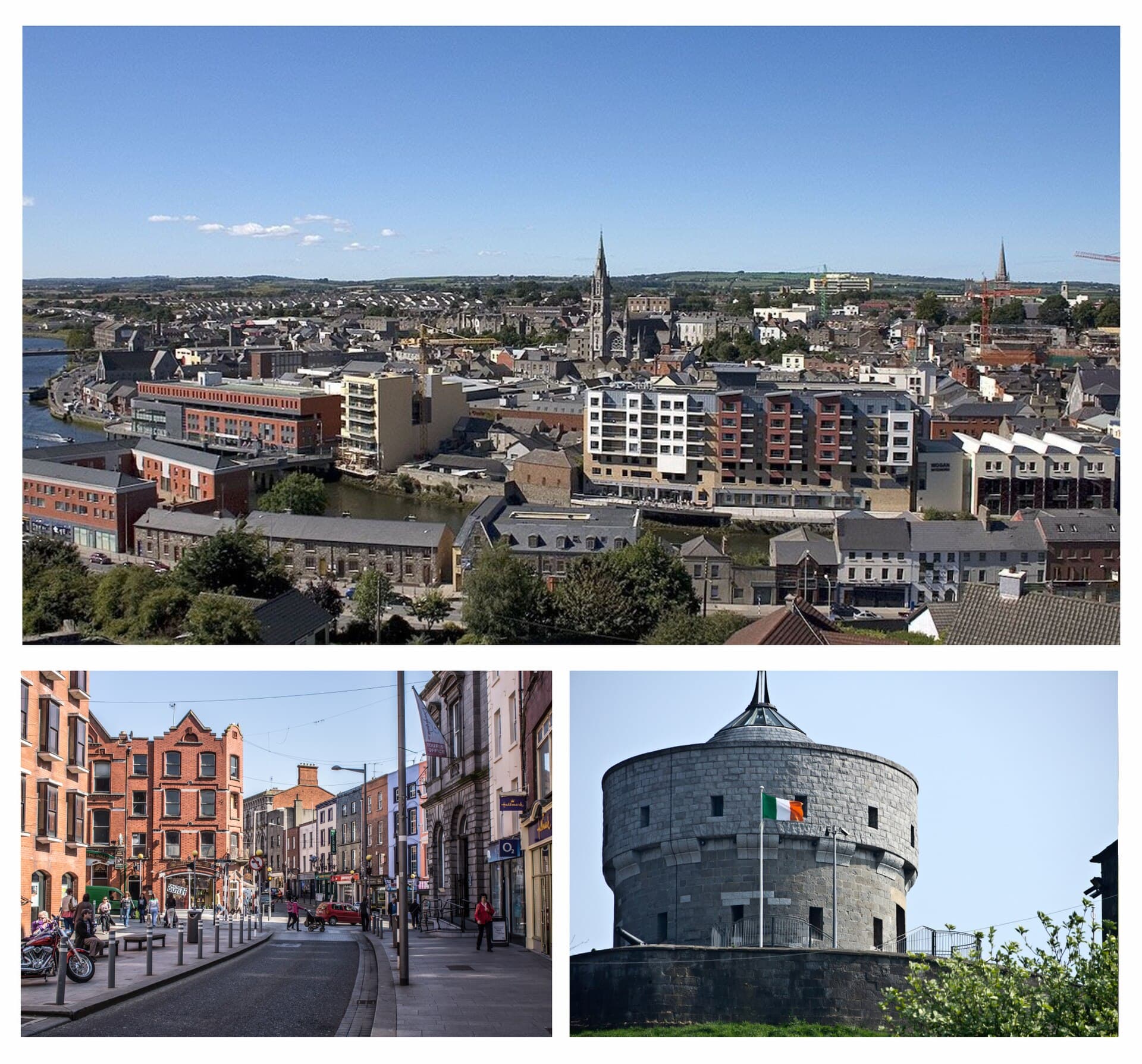 Stephen Durnin, William Murphy / CC BY-SA 2.5, via Wikimedia Commons
Samodzielna audio-wycieczka po Drogheda — trasa GPS pieszo, odtwarzanie offline, wciągająca narracja w 32 językach.
“Where ancient echoes resonate through medieval passages and along the Boyne's currents.”
Nie pocztówki. Historie, których nawet miejscowi nie znają — szeptane do ucha, dokładnie tam, gdzie się wydarzyły.
Within the solemn confines of St. Peter's, a relic of a martyred saint draws pilgrims, yet some suggest his presence lingers beyond the physical.
This prominent hill, crowned by a Martello tower, possesses a history far older than its visible fortifications, hinting at a legendary figure interred beneath.
The solitary standing tower of a medieval friary holds accounts of peace treaties and noble executions, alongside murmurs of a spectral resident.
Odkryj każdy sekret Drogheda
Każdy adres, każde pełne odkrycie — w Twoim uchu, dokładnie tam, gdzie się wydarzyło.
Ty wybierasz przystanki. Ty spacerujesz. Głos ujawnia to, co inni przegapiają.


Twój samodzielny audioprzewodnik po Drogheda jest gotowy — wybierz swoje punkty orientacyjne, wybierz język i rozpocznij w momencie przybycia.
KupLume ma wbudowanego przewodnika w rozszerzonej rzeczywistości. Unieś telefon: kamera pokazuje ulicę przed tobą, a na rzeczywistym obrazie świeci strzałka, która zawsze wskazuje twój następny przystanek — bez rozszyfrowywania mapy, bez błędnych skrętów. Jak wszystko w Lume, działa całkowicie offline.
Drogheda, or Droichead Átha meaning 'bridge at the ford' in Irish, is a significant town on Ireland's east coast, bisected by the River Boyne. Situated approximately 43 kilometers north of Dublin, it serves as a portal to the Boyne Valley region, including the UNESCO World Heritage Site of Newgrange, just 8 kilometers to the west. As the largest town in the Republic of Ireland by both population and area, Drogheda interweaves its medieval past with a spirited modern culture, offering a wealth of historical attractions within walking distance.
Originally two distinct towns, one on the Meath side and the other on the Louth side of the Boyne, Drogheda was unified in 1412. Its strategic location made it an important stronghold and trading post for Norsemen and later Anglo-Normans from the 8th to the 12th centuries. Today, Drogheda maintains its identity as a working port town, while also embracing its role as a cultural center with art galleries, theatres, and annual festivals.
Drogheda's origins extend back thousands of years, evidenced by prehistoric monuments and early Christian ruins. The town's name, Droichead Átha, directly references its position at a crucial ford on the River Boyne. Following the Norman invasion in the 12th century, the area was divided into two towns: Drogheda-in-Meath and Drogheda-in-Oriel (later County Louth). Hugh De Lacy, Lord of Meath, constructed a motte-and-bailey castle on a hilltop overlooking the Boyne around 1172, which would eventually become Millmount Fort. The first town charter was granted to Drogheda-in-Meath in 1194.
By the 13th century, stone walls replaced earlier earthen defenses, enclosing an impressive 113 acres, making Drogheda one of the largest walled towns of its era. The two towns were formally united in 1412, and Drogheda was designated a 'County Corporate.' Throughout the medieval period, Drogheda was a significant center, even hosting sessions of the Irish Parliament.
The 17th century brought considerable turmoil. In 1641, a Catholic rebellion led to the town being besieged. Most notably, in 1649, Oliver Cromwell besieged a combined Royalist and Catholic garrison. When they refused to surrender, a massacre ensued, a notorious event in Irish chronicles. The town's walls, though rebuilt in 1689, were never tested again after the decisive Williamite victory at the Battle of the Boyne in 1690, which occurred just a few miles upriver.
In the early 19th century, Drogheda saw the arrival of major new industries, including the Drogheda Steam Packet Company, which established regular shipping services to Liverpool. A rail link to Dublin was established by 1844. While much of its medieval heritage was lost to 19th and 20th-century development, Drogheda today is a flourishing town with a population of over 44,000, serving as a commuter hub for Dublin and a base for exploring the Boyne Valley.
Drogheda offers a compelling journey through Irish history, with several key sites within easy reach. Begin at Millmount Fort, a distinctive Martello tower atop a large mound overlooking the River Boyne. This complex houses the Drogheda Museum, with exhibits spanning local history and offering expansive views of the town. A short walk brings you to St. Laurence's Gate, a striking 13th-century barbican that stands as one of the finest examples of a medieval town gate in Ireland. You can walk through its impressive double-towered structure.
For a unique experience, visit St. Peter's Roman Catholic Church on West Street, a French Gothic Revival edifice built in 1884. This church is home to the national shrine of St. Oliver Plunkett, where his preserved head is displayed in a gilded shrine, alongside the wooden door from his London prison cell. Another significant historical remnant is the Magdalene Tower, the sole surviving part of a 13th-century Dominican friary, notable for its Gothic arch and historical importance. Beyond the town center, the Battle of the Boyne Visitor Centre at Oldbridge House, just 6 kilometers west, provides an immersive experience into one of Ireland's most famous battles.
The ideal time to visit Drogheda for warm-weather activities is from late June to late August, when average daily temperatures are mild. July is typically the warmest month, with an average high of 19°C (66°F). For those preferring fewer crowds and mild weather, May, September, and October offer a good balance, with comfortable temperatures and longer daylight hours. While Ireland has a mild, temperate climate and can be visited year-round, rainfall is highest in November and lowest in April.
Drogheda is easily accessible, located just off the M1 motorway between Dublin and Belfast. Direct train services connect Drogheda to Dublin Connolly station (approximately 40 minutes) and Belfast. The town's bus station on Donore Road serves routes to Dublin, Monaghan, and local destinations.
For visitor information, the Drogheda Tourist Information Office is located in the historic Tholsel building on West Street. Many of Drogheda's historical sites are within walking distance of each other, making it a pleasant town to explore on foot. Consider taking a historic walking tour, or exploring the Boyne Valley Trails for scenic routes. The town also offers a range of accommodation options, from hotels to guesthouses.
Drogheda in koreański, in chiński or in hebrajski — and 29 more languages, every stop narrated by a native voice. The widest language range of any self-guided audio tour.
Available in: