The Belfry of Ghent
The gilded dragon atop the Belfry isn't just decorative; it's a symbol of Ghent's fierce independence.
Pełna historia odblokowuje się w wycieczce
 Michielverbeek / CC BY-SA 4.0, via Wikimedia Commons
Samodzielna audio-wycieczka po Ghent — trasa GPS pieszo, odtwarzanie offline, wciągająca narracja w 32 językach.
“Ghent: where medieval grandeur meets a rebellious spirit.”
Nie pocztówki. Historie, których nawet miejscowi nie znają — szeptane do ucha, dokładnie tam, gdzie się wydarzyły.
The gilded dragon atop the Belfry isn't just decorative; it's a symbol of Ghent's fierce independence.
This imposing medieval castle, complete with a moat, once served a rather grim purpose beyond defense.
A seemingly innocent market square in Ghent was once the site of a surprisingly fierce rivalry over a local sweet.
Odkryj każdy sekret Ghent
Każdy adres, każde pełne odkrycie — w Twoim uchu, dokładnie tam, gdzie się wydarzyło.
Ty wybierasz przystanki. Ty spacerujesz. Głos ujawnia to, co inni przegapiają.


Twój samodzielny audioprzewodnik po Ghent jest gotowy — wybierz swoje punkty orientacyjne, wybierz język i rozpocznij w momencie przybycia.
KupLume ma wbudowanego przewodnika w rozszerzonej rzeczywistości. Unieś telefon: kamera pokazuje ulicę przed tobą, a na rzeczywistym obrazie świeci strzałka, która zawsze wskazuje twój następny przystanek — bez rozszyfrowywania mapy, bez błędnych skrętów. Jak wszystko w Lume, działa całkowicie offline.
Ghent, or Gent in Dutch, is a city in the East Flanders province of Belgium, situated at the confluence of the Leie and Scheldt rivers. It stands as a testament to medieval power and a lively contemporary spirit, often described as having the beauty of Bruges but with a more energetic and authentic local feel. The city's pedestrian-friendly center invites exploration of its guild houses, active squares, and riverside cafés.
Once one of Northern Europe's largest and wealthiest cities in the Late Middle Ages, Ghent's prosperity was built on its thriving cloth industry. Today, it remains a significant port and university city, with a substantial student population contributing to its lively atmosphere and dynamic cultural scene. This blend of historical grandeur and youthful energy makes Ghent a compelling destination for those seeking a deeper Belgian experience.
Ghent's origins trace back to a settlement at the confluence of the Scheldt and Leie Rivers. Archaeological findings suggest human presence in the region as far back as the Stone Age. The city's formal foundation is often linked to Saint Amand, who established the abbey of Saint Bavo around 630 AD. This strategic location was ideal for trade but also made it vulnerable to Viking raids between the 8th and 11th centuries.
Under the protection of the County of Flanders, Ghent recovered and thrived from the 11th century, evolving into a significant city-state. By the 13th century, it was one of the largest cities in Europe north of the Alps, second only to Paris, with a population reaching up to 65,000 within its walls. This astonishing prosperity was largely due to its cloth industry, with luxury cloths made from English wool gaining renown across Europe until the 15th century. The wealth and influence of its merchant class led to Ghent's considerable political power and a fiercely independent spirit, often leading to clashes with its rulers.
The 16th century marked a period of decline for Ghent, partly due to a severe economic recession and its rebellious stance against authority. In 1539, the citizens revolted against Holy Roman Emperor Charles V, who was born in Ghent, refusing to pay increased taxes to fund his wars. In response, Charles V marched into the city with his army, publicly humiliating its leaders by parading them in their undershirts with nooses around their necks. This event led to the people of Ghent being known as 'Stroppendragers' or 'noose bearers,' a label they proudly commemorate annually during the Ghent Festival.
The city's fortunes reversed during the Industrial Revolution in the 19th century, becoming the first place on mainland Europe where industrialization took hold, largely due to its textile industry. Lieven Bauwens, a local industrial spy, played a key role in this transformation by smuggling cotton mill components from the UK. This industrial boom, however, also brought significant social challenges, leading to the creation of Belgium's first modern trade union in Ghent.
After the late 16th century, Ghent's diminished importance ironically contributed to the excellent preservation of its historic center, making it a popular tourist destination today. The city's rebellious heritage continues to manifest in its lively street art scene, music festivals, and innovative culinary offerings. Ghent was named the 2024 European Youth Capital, reflecting its dynamic and forward-thinking character.
Ghent's cityscape is defined by its three medieval towers: Saint Nicholas' Church, the Belfry, and Saint Bavo's Cathedral. The Belfry of Ghent, a UNESCO World Heritage site, offers sweeping views of the city from its 91-meter height, accessible by both stairs and an elevator. Inside Saint Bavo's Cathedral, you'll find the renowned Ghent Altarpiece, The Adoration of the Mystic Lamb, a 15th-century masterpiece by Hubert and Jan van Eyck. Saint Nicholas' Church, built in the 13th century with blue-gray Tournai limestone, showcases early Scheldt Gothic architecture.
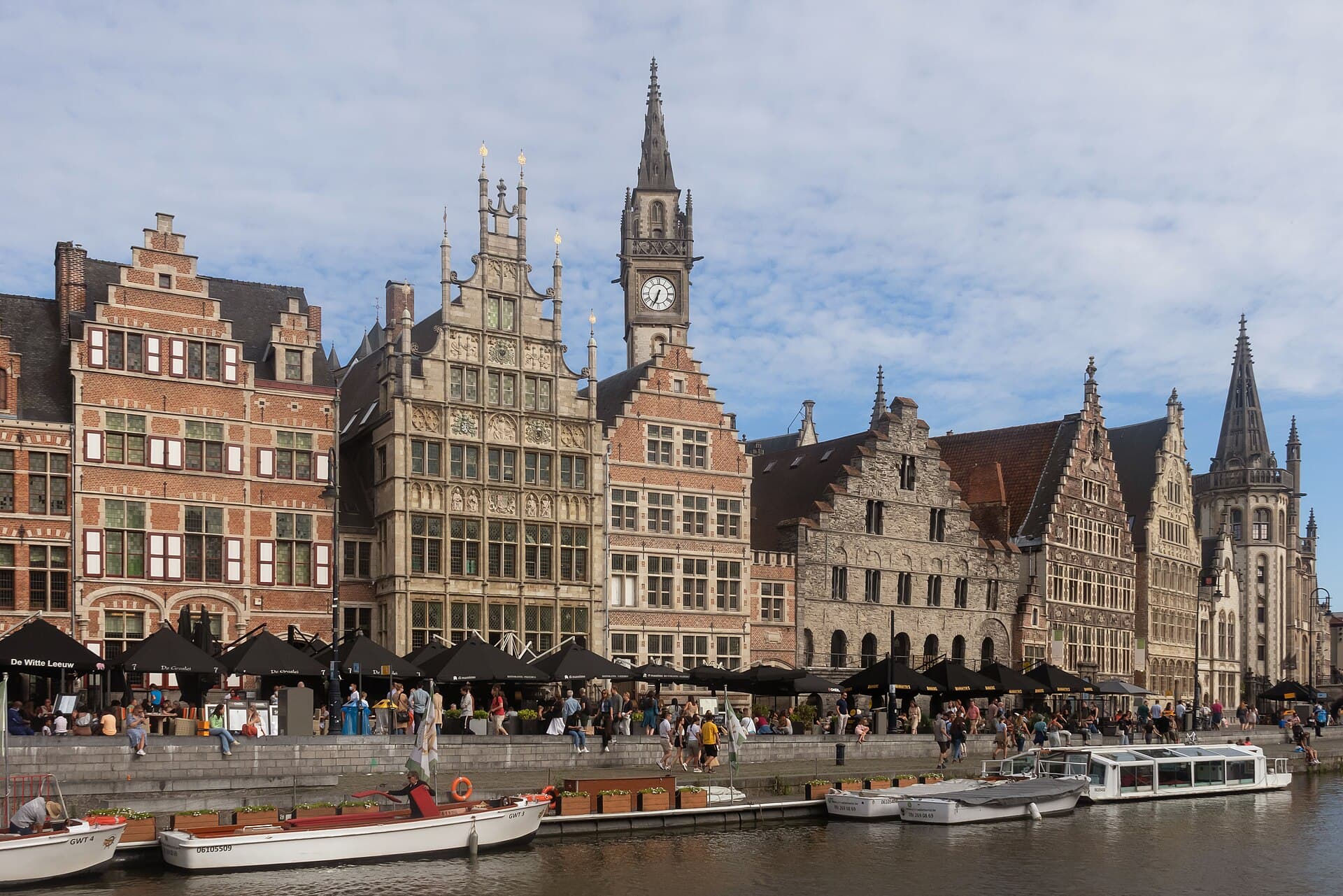
The Gravensteen, or Castle of the Counts, is a remarkably intact 12th-century moated fortress in the city center, offering a glimpse into medieval life and views from its ramparts. The Graslei and Korenlei are the city's iconic medieval quays, lined with historic guild houses and bustling with activity, perfect for a stroll or a boat tour along the canals. For a different perspective, explore Patershol, a former working-class district now known for its winding alleys, stone streets, and diverse culinary scene. Do not miss the lively Graffiti Alley for a display of urban art.
Ghent is a year-round destination, but the shoulder seasons of spring (April to early June) and autumn (September to early November) offer mild weather, fewer crowds, and often more affordable accommodation. May is particularly recommended for a good balance of weather and crowd levels. Summer (July and August) brings pleasant temperatures and a lively outdoor atmosphere, with events like the Gentse Feesten (Ghent Festivities) in July. Winter (December to February) provides a mystical charm with Christmas markets, though days are shorter and often grey.
Ghent's city center is largely car-free, making it ideal for exploration on foot. Public transportation, including trams and buses, is efficient for longer distances, and cycling is also a popular way to get around. The main train station, Gent-Sint-Pieters, is well-connected to other Belgian cities; from there, trams can take you to the city center.
The official language is Dutch, but English is widely spoken, especially in tourist areas. The local currency is the Euro. Consider purchasing the CityCard Gent for access to museums, a canal cruise, and bike rentals if you plan extensive sightseeing. Two to three days are generally sufficient to explore Ghent's highlights and enjoy its culinary scene. Remember that most shops are closed on Sundays, with some exceptions on the first Sunday of each month.
Ghent in koreański, in chiński or in hebrajski — and 29 more languages, every stop narrated by a native voice. The widest language range of any self-guided audio tour.
Available in: