Chapel of Notre-Dame
A statue of the Virgin Mary in Pradelles is credited with an unusual resilience, surviving what few other artifacts of its kind did.
Full story unlocks in the tour
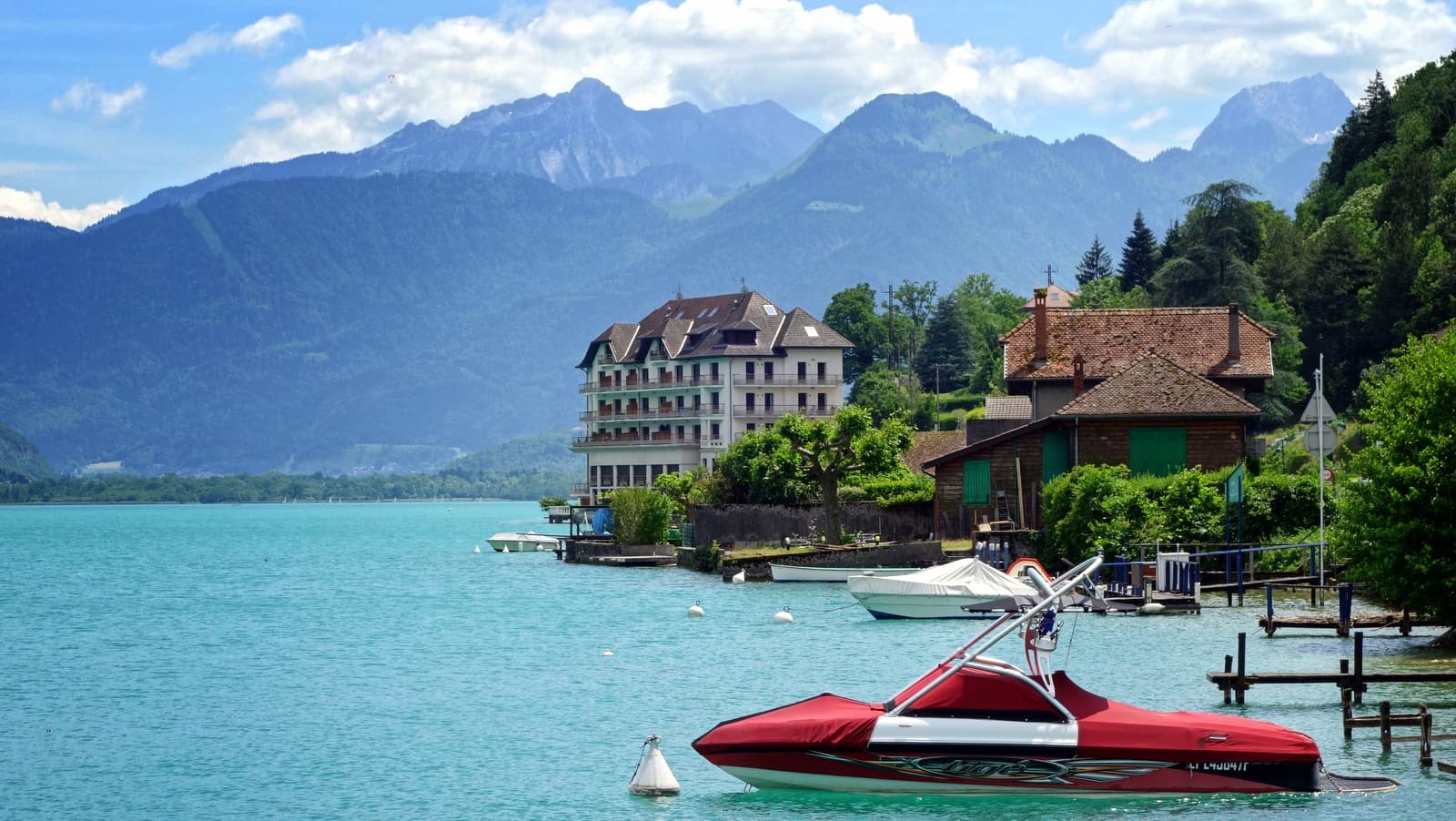 Miwok from France / cc0, via Wikimedia Commons
Self-guided audio walking tour of Pradelles — GPS route, offline playback, story-driven narration in 32 languages.
“Where ancient paths converge and a miraculous past lingers.”
Not the postcards. The stories even locals don't know — whispered in your ear, right where they happened.
A statue of the Virgin Mary in Pradelles is credited with an unusual resilience, surviving what few other artifacts of its kind did.
Before modern roads, a crucial route through Pradelles wasn't just for commerce; it was a path where faith and danger walked hand-in-hand.
A famous Scottish author once passed through Pradelles with an unusual companion, inspiring a renowned hiking trail, yet his written account of the village is surprisingly brief.
Discover every secret of Pradelles
Every address, every reveal in full — in your ear, right where it happened.
You pick your stops. You walk. The voice reveals what the others miss.


Your self-guided audio tour of Pradelles is ready — pick your landmarks, choose your language, and start the moment you arrive.
BuyLume has a built-in augmented-reality guide. Hold your phone up and its camera shows the street ahead of you, with a glowing arrow laid over the real view that always points to your next stop — no map to puzzle over, no wrong turns. Like everything in Lume, it works fully offline.
Pradelles, a village in the Haute-Loire department of the Auvergne-Rhône-Alpes region, is recognized as one of France's 'most beautiful villages.' Situated at an elevation of approximately 1,150 meters, the village offers expansive views of the Velay plateaus and the Ardèche mountains. Its strategic position, overlooking the Allier Valley, once made it a significant fortified town.
This former stronghold served as a vital crossroads for centuries. It protected pilgrims and muleteers traversing the Regordane Way and was an important trading hub. Today, Pradelles invites visitors to explore its preserved medieval architecture, volcanic stone houses, and narrow, winding streets that evoke a sense of its past.
Pradelles's history stretches back to at least the 12th century, developing around a fortified castle, remnants of which are still integrated into the village's architecture. In the 11th century, it was known as the 'stronghold of the high meadows,' a testament to its defensive importance. The village's strategic location at the intersection of the Haute-Loire, Lozère, and Ardèche departments made it a crucial stop on the Regordane Way, a medieval route for both trade and pilgrimage. This ancient road connected Auvergne to Languedoc, facilitating the movement of merchants, pilgrims, and even armies.
Religious events have also shaped Pradelles. In 1512, a statue of the Virgin Mary, later named Notre-Dame de Pradelles, was discovered. This statue became central to a local cult, with miracles attributed to it. It famously survived a fire in 1586 that destroyed much of the surrounding area and was only partially damaged when revolutionaries attempted to burn it in 1793. The Chapel of Notre-Dame, built by Dominicans in 1613, houses this revered statue and remains a site of pilgrimage, particularly on August 15th.
Over the centuries, Pradelles witnessed various historical figures pass through its gates, from Saint Jean-François Régis in the 17th century to the bandit Louis Mandrin in the 18th. The Scottish writer Robert Louis Stevenson also journeyed through Pradelles in 1878 with his donkey, Modestine, a trip that inspired his book 'Travels with a Donkey in the Cévennes' and the popular GR70 hiking trail. While its importance as a major trading hub diminished with the advent of the railway, which bypassed the village, Pradelles has preserved its medieval character and is now celebrated for its historical heritage and scenic beauty, earning it the moniker 'balcony of the South.'
Begin your exploration at the Place de la Halle, the village's historic heart, which retains echoes of its former market under a covered gallery. From here, wander through the narrow streets, observing the high stone facades of old houses, some dating back centuries. Look for the remnants of the village's fortifications, including the Porte de la Verdette and the Porte du Besset, two original 13th-century gateways that once controlled access to the fortified center. The Tour de Rochely, a watchtower, also stands as a reminder of Pradelles's defensive past.
The Chapel of Notre-Dame, constructed in 1613 by the Dominicans, is a significant historical monument, housing a miraculous statue of the Virgin Mary. A pilgrimage takes place here every August 15th. For panoramic views of the Langogne basin and Lake Naussac, visit the orientation table in the Calvary Garden. Beyond the village, consider a ride on the Pradelles Railbike, which offers routes along an old railway line, allowing you to pedal through tunnels and over viaducts while enjoying the scenery. The Musée du Cheval de Trait (Draft Horse Museum) provides insight into the history of working horses in the region.
The most pleasant times to visit Pradelles are generally spring (March to May) and autumn (September to November). During these seasons, the weather is often mild, and the crowds are typically smaller than in the peak summer months. Summer, particularly July and August, brings warmer temperatures and a livelier atmosphere with various festivals and events, though it can also be more crowded. If you are interested in the religious pilgrimage, August 15th is a notable date. Winter travel is possible, but many smaller towns and attractions may have reduced hours.
The local currency in Pradelles, as in the rest of France, is the Euro. While credit cards are widely accepted, it's advisable to carry some cash for smaller purchases at local markets or shops. French is the official language, and knowing a few basic phrases can enhance your interactions with locals. Pradelles is generally considered a safe destination for travelers. Most accommodations offer complimentary Wi-Fi, and easy access to parking is common. The village has a Tourist Office on Place de la Halle where you can obtain a map of the town with points of interest. The mairie (town hall) is open Monday to Friday mornings, with Saturday appointments available. The population of Pradelles was around 531 in 2023.
Pradelles in Korean, in Chinese or in Hebrew — and 29 more languages, every stop narrated by a native voice. The widest language range of any self-guided audio tour.
Available in: