Pagode Thiên Ấn
Les habitants parlent d'une cloche sacrée à la pagode Thiên Ấn qui possédait autrefois un pouvoir inhabituel.
L'histoire complète se débloque dans le tour
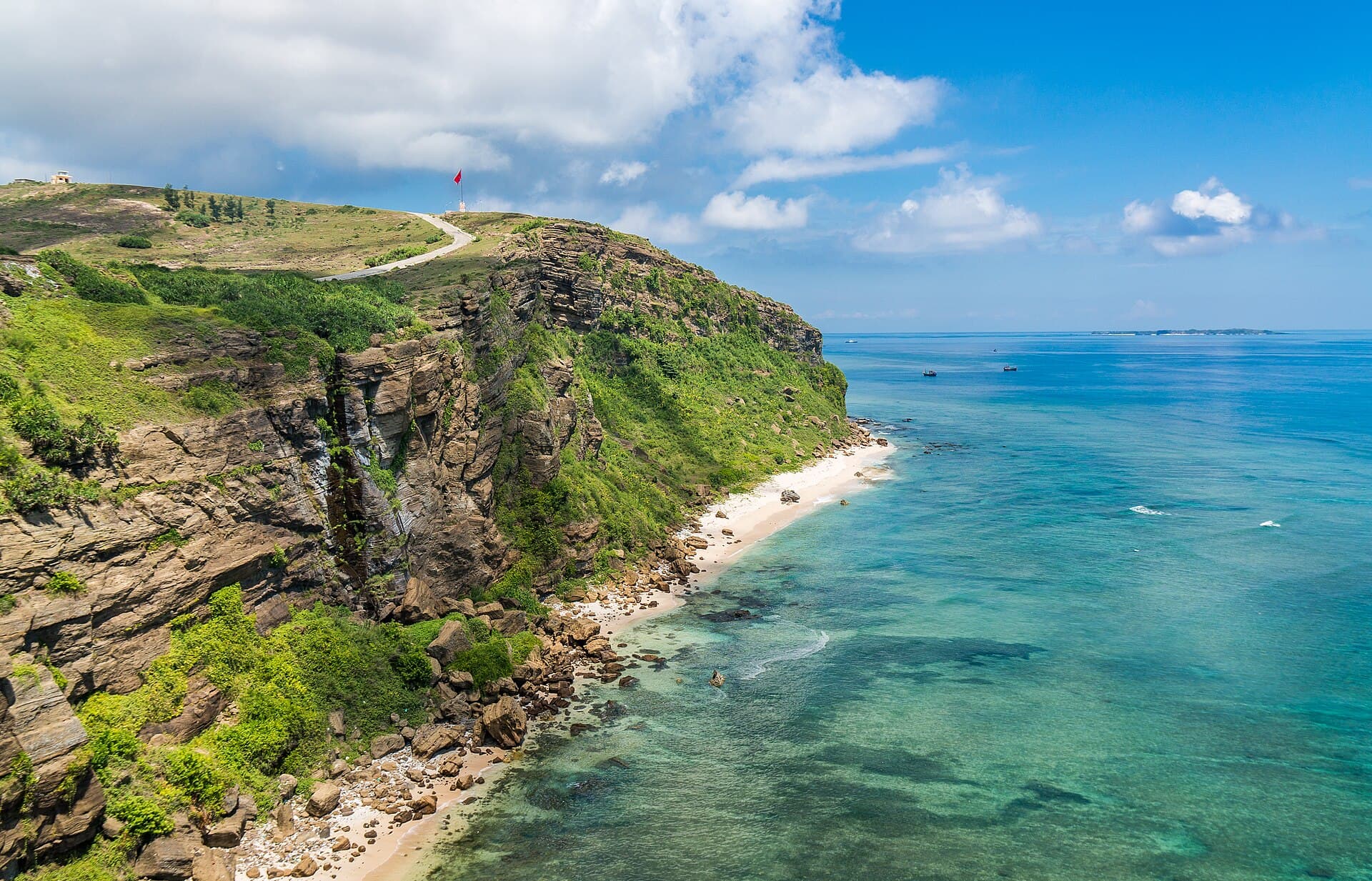 minhphuc_99kdd / Public domain, via Wikimedia Commons
Visite audio autoguidée de Quảng Ngãi — parcours GPS à pied, lecture hors ligne, narration en 32 langues.
“Là où l'histoire ancienne rencontre l'esprit résilient sur la côte centrale du Vietnam.”
Pas les cartes postales. Les histoires que même les habitants ignorent — soufflées à l'oreille, là où elles se sont passées.
Les habitants parlent d'une cloche sacrée à la pagode Thiên Ấn qui possédait autrefois un pouvoir inhabituel.
L'ancienne citadelle de Quảng Ngãi recèle un secret dans sa construction même, un détail qui suggère une influence surprenante.
Au-delà du musée solennel, il existe un aspect moins connu du Mémorial de My Lai qui témoigne de la guérison et du souvenir continus.
Découvrez tous les secrets de Quảng Ngãi
Chaque adresse, chaque révélation en entier — dans ton oreille, là où elle s'est passée.
Tu choisis tes lieux. Tu marches. La voix te révèle ce que les autres ignorent.

Votre visite audioguidée de Quảng Ngãi vous attend — choisissez vos lieux, votre langue, et lancez-vous dès votre arrivée.
AcheterLume intègre un guide en réalité augmentée. Levez votre téléphone : sa caméra montre la rue devant vous, avec une flèche lumineuse posée sur l'image réelle qui pointe toujours vers votre prochain arrêt — aucune carte à déchiffrer, aucun mauvais virage. Comme tout dans Lume, ça fonctionne entièrement hors-ligne.
Quảng Ngãi, une ville côtière du centre du Vietnam, offre un mélange captivant d'histoire poignante, de beauté naturelle sereine et de vie locale authentique. Souvent ignorée par les voyageurs se dirigeant vers des destinations plus en vue, cette province récompense ceux qui cherchent une compréhension plus approfondie du passé du Vietnam et un aperçu de son présent en évolution. De ses racines culturelles anciennes de Sa Huỳnh aux réflexions sombres du Mémorial du massacre de My Lai, Quảng Ngãi présente un récit aux multiples facettes.
La ville elle-même sert de point central pour la province environnante, qui s'étend des montagnes Trường Sơn à la mer de l'Est, englobant des paysages diversifiés de montagnes, de plaines et d'îles au large. Bien qu'elle ait connu une revitalisation, avec l'émergence de nouveaux cafés et restaurants, elle conserve un charme enraciné dans son héritage culturel durable et les rythmes quotidiens de ses communautés.
Explorer Quảng Ngãi, c'est s'engager avec une région qui a été le théâtre d'événements historiques importants et qui reste pourtant profondément connectée à son environnement naturel et à ses modes de vie traditionnels. C'est une destination pour le voyageur réfléchi, offrant des opportunités de réflexion, de découverte et de connexion avec l'esprit résilient de son peuple.
L'histoire de Quảng Ngãi est un récit tissé de fils d'anciennes civilisations, de règne impérial et de l'impact profond des conflits modernes. L'histoire de la région commence bien avant l'histoire enregistrée, en tant que berceau de la culture Sa Huỳnh. S'épanouissant il y a environ 2 500 à 3 000 ans, cette société de l'âge du fer a laissé des preuves archéologiques, notamment des urnes funéraires, dans des régions comme Sa Huỳnh dans le district de Đức Phổ. Ces premiers habitants ont établi un commerce maritime important, façonnant l'identité initiale de la côte centrale vietnamienne.
Plus tard, les terres de Quảng Ngãi sont devenues une partie du puissant Royaume de Champa. Bien que moins proéminent en vestiges Cham par rapport aux provinces voisines de Quảng Nam et Bình Định, il a néanmoins joué un rôle notable dans les vastes réseaux commerciaux maritimes du royaume. En 1471, après la guerre Champa-Đại Việt, la région est officiellement devenue une partie du Đại Việt (Vietnam), aux côtés de la province de Bình Định, marquant un changement significatif dans son paysage culturel et politique.
L'ère de la dynastie Nguyễn a apporté de nouveaux développements architecturaux et administratifs. En 1807, le Thành Cổ Quảng Ngãi, également connu sous le nom de Cẩm Thành (Citadelle de Gấm), a été construit. Cette fortification, édifiée dans un style distinctif de forteresse étoilée, a servi de centre administratif et militaire de la province jusqu'à sa destruction en 1947. Le XIXe siècle a également vu la construction de la Grande Muraille de Quảng Ngãi, une structure défensive substantielle qui a renforcé la sécurité et facilité le commerce entre les Vietnamiens et le peuple Hrê.
Le XXe siècle a jeté une longue ombre sur Quảng Ngãi, en particulier pendant la guerre du Vietnam. La province a été un champ de bataille important, et le 16 mars 1968, elle est devenue le site du massacre de My Lai (connu sous le nom de massacre de Sơn Mỹ au Vietnam). Cet événement horrible, où des soldats de l'armée américaine ont tué des centaines de civils non armés, reste un moment sombre et pivot dans l'histoire de la région. Le Mémorial de Sơn Mỹ, établi en 1975, témoigne des victimes et est un appel à la paix.
Depuis la guerre, Quảng Ngãi a connu des périodes de reconstruction et de revitalisation. Bien qu'autrefois négligée, l'argent du pétrole a contribué à sa recapitalisation, conduisant à l'émergence d'équipements modernes tout en préservant ses sites culturels et historiques. Aujourd'hui, Quảng Ngãi continue d'évoluer, équilibrant ses profondes racines historiques avec le développement contemporain, offrant aux visiteurs un profond voyage à travers le temps.
Quảng Ngãi offre une gamme d'expériences, des sites historiques solennels aux plages tranquilles et aux monuments culturels.
Commencez par une visite au Mémorial de Sơn Mỹ, également connu sous le nom de Mémorial du massacre de My Lai. Ce site commémore les événements tragiques du 16 mars 1968 et comprend un musée avec des artefacts, des photos et une liste des 504 victimes. Un grand monument et une salle de prière bouddhiste font également partie du complexe, offrant un espace de souvenir et de réflexion.
Pour un aperçu du passé ancien de la région, explorez le Thành Cổ Quảng Ngãi (Ancienne Citadelle de Quang Ngai). Construite à l'origine en 1807 dans un style distinctif de forteresse étoilée, les vestiges de son tracé peuvent encore être observés dans le plan des rues de la ville. Bien qu'une grande partie de la structure originale ait été détruite, un modèle reconstruit et un parc environnant donnent un aperçu de son ancienne importance.
Montez la montagne Thiên Ấn pour découvrir la pagode Thiên Ấn, un site historique national construit à la fin du XVIIe siècle. La pagode est connue pour son architecture ancienne et son atmosphère sereine, offrant des vues panoramiques sur la rivière Trà Khúc et le paysage environnant.
Détendez-vous sur la plage de Mỹ Khê, située à environ 12 km à l'est de la ville de Quảng Ngãi. Cette étendue de côte de 7 kilomètres présente du sable blanc fin, des eaux claires et est bordée d'une forêt luxuriante de casuarinas. C'est un endroit idéal pour nager, se promener et déguster des fruits de mer frais dans les restaurants locaux.
Plus loin, envisagez un voyage à l'île de Lý Sơn, une île volcanique connue pour ses paysages spectaculaires, ses champs d'ail et ses villages de pêcheurs. L'île offre une expérience écologique et culturelle unique, soulignant le patrimoine maritime de la région.
Quảng Ngãi connaît un climat de mousson tropicale avec des saisons humides et sèches distinctes. La saison sèche, de janvier à août, est généralement considérée comme la meilleure période pour visiter, offrant un temps chaud et ensoleillé et des températures confortables pour les activités de plein air. Février, mars, avril et juin connaissent généralement des journées plus sèches. Les températures pendant cette période varient de 26°C à 35°C (79°F à 95°F). La saison des pluies dure de septembre à décembre, avec les précipitations les plus élevées en octobre. La saison des typhons dans la région a généralement lieu de juillet à novembre, avec une activité maximale entre août et octobre, il est donc conseillé d'éviter de voyager pendant ces mois.
Quảng Ngãi est située à environ 883 km au sud de Hanoï et 838 km au nord de Hô Chi Minh-Ville, et à environ 130 km au sud de Da Nang.
Comment s'y rendre : Par avion : L'aéroport le plus proche est l'aéroport de Chu Lai (VCL), qui propose des vols intérieurs depuis Hanoï et Hô Chi Minh-Ville. De Chu Lai, le Mémorial de My Lai est à environ 2 heures (50 km) en voiture. Par la route : La route nationale 1 et le chemin de fer trans-vietnamien traversent Quảng Ngãi. Des bus sont disponibles depuis les grandes villes, avec deux grandes gares routières à Quảng Ngãi. Des transferts en voiture privée peuvent également être organisés depuis des villes voisines comme Da Nang ou Hoi An. * Par bateau : Le port de Sa Kỳ, à environ 25 km de la ville de Quảng Ngãi, sert de porte d'entrée à l'île de Lý Sơn.
Se déplacer : Les taxis et les motos sont courants pour les déplacements locaux. Pour explorer la ville et les attractions à proximité, louer une moto ou utiliser des services de covoiturage peut être pratique.
Hébergement : La ville propose une gamme d'hôtels et de maisons d'hôtes. Pour ceux qui visitent la plage de Mỹ Khê, des complexes hôteliers et des options de camping sont disponibles.
Cuisine locale : Ne manquez pas les spécialités locales comme le Don (un bouillon doux et salé avec de petites palourdes de la rivière Trà Khúc), le Tra River Goby Fish (cá bống sông Trà), le Ram Bắp (rouleaux de printemps au maïs) et le Bánh Tráng Đập (galette de riz écrasée). Les fruits de mer sont également un point fort, en particulier près des zones côtières comme Mỹ Khê.
Quảng Ngãi en coréen, en chinois ou en hébreu — et dans 29 autres langues, chaque étape narrée par une voix native. La plus large gamme de langues de tous les audioguides autoguidés.
Disponible en :