Ghenh Rang Tien Sa
This scenic area holds a surprising connection to a renowned Vietnamese poet.
Full story unlocks in the tour
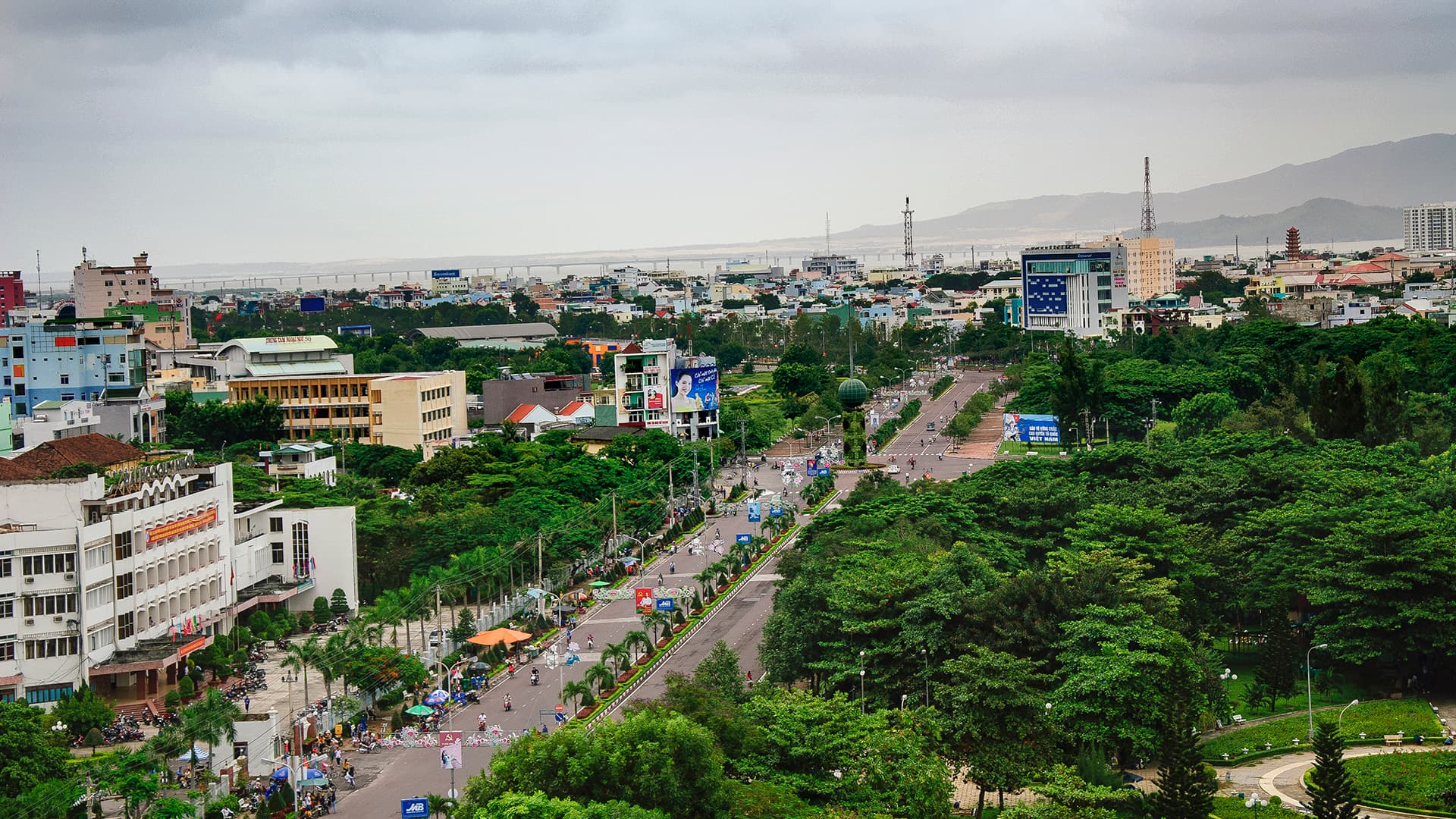 Vũ Tuấn Quy Nhơn / CC BY 2.0, via Wikimedia Commons
Self-guided audio walking tour of Quy Nhơn — GPS route, offline playback, story-driven narration in 32 languages.
“Where ancient echoes meet the ocean's calm.”
Not the postcards. The stories even locals don't know — whispered in your ear, right where they happened.
This scenic area holds a surprising connection to a renowned Vietnamese poet.
The main beach in Quy Nhơn has a unique shape that's more than just aesthetically pleasing.
Beyond its historical purpose, this quiet coastal valley offered solace to a celebrated figure.
Discover every secret of Quy Nhơn
Every address, every reveal in full — in your ear, right where it happened.
You pick your stops. You walk. The voice reveals what the others miss.


Your self-guided audio tour of Quy Nhơn is ready — pick your landmarks, choose your language, and start the moment you arrive.
BuyLume has a built-in augmented-reality guide. Hold your phone up and its camera shows the street ahead of you, with a glowing arrow laid over the real view that always points to your next stop — no map to puzzle over, no wrong turns. Like everything in Lume, it works fully offline.
Quy Nhơn, the coastal capital of Bình Định Province in central Vietnam, offers a compelling blend of untouched natural splendor and profound historical depth. Unlike some of its more bustling neighbors, Quy Nhơn maintains an authentic, local atmosphere, making it a rare find for travelers seeking a genuine Vietnamese experience without the crowds. The city is framed by a beautiful golden bay and backed by green mountains, creating a diverse landscape of mountains, forests, hills, and pristine beaches. Its 42-kilometer coastline features fine sandy beaches and sheltered bays, including the prominent Quy Nhơn Beach.
Often described as an "in-the-know" spot, Quy Nhơn is gaining recognition as one of the three core tourism centers of Vietnam's Central Southern Coastal region, alongside Đà Nẵng and Nha Trang, yet it retains a fraction of their tourist density. The city's relaxed pace, friendly locals, and incredibly fresh seafood contribute to its growing appeal. Whether you're drawn to its historical Cham towers, serene fishing villages, or expansive coastal scenery, Quy Nhơn promises an immersive journey through a lesser-explored part of Vietnam.
The city's topography is remarkably varied, encompassing diverse natural environments within a compact area. To the west and northwest, mountain ranges rise gently, shaping weather patterns and offering natural viewpoints overlooking the coast. This unique geography, with mountains behind and the sea in front, contributes to Quy Nhơn's picturesque setting.
The history of Quy Nhơn stretches back centuries, with its origins deeply rooted in the 11th-century Champa civilization. This powerful maritime culture flourished along Vietnam's central coast, leaving behind a unique legacy evident in the ancient Cham Towers scattered throughout the region. The city's strategic coastal location has consistently played a crucial role in its development, transforming it into a vital seaport over time.
During the 1620s, Portuguese Jesuits arrived, referring to the area as Pulo Cambi. A significant chapter in Quy Nhơn's history unfolded in the 18th century when it became the birthplace of the Tây Sơn Rebellion, a major peasant uprising. The city is the homeland of its legendary leader, Nguyễn Huệ, who later became Emperor Quang Trung, one of Vietnam's most successful military commanders. The Tây Sơn brothers established this region as their stronghold, making the ancient Cham citadel of Đồ Bàn their capital, which they renamed the Imperial Citadel.
The town of Quy Nhơn was officially founded in the late 18th century, though human settlement dates back to the 11th century. It also served as a prominent port in the 15th century, often a first stop for Chinese Admiral Zheng He's legendary voyages. Later, in the 18th century, the last king of the Nguyễn Dynasty was born here. The 20th century saw Quy Nhơn play a critical role during the Vietnam War, serving as a strategic port and logistics hub for Allied forces due to its position along the South China Sea coast. The United States established significant military infrastructure, including the Qui Nhơn Airfield, which supported operations for troop transport, cargo handling, and aerial support.
After the reunification of Vietnam in 1975, Quy Nhơn underwent administrative restructuring and a gradual recovery. It officially gained municipal status in 1986 and was reinstated as the provincial capital of Bình Định in 1989. As of July 1, 2025, Quy Nhơn was integrated into the newly formed Gia Lai Province (resulting from the merger of the former Bình Định and Gia Lai provinces), with Quy Nhơn serving as the administrative center. Today, the city is recognized as a first-class city with geo-economic priority and urbanized infrastructure, described by the government as one of the three commercial and tourism centers of the central southern coastal region.
Quy Nhơn offers a diverse range of attractions, blending natural beauty with historical significance. Start with the captivating Cham Towers, ancient structures that are remnants of the Champa Kingdom. The Twin Towers (Tháp Đôi), located in the city center, are beautifully preserved red-brick towers set amidst landscaped gardens. Further afield, the Bánh Ít Towers (Silver Towers), situated on a hill, offer sweeping views of rice fields and the surrounding countryside. You can also explore the Dương Long Towers, another impressive Cham complex.
For natural wonders, Kỳ Co Beach is often called the "Maldives of Vietnam" with its crystal-clear turquoise water, soft white sand, and dramatic rock formations. It's accessible by canoe or boat from Eo Gió, a crescent-shaped bay embraced by towering cliffs, known for its expansive coastal views and as a prime sunset-watching spot. Hòn Khô Beach on Hòn Khô Islet offers rustic charm and lively coral reefs, ideal for snorkeling. Do not miss Hoàng Hậu Beach (Queen's Beach), known for its unique egg-shaped stones.
Delve into local history at the Quang Trung Museum, which houses artifacts from the Tây Sơn Uprising. The Memorial of Emperor Quang Trung in the city's main roundabout honors this revered national hero. For a spiritual experience, visit Long Khánh Pagoda, an ancient temple dating back to 1700, featuring a 17-meter-high Buddha statue and intricate mosaic dragons. The Quy Nhơn Cathedral, completed in 1939, is a Gothic-styled church with intricate spires and stained-glass windows. For a glimpse into local life, explore peaceful fishing villages like Nhơn Lý or Hải Minh, where you can observe daily routines and savor fresh seafood.
The best time to visit Quy Nhơn for warm-weather activities, especially beach and pool enjoyment, is from late January to early April. During this period, the weather is delightful, with average temperatures ranging from 84 to 90°F (29 to 33°C), increased sunshine, and minimal rainfall, marking the beginning of the dry season. February is particularly dry, with the lowest average precipitation. The winter months, from December to February, are generally warm, with an average temperature of 75.4°F (24°C) in January. For those seeking cooler temperatures, the cool season lasts from late November to mid-February, with average daily highs below 81°F (27°C).
It's advisable to avoid the rainy season, which typically runs from September to December, with October and November being the wettest months, experiencing significant rainfall and occasional storms.
Quy Nhơn is generally a safe destination with a low crime rate and friendly locals, making it suitable for solo travelers, including females. However, as with any travel, it's wise to stay aware of your belongings in crowded areas. The local currency is the Vietnamese Dong (VND). ATMs are widely available in the city center and accept international cards, though some may charge a withdrawal fee. It's recommended to exchange major currencies (USD, AUD, EUR) at banks or gold shops, as exchange offices at the airport are uncommon, and paying in foreign currency is not widely accepted outside of hotels.
Phu Cat Airport (UIH) serves Quy Nhơn, located about 28 km northwest of the city. Taxis from the airport to the city center cost approximately 350,000–450,000 VND. Flights from Hanoi take around 1 hour and 50 minutes, and from Ho Chi Minh City, about 1 hour and 30 minutes. Getting around Quy Nhơn is easy with taxis, Grab, and motorbike rentals. Renting a motorbike offers flexibility for exploring, typically costing 120,000–150,000 VND per day. While traffic is less chaotic than in larger Vietnamese cities, defensive driving and wearing a helmet are essential. Vietnamese is the primary language, and while English support is limited outside of tourism, locals are generally welcoming.
Quy Nhơn in Korean, in Chinese or in Hebrew — and 29 more languages, every stop narrated by a native voice. The widest language range of any self-guided audio tour.
Available in: