The Mehlsack Tower
This prominent white tower bears a name that might evoke images of baked goods, yet its original purpose was far more strategic.
Full story unlocks in the tour
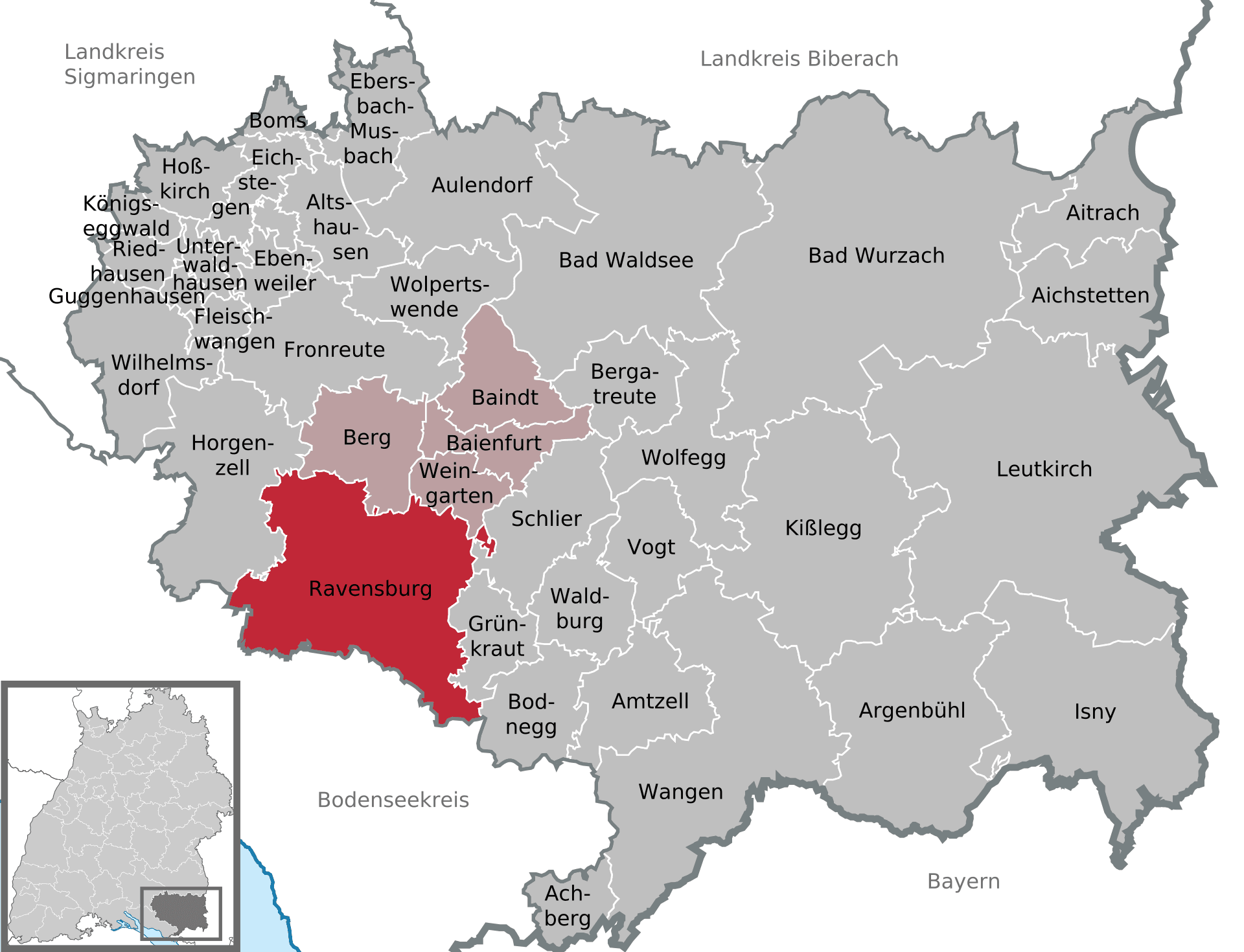 Hagar66 based on work of TUBS / Public domain, via Wikimedia Commons
Self-guided audio walking tour of Ravensburg — GPS route, offline playback, story-driven narration in 32 languages.
“Where medieval towers meet modern imagination.”
Not the postcards. The stories even locals don't know — whispered in your ear, right where they happened.
This prominent white tower bears a name that might evoke images of baked goods, yet its original purpose was far more strategic.
The central square of Ravensburg holds a secret that explains its welcoming, walkable atmosphere.
Within the venerable stones of a Ravensburg church, one discovers a testament to a powerful medieval enterprise.
Discover every secret of Ravensburg
Every address, every reveal in full — in your ear, right where it happened.
You pick your stops. You walk. The voice reveals what the others miss.


Your self-guided audio tour of Ravensburg is ready — pick your landmarks, choose your language, and start the moment you arrive.
BuyLume has a built-in augmented-reality guide. Hold your phone up and its camera shows the street ahead of you, with a glowing arrow laid over the real view that always points to your next stop — no map to puzzle over, no wrong turns. Like everything in Lume, it works fully offline.
Ravensburg, frequently referred to as 'the city of towers and gates,' stands as a remarkably preserved medieval town in Southern Germany, approximately 23 kilometers north of Lake Constance. Its skyline, punctuated by 17 enduring medieval towers and gates, offers a tangible journey into its deep past. Beyond its striking architecture, Ravensburg is also recognized globally as the home of the Ravensburger company, celebrated for its games, jigsaw puzzles, and children's books, earning it the additional designation 'the city of games.'
The city's historic core remains largely untouched, featuring defensive walls, patrician houses, and Gothic churches, establishing it as one of the most appealing medieval cities in southern Germany. Today, Ravensburg thrives as an economic center with approximately 50,000 residents, weaving its historical allure with a contemporary, lively atmosphere. Its position between Lake Constance and the Allgäu region affords sweeping views, even reaching the Alps on clear days.
## From Welf Stronghold to Imperial City Ravensburg's origins trace back to the 11th century, evolving from a settlement at the base of Ravensburg Castle, the ancestral seat of the influential Welf family. The town received its first official mention in 1088. Its strategic location along the Schussen River, near Lake Constance, proved ideal for commerce and settlement. In 1191, through an inheritance agreement, Frederick Barbarossa of the Hohenstaufen family acquired Ravensburg from Welf VI.
## The Golden Age of Trade Ravensburg secured its market rights early on and became a Free Imperial City in 1276, directly under the Holy Roman Emperor. The medieval period marked Ravensburg's most prosperous era, particularly in the 14th and 15th centuries, when it developed into one of Swabia's most significant trading towns. Around 1380, the Great Ravensburg Trading Society was founded by merchant families. This influential organization maintained commercial ties throughout Europe, extending as far as Spain and the Netherlands, dealing in linen, textiles, paper, oriental spices, Mediterranean wines, and Bohemian ores. A notable achievement was the establishment of one of the first paper mills north of the Alps in 1402, cementing Ravensburg's economic importance.
## Decline and Resurgence Ravensburg enjoyed considerable prosperity until the Thirty Years' War in the 17th century, which brought economic stagnation. After the war, the city adopted a unique parity government, where Catholics and Protestants shared public offices equally. In 1803, during the Napoleonic wars, Ravensburg relinquished its status as a Free Imperial City, becoming part first of Bavaria and then the Kingdom of Württemberg in 1810. Industrialization in the mid-19th century brought renewed wealth, transforming the city into a center for machine production. Ravensburg largely avoided damage during World War II, preserving its historic cityscape. Today, it continues to be a dynamic economic and cultural center in Upper Swabia.
Ravensburg's well-preserved medieval core is best explored on foot, as automobiles are prohibited from many of its narrow streets and alleyways. The central Marienplatz provides an excellent starting point, ringed by late-Gothic structures like the Rathaus (Town Hall), the 14th-century Kornhaus (now the town library), and the Waaghaus (formerly a warehouse, now a bank).
The city's defining characteristic is its collection of medieval towers and gates. The Mehlsack Tower, a 51-meter-tall rounded white tower, serves as a municipal emblem, offering sweeping views after ascending its 240 steps. The Blaserturm, also 51 meters tall, rises in the city center and provides similar expansive views. Other notable towers include the Obertor and Frauentor.
For cultural immersion, visit the Humpis-Quartier Museum, a complex of seven late-medieval buildings that illuminate the town's imperial history and culture. The Kunstmuseum Ravensburg (Ravensburg Art Museum) focuses on 20th-century expressive-gestural art and has garnered architectural accolades. The Museum Ravensburger, situated in the company's former headquarters, offers interactive exhibits about the renowned games, puzzles, and children's books. Do not overlook the Liebfrauenkirche Ravensburg, a Gothic church retaining fragments of its original stained glass.
The most agreeable time to visit Ravensburg for comfortable weather and outdoor pursuits extends from late June to early September. During these months, anticipate warm daytime temperatures, averaging around 24-25°C (75-77°F), and extended hours of sunshine. Spring (April–June) and fall (September–October) also present favorable conditions with mild weather and fewer crowds, ideal for exploring the city's historical locations and enjoying local celebrations. While winters are cold and snowy, December brings a festive atmosphere with Christmas markets.
Ravensburg is well-connected and readily accessible. By car, it stands at the intersection of highways B30, B32, and B33, with eight parking garages encircling the old town. The closest airport is Friedrichshafen Airport (FDH), approximately 20 km distant, with Memmingen Airport (FMM) also a viable option. Zurich and Stuttgart airports are further afield but offer a broader selection of flights. The train station is about a 10-minute walk from the town center, with regular services to Ulm and Friedrichshafen. Within the city, public transport relies on an extensive bus network, though the historic core is best traversed on foot. The Tourist Information Office, located in the historic Lederhaus on Marienplatz, serves as a valuable resource for maps, guided tours, accommodation, and event tickets.
Ravensburg in Korean, in Chinese or in Hebrew — and 29 more languages, every stop narrated by a native voice. The widest language range of any self-guided audio tour.
Available in: