Château de Rochefort-en-Terre
The grand manor visible today is not the original medieval fortress. Its revival began with an unexpected patron.
Full story unlocks in the tour
 Selbymay / CC BY-SA 3.0, via Wikimedia Commons
Self-guided audio walking tour of Rochefort-en-Terre — GPS route, offline playback, story-driven narration in 32 languages.
“Where ancient stones stand witness and blossoms adorn every wall.”
Not the postcards. The stories even locals don't know — whispered in your ear, right where they happened.
The grand manor visible today is not the original medieval fortress. Its revival began with an unexpected patron.
This church holds a secret tied to an ancient peril and a remarkable discovery.
The abundant floral displays that grace Rochefort-en-Terre's buildings are not an organic tradition.
Discover every secret of Rochefort-en-Terre
Every address, every reveal in full — in your ear, right where it happened.
You pick your stops. You walk. The voice reveals what the others miss.
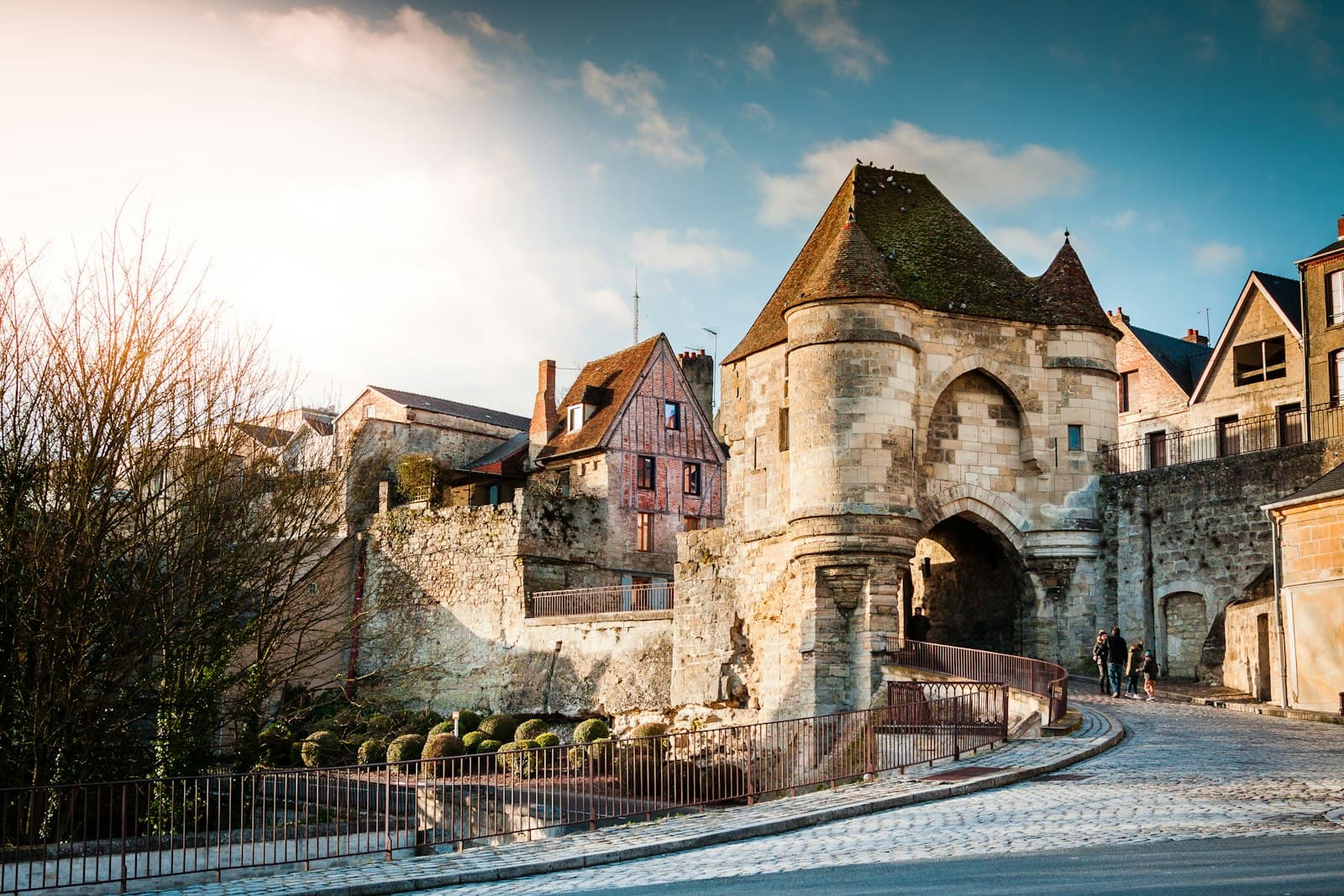
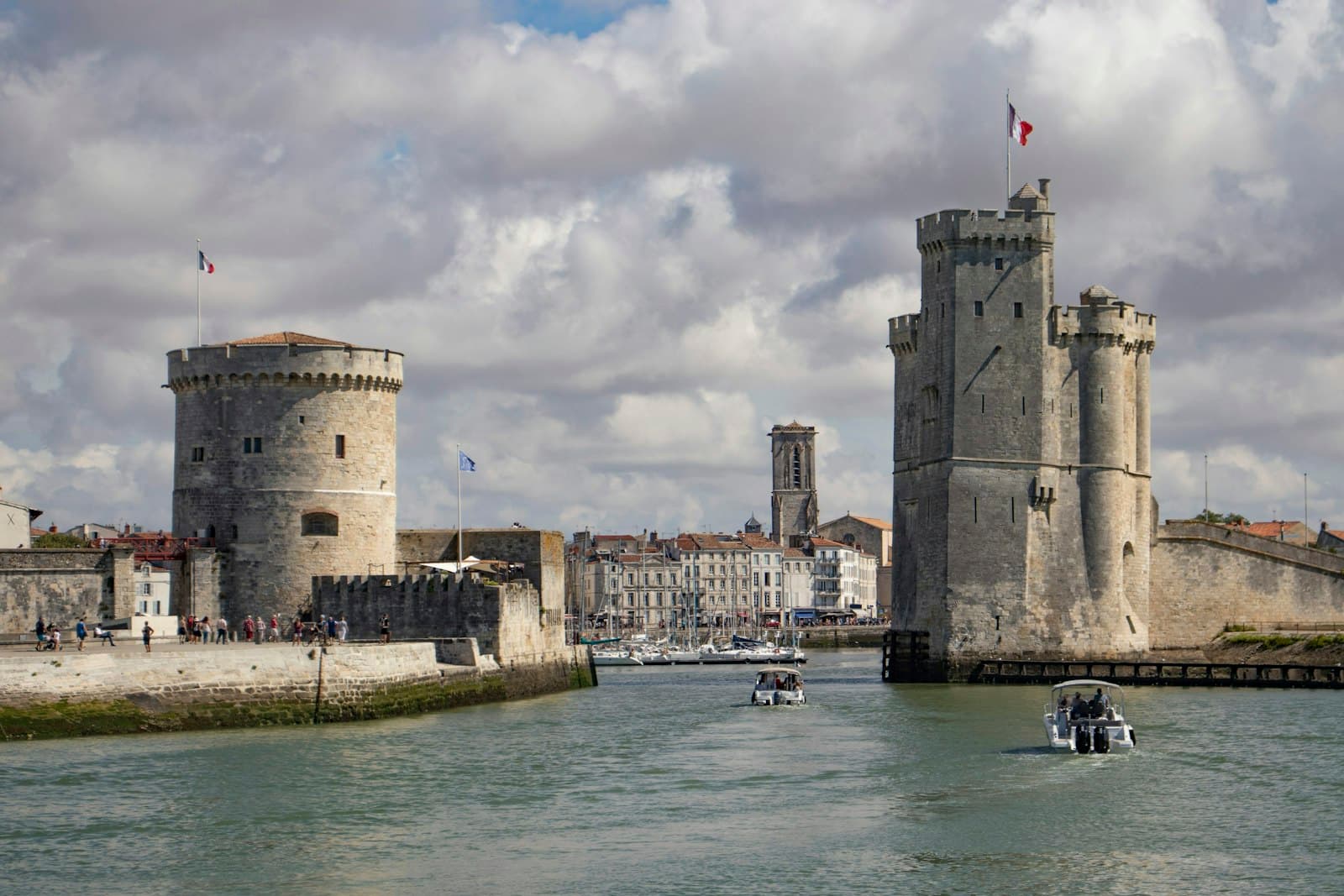
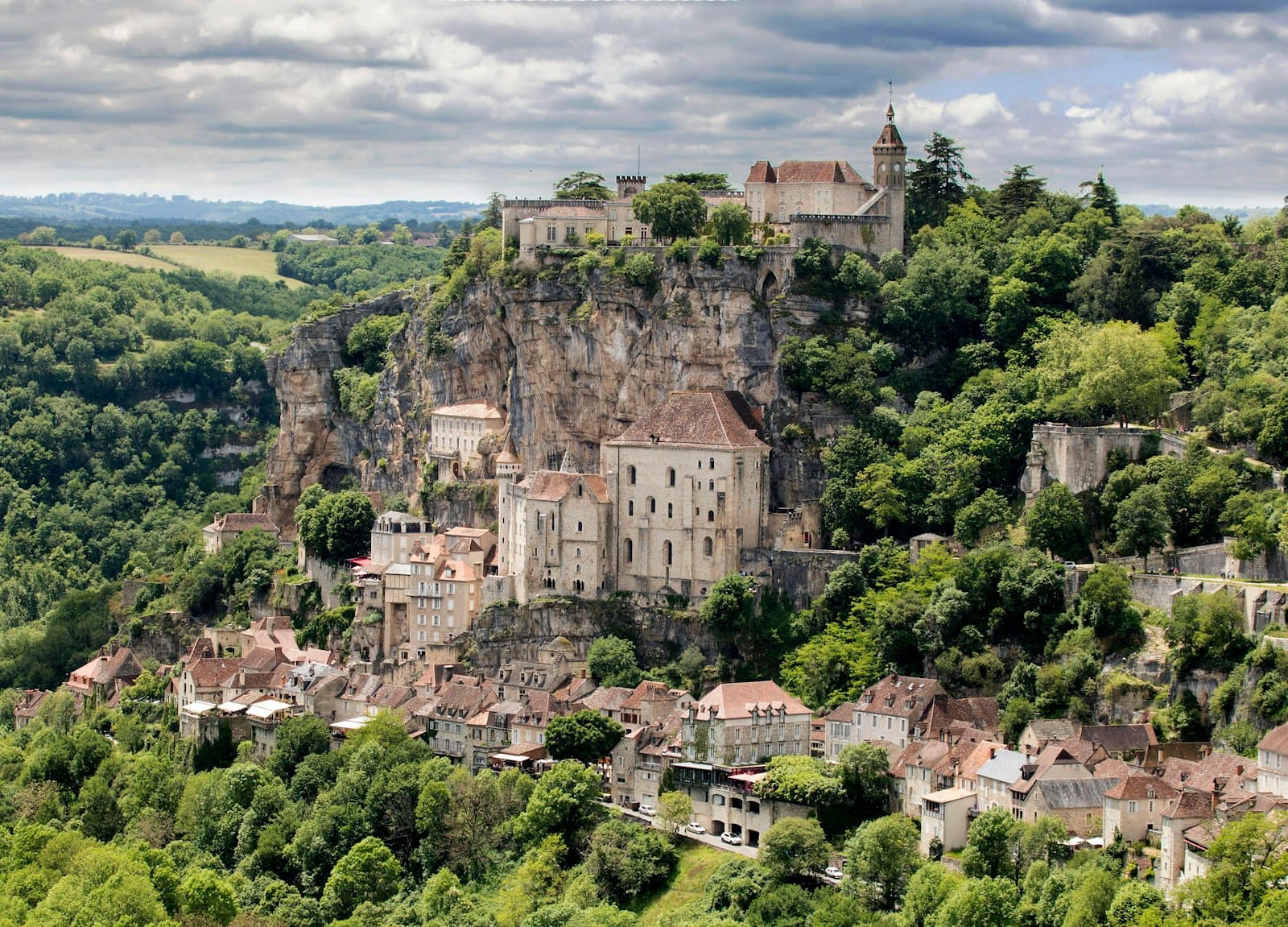
Your self-guided audio tour of Rochefort-en-Terre is ready — pick your landmarks, choose your language, and start the moment you arrive.
BuyLume has a built-in augmented-reality guide. Hold your phone up and its camera shows the street ahead of you, with a glowing arrow laid over the real view that always points to your next stop — no map to puzzle over, no wrong turns. Like everything in Lume, it works fully offline.
Rochefort-en-Terre, a designated "Plus Beaux Villages de France" and "Petite Cité de Caractère" in Brittany, offers a passage through time with its well-preserved medieval architecture and striking floral displays. Narrow lanes paved with stone wind past half-timbered houses and granite mansions, all adorned with blooming geraniums and ivy. The village, situated upon a rocky elevation amidst moors and woods, captivates visitors with its character and artistic atmosphere.
Stepping into Rochefort-en-Terre feels like entering a storybook, where every detail, from stylized shop signs to intricate stonework, is carefully maintained. It is a place where history and Breton traditions intertwine, inviting unhurried explorations and discoveries around every turn. The village was even voted "France's Favourite Village" in 2016.
Rochefort-en-Terre's past extends back over 2,000 years, with archaeological evidence revealing Gallo-Roman presence in the area. Its strategic location on a rocky promontory, a crucial passage between inland Malestroit and the coastal La Roche-Bernard, made it an early stronghold. The first mentions of a seigniory here date back to the 11th century, with a castle built upon older Gallo-Roman fortifications. This "Roche Forte" (Strong Rock) became the seat of a powerful seigniory, initially part of the County of Vannes, and by the 12th century, the châtellenie of Rochefort was among the most important in the Vannetais region.
For four centuries, the lords of Rochefort, and later the de Rieux-Rochefort family, solidified the commune's position, wielding significant political, religious, and economic influence. The village prospered, becoming not only a fortified place but also an important pilgrimage site. However, the original 12th-century castle faced destruction and reconstruction multiple times throughout conflicts like the French Wars of Religion (Ligue) and the Revolution. In 1793, a Chouanne revolt, marked by the assassination of republican administrators, further impacted the village.
The 19th century saw a period of decline for Rochefort-en-Terre. However, its fortunes changed dramatically in the early 20th century when American painter Alfred Klots purchased the château's outbuildings in 1903. Klots undertook a significant restoration, transforming the ruins into a manor house and envisioning the village as a center for artists. He actively encouraged locals to adorn their homes with flowers, initiating the "flowered windows" contest in 1911, a tradition that continues to define the village's aesthetic today. His son, Trafford Klots, inherited the château and continued to host artists there. After Trafford's death, his wife donated the building to the French government. This artistic legacy is still evident, with numerous artisan shops and galleries throughout the village.
Begin your exploration at the Château de Rochefort-en-Terre, a grand manor built on the remains of a 12th-century fortress. While the medieval castle is largely in ruins, the manor house and its grounds host art exhibits and offer views of the village. Within the château grounds, you will find the Naïa Museum, dedicated to fantasy and kinetic art, named after a local witch from the early 20th century.
Wander through the village's stone-paved streets, admiring the half-timbered and Renaissance-style houses, many adorned with abundant flowers. Do not miss the Place du Puits and Rue Saint-Michel for notable corbelled houses. The Collegiate Church of Notre-Dame-de-la-Tronchaye, dating from the 12th and 16th centuries, features remarkable architecture and stained glass windows. Also, seek out the horseshoe-shaped market hall (Les Halles) and the 16th-century Calvary. Numerous artisan shops and galleries display local crafts, from pottery to paintings. For a natural escape, the nearby Moulin Neuf lake offers a 3 km walkway through woods and clearings.
Rochefort-en-Terre is appealing throughout the year, but spring and autumn offer pleasant weather and fewer crowds, ideal for enjoying the village's celebrated floral displays. From May to September, average temperatures range from 19°C to 24°C, perfect for exploration. The village is particularly enchanting during the winter holidays, from late November to early January, when it transforms with dazzling Christmas illuminations and festive markets.
Rochefort-en-Terre is approximately 90 kilometers (an hour and a half drive) southwest of Rennes, Brittany's capital, via the N24 and D776. If traveling by public transport, the nearest train station is in Questembert, about 20 minutes away by car, with regular trains from Rennes. Vannes also offers train and bus services to Rochefort-en-Terre. The old town is pedestrianized during the summer, making comfortable walking shoes essential for navigating its stone-paved streets. The Tourist Office provides maps and offers guided tours. Many artisan shops are easily identified by red pennants. For dining, local Breton galettes and crêpes are available, with more refined gastronomic experiences also an option.
Rochefort-en-Terre in Korean, in Chinese or in Hebrew — and 29 more languages, every stop narrated by a native voice. The widest language range of any self-guided audio tour.
Available in: