Hôtel Saint-Pol
Un encuentro accidental de un monarca con el fuego provocó un cambio dramático en su apariencia.
La historia completa se desbloquea en el tour
 Vincent4145 / CC BY-SA 3.0, via Wikimedia Commons
Tour de audio autoguiado de Romorantin-Lanthenay — ruta GPS a pie, reproducción offline, narración en 32 idiomas.
“Donde la ambición renacentista y la serena belleza de Sologne convergen.”
No las postales. Las historias que ni los locales conocen — al oído, justo donde ocurrieron.
Un encuentro accidental de un monarca con el fuego provocó un cambio dramático en su apariencia.
El propio nombre de Romorantin-Lanthenay resuena con ecos de un linaje antiguo y significativo, como sugirió un historiador del siglo XVIII.
Una reina de Francia, buscando refugio de una enfermedad contagiosa, encontró un inesperado cobijo aquí, donde dio a luz a una futura figura real.
Descubre todos los secretos de Romorantin-Lanthenay
Cada dirección, cada revelación al completo — a tu oído, justo donde ocurrió.
Eliges tus paradas. Caminas. La voz te revela lo que los demás ignoran.
Tu tour de audioguía por Romorantin-Lanthenay te espera — elige tus lugares, tu idioma y empieza al llegar.
ComprarLume incluye una guía de realidad aumentada. Levanta el móvil y su cámara muestra la calle que tienes delante, con una flecha luminosa sobre la imagen real que siempre apunta a tu próxima parada — sin mapas que descifrar, sin giros equivocados. Como todo en Lume, funciona completamente sin conexión.
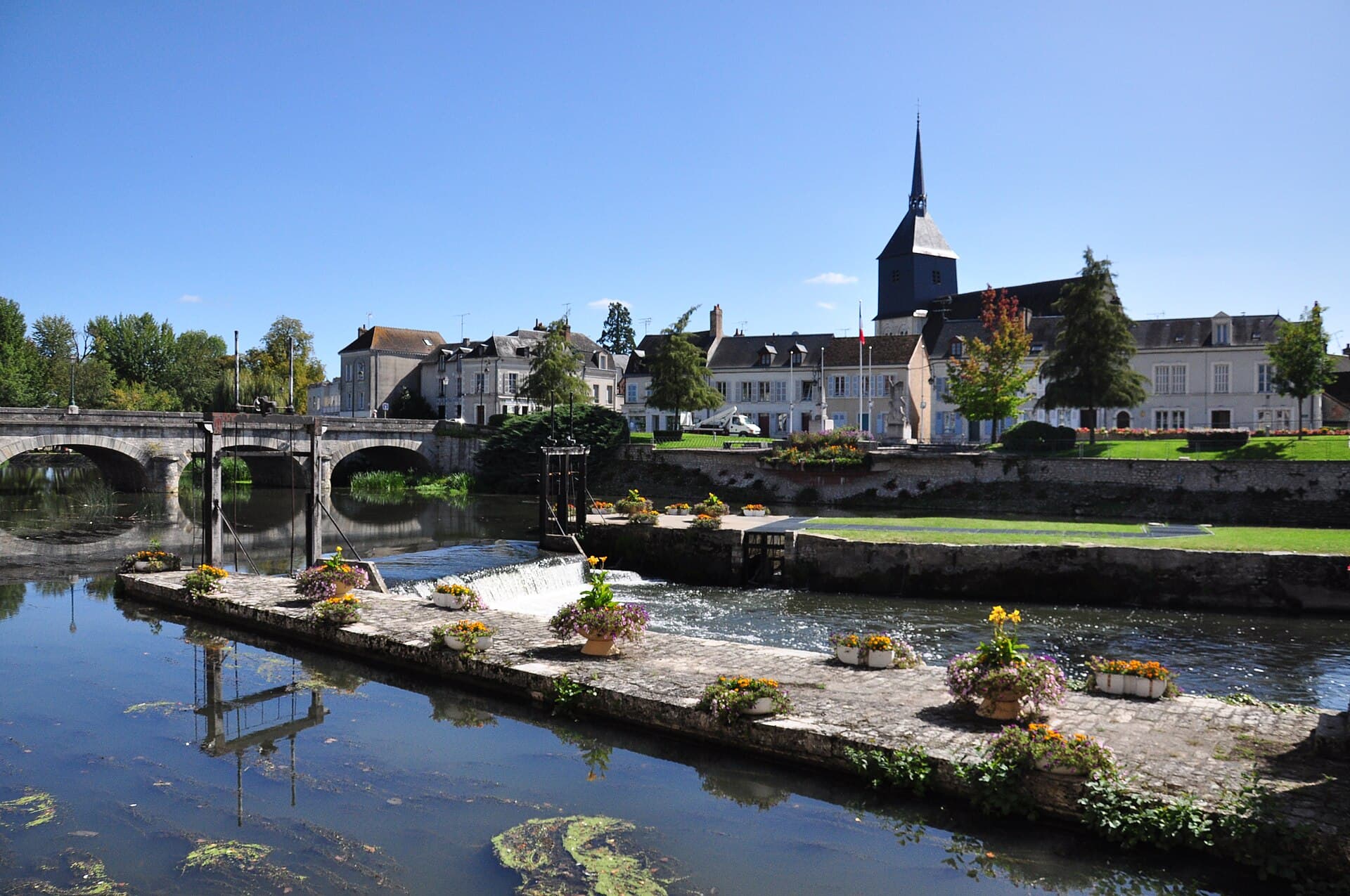
Romorantin-Lanthenay, a menudo reconocida como la principal ciudad de Sologne, se despliega dentro del departamento de Loir-et-Cher en Francia, situada en la región de Centre-Val de Loire. Ofrece una convincente mezcla de profundidad histórica, particularmente de la era del Renacimiento, y el tranquilo encanto del paisaje de Sologne. La ciudad se desarrolló con gracia a lo largo del río Sauldre, un afluente del Cher, con una serie de pasarelas que se arquean sobre sus aguas.
Esta ciudad ofrece una auténtica experiencia francesa, distinguida por su arquitectura renacentista y sus tradiciones culinarias locales. Está rodeada de bosques, ríos plácidos y una campiña verde, lo que la convierte en un destino para aquellos atraídos por la historia, la cultura y el mundo natural.
## Orígenes Medievales y Conexiones Reales La historia documentada de Romorantin comienza a finales del siglo XII, cuando estaba en manos de los Condes de Blois. Recibió una carta de franquicia en 1196, y se erigieron fortificaciones en la orilla derecha del río Sauldre. La 'Grosse Tour', un castillo fortificado, resistió un asalto inglés en 1356.
Hacia finales del siglo XV, bajo el patrocinio de los Condes de Angulema, especialmente Jean d'Angulema (abuelo de Francisco I), la ciudad se expandió. El puente fue reubicado río arriba y se construyeron nuevas murallas para proteger la parte norte de la ciudad. Jean d'Angulema también inició la construcción de un nuevo castillo al oeste, junto al Sauldre. Hoy en día, solo quedan el torreón de la torre sureste, frente al Sauldre, y la 'Torre de la Prisión' al noreste de esta estructura más antigua, que se integró en el recinto de la ciudad de los siglos XII y XIII.
## La Edad de Oro del Renacimiento y la Visión de Da Vinci Romorantin experimentó un período de gran florecimiento durante el Renacimiento, en gran parte debido a sus conexiones reales. En 1499, Luisa de Saboya, viuda de Carlos de Angulema, residía en su castillo aquí. Durante este tiempo, Luis XII y Ana de Bretaña buscaron refugio en Romorantin de la peste en Blois, y fue aquí donde nació su hija, Claudia, futura Reina de Francia. Luisa de Saboya sentía afecto por Romorantin y encargó varias mejoras, incluida la instalación del primer reloj de la ciudad en la 'Grosse Tour' en 1500 y la construcción de cuatro capillas en el coro de la iglesia alrededor de 1510. También supervisó la ampliación del antiguo castillo.
Sin embargo, el proyecto más ambicioso de la ciudad nunca se materializó por completo. En 1516, el rey Francisco I, cuya esposa Claudia nació en Romorantin, imaginó convertirla en la capital de su reino. Invitó a Leonardo da Vinci a Francia para desarrollar un gran plan para Romorantin, que incluía un palacio real a lo largo del Sauldre, una nueva ciudad atravesada por canales y un pabellón de caza en un bosque cercano. Este ambicioso proyecto fue archivado después de 1519, tras el fallecimiento de da Vinci.
## Siglos Posteriores y Desarrollo Moderno Finales del siglo XVI vieron a Romorantin afectada por las Guerras de Religión, lo que llevó a un declive en su industria manufacturera de telas a medida que los protestantes emigraban. La ciudad y la región de Sologne lucharon por recuperarse durante varios siglos. La prosperidad regresó a principios del siglo XIX, notablemente con el establecimiento del negocio de fabricación de telas de la familia Normant alrededor de 1800. En 1961, Romorantin se fusionó con el pueblo vecino de Lanthenay, formando Romorantin-Lanthenay.
Comience su exploración en el Musée de Sologne, ubicado en dos estructuras renacentistas del siglo XVI, que incluyen antiguos molinos y la Torre Jacquemart, que se extienden elegantemente sobre el río Sauldre. El museo ilumina la historia, costumbres, vida silvestre y artesanías de la región. Cerca, la Iglesia de Saint-Etienne, un edificio de estilo gótico reconstruido a finales del siglo XV y principios del XVI, presenta una larga nave y un ábside de tres lados.
Para aquellos interesados en los automóviles, el Museo del Automóvil Matra presenta una extensa colección de coches de carreras Matra, prototipos y motores en 3.000 metros cuadrados. Pasee por el Parc de Beauvais, un parque de ocio que ofrece minigolf y castillos hinchables en verano, conectado por un puente a la más natural Isla Poulies. La ciudad también cuenta con otros edificios cívicos notables, como el Hôtel Saint-Pol, una mansión del siglo XVI reconocida como Monumento Histórico, adornada con un emblema de puercoespín.
Romorantin-Lanthenay sirve como un punto de partida conveniente para explorar el Valle del Loira. A poca distancia en coche, puede visitar castillos célebres como Chambord, Cheverny y Blois. El ZooParc de Beauval, un importante zoológico europeo, también se encuentra a aproximadamente 40 minutos.
El momento ideal para experimentar Romorantin-Lanthenay se extiende desde la primavera hasta el otoño, cuando el clima generalmente permite una exploración cómoda. La primavera trae temperaturas suaves y el despertar de coloridas flores en los parques. El verano ofrece luz diurna prolongada, perfecta para actividades al aire libre, con máximas promedio alrededor de 24°C (74°F) en junio y 27°C (81°F) en agosto. El otoño transforma el Bosque de Sologne circundante con sus hojas doradas y ofrece productos de temporada. Los cielos más despejados se observan típicamente en julio.
Romorantin-Lanthenay está situada en el departamento de Loir-et-Cher, aproximadamente a 30 km al noroeste de Vierzon y a 65 km al sur de Orléans. Para comer, la ciudad ofrece una selección de restaurantes, incluyendo opciones de cocina tradicional francesa. Las opciones de alojamiento incluyen hoteles, bed & breakfasts y alquileres vacacionales. La posición central de la ciudad la convierte en una buena base para excursiones de un día a los cercanos castillos del Valle del Loira y atracciones como el ZooParc de Beauval. La información sobre transporte público y estacionamiento se puede encontrar a través de los recursos turísticos locales. La hora local en Romorantin-Lanthenay es UTC+2 durante el horario de verano.
Romorantin-Lanthenay en coreano, en chino o en hebreo — y 29 idiomas más, cada parada narrada por una voz nativa. La mayor variedad de idiomas de cualquier audioguía autoguiada.
Disponible en: