Dominikanermuseum
Un mosaico romano en Rottweil cuenta una historia mucho más antigua que la propia Alemania.
La historia completa se desbloquea en el tour
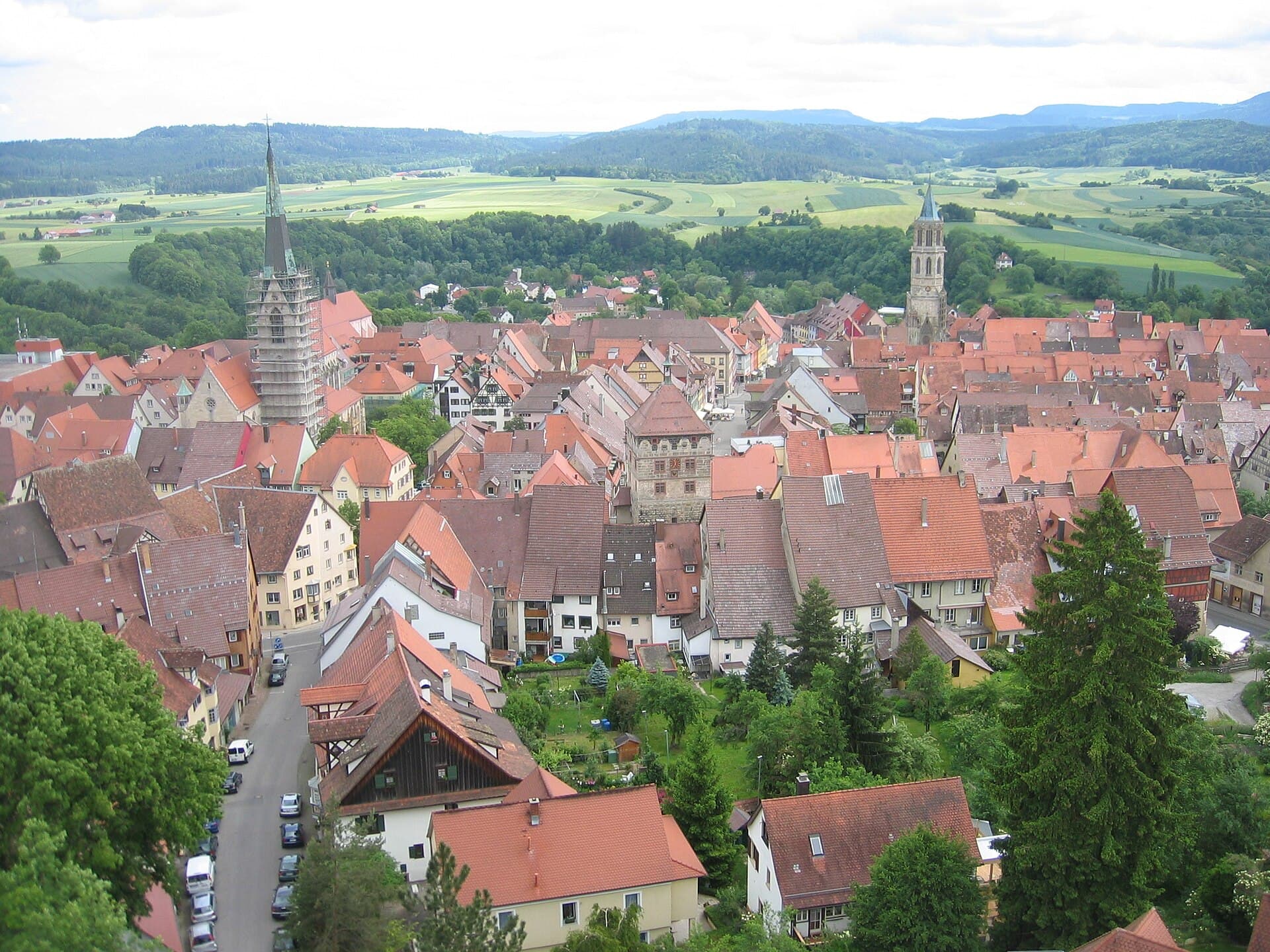 Christoph Probst / Public domain, via Wikimedia Commons
Tour de audio autoguiado de Rottweil — ruta GPS a pie, reproducción offline, narración en 32 idiomas.
“Donde las antiguas calles romanas se encuentran con alturas futuristas.”
No las postales. Las historias que ni los locales conocen — al oído, justo donde ocurrieron.
Un mosaico romano en Rottweil cuenta una historia mucho más antigua que la propia Alemania.
La plataforma de observación más alta de Alemania no está en una montaña, sino en una maravilla de la ingeniería moderna.
Partes de las defensas medievales de Rottweil se consideraron innecesarias, por una razón inesperada.
Descubre todos los secretos de Rottweil
Cada dirección, cada revelación al completo — a tu oído, justo donde ocurrió.
Eliges tus paradas. Caminas. La voz te revela lo que los demás ignoran.


Tu tour de audioguía por Rottweil te espera — elige tus lugares, tu idioma y empieza al llegar.
ComprarLume incluye una guía de realidad aumentada. Levanta el móvil y su cámara muestra la calle que tienes delante, con una flecha luminosa sobre la imagen real que siempre apunta a tu próxima parada — sin mapas que descifrar, sin giros equivocados. Como todo en Lume, funciona completamente sin conexión.
Rottweil, la ciudad más antigua de Baden-Württemberg, Alemania, ofrece una fascinante mezcla de historia antigua e innovación moderna. Situada entre la Selva Negra y los Alpes Suabos, esta ciudad de tamaño medio con más de 25.000 residentes mantiene un centro medieval bien conservado, caracterizado por sus históricas torres, iglesias y fuentes. Sus raíces se remontan a un asentamiento militar romano establecido en el año 73 d.C., lo que la convierte en un importante sitio histórico de la región.
Más allá de su atractivo histórico, Rottweil también es conocida por ser el origen de la raza de perro Rottweiler, cuyos antepasados eran perros de pastoreo romanos que acompañaban a las legiones y más tarde sirvieron a los carniceros locales. La ciudad cultiva activamente sus tradiciones, sobre todo durante la Fastnacht suabo-alemana, una animada celebración de carnaval. Esta antigua herencia se yuxtapone sorprendentemente con la arquitectura contemporánea, ejemplificada por la Torre de Pruebas ThyssenKrupp, un imponente símbolo de destreza ingenieril que domina el horizonte.
La historia de Rottweil se remonta a tiempos prehistóricos, con evidencia de asentamientos que datan del 2000 a.C. Sin embargo, sus orígenes formales comienzan en el año 73 d.C. cuando los romanos establecieron un asentamiento militar llamado Arae Flaviae. Esta ubicación estratégica, en el cruce de varias rutas comerciales, se convirtió en una de las ciudades romanas más grandes de la región, incluso recibiendo privilegios de ciudad romana como municipium en el año 186 d.C., el único asentamiento civil en lo que hoy es Baden-Württemberg en ostentar este estatus. Baños romanos y un mosaico de Orfeo de este período ofrecen vínculos tangibles con su pasado imperial.
Después de la retirada romana, Rottweil se convirtió en una corte ducal y real antes del año 771 d.C. En 1268, obtuvo el importante estatus de Ciudad Imperial Libre, directamente responsable ante el Sacro Emperador Romano. Este período vio el desarrollo de su núcleo medieval tardío, con la construcción de iglesias, casas de ciudad y torres defensivas que aún definen su carácter hoy en día. Rottweil incluso formó una alianza temporal, y luego un "Pacto Eterno", con la Confederación Suiza, participando en batallas como la de Morat en 1476 y recibiendo un valioso "estandarte de Julio" del Papa Julio II en 1512.
Las fortunas de la ciudad cambiaron con el panorama político de Europa central, soportando ocupaciones durante varias guerras medievales. Un capítulo más oscuro de su historia incluye las Cazas de Brujas de Rottweil entre 1546 y 1661, que vieron la ejecución de 266 individuos. El ayuntamiento emitió un indulto póstumo y una disculpa oficial en 2015. La independencia de Rottweil como ciudad libre y su alianza con la Confederación Suiza terminaron en 1803 con la conquista de la región por Napoleón, después de lo cual pasó a formar parte del estado de Württemberg.
El siglo XIX trajo nuevas conexiones con el sistema ferroviario en 1868, impulsando su economía y estableciéndola como un importante cruce. Hoy en día, Rottweil sigue siendo un centro administrativo, equilibrando sus profundas raíces históricas con una perspectiva de futuro. Su compromiso con la tradición es particularmente evidente en la Fastnacht suabo-alemana, una celebración de carnaval conocida por sus trajes únicos y desfiles históricos, que sigue siendo un importante punto culminante cultural.
Comience su exploración en el centro medieval de Rottweil, un área compacta en una colina con vistas al río Neckar. La Schwarzes Tor (Puerta Negra), construida alrededor de 1230 como parte de las fortificaciones de Staufer, es un punto de referencia prominente y el punto de partida de los animados desfiles de Fastnacht. Pasee por la calle principal para admirar las casas tradicionales alemanas y visite el Stadtmuseum (Museo de la Ciudad), que alberga un famoso mosaico romano de Orfeo y una colección de trajes históricos. El Dominikanermuseum también ofrece una exposición inigualable sobre el Imperio Romano.
Entre las iglesias destacadas se encuentran la Heilig-Kreuz-Münster (Colegiata de la Santa Cruz), una mezcla de estilos románico y gótico que data del siglo XII, con esculturas góticas y un crucifijo de Veit Stoss. La Lorenzkapelle (Capilla de San Lorenzo) del siglo XVI exhibe obras de maestros suabos y retablos góticos. Para echar un vistazo al pasado más reciente de Rottweil, la Torre Alta, una torre de vigilancia y prisión medieval, ofrece vistas panorámicas.
Para un contraste sorprendente, diríjase a la Torre de Pruebas de TK Elevator. Esta estructura de 246 metros de altura, completada en 2017, cuenta con la plataforma de observación pública más alta de Alemania a 232 metros, ofreciendo amplias vistas panorámicas de la Selva Negra, la Jura de Suabia e incluso los Alpes suizos en días despejados. Un ascensor panorámico de cristal lleva a los visitantes a la cima en solo 30 segundos.
La época más agradable para visitar Rottweil para actividades de clima cálido es desde principios de julio hasta finales de agosto, cuando las temperaturas diarias promedio son agradables, oscilando entre 12°C y 23°C. Durante estos meses, el cielo tiende a estar más despejado, siendo julio el mes más claro. Si bien la lluvia ocurre durante todo el año, junio registra la mayor precipitación, y agosto tiene una probabilidad moderada de lluvia ligera. Para aquellos interesados en eventos culturales, Rottweil organiza un Festival de Jazz cada primavera y una Serie de Conciertos de Verano durante julio y agosto. El tradicional carnaval de Fastnacht, que se celebra en febrero, ofrece un desfile histórico y una celebración inolvidables para aquellos que buscan una experiencia cultural única.
Rottweil está bien conectada y es accesible. El aeropuerto de Stuttgart (STR) es el aeropuerto principal más cercano, a aproximadamente 89 km, siendo el aeropuerto de Zúrich (ZRH) también una opción viable a 111 km. La ciudad se encuentra en un enlace ferroviario InterCity entre Stuttgart y Zúrich, ofreciendo buenas conexiones de tren de alta velocidad. La estación de tren está a aproximadamente un kilómetro del centro histórico, subiendo una cuesta empinada. Hay autobuses locales disponibles para moverse por la ciudad y sus alrededores. Para los conductores, Rottweil se encuentra justo al este de la autopista A81, que conecta Stuttgart y el lago de Constanza. La oficina de información turística, ubicada en Hauptstrasse, está abierta de lunes a viernes durante todo el año y los sábados por la mañana durante el verano.
Rottweil en coreano, en chino o en hebreo — y 29 idiomas más, cada parada narrada por una voz nativa. La mayor variedad de idiomas de cualquier audioguía autoguiada.
Disponible en: