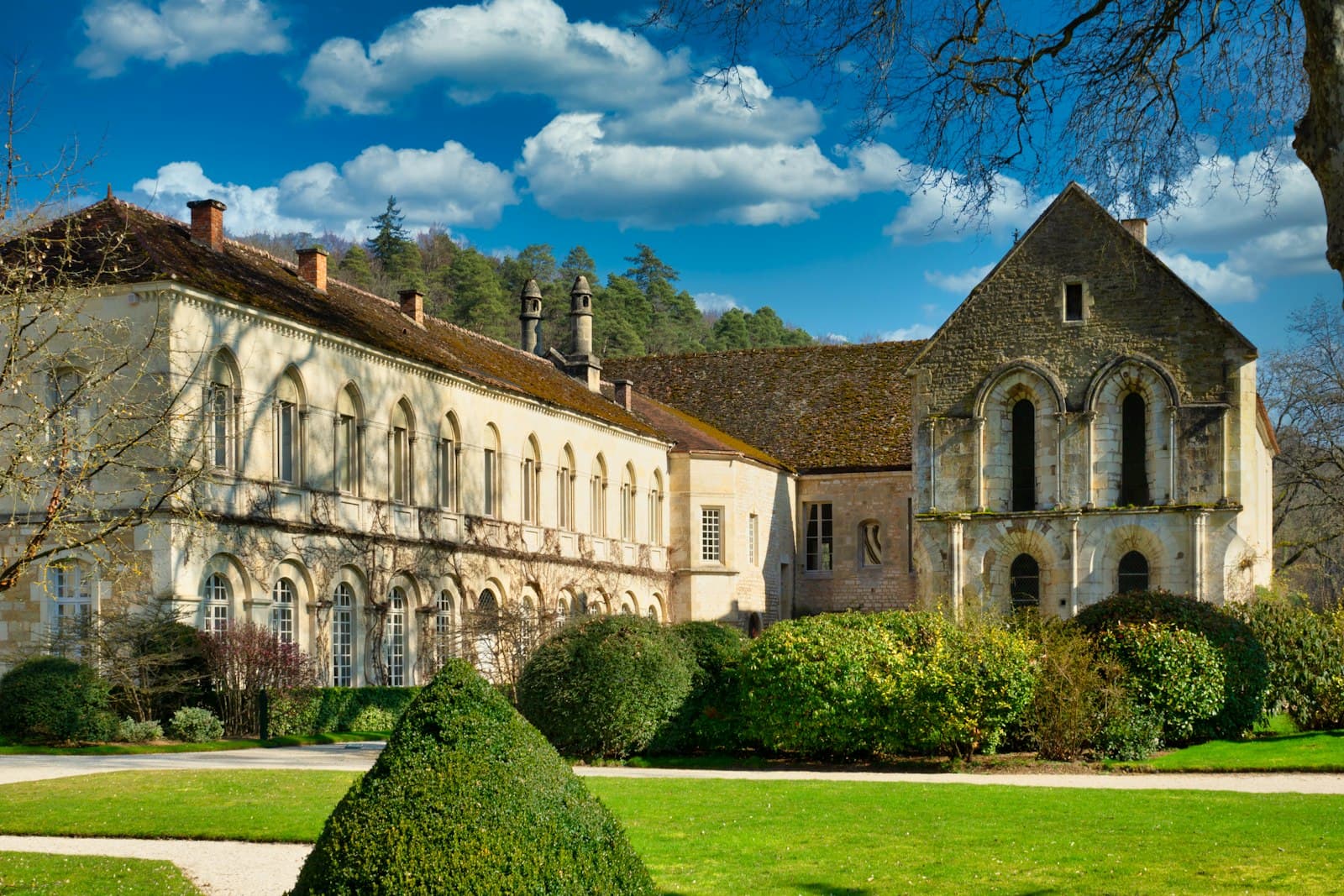
The Abbey Church
Beyond its Gothic grandeur, the Abbey Church holds a secret that drew pilgrims from across Europe for centuries.
Full story unlocks in the tour
 moi-même / Public domain, via Wikimedia Commons
Self-guided audio walking tour of Saint-Antoine-l'Abbaye — GPS route, offline playback, story-driven narration in 32 languages.
“Where medieval echoes meet curative whispers.”
Not the postcards. The stories even locals don't know — whispered in your ear, right where they happened.
Beyond its Gothic grandeur, the Abbey Church holds a secret that drew pilgrims from across Europe for centuries.
As you wander the medieval alleys, keep an eye out for subtle architectural details that hint at a unique local tradition.
Within the sacristies of the Abbey Church lies a collection that reveals a surprising aspect of the monastic order's work.
Discover every secret of Saint-Antoine-l'Abbaye
Every address, every reveal in full — in your ear, right where it happened.
You pick your stops. You walk. The voice reveals what the others miss.


Your self-guided audio tour of Saint-Antoine-l'Abbaye is ready — pick your landmarks, choose your language, and start the moment you arrive.
BuyLume has a built-in augmented-reality guide. Hold your phone up and its camera shows the street ahead of you, with a glowing arrow laid over the real view that always points to your next stop — no map to puzzle over, no wrong turns. Like everything in Lume, it works fully offline.
Saint-Antoine-l'Abbaye, a village in the Isère department of France, invites a journey back in time. Recognized as one of 'The Most Beautiful Villages of France' and crowned 'France's Favorite Village' in 2025, it offers a remarkably preserved medieval atmosphere. The village is defined by its impressive Gothic abbey church and a network of narrow, winding streets lined with half-timbered houses and historic market halls.
Situated between the Isère valley and the Vercors mountain range, Saint-Antoine-l'Abbaye is more than just a picturesque stop; it's a site deeply intertwined with centuries of European history, particularly its role as a significant pilgrimage and healing center during the Middle Ages. The village invites visitors to slow down, explore its architectural heritage, and uncover the stories embedded in its stone.
The history of Saint-Antoine-l'Abbaye is inextricably linked to Saint Anthony the Great, an Egyptian Christian monk from the 3rd century, considered the father of Christian monasticism. In the 11th century, the relics of Saint Anthony were brought to the village, then known as La-Motte-Saint-Didier, by a local lord. These relics quickly became associated with miraculous cures for a devastating illness known as 'Saint Anthony's Fire'. This affliction, now identified as ergotism, was caused by consuming rye grain contaminated with a particular fungus, leading to symptoms like intense burning pain, gangrene, convulsions, and hallucinations.
The perceived healing powers of Saint Anthony's relics drew a multitude of pilgrims and the sick to the village. In response to this influx, the Hospital Brothers of Saint Anthony, also known as the Antonines, were founded around 1095. Initially a lay community, they established a hospital near the church to care for those suffering from Saint Anthony's Fire. The order grew significantly, receiving monastic vows in 1218 and adopting the Augustinian rule in 1248. By 1297, Pope Boniface VIII recognized them as an order of Canons Regular, and the abbey became the mother house of the congregation. At its peak in the 15th century, the Antonine order maintained an extensive network of 370 hospitals across Western Europe.
The abbey church itself, a remarkable example of Gothic architecture, was constructed between the 12th and 15th centuries. Its grand scale reflects the importance and influence of the Antonine order. The village's architectural heritage also includes narrow streets, half-timbered houses, and a medieval market hall, all contributing to its preserved character. In 1840, the abbey church was recognized for its historical significance and listed as a Historic Monument. While the Antonine order was suppressed during the French Revolution in 1777, the legacy of their medical work and the village's historical importance endure. Today, Saint-Antoine-l'Abbaye continues to attract visitors, celebrated for its unique history and its designation as one of France's most beautiful villages.
Begin your exploration at the Abbey Church of Saint-Antoine, a significant Gothic edifice built between the 13th and 15th centuries. Admire its carved portal and the impressive Gothic tympanum on the western façade. Inside, discover frescoes, walnut choir stalls, Aubusson tapestries, and a monumental high altar that houses the reliquary of Saint Anthony of Egypt. The church's sacristies hold the Antonine Treasure, a collection of sacred art and historical surgical instruments, accessible via guided tour.
Stroll through the medieval village, recognized for its authenticity. The narrow streets are lined with half-timbered houses, facades adorned with mullioned windows, and old picturesque shops. Do not miss the medieval market hall. The Musée de Saint-Antoine-l'Abbaye, housed in the former novitiate, provides deeper insight into the history of the Hospitallers of Saint Anthony, therapeutic perfumes, and the history of gardens. The museum features permanent exhibitions like 'Chronicles of an Abbey' and 'Perfumes of History, from Care to Well-being,' along with temporary exhibits. Consider taking the 'Wanderer's Trail,' a marked path that guides you through the village and surrounding countryside.
The village of Saint-Antoine-l'Abbaye is open to visitors year-round. Spring and summer are particularly pleasant for exploring the narrow streets and enjoying outdoor terraces, with the best weather for warm-weather activities from mid-June to early September. July offers the clearest skies. Autumn provides beautiful light, while winter offers a calmer, more intimate atmosphere. To avoid crowds, especially during events like the medieval festival, weekday mornings are recommended.
Saint-Antoine-l'Abbaye is located in the Isère department, between Grenoble and Valence. It is accessible by car from nearby towns like Saint-Marcellin, Romans-sur-Isère, Grenoble, or Valence. The nearest train station is in Saint-Marcellin. Driving to the village can involve narrow and winding roads, so allow ample time.
Parking can be challenging on busy days, particularly during festivals, so arriving early is advisable. The village's old streets are often sloping and cobbled, which may limit accessibility in certain areas; it's recommended to contact the Tourist Office for information on suitable routes if needed. Guided tours are available, offering insights into the village's history, the abbey church, and the Antonine Treasury. Allow approximately 1.5 to 2 hours to explore the main points of interest. The village offers various restaurants, cafes, and accommodations, but booking in advance is recommended, especially during weekends and events.
Saint-Antoine-l'Abbaye in Korean, in Chinese or in Hebrew — and 29 more languages, every stop narrated by a native voice. The widest language range of any self-guided audio tour.
Available in: