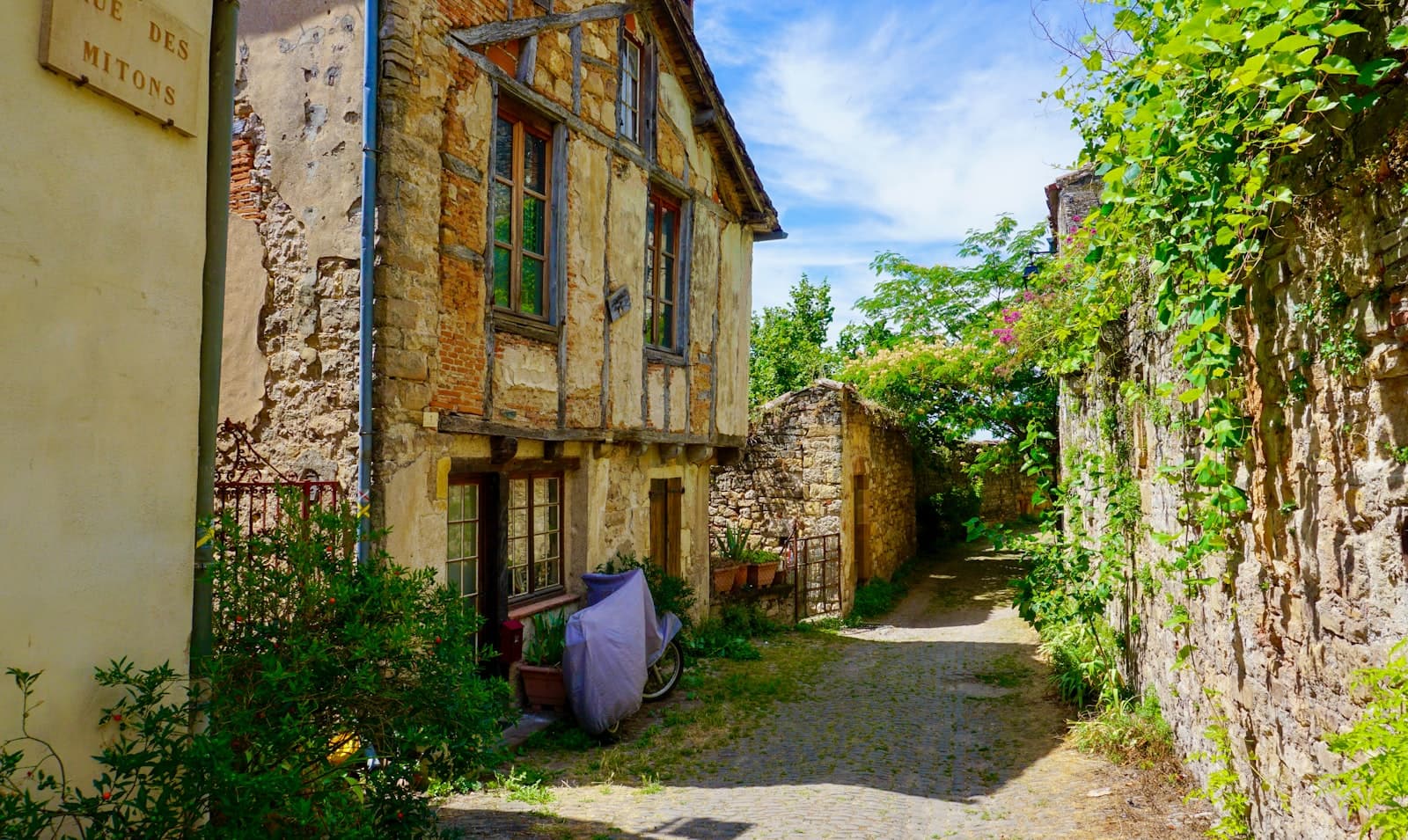
Maison Romane (Antiguo Ayuntamiento)
Este edificio, aparentemente común, posee una notable distinción histórica que se remonta a siglos atrás.
La historia completa se desbloquea en el tour
 Frecks / CC BY-SA 4.0, via Wikimedia Commons
Tour de audio autoguiado de Saint-Antonin-Noble-Val — ruta GPS a pie, reproducción offline, narración en 32 idiomas.
“Donde las piedras antiguas hablan al presente, y el Aveyron fluye con narrativas perdurables.”
No las postales. Las historias que ni los locales conocen — al oído, justo donde ocurrieron.
Este edificio, aparentemente común, posee una notable distinción histórica que se remonta a siglos atrás.
Caminando por las calles, se observan pequeños canales que recorren la ciudad, una característica con un origen industrial inesperado.
Muchas estructuras en la ciudad presentan desvanes de techo abiertos, un detalle que ilumina una faceta olvidada de la economía temprana de la ciudad.
Descubre todos los secretos de Saint-Antonin-Noble-Val
Cada dirección, cada revelación al completo — a tu oído, justo donde ocurrió.
Eliges tus paradas. Caminas. La voz te revela lo que los demás ignoran.


Tu tour de audioguía por Saint-Antonin-Noble-Val te espera — elige tus lugares, tu idioma y empieza al llegar.
ComprarLume incluye una guía de realidad aumentada. Levanta el móvil y su cámara muestra la calle que tienes delante, con una flecha luminosa sobre la imagen real que siempre apunta a tu próxima parada — sin mapas que descifrar, sin giros equivocados. Como todo en Lume, funciona completamente sin conexión.
Ubicado en las impresionantes gargantas del río Aveyron, en el sur de Francia, Saint-Antonin-Noble-Val es un pueblo medieval que parece suspendido en el tiempo. Sus antiguas casas de piedra, sus sinuosos pasadizos y la suave corriente del río Aveyron evocan una atmósfera cautivadora. El núcleo histórico del pueblo permanece notablemente conservado, ofreciendo una conexión tangible con su pasado.
Más que un telón de fondo pintoresco, Saint-Antonin-Noble-Val es un centro animado donde la historia se entrelaza con la vida cotidiana. El pueblo es miembro del movimiento Cittaslow, que aboga por un ritmo de vida más pausado. Su bullicioso mercado dominical atrae tanto a lugareños como a visitantes, y el paisaje natural circundante ofrece amplias oportunidades para actividades al aire libre, desde kayak en el río hasta la exploración de cuevas cercanas.
La historia de Saint-Antonin-Noble-Val se remonta a más de 10.000 años, con evidencia arqueológica de ocupación del Paleolítico Superior descubierta en el cercano sitio de Fontalès. Los orígenes del pueblo se remontan al siglo VIII, cuando se estableció una abadía en el lugar, donde se cree que fueron enterrados los restos de Antonino de Pamiers. Antonino, un misionero martirizado alrededor del 305 d.C., introdujo el cristianismo en la región de Rouergue. La leyenda cuenta que los ángeles llevaron su cabeza y brazo izquierdo en un pequeño bote río arriba hasta este mismo lugar.
A partir del siglo IX, Saint-Antonin fue gobernado por vizcondes, poderosos señores que sirvieron como vasallos del Conde de Toulouse. El pueblo prosperó como un dinámico centro comercial en la Edad Media, con sus comerciantes llegando hasta Italia, España, Flandes, Inglaterra y Holanda. Industrias como las curtidurías y las pañerías prosperaron, particularmente en el distrito de Bessarel. Los siglos XII al XVI vieron una rica expresión artística, influenciada por los contactos italianos, evidente en la escultura y decoración de las casas burguesas.
Saint-Antonin desempeñó un papel significativo y a menudo disputado en la historia regional desde el siglo XII hasta el XVII. Durante las Guerras de Religión en el siglo XVI, el pueblo se convirtió en un bastión protestante, lo que llevó a la destrucción del monasterio y la proscripción de las prácticas católicas en 1570. La influencia económica del pueblo disminuyó después de este período, lo que, sin querer, ayudó a preservar su núcleo medieval. Aunque brevemente rebautizado como Libre-Val después de la Revolución Francesa, volvió a ser Saint-Antonin. En 1808, Napoleón lo transfirió al Departamento de Tarn-et-Garonne, y en 1962, 'Noble-Val' se añadió oficialmente a su nombre, haciendo referencia a la designación romana de la zona como 'Vallis Nobilis' o 'Valle Noble'. Hoy en día, su trazado medieval, completo con casas de arcos de piedra y entramado de madera, permanece prácticamente inalterado después de 800 años.
Comience su exploración en el corazón del pueblo en la Place de la Halle, donde el mercado medieval, que data de 1840, se alza sobre robustos pilares de piedra. Esta plaza también alberga la Maison Romane, el ayuntamiento del siglo XII, que ahora alberga un museo de prehistoria. Pasee por las estrechas y sinuosas calles medievales, donde descubrirá una gran cantidad de detalles arquitectónicos, incluidos arcos góticos y románicos, ventanas ornamentadas y casas con entramado de madera. Busque la Maison d'Amour, llamada así por una escultura del siglo XV de una pareja besándose en su arcada.
Más allá de la arquitectura, explore los canales artificiales que cruzan la ciudad, vestigios de su industria del curtido. Para un cambio de escenario, diríjase al río Aveyron para practicar kayak o simplemente para admirar el puente arqueado y su reflejo. Las gargantas de Aveyron circundantes ofrecen espectaculares acantilados de piedra caliza y miradores panorámicos, como el Roc d'Anglars. Saint-Antonin-Noble-Val también sirvió como lugar de rodaje para películas como 'Charlotte Gray' y 'Un viaje de diez metros', con muchas escenas callejeras y tomas de campo filmadas en y alrededor del pueblo.
Saint-Antonin-Noble-Val recibe visitantes durante todo el año, y cada estación ofrece un carácter distinto. La primavera trae árboles en ciernes y una atmósfera animada a medida que las tiendas y cafeterías reabren, con temperaturas que aumentan a partir de marzo. El verano es popular para actividades al aire libre como el kayak, aunque el mercado dominical puede estar concurrido. El otoño ofrece hermosos productos como setas y trufas en el mercado. Septiembre ofrece un clima suavemente fresco y ventoso, ideal para la exploración. Los inviernos son más tranquilos, con aire fresco y un ritmo de vida más lento. El célebre mercado dominical funciona todos los fines de semana, durante todo el año, de 7 AM a 1 PM.
Saint-Antonin-Noble-Val está situado en el departamento de Tarn-et-Garonne, aproximadamente a 1 hora y 20 minutos al noreste de Toulouse en coche. Si bien el centro medieval es apto para peatones, hay aparcamiento disponible en las afueras de la ciudad, como en la Avenue de la Gare, el Boulevard des Thermes o la Avenue du Dr A Constans. El pueblo cuenta con una Oficina de Turismo en 10 rue de la Pelisserie, que ofrece información y visitas guiadas. Encontrará una variedad de restaurantes locales que ofrecen cocina francesa, con opciones desde platos tradicionales hasta experiencias más gourmet. El mercado principal es los domingos, y un mercado orgánico más pequeño tiene lugar los jueves de 4 PM a 8 PM en la Avenue Paul Benet.
Saint-Antonin-Noble-Val en coreano, en chino o en hebreo — y 29 idiomas más, cada parada narrada por una voz nativa. La mayor variedad de idiomas de cualquier audioguía autoguiada.
Disponible en: