The Crypt of Fleury Abbey
Beneath the main altar, a sacred pillar holds a secret that fueled centuries of pilgrimage.
Full story unlocks in the tour
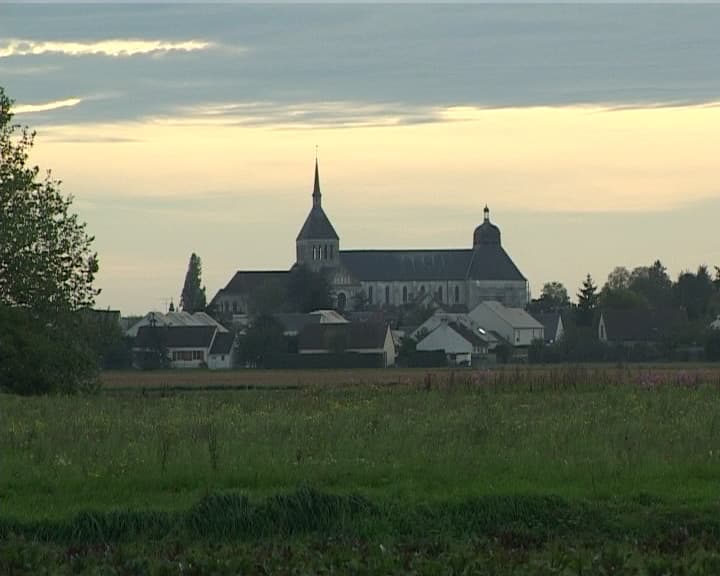 Moitsu / cc by-sa 3.0, via Wikimedia Commons
Self-guided audio walking tour of Saint-Benoît-sur-Loire — GPS route, offline playback, story-driven narration in 32 languages.
“Where ancient relics and royal secrets intertwine along the Loire.”
Not the postcards. The stories even locals don't know — whispered in your ear, right where they happened.
Beneath the main altar, a sacred pillar holds a secret that fueled centuries of pilgrimage.
Look closely at the top of the imposing west tower, and you'll notice a peculiar architectural detail that speaks of defiance.
A French king rests here, but his burial in this abbey was not a matter of simple royal decree.
Discover every secret of Saint-Benoît-sur-Loire
Every address, every reveal in full — in your ear, right where it happened.
You pick your stops. You walk. The voice reveals what the others miss.

Your self-guided audio tour of Saint-Benoît-sur-Loire is ready — pick your landmarks, choose your language, and start the moment you arrive.
BuyLume has a built-in augmented-reality guide. Hold your phone up and its camera shows the street ahead of you, with a glowing arrow laid over the real view that always points to your next stop — no map to puzzle over, no wrong turns. Like everything in Lume, it works fully offline.
Saint-Benoît-sur-Loire, a village in the Loiret department of France, is defined by the imposing presence of its Benedictine abbey, a site of profound historical and spiritual significance. Situated on the right bank of the Loire River, approximately 40 kilometers (25 miles) east of Orléans, the village is part of the Loire Valley, a UNESCO World Heritage site. While the wider Loire region is celebrated for its grand châteaux, Saint-Benoît-sur-Loire offers a different kind of majesty, rooted in its ancient monastic heritage.
Originally known as Fleury Abbey, this monastic foundation, established around 630-650 AD, became one of Western Europe's most celebrated Benedictine monasteries. Its renown stems largely from its possession of the relics of Saint Benedict of Nursia, the father of Western Monasticism and a patron saint of Europe. Today, the abbey church, a masterpiece of Romanesque architecture, stands as the sole surviving medieval structure of the original monastery, drawing pilgrims and history enthusiasts alike.
The origins of Saint-Benoît-sur-Loire trace back to a Gallo-Roman villa named 'Floriacum' in what was known as the "Golden Valley" (Vallis Aurea), a fertile agricultural area along the Loire. It was on this site, possibly a former Druidic shrine, that Fleury Abbey was founded around 630-650 AD by Leodebaldus, abbot of St-Aignan (Orléans). The monastery quickly grew in prominence, but its true fame began in 672 or 673 when monks traveled to Montecassino Abbey in Italy, retrieving the remains of Saint Benedict of Nursia and his sister Saint Scholastica. These relics were interred at Fleury, leading to the abbey's renaming as Saint-Benoît-sur-Loire, solidifying its status as a major pilgrimage destination.
Fleury Abbey experienced a golden age between the 10th and 13th centuries, becoming a significant intellectual and spiritual center in the Western world. Under the leadership of abbots like Gaucelin, an illegitimate son of King Hugh Capet, who began serving in 1004, an influential abbey school was established, and construction on a new abbey church commenced. The impressive west tower, known as Tour de Gauzlin, was begun in 1020, and the current church, largely Romanesque, was started around 1071. Despite a destructive fire in 1095, the church was consecrated in 1108, with construction continuing until about 1130. The abbey enjoyed the patronage of the Carolingian dynasty and later the Robertian house, playing a crucial role in legitimizing its patrons.
However, the abbey also faced periods of hardship. In 1525-27, the monks' refusal to accept their first commendatory abbot led to the removal of the third level of the west tower as punishment. In 1562, during the Wars of Religion, the abbey was pillaged by Huguenots, resulting in the dispersal of its extensive library, which held Latin classics and unique manuscripts. While Cardinal de Richelieu initiated restorations in the 17th century, the monastic buildings were largely destroyed during the French Revolution between 1760 and 1800. The abbey church, however, was spared and underwent careful restoration from 1836 to 1923. Monastic life was re-established in 1944, and the abbey buildings were rebuilt after World War II, with a community of about 40 Benedictine monks residing there today.
The primary draw of Saint-Benoît-sur-Loire is the magnificent Abbey of Fleury, a Romanesque basilica that showcases 11th, 12th, and 13th-century architectural elements. Begin your visit at the Tour Porche, also known as the Tour de Gauzlin, an 11th-century west tower with open archways and intricately carved capitals depicting biblical and Christian historical scenes. The north entrance features a richly sculptured portal from the early 13th century, with a tympanum showing Christ and the evangelists, and a lintel illustrating the transfer of Saint Benedict's relics.
Inside, the abbey church features a nave with Gothic-style pointed arches and columns, adorned with capitals illustrating stories of Abraham, Adam, Eve, and Saint Benedict. The choir, consecrated in 1108, contains the effigy tomb of King Philip I of France. Below the choir, the 11th-century crypt, with its large cylindrical pillars and double ambulatory, houses the relics of Saint Benedict within a massive axial pillar. The floor around the altar is paved with an intricate 4th or 5th-century Roman mosaic, preserved from an earlier church.
Beyond the abbey, explore the charming village itself, which has been recognized as a "Petite cité de caractère" and a "Village de caractère du Loiret." Wander through the medieval streets, discover bourgeois houses, and visit the picturesque port along the Loire River, which offers scenic views and exhibits. The Belvédère, an interactive space in the village center, offers insights into the abbey's history and architecture.
The Loire Valley, including Saint-Benoît-sur-Loire, is best visited during late spring (May to June) and early autumn (September to October). These periods offer mild temperatures, fewer crowds, and the beauty of blooming gardens in spring or the lively foliage and wine harvests in autumn. May and June are particularly pleasant, with temperatures between 20-24°C (68-75°F), ideal for exploring the abbey grounds and surrounding areas. September also provides warm days for outdoor activities and cooler evenings, with the Loire landscape turning golden. While summer (July-August) brings warmer weather and extended opening hours, it is also peak tourist season, meaning larger crowds.
Saint-Benoît-sur-Loire is located approximately 130 km (80 miles) south of Paris and about 40 km (25 miles) east of Orléans. The nearest major airport is in Paris, from which the village is about a two-hour drive. While the village is a destination in itself, it is advisable to have a car to explore the wider Loire Valley region and its many attractions. Parking is available near the Tour de Gauzlin at the abbey.
The village is part of the Loire Valley UNESCO World Heritage site, and its port is classified as a picturesque site. You can find local shops and craftsmen within the village. Nearby attractions include the Carolingian Oratory of Germigny-des-Prés (5 km away), the Château de Sully-sur-Loire (7 km away), and the Loire Marine Museum in Châteauneuf-sur-Loire (8 km away). For those interested in outdoor activities, ULM flights and karting are available in the vicinity.
Saint-Benoît-sur-Loire in Korean, in Chinese or in Hebrew — and 29 more languages, every stop narrated by a native voice. The widest language range of any self-guided audio tour.
Available in: