Castiglia di Saluzzo
Cette imposante forteresse, autrefois demeure de puissants marquis, a plus tard servi un tout autre dessein.
L'histoire complète se débloque dans le tour
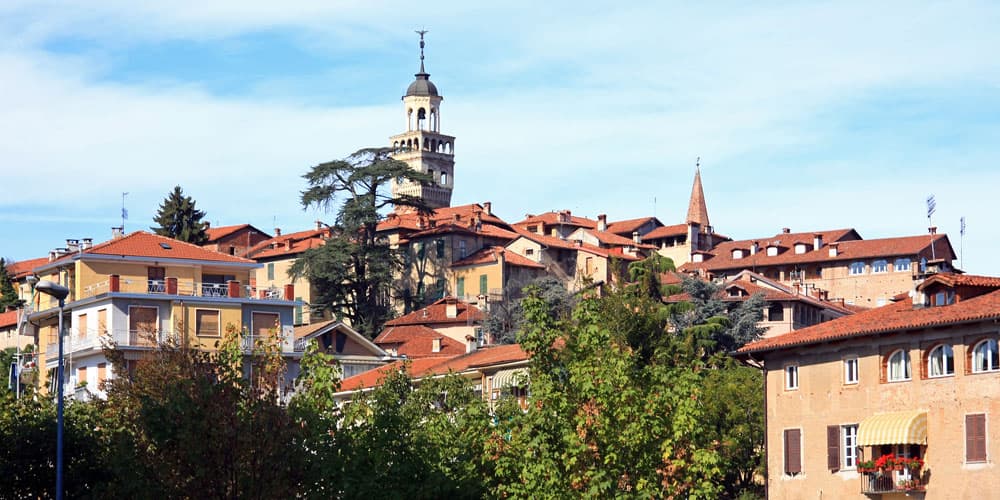 Alessandro Vecchi / CC BY-SA 3.0, via Wikimedia Commons
Visite audio autoguidée de Saluces — parcours GPS à pied, lecture hors ligne, narration en 32 langues.
“Où la grandeur médiévale résonne avec les récits de marquis et un art intemporel.”
Pas les cartes postales. Les histoires que même les habitants ignorent — soufflées à l'oreille, là où elles se sont passées.
Cette imposante forteresse, autrefois demeure de puissants marquis, a plus tard servi un tout autre dessein.
Entrez dans ce palais Renaissance et découvrez la présence surprenante d'un maître flamand dans le Piémont.
Gravir les 130 marches de la Tour Civique de Saluzzo offre bien plus qu'une vue étendue.
Découvrez tous les secrets de Saluces
Chaque adresse, chaque révélation en entier — dans ton oreille, là où elle s'est passée.
Tu choisis tes lieux. Tu marches. La voix te révèle ce que les autres ignorent.

Votre visite audioguidée de Saluces vous attend — choisissez vos lieux, votre langue, et lancez-vous dès votre arrivée.
AcheterLume intègre un guide en réalité augmentée. Levez votre téléphone : sa caméra montre la rue devant vous, avec une flèche lumineuse posée sur l'image réelle qui pointe toujours vers votre prochain arrêt — aucune carte à déchiffrer, aucun mauvais virage. Comme tout dans Lume, ça fonctionne entièrement hors-ligne.
Saluzzo, une ville captivante de la région du Piémont en Italie, vous invite à remonter le temps dans un passé médiéval méticuleusement préservé. Située au pied des Alpes Cottiennes, à l'ombre de l'imposant Mont Viso, Saluzzo offre un mélange unique d'histoire, de culture et de beauté naturelle. Sa ville haute, un labyrinthe de rues sinueuses, de murs anciens et de palais nobles, grimpe la colline, culminant avec l'imposante Castiglia.
Ancienne capitale du puissant Marquisat de Saluzzo de 1142 à 1548, l'emplacement stratégique de la ville au carrefour des routes commerciales a favorisé un riche échange culturel, notamment avec la France voisine. Cet héritage est évident dans son architecture, son art et même quelques traces linguistiques persistantes. Saluzzo reste un centre important pour les antiquités et la restauration de meubles anciens, et son calendrier culturel engageant, des festivals aux marchés, garantit qu'il y a toujours quelque chose à découvrir dans ce coin authentique de l'Italie.
Les origines de Saluzzo remontent à l'Antiquité, avec des preuves archéologiques suggérant des établissements dès l'âge du fer. À l'époque romaine impériale, elle était connue sous le nom d''Ager Salutiensis' et faisait partie de la 'IX Regio Augusta Taurinorum' (Turin). Après la dissolution de l'Empire carolingien, Saluzzo a connu divers souverains, passant finalement à la famille Aleramici.
La véritable importance de Saluzzo a commencé en 1142 lorsque Manfred Ier, fils de Bonifacio del Vasto, est devenu le premier Marquis de Saluzzo. Pendant plus de quatre siècles, le Marquisat de Saluzzo, bien que n'étant pas toujours militairement puissant, a habilement navigué dans le paysage politique complexe de l'Italie médiévale, maintenant son indépendance malgré les ambitions de voisins plus grands comme la Maison de Savoie, la monarchie française et le Saint Empire romain germanique. Le territoire du Marquisat comprenait des parties des provinces modernes de Cuneo et de Turin, s'étendant parfois dans des zones faisant aujourd'hui partie de la France.
Le XVe siècle a marqué l'apogée du pouvoir et de la splendeur artistique de Saluzzo, notamment sous Ludovico Ier (1416-1475) et Ludovico II (1438-1504). Ludovico Ier a mené une politique de neutralité, médiatisant les conflits entre les puissances européennes. Ludovico II, malgré des revers militaires, était un visionnaire, commandant le 'Buco di Viso', le premier tunnel à travers les Alpes, pour faciliter le commerce avec la France.
Cependant, les conflits internes entre les enfants de Ludovico II ont affaibli le Marquisat, menant à son annexion par la France en 1548. Saluzzo est restée sous domination française pendant un demi-siècle jusqu'au Traité de Lyon en 1601, où elle a été cédée au Duché de Savoie. Dès lors, le destin de Saluzzo s'est entrelacé avec celui du Piémont, devenant finalement une partie du Royaume d'Italie au XIXe siècle. Des figures notables comme l'imprimeur du XVIIIe siècle Giambattista Bodoni et le dramaturge du XIXe siècle Silvio Pellico sont nées ici, cimentant davantage la place de Saluzzo dans l'histoire et la culture italiennes.
Commencez votre exploration dans la ville haute, le cœur médiéval de Saluzzo. La Castiglia domine l'horizon, une majestueuse forteresse du XIIIe siècle qui fut autrefois la résidence des marquis et plus tard une prison. Aujourd'hui, elle abrite les Musées de la Civilisation Chevaleresque et de la Mémoire Carcérale. Gravissez les 130 marches de la Tour Civique, qui fait partie de l'Ancien Hôtel de Ville, pour des vues panoramiques sur la ville, les Alpes et la Vallée du Pô.
Flânez dans les rues étroites et sinueuses pour découvrir des merveilles architecturales comme la Casa Cavassa, une résidence noble du XVIe siècle, aujourd'hui musée civique, présentant de l'art de la Renaissance, y compris des œuvres de Hans Clemer. À proximité, l'Église de San Giovanni, une église dominicaine du XIVe siècle, révèle un intérieur gothique flamboyant saisissant avec la chapelle funéraire des marquis. Ne manquez pas la Cathédrale Santa Maria Assunta dans la ville basse, une église de style gothique lombard de la fin du XVe siècle, avec une façade en briques apparentes frappante et des œuvres d'art complexes.
Au-delà du centre-ville, un court trajet en voiture vous mènera au Castello della Manta, une résidence noble célèbre pour ses magnifiques fresques du XVe siècle, dont les 'Neuf Preux et Héroïnes' et la 'Fontaine de Jouvence'. Pour un avant-goût de la vie locale, explorez la Piazza Cavour et la Piazza Risorgimento dans le quartier du XIXe siècle, où vous trouverez des boutiques, des cafés et des marchés.
La meilleure période pour visiter Saluzzo pour un temps agréable et des activités de plein air est d'avril à octobre. Pendant ces mois, vous pouvez vous attendre à de bonnes températures et moins de pluie, ce qui est idéal pour explorer les rues médiévales de la ville et profiter de la beauté naturelle environnante. Plus précisément, de début juin à mi-septembre offre les conditions les plus favorables pour les activités touristiques générales en extérieur, juillet et août étant les mois les plus chauds, parfaits pour les activités par temps chaud. Le printemps et le début de l'automne sont également idéaux pour assister aux festivals locaux et aux événements culturels.
Saluzzo est située dans la province de Cuneo, à environ une heure de route de Turin, Alba et Cuneo. Bien que les transports en commun via les trains régionaux et les bus soient disponibles, une voiture est souvent recommandée pour une plus grande flexibilité, surtout pour explorer les vallées alpines environnantes et les attractions proches comme le Parc Naturel du Monviso. La ville possède sa propre gare avec des correspondances vers Savigliano, où vous pouvez vous connecter à Turin et Cuneo.
Saluzzo est connue pour son atmosphère accueillante et offre une gamme d'options d'hébergement. Le centre historique de la ville est mieux exploré à pied, des chaussures de marche confortables sont donc indispensables pour naviguer dans les rues sinueuses et les montées. Vous trouverez une variété de boutiques et d'excellents restaurants proposant une cuisine piémontaise typique et des vins locaux.
Saluces en coréen, en chinois ou en hébreu — et dans 29 autres langues, chaque étape narrée par une voix native. La plus large gamme de langues de tous les audioguides autoguidés.
Disponible en :